Transit Riders Union Charts New Course After Katie Wilson’s Election
Transit Riders Union restructures leadership as Katie Wilson becomes Seattle mayor. New General Secretary Wes Mills outlines priorities including bus lanes, transit funding renewal, and progressive revenue.
Transit Riders Union Charts New Course After Katie Wilson's Election
The Transit Riders Union faces a transformation as its longtime leader prepares to become Seattle's mayor. For over a decade, the grassroots organization has built power for working people across King County. With Katie Wilson headed to City Hall, TRU is navigating a leadership transition while positioning itself to push an ambitious agenda.
Wes Mills, TRU's new General Secretary, discussed how the organization is adapting and what comes next.
From Suburban Kid to Transit Organizer
Mills grew up in suburbs where "you couldn't get anywhere without getting in a car unless you really wanted to risk it. We had the whole thing growing up of you got on your bike and you could only go two blocks away because that was about as far as you could go safely."
Seattle changed everything. "I was just enamored with - wait, you don't have to drive, you don't have to go 20 minutes just to get to a grocery store."
But advocating for better transit means addressing much more. "We need buses. So we need people to live near buses because you can't have buses out to the middle of nowhere. So we need housing for that. But then people need to be able to afford it. And it just builds on itself and turns into this big cycle."
During the pandemic, Mills dove into organizing with social housing and Raise the Wage campaigns that reshaped South King County's economic landscape.
Building Power Through Coalition Work
TRU's organizing relies on volunteer energy and coalition building. Mills described the organization as "an internal coalition of volunteers and then we have the coalitions of the groups around us."
The work extends beyond transit policy. Volunteers run Camp Outreach, feeding unhoused neighbors regularly. The Bus and Transit Service Committee focuses on transit policy. A Disability Access Secretary keeps accessibility central to all advocacy work.
"It's really the volunteers who are doing all of this," Mills said. "There's the General Council and our General Manager who are there to make sure that the people who are doing the work are coordinated and supported."
This volunteer-driven model helped TRU win minimum wage campaigns in Tukwila, Burien, and unincorporated King County, establishing some of the highest wage floors in the nation. Success came from tailoring campaigns to each community rather than imposing a one-size-fits-all approach.
"We need to go out and talk to both the businesses to see what they can support, and talk to the workers and say, what is it that you need?" Mills explained. Worker surveys shaped policy details, including adjustments for different business sizes and implementation timelines. "Everyone should get to come along. It shouldn't be that much of a disparity if you are working for a smaller business versus a large multinational."
Navigating the Leadership Transition
Katie Wilson's election created both opportunity and challenge for TRU. The organization had to separate roles Wilson held simultaneously as both volunteer General Secretary and paid General Manager.
"We didn't really want to make it another of - well, someone come step in and be just like Katie again," Mills said. Mills now serves as General Secretary, a volunteer position elected by membership, while Lam Ho has been hired as General Manager to handle day-to-day operations.
The organization also expanded its General Council, adding roles focused on outreach, campaigns, communication, and direct transit advocacy. Wilson has remained involved in the transition despite her mayoral responsibilities. "She's been generous with a lot of her time to come and do a lot of the administrative and soft handover things with us."
A Mayor Who Rides the Bus
Mills expressed enthusiasm about having someone in the mayor's office who shares TRU's lived experience. "It is very gratifying to see someone who lives life the way that my household does in the Mayor's office. Someone who rents, someone who doesn't drive, someone who's raising a kid here in the city."
But shared values don't mean automatic wins. "It will be nice to be able to advocate for things instead of needing to be as responsive to - against certain things." Implementation still requires political will and coalition building. "Now we're in a position to be able to help put a lot of that political pressure in the direction that we want it to go."
TRU supported Wilson's campaign along with several progressive City Council members and the new City Attorney, creating space for initiatives that struggled to gain traction under previous administrations.
Short-Term Priorities: Red Paint and Bus Lanes
Mills focused on transit infrastructure improvements that can happen quickly. "Right out of the gate, I'm really hoping that the moment the swearing-in finishes that SDOT can have people out on Denny Way just with the red paint rollers ready to go."
Mills identified corridors where bus lanes could be implemented: Rainier Avenue, the new Judkins Park station area, and Mount Baker. "Just rolling out the red paint and saying, We are going to prioritize buses again."
Another near-term priority is renewing the Seattle Transit Measure, which expires in 2026. "We would like to get a really good proposal out fairly soon so that we could start campaigning on it."
The organization also wants the city to use housing tools provided by the state, particularly for missing middle housing, and implement the Shared Streets Law.
Long-Term Vision
"Years Two, Three, and Four are going to be the big ones," Mills said. Priorities include Sound Transit 3 decisions, expanding social housing beyond Seattle, and progressive revenue to stabilize city finances. "It doesn't do us a whole lot of good to have put all this work in and then two years down the road - oops, turns out we can't afford it."
TRU also wants to spread the social housing model statewide and improve intercity rail. "We've talked for years about improving Amtrak Cascades. Can we get that moving?"
How TRU Punches Above Its Weight
TRU's influence comes from its member-driven model. The Bus and Transit Service Subcommittee started when Saunatina "was annoyed that there wasn't a bus route to get where she needed to go to King County Elections in Renton. And so she just started it." Camp Outreach began with a few volunteers and grew into a sustained program.
"If you think Transit Riders Union should be doing something, well, join us and come do it," Mills said. People can join at transitriders.org or contact@transitriders.org.
Looking Ahead
Mills envisions stable housing costs and better transit integration. "While probably no force in the universe can make rents go down in the short term, I hope for a path to stable rents, more housing, and a much more efficient transit system."
His personal goal is restoring Seattle's frequent transit network so buses become practical daily transportation again.
With new TRU leadership and aligned elected officials, the opportunity is real. "We're really hoping that this gives us a lot of room to get a lot of these big things accomplished that may have stalled until this point," Mills said.
About the Guest
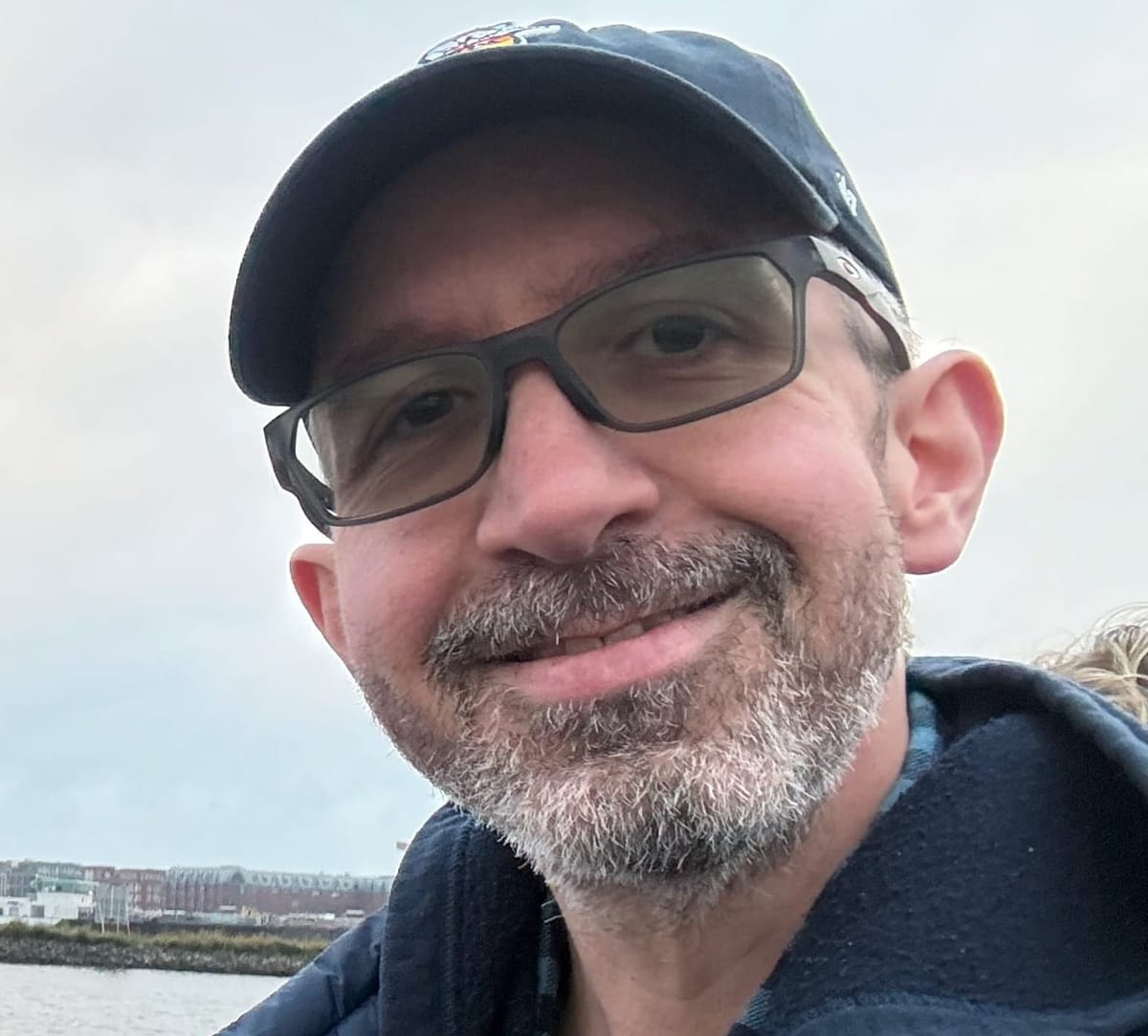
Wes Mills
Wes Mills is a devoted transit nerd who does not drive, living in Northgate with his wife and their dog. His hobby of transit turned into a bigger passion that everyone should be able to get around without the hassle or expense of a car, whether by choice or necessity. Volunteering with Share the Cities, Move Redmond, Transit Riders Union, and House our Neighbors gives him the chance to indulge another hobby (paperwork! really!) and learn how to make things better. In his spare time, he likes to watch curling or baseball, take pictures of buses, and find more science fiction to read.
Resources
Podcast Transcript
[00:00:00] Crystal Fincher: Welcome to Hacks & Wonks. I’m your host, Crystal Fincher. On this show we talk with policy wonks and political hacks to gather insight into local politics and policy in Washington state through the lens of those doing the work, with behind-the-scenes perspectives on what’s happening, why it’s happening, and what you can do about it.
In Seattle and across King County, a grassroots organization has been punching far above its weight for over a decade - winning battles for transit riders, low-wage workers, renters, and anyone who believes our region should work for everyone, not just those who can afford sky-high rents or a car. The Transit Riders Union isn't your typical advocacy group. Born in 2011 from a simple idea that transit riders deserve a voice, TRU has evolved into a powerful, member-driven force for economic justice. They're organizers who help convince voters to tax themselves for better bus service. They're coalition builders who've spread the Raise the Wage movement from Tukwila to Burien to unincorporated King County, establishing some of the highest minimum wages in the nation. They're the volunteers who feed unhoused neighbors every week and the advocates who fight for every bus lane, every fare subsidy, and every policy that makes this region more equitable. And now, as their longtime leader Katie Wilson prepares to take office as Seattle's next mayor, TRU enters a new chapter - one that promises both opportunity and challenge.
Today, we're joined by Wes Mills, TRU's General Secretary, a self-described kid of the suburbs who discovered the power of public transit when he moved to Seattle and quickly realized that transit advocacy means fighting for housing, wages, and so much more. Wes has held my attention for years as someone who's been a steady builder of the work and someone who carries the work when no one is watching. He brings us inside TRU's organizing model, shares how they're navigating this leadership transition, and reveals what's next for an organization that's never been content to simply ask for better - they organize, they campaign, and they win. From the politics of bus lanes to the future of Sound Transit, from progressive revenue to social housing, this conversation explores what it takes to build real power for working people in an era when too many cities are moving backward. TRU is moving forward and they're bringing a deeply committed network of volunteers with them.
So today, I am thrilled to be welcoming Wes Mills, the General Secretary of Transit Riders Union. Welcome!
[00:02:52] Wes Mills: Hello - thank you for having me.
[00:02:55] Crystal Fincher: Absolutely. Well, I'm really excited to have you because Transit Riders Union is an organization that has done so much work in community, that has advocated for so much, been incredibly effective - not just in Seattle, but in many communities around the region. Obviously, we have talked to now-Mayor-Elect Katie Wilson, then-General Secretary Katie Wilson, on the show a few times. But really wanted to catch up with the work that TRU is doing and get to know a little bit more about you. So I guess as we start, what brought you to Transit Riders Union and what has really driven your involvement?
[00:03:37] Wes Mills: So a lot of it comes from just the idea of being able to get around without a car, being able to do the things that we need to do to have a nice environment for our region. I mean, we say as part of Transit Riders Union that - we are a union of transit riders, in that we advocate for things that transit riders need. So obviously like buses and being able to get around outside of a car, which - that's what I like to do. I mean, I say that I'm a kid of the suburbs. You couldn't get anywhere from my house without getting in a car unless you really wanted to risk it. We had the whole thing growing up of you got on your bike and you could only go two blocks away because that was about as far as you could go safely. And then, moving to Seattle many years ago now, I was just enamored with - wait, you don't have to drive, you don't have to go 20 minutes just to get to a grocery store. And so, just being able to get involved in having more of that was really interesting to me.
And I started out approaching it as, how do I talk to people about buses and trains? And then as you get into that, you quickly start to realize that it is so much more that goes into that. Like - well, we need buses. So we need people to live near buses because you can't have buses out to the middle of nowhere. So we need housing for that. But then people who want to live in housing, we need dense housing. Then people need to be able to afford it. And it just builds on itself and turns into this big cycle. So I had originally just gotten involved with TRU just kind of as a membership - Oh, I'll donate some money and help this group out. And then that opened up groups like Share the Cities. And it turned into more and more things of - how do we get more and more of these nice things that we want? And then really kind of escalated during the height of the pandemic when we all were like - Okay, how can I sit indoors and be effective? And so I started volunteering with the social housing campaign and helping out with the Raise the Wage campaigns that TRU has done and just really dove headfirst into how do we do all of these things to make all of these good things a reality. And it's been really gratifying to see how Seattle voters have supported us - all the way back in 2014, when we had the first vote to tax ourselves to pay for more bus service because we thought all our buses were going to disappear. And then it turns out we got a lot of buses and it was awesome. So yeah, comes from a root of - I really liked buses and then spreads out from there.
[00:06:04] Crystal Fincher: That makes sense. For people who are not familiar with TRU, what is TRU? Who is TRU? And what are you up to?
[00:06:14] Wes Mills: Well, who is TRU is more than just now me and our General Manager, who we've hired to take that role that Katie was doing as a combined thing of General Secretary and General Manager. It's an army of volunteers. It's an army of people who are really dedicated to, again, just making the region better for the people who live there and the people who will someday live here. We have dedicated groups of people - and I mean dedicated in the sense of this is what they focus on and this is what they're passionate about - doing everything from working on campaigns like the Raise the Wage campaigns to Camp Outreach, like literally going out and feeding people who are unhoused. Every weekend, every few days, like clockwork, just out there really doing the epitome of mutual aid - making food and giving it to people who need it. Then we have the people who are like me - our transit wonks - that are called BATS or Bus and Transit Service Committee. We have people who are focused on disability access. Like we have a person on the TRU General Council who's the Disability Access Secretary. And she is just absolutely both passionate and motivated to make sure that access and accessibility is a thing that our transit system has and our region has.
So It's really the volunteers who are doing all of this. I mean, there's the people here - like there's the General Council and our General Manager - who are there to kind of just make sure that the people who are doing the work are coordinated and supported. And yeah, and I mean, right now we're doing a lot of continuing those projects. We've had some good wins with the various coalitions that we've been a part of for things like renters' rights and minimum wage. And now we're really trying to say - what are we focusing on next? Transit is going to be a big one. There's a lot going on with transit in our region. We're opening up a few new light rail stations later this week. And then it's very much at what comes next from the big debate of where do we put all of these new light rail stations over the next 15 years to the small ones of what are the bus routes look like once we've done that and as we open new ones.
[00:08:14] Crystal Fincher: Yes. And trying to complete new rapid bus lines more quickly than it took to put a person on the moon, which has been a challenge so far. But I want to back up a little bit and talk about - not only some of the campaigns that you've been involved in, the public outreach, lots of people know about the Raise the Wage campaigns that TRU has been involved in. But also, I really want to talk about how you, as an organization, decided to move in that direction and how you went about putting that together and winning those campaigns. Because I think so much of what is cool about TRU and what has made TRU so effective is in that. So kind of not only what have you done, but how did TRU go about doing it?
[00:09:06] Wes Mills: It really comes back to our volunteers. And a lot of it is also driven by Katie, who's been our General Secretary since TRU was founded. I mean, that's a lot of where TRU comes from - is Katie and that original group of volunteers said, Hey, you know, we need a better bus system and went and advocated for it. And then, like I was saying at the beginning, kind of like how it was with me, you quickly realize there's a lot more that gets put into being able to make that a reality. And TRU as a group is very bottom-up and member-driven. And so, through the coalition work that Katie has done for years - through groups like Stay Housed, Stay Healthy, and similar, it was - well, we have an opportunity now to try to make a more equitable region. Seattle has a better minimum wage, so how do we expand that to the rest of the region? Because as we all know, you can live in one area and work in another. Well, if you live in Seattle, but you work in some of these other suburbs or you work in a suburb that's in one area, but because of the cost of housing, you have to come from another suburb, those kinds of places. It really makes for this kind of lopsided employment system. And so TRU, through our own volition - like again, a lot of it driven through Katie and the connections that she has built - and our coalition partner said, All right, let's start going throughout the region and say, where are these employment centers that we can look at? And then we can say - can we have impact on getting a better minimum wage and getting better working conditions for the people who are working there? Because you have, like in the case of Tukwila, it has a really large regional mall. And so we could make a lot of impact there by saying - yes, voters of Tukwila, are you willing to raise the minimum wage to support the people who are working in your city who may not necessarily live in your city? And it was good to see that voters support that. Voters supported it in Burien, so we've had successes and it's been nice to see.
[00:11:00] Crystal Fincher: Now in Tukwila and Burien, which a lot of people look at South King County are like - Oh, it's all the same. But different cities have - all over the place - have different demographics, different residents, different histories, compositions of businesses that make it challenging sometimes if you were to take a cookie cutter of one policy and try and ram that exact policy through in a different place. It might not be received the same or meet the same needs in the different areas. And it seemed like Transit Riders Union understood that and didn't approach those minimum wage initiatives like that. And really worked with people within those communities to craft policies that were going to make sense for their specific circumstance. What informed that decision for you at Transit Riders Union? And how did that turn out?
[00:11:58] Wes Mills: Again, it comes back to a lot of the strength of organizing that Katie and our General Council have been able to do. And building those coalitions - the coalition work is the biggest part. Like TRU is - it's almost like we're an internal coalition of volunteers and then we have the coalitions of the groups around us. And as you say, it came through our coalition partners on building these campaigns of like - Well, we need to go out and we need to talk to both the businesses that are there to see, what is it that you think you can support? And we also need to talk to the workers and say, what is it that you need? I know that we did surveys of workers, particularly around the malls and the employment centers in both of those cities to just say, what pain points do you have? But also what has gone well for you? What would you not want to lose? And those sorts of things. And so we had adjustments for the different sizes of businesses, kind of building on what Seattle did with the idea of - if you're this particular size, well, you can do certain things or you get a longer runway, but also saying that everyone should get to come along. It shouldn't be that much of a difference or that big of a disparity, if you are working for a smaller business versus a large multinational or someone with a lot of locations. So yeah, putting in the work with our coalition partners is the biggest one. And that's something that has been really nice for me, as a volunteer at TRU for a long time to see from TRU leadership. And that's something that we really want to continue as we move into this new phase, as it were.
[00:13:28] Crystal Fincher: So how has this new phase been going - the transition from Katie to new leadership? The organization has been - obviously just said - is associated with Katie since its founding. So how have you approached this transition and making sure that all of the work can continue, that people are still motivated and engaged through this process?
[00:13:54] Wes Mills: Well, we've done a few different things. The biggest one or the most visible one for the people who are organizing with and around us is we've hired a new General Manager. So a lot of people may not fully understand that Katie actually occupied two roles. She had a volunteer role as what we call General Secretary, or like what might be called a Board President in another nonprofit. And she also had a paid role that was, at times Campaign Coordinator, General Manager, that sort of title. And so through her having both of those, she's been really effective. But we really wanted to kind of separate those because those of us who volunteer with TRU also have day jobs. And we didn't really want to make it another of - well, someone come step in and be just like Katie again. So now we have the General Secretary - who's me - who's voted on by the membership. That's a volunteer role. And then we've hired a new General Manager, named Lam, who I'm sure people will be seeing a lot more of. He's already been out meeting with people, introducing himself, getting connected.
And we also then made sure that some of the other things that either were kind of done ad hoc as volunteers or that Katie did - that we took some of those priorities and put them on the General Council. We added some new roles to our General Council to focus on things like outreach and campaigns and communication and direct transit advocacy. Because we knew that those things were going to be important alongside the existing roles that we had around, say, disability and access. So by doing those, we've now also then gone to the membership a couple of times and said - Okay, what is it you want to work on? What is it that you're already working on under the banner of TRU that we can make sure continues? Or that you might have been working on kind of - I say on the side, there's not really an on the side for TRU because we have a lot of sides - but what were you working on kind of more ad hoc with Katie that we can make sure that there's a lot of people there to help you? Those sorts of things. So it's been a lot of making sure that we're picking up all of the pieces that Katie has. She's been generous with a lot of her time to come and do a lot of the administrative and a lot of the soft handover things with us, even though she has a thousand different things going on as well. She's still very much there to be supportive in the background and give us the best possible send off.
[00:16:12] Crystal Fincher: So now that Katie Wilson is going to be the Mayor of Seattle, this has to be exciting that someone who shares your values, someone who understands your work, your agenda is going to be there. But it still doesn't mean that everything you want is automatically going to happen. What are your priorities that you're pushing for - let's start with the city of Seattle - and how do you think it's going to be working in partnership with Katie and her administration to get that done?
[00:16:42] Wes Mills: I think it's going to be awesome, just both for me personally and TRU as a whole. I know that we're all really excited for obvious reasons. We supported Katie, but it's also not just because Katie is and was our leader. It's because we agree with how she approaches things. We agree with her outlook on life to a greatest extent. For me personally, it is very gratifying to see someone who lives life the way that my household does in the Mayor's office. You know, someone who rents, someone who doesn't drive, someone who's raising a kid here in the city. So we think it is going to be not so much an easier time, but a more straightforward time. It will be nice to be able to advocate for things instead of needing to be as responsive to - against certain things. And we supported her and we supported the priorities that she championed. And we absolutely look forward to working with her to be able to implement them.
Because also a lot of the things that we want as part of the bigger priority - bigger regional priorities like transit, like housing - those sorts of things that Seattle can do on its own, but that we're also going to need help from around the region, are also going to take political will. It's not just that the Mayor of Seattle comes in and says - Okay, this is how it's going to be. We are setting things like this. I know that it can feel like that sometimes, but that's also because there's a lot of political pressure in the direction that the current administration wanted to go. And now we're in a position to be able to help put a lot of that political pressure in the direction that we want it to go. And so, yeah, we're excited and optimistic in a lot of ways. We also obviously hope that there will be good lines of communication between this new Mayor's office and Transit Riders Union and, of course, the rest of the groups that organize. There's a lot of us that do very similar things, and we try to coordinate with each other. We try to keep in contact. We try to work together. And we want to be this big group - this big tent, as it were - going into and with and helping alongside the Mayor's office and the two new City Councilmembers that we just elected. We really think we've got a much improved Council. I mean, obviously, we supported the election of the three City Councilmembers who got elected. We supported the election of the new City Attorney. And so, yeah, we're really hoping that this gives us a lot of room to get a lot of these big things accomplished that may have stalled until this point.
[00:19:05] Crystal Fincher: Yeah, definitely. Now, there's a lot of people who are looking at this new administration - excited about many things. I think a lot - like you talked about - the opportunity to advocate for shared goals, shared priorities, as opposed to fighting against someone who may not be very aligned with the goals of the organization. But this is happening, like you said, in a challenging environment - both in terms of just figuring out the landscape and what coalitions can get things done and the challenging financial situation that the City is in. So if you're looking at kind of low-hanging fruit - things that look very doable, things that may have already been planned and are just ready to execute, things that may not have a huge price tag attached - what do you see as the most viable, low-hanging fruit, achievable projects or goals, policy initiatives that could be enacted in Katie Wilson's first year and in the first year of the terms of these City Councilmembers?
[00:20:17] Wes Mills: Obviously, we think that there's a lot to be done around transit. There's so much that is within the purview of the Mayor's office and within the Department of Transportation. Of course, first and foremost, just right out of the gate, for me personally, I'm really hoping that the moment that the swearing-in finishes that SDOT can have people out on Denny Way just with the red paint rollers just ready to go. Just the moment that clapper comes down and we have the new administration. But it's also things like that - speeding up being able to do bus lanes, not thinking about taking out small bus lanes that we already have. But those sorts of things of how do we make those very simple infrastructure improvements. Rainier Avenue is another big one - SDOT is trying, they're doing it in pieces. How do we make that a holistic solution? The new Judkins Park station is another one of those that - obviously that will take some input with WSDOT - but being able to make that a better area. Mount Baker is another one. So transit improvements across the city - just rolling out the red paint and saying, We are going to prioritize buses again. We're going to prioritize them in more places. And then along those same lines, we have our Seattle-taxes-ourselves measure, the Seattle Transit measure, coming up for renewal in 2026. That's something that we would like to get a really good proposal for out fairly soon so that we could start campaigning on it, because it's going to need to go to the voters and we hope that they are supportive a third time.
And in addition to that, just some of the quality of life improvements alongside transit - getting out of the way of housing rules, saying that we have a lot of these tools that the state has given us. Yes, we did just pass the Comp Plan, but there's some room in the Comp Plan to be able to say that we have flexibility because the Council intended it to be that way. So we have those rules on improving, especially missing middle housing - actually using them, actually using things like the new Shared Streets Law to make more neighborhoods quieter and calmer for people to be able to live in, especially with this housing that we're going to need to build across the city. So we really feel like her first year - she's already said several things that she wants to do in her first year that we absolutely agree with and we think are going to make a lot of impact.
And then it's Years Two, Three, and Four that are going to be the big ones because that's when the bigger stuff starts to happen. Like hopefully we've made a decision on Sound Transit 3. Hopefully we're starting to see some payoff on our housing investments of just getting people indoors. And then also, hopefully, progressive revenue - a thing that Katie's been known for in the past with the Progressive Revenue Task Force and those sorts of groups. Like you said, the challenging financial environment - how do we get those into place so that the City's budget isn't as precarious as it looks? Because it doesn't do us a whole lot of good to have put all this work in and then two years down the road - oops, turns out we can't afford it.
[00:23:08] Crystal Fincher: And now some of these things are absolutely also applicable to our new King County Executive, Girmay Zahilay, and a few new representatives that we're sending to Olympia in our State Legislature. And they're about to start their legislative session here in January, so that's just around the corner. So when you look at both regionally and in the long term, what are some of those things that you're pushing for?
[00:23:37] Wes Mills: I think right now, just our biggest one is around Sound Transit 3 and around the financial stability of both our transit system and our regional systems. Obviously, a lot of what we do is focused here in Seattle and here in our region because that's where our membership has experience and has the capacity to look at. But we want to improve social housing - Seattle has a Social Housing Developer that obviously Katie was a big part of getting passed and was a big motivator in her running. And so can we expand that model statewide or can we make it easier for more jurisdictions to do it? And not have to do it piece by piece like we did over the course of a few years? And then how do we improve those regional connections? Like we've talked for years about improving Amtrak Cascades and we keep having the little pieces building on each other. Can we get that moving? Can we, as Transportation Choices Coalition says - Can we build the damn trains in more ways than one?
[00:24:34] Crystal Fincher: Absolutely. So, I know a lot of people who have been involved with Transit Riders Union. I've said for a long time that it's one of the organizations that like punches so far above its weight when you look at just budget, the people involved. But it really is, I think, the strength of volunteers, the people who are putting in so much work in communities across the region. If people are curious about Transit Riders Union and want to become involved, how do they go about doing that?
[00:25:07] Wes Mills: We like to think that we're really approachable. I mean, we're a sprawling mass of volunteers and people doing things, but we have several ways for people to plug in. Probably the easiest way - if you genuinely don't know, if you just want to see what we're all about and get an introduction, is we have our website that probably needs to be updated. Another in a long list of things that we're working on. But we have our transitriders.org website where people can go and have a look at what we're currently up to. If you want to just drop us an email, contact@transitriders.org and just say - Hey, I'm interested, tell me more about it. We have people who check it and who love to meet with people and talk to folks to see how they can get involved. Not surprisingly, we've had a somewhat good uptick in the number of people joining as members because they heard about what we did, and they heard about what Katie did with us, and are interested in volunteering. We've got a lot of different places for people to get active.
And also with TRU, it really comes down to - if you think Transit Riders Union should be doing something, well, join us and come do it. We really push on the things that our members and our volunteers want to push on. So like I mentioned earlier, our Bus and Transit Service Subcommittee - that is a member-driven effort driven by one of our members, Saunatina, who was annoyed that there wasn't a bus route to get where she needed to go to get down to King County Elections in Renton. And so she just started it. And then now a few years later, it's turned into this group that actually advocates for bus routes across the city and across the region. And Camp Outreach is another big one. It turned into a couple of our volunteers just going out and feeding people. And now it's quite a few volunteers who've gotten grants and who've gotten donations. So yeah, if folks want to reach out however they want to - I mean DM us on social media, we have somebody who watches those now. And if you find your way to us in any way you can, we will come back to you and say - Welcome, this is how you can come and advocate for things that transit riders need alongside us.
[00:27:07] Crystal Fincher: And if we're talking a year from now, what is your vision for the things that will have happened? What city will we be living in a year from today if TRU is successful in the short term in helping to advocate for some of the changes you talked about?
[00:27:26] Wes Mills: I think the two biggest things is - while probably no force in the universe can make rents go down in the short term, I think the thing that I hope for the most is that we will at least have a path to stable rents, we'll at least have a path to more housing, and that we will have a much more efficient transit system to get people through and among those areas. We have a lot of different things to offer in this city. We have a lot of different things to offer in the region. We've spent a lot of time building all of those. And just getting people to, around, and through them efficiently, safely, reliably. For me personally, I would like to have our frequent transit bus network back. Something like that - we've gotten buses out of traffic and it's a joy to ride buses for me, but I understand that not many people go out to ride the bus just because it's a hobby that they want to experience. And so it's integrated back more into people's daily lives, especially as these return-to-office rules happen and as people have more things to do. So, yeah, I'm really hopeful that in a year we've got our Social Housing Developer off the ground, we've got our bus lanes getting built, we've got more people getting off the street because they actually have somewhere to go.
[00:28:36] Crystal Fincher: Absolutely. Well, thank you for taking the time to join me today, help people learn a bit more about Transit Riders Union. And really looking forward to the work that is to come. Thank you so much.
[00:28:50] Wes Mills: Yep - thank you very much.
[00:28:52] Crystal Fincher: Thank you for listening to Hacks & Wonks, which is produced by Shannon Cheng. You can follow Hacks & Wonks on Bluesky @HacksAndWonks. You can find me on Bluesky at @finchfrii - that's F-I-N-C-H-F-R-I-I. You can catch Hacks & Wonks on every podcast service and app - just type "Hacks and Wonks" into the search bar. Be sure to subscribe to get the full versions of our Friday week-in-review shows and our Tuesday topical show delivered to your podcast feed. If you like us, leave a review wherever you listen. You can also get a full transcript of this episode and links to the resources referenced in the show at officialhacksandwonks.com.
Thanks for tuning in - talk to you next time.