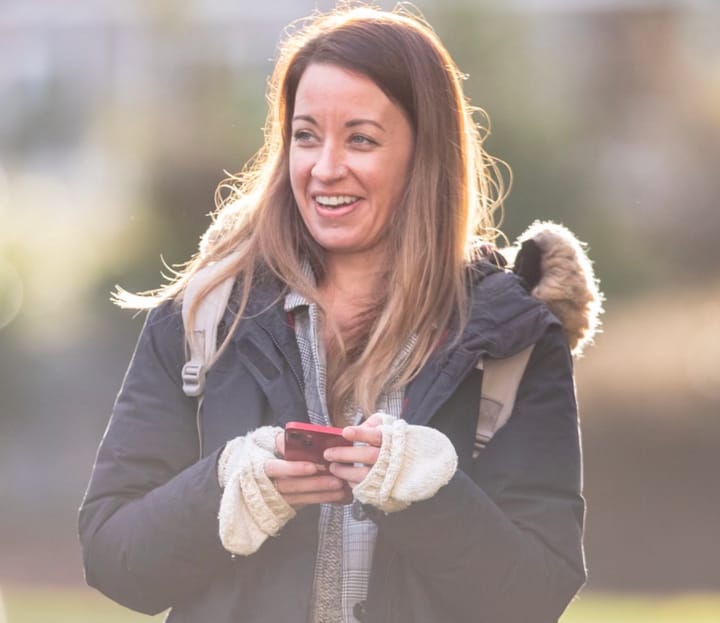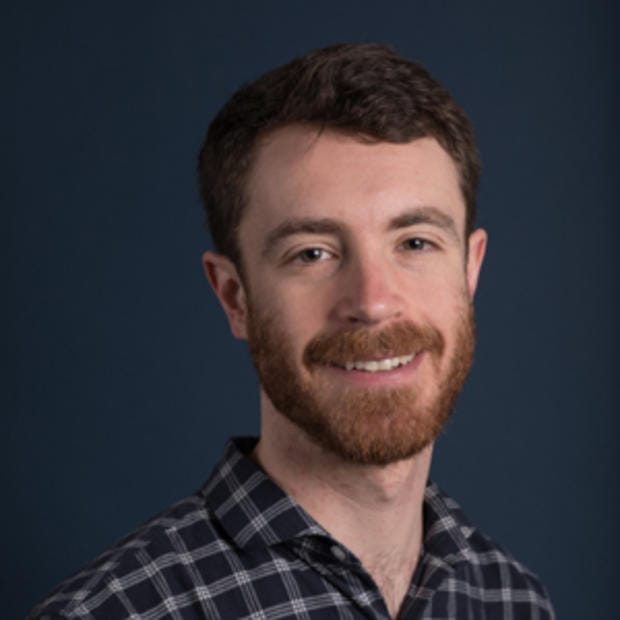

Week in Review: April 10, 2026 - with Erica Barnett
Crystal Fincher and Erica Barnett break down the news of the week
On this week-in-review, Crystal Fincher and Erica Barnett discuss:
📜 Accountability law enacted for sheriffs
⚔️ Court battle starts over millionaires’ tax
🏛️ Wilson town halls on shelter proposal and surveillance
👮 Cops assigned to Magnuson
↔️ Opposing views at Comp Plan hearings
About the Guest
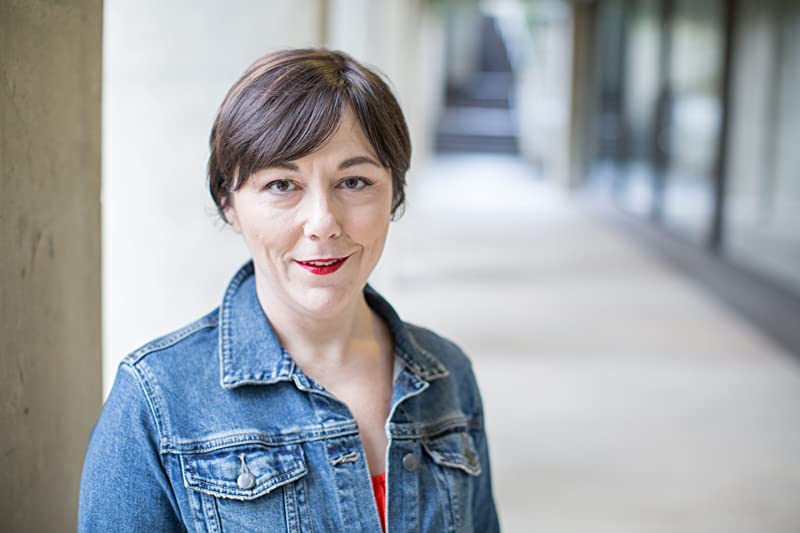
Erica Barnett
Erica Barnett is a Seattle political reporter, editor of PubliCola, and co-host of the Seattle Nice podcast.
Find Erica Barnett on Bluesky at @ericacbarnett and on PubliCola.com.
Resources
“Ferguson signs bill that could oust decertified sheriffs. Here’s how it works” by Caitlyn Freeman from The Seattle Times
“Sheriffs bristle at WA bill that would make ousting them simpler” by Caitlyn Freeman from The Seattle Times
“Court battle set to begin over WA’s new income tax” by Jerry Cornfield from Washington State Standard
“SPD Dedicates Three Officers to Magnuson Park, Citing Success with "Disorder" and Property Crimes During Pilot” by Erica C. Barnett from PubliCola
“Seattle Council Hears from Renters Who Want Quality of Life and Homeowners Who Want to Keep Neighborhoods to Themselves” by Erica C. Barnett from PubliCola
Find stories that Crystal is reading here
Listen on your favorite podcast app to all our episodes here
Podcast Transcript
[00:00:50] Crystal Fincher: Well, hey - welcome back to Hacks & Wonks. I'm your host, Crystal Fincher. On this show, we talk with policy wonks and political hacks to gather insight into local politics and policy in Washington state, through the lens of those doing the work with behind-the-scenes perspectives on what's happening, why it's happening, and what you can do about it.
Today, we're continuing our Friday week-in-review shows - after a little bit of a break - where we review the news of the week with a co-host. Welcome back to the program, friend of the show and today's co-host: Seattle political reporter, editor of PubliCola and co-host of the Seattle Nice podcast, Erica Barnett.
[00:01:42] Erica Barnett: Hello, it's great to be here.
[00:01:44] Crystal Fincher: Great to have you back. Well, I want to start today talking about Governor Ferguson signing a bill that has proven to be controversial with some law enforcement - with some sheriffs - that could potentially oust sheriffs who have been decertified. What's happening and what are their concerns surrounding this?
[00:02:05] Erica Barnett: I mean, it's a somewhat arcane aspect, I think, of being a cop - that people may not know about - but they have to be certified by an organization at the state level called the Criminal Justice Training Commission. And they can be decertified for all kinds of reasons, up to and including misconduct. And this law basically says you have to be certified - if you're decertified, you can't be the sheriff of a county. There's also some other rules around being a sheriff - like being in law enforcement for at least five years, being at least, I think, 25 years old. And so that's the law of the land now. And there are some sheriffs that are very angry about this - mostly in eastern Washington. And, you know, they're basically arguing that they should not have to follow these rules, that it is an overreach of the government into local governance. And, you know, essentially that it's also unclear how this would be - not enforced, but enacted - because it's still a little vague about who would become the sheriff if a sheriff was ousted because they couldn't comply with these rules or because they got decertified because of some problem. And it's pretty rare to get decertified for a sheriff, so this would probably apply only rarely - although they argue that this could become a political thing where they get decertified for political reasons, which I think is a stretch.
[00:03:30] Crystal Fincher: It does sound like a stretch. The mechanisms by which this would happen are numerous. There are a number of levels to the review, the findings, appeals that would happen for this to even you be on the table. And I think I heard them talk about one of the commissions involved with this and its composition being something that concerned them. What were they saying about that?
[00:03:56] Erica Barnett: Yeah, as I understand it, they were saying that there is a 3-2 majority of non-law enforcement people on the CJTC and that that would result in some kind of bias against them. The reporting on this that I have read, has basically said that this has never been a problem in the past. When they have chosen to decertify sheriffs in the past, it's generally, or it has entirely been 5-0 decisions. And, you know, I mean, it is pretty hard to get decertified as a law enforcement officer. It's much easier to get placed on, for example, a Brady list where you can't testify in court because of a history of dishonesty. But the CJTC does not decertify people very often, and it is most often for cases of grave misconduct. So, when I say it's a stretch, I mean, what you pointed out is part of that. It's this sort of conspiratorial thinking that people are going to be out to get them and decertify them unfairly when there has been no history of this and no record of this. And I would argue kind of the contrary. I mean, there's plenty of cops that don't get decertified, even though they commit grave misconduct. Here in Seattle - Daniel Auderer, the infamous cop who was caught on tape laughing at the death of a pedestrian due to a cop driving 75 miles an hour - he has not been decertified, even though he had a case before the CJTC. So it's usually in pretty extreme examples.
[00:05:21] Crystal Fincher: It does seem to be so.
[00:05:23] Erica Barnett: Now he was fired, I should say. So that also kind of preempted that process. But that case was hanging for a long time.
[00:05:30] Crystal Fincher: Yeah, someone who's been a vocal opponent - certainly outspoken about this - has been Pierce County Sheriff Keith Swank, who has made several inflammatory statements before, has been involved in some contentious court battles about his authority or lack thereof. He currently has a complaint against him that hasn't made its way through the process yet. And he was saying that although he sides with those people who are concerned about this, that he would be essentially happy to be a test case for this. Saying that he doesn't need the job, he was a retired cop from before. And that - Hey, he'll see what the process is. He'll be happy to go through it and see what this is. So we'll see what this shapes up to be. But it certainly seems to be an accountability measure that a lot of people have been calling for and that seems to have been past due.
Now, I also want to talk today about a court battle that is set to begin over Washington's new income tax - the millionaires' tax. What is happening here?
[00:06:40] Erica Barnett: Yeah, so the long-awaited battle over the income tax, which just passed in this most recent legislative session, has arrived. And essentially, the battle is over whether income constitutes property or whether it constitutes another thing. And if it is property, as a court essentially held back in 1932, so almost 100 years ago - I'm not a lawyer, so I'm going to get things wrong about this, just so your listeners know. At a very high level, though, the argument on the anti-income tax side is that income is property and property has to be taxed uniformly. And that any kind of progressive income tax, meaning one that applies at different rates to different people, is unconstitutional. And so former Attorney General Rob McKenna is one of the folks arguing and leading the charge on that case. And it's being filed in Klickitat County, which is an interesting choice - probably a more conservative judicial system over there, I'm guessing, than in, for example, King County in Seattle. So that's going to make its way forward. It's probably going to make it to the state Supreme Court. And what they were saying in a press conference on Thursday morning was that it could be next year before it gets to the Supreme Court as it works its way through the lower court system.
[00:08:02] Crystal Fincher: Yeah, certainly a court battle here, in addition to the battle that's likely going to be on the ballot this November - assuming or given they collect enough signatures to put it on there. And, you know, it's really interesting. I think, as you said, this court decision that effectively outlawed an income tax is almost 100 years old. You have a number of proponents of this saying - Look, with the composition of the court now, modern law, modern situations, we expect this to be different. We heard some of those same concerns or similar concerns with court cases around, like the capital gains tax and other things that do seem to have gone in the pro-tax direction - which is certainly giving people some confidence and some wind at their backs when they are moving into this. It looks like this will be argued by Attorney General Nick Brown for the arguments for the state. And it seems like this is something that they have seen on the horizon, that they have time to prepare to do. So we'll see how this pans out. But certainly, this is going to be a battle that is fought on multiple fronts. We have seen a lengthy battle to get it through the Legislature, and now we have the battle in the court system kicking off today.
Now, I want to turn next to news of a big meeting at City Hall last night. What happened and what made it different than some prior meetings that we've seen under previous administrations?
[00:09:38] Erica Barnett: Yeah, there was a big sort of town hall-style event and panel last night about Mayor Katie Wilson's shelter proposal. She wants to add 4,000 units of shelter during her first term, or during her term. And of those, 500 before or around the World Cup in June, which is an incredibly ambitious proposal. So last night she had a meeting about this proposal and it was held in the Bertha Knight Landes room at City Hall and the room was packed. I had trouble finding a seat. And it was - I don't know, it was just very interesting the way that she chose to do this. Now, she is promoting her plan and she had a panel of supporters, which she moderated as the mayor - which is a thing I don't think I've ever seen before. So there weren't quotes coming out of the mayor's mouth for reporters to write down and quote her on because she was asking the questions on this panel. And sort of in between various statements from city officials and explanations and PowerPoint presentations and such - prior to this panel, people were invited to come up and add stickers to a map showing where they live or work or play. And to say, like, this is where I would want to see a shelter. And then they were asked to write index cards that sort of were letters to people who would be living potentially at a shelter in their neighborhood and what would they like to say to them. It was just very interactive in a way that had it been, you know, not to pick on Bruce Harrell, so I'll say any prior mayor, pretty much - it would have been a press conference that the media would be invited to. And the three people who sat on the panel and did most of the talking last night would say their little two minutes. And then everybody would ask the mayor questions and then it would be over. But this was a public event where the public got a chance to ask questions and give feedback and talk amongst themselves. I don't know - it was pretty cool. Like, I've just never been to a City Hall meeting that's quite like this. Does it mean that she'll get more support for her shelter plan? I don't know. I mean, I was sitting next to a bunch of folks from We Heart Seattle, which is a pretty controversial encampment cleanup/sweeps group. And they were not clapping a whole lot, but they did seem to be listening. Maybe not Andrea Suarez so much - the leader of that group. But it was a mixed bunch of people, it wasn't a Katie Wilson rally by any stretch.
[00:12:05] Crystal Fincher: Now, there was also a meeting on surveillance with Mayor Wilson. What happened here?
[00:12:11] Erica Barnett: Yeah, so your listeners probably know that there was a town hall on surveillance a couple weeks ago - an in-person town hall - and it kind of, you know, I mean, I was there. My impression was that there was an organized effort to get people out who opposed surveillance and wanted to sort of yell at the mayor about it. And so the question-and-answer portion was pretty unproductive because it was just people - I mean, unproductive in the sense that there wasn't a lot of conversation. It was just people saying - You're wrong for doing this. It's going to be a disaster. We trusted you and now we're mad.
This meeting this week was an online town hall that did attract a lot fewer people, but there was a real discussion, I think, between opponents of surveillance and the mayor. I would say they're at an impasse because I think Mayor Wilson is just dead set for adding surveillance cameras, at least the first ones that were approved by the City Council under Mayor Bruce Harrell. But, I mean, it's - and both sides seemed like they were pretty resigned. But it was a more productive kind of conversation, I thought, in that people seemed to be listening to each other instead of just screaming. I went to a watch party for it at Stoup on Capitol Hill. It was pretty sparsely attended, but the Zoom call had more people on it. And it was, again, just like the mayor making herself available in a way that I think is unprecedented in the City's recent memory. Again, I cannot imagine Bruce Harrell sitting down in an open forum where people can't be cut off and just listening to complaints and questions from dozens of people who are adamantly opposed to something the City wants to do.
[00:13:59] Crystal Fincher: Yeah, absolutely. Now, one of the big issues - and I think part of what's behind some of the passionate opposition to this, besides concerns for civil rights and safety - are that a lot of supporters of Katie Wilson, or some supporters of Katie Wilson, feel that she made a campaign promise to certainly limit, if not reduce, the amount of surveillance, particularly with these cameras. Was that a campaign promise? And what does she say about that?
[00:14:33] Erica Barnett: Well, I would say it was not a campaign promise, but it was heavily implied. What she says about it is she never promised this, but that she promised to put real scrutiny on the surveillance cameras. And that since she's gathered more information - information that I think is coming from one side, and a lot of it from the police, who have an interest in surveillance cameras, they always want to have more of a footprint in communities. But in any case, she said that this information has made her inclined to expand surveillance to include all the stuff that the City Council approved, including cameras in the Central District, on Capitol Hill, around the Stadium District. And so, was it a campaign promise? No. But I think that people were pretty sure they knew where she stood based on what she said. I mean, that's what I thought, too. I didn't think that she would be quite so surveillance friendly. So, yeah, I mean, people are disappointed and pissed off and they have a right to be.
[00:15:32] Crystal Fincher: Yeah, that's the impression I get also. You know, a big concern here is just - even with good intentions, even with founded concerns, how do you limit the access of unauthorized entities to this camera footage. You know, some of the camera footage is available via public disclosure requests. Some of this can be used by authorized entities on behalf of unauthorized entities - and that happening there. I think one of the big questions is - given the amount of risk for the amount of people that are at risk in Seattle, is it worth it to put that many people in danger given the challenges that people are having with truly protecting this information and keeping it away from entities that have been causing harm, while still keeping people safe?
[00:16:27] Erica Barnett: I will say on that point - one thing that the Wilson administration pushes back on, and I think this is a good point - is that there are SDOT cameras all over the city that bad actors could also access. And so if you're talking about ICE, if you're talking about like anti-trans groups from out of state, anti-abortion groups, stalkers - there are cameras that already exist, unfortunately, that could be accessed in the exact same ways. And, you know, as I've said before, like, for me, the reason not to give police surveillance cameras - I don't like any of the surveillance, to be clear. Like, I think we should get rid of all of it. But given our current reality, police themselves need to be held to a higher standard and they need to prove that they essentially can use this information in a way that is not biased. And they need to demonstrate that by not showing bias against certain racial groups, by not using excessive force at protests - just all the kind of good behaviors that we say we want in police - and that part of the accountability ordinance that was passed in 2017, and that they have sort of consistently failed to deliver on. And so i think if they can't deliver on all that, then they don't get to have surveillance cameras. That's my personal opinion. Outside, you know, all the other concerns right now with ICE and the Trump administration driving people to Seattle to seek reproductive care. So, yeah, it's a very complex issue.
[00:18:03] Crystal Fincher: I think that's valid. And I think it's valid for people who oppose it and are saying - out of all the things that we could be spending money on, out of all of the areas that we could be investing our resources, this is not an area proven to actually make people safer and to reduce harm being committed against people. We know that there are things that have proven to be more effective. Why are we not investing in those, particularly in the areas with the highest level of crime - particularly violent crime - in the city?
And that leads to another conversation that you wrote about where SPD has dedicated three officers to Magnuson Park, citing success with disorder, while people question - Why here? This doesn't seem to be one of the hotspots in the city, yet it's getting, seems like an outsized amount of investment. So what is happening here? What motivated this? And why are they saying it's necessary?
[00:19:01] Erica Barnett: Yeah, I mean, I think underneath - the question of what's really happening here is that there have been a ton of complaints over a very long period of time from people who live in the Magnuson Park area - Sand Point, View Ridge, those neighborhoods, but particularly right around Magnuson Park - that there's a lot of noise, that there's street racing, that there's loud parties in the summer. And Maritza Rivera, the City Councilmember from that district, has really elevated those complaints and concerns and made them a big issue. And a lot of times that is all it takes to sort of get attention on a particular area. I mean, Debora Juarez was really good at doing this for her issues up in District 5. Maritza Rivera represents Northeast Seattle, some of the most affluent neighborhoods in the city. And yeah, I think that there's just a lot of politics going on behind the scenes.
And so the police are saying that they've seen success. I have not seen numbers that really definitively show that. The numbers that they provided are pretty unconvincing. I mean, there could be a vibes-based success in that they feel like they are doing foot patrols and bike patrols - and that's building community, and they're getting to know people who live in the park because there's hundreds of units of low-income housing in the park. But I think ultimately it comes down to politics. If you were actually looking at crime, you would be perhaps putting people at Rainier and Henderson or 3rd and Pike. But Shon Barnes, the police chief, said that that is not the only consideration that they are taking into account when deciding where to stand up these new kind of mini foot patrols in neighborhoods.
[00:20:43] Crystal Fincher: And what they've talked about here in Magnuson Park, certainly in press conferences, is that they are focusing on what people would call community oriented policing - getting to know the people there, becoming part of the neighborhood. Do you know if people on the ground feel like that's happening and what the reaction has been to that?
[00:21:03] Erica Barnett: Now, I don't know the answer to that. This is a story that I've just covered a couple of times as it has been announced and then expanded. I will say, I mean, two cops in a three mile radius who are sometimes on foot, sometimes on bikes, but also serving the North Precinct - I mean, if they get called, they have to go - so they're not exclusively doing this. And so I would say that is a small investment. And I would not expect a couple of officers in that big of an area to get to know everybody on the ground.
And one interesting thing that came out of this press conference was somebody asked a question that was clearly about Charleena Lyles, who was shot and killed by police just a few hundred feet from where the press conference took place in 2017. And Barnes seemed confused by the reference to officer-involved shootings, as that reporter put it, and then sort of said - Well, you know, if there's somebody in mental health crisis, this will help because they'll know the person. But yeah, I don't know, man. That seems like a leap to say that we're not going to shoot people or respond poorly to people who are in a mental health crisis - given that the whole idea of the CARE team, which is not really able to respond to mental health crisis calls, was to not have cops responding to these at all. And so during the press conference, the officer who was leading this team or a part of this team was saying - We were able to respond to a mental health crisis call the other day in three minutes. And my response to that is - Is that a good thing? Is it a good thing that cops are responding instantly to the scene of a call that probably should be a matter for social workers? So anyway, bit of a tangent there, but I'm skeptical.
[00:22:50] Crystal Fincher: I mean, very relevant tangent, given that the City has a CARE team that is supported and that people want expanded. It's one of the most popular things when you ask voters in the city - What do they want? They want more CARE team coverage for mental health crises and street disorder. So it's very curious that didn't seem to be part of this equation at all. Yet again, we'll continue to follow that.
I also want to talk about something else you wrote about this week, with the Seattle City Council hearing from renters who want quality of life and homeowners who want to keep their neighborhoods to themselves. What did you hear in this meeting?
[00:23:31] Erica Barnett: Well, as your listeners probably know - at the Seattle City Council, they're considering the later phases of the Comprehensive Plan, which is basically the growth plan for housing in Seattle for the next 10 years. And so this is coming up in the Land Use and Comprehensive Plan committees a lot - people showing up to either say, We want more apartments, we're tired as renters of having to live entirely on big, busy arterial roads and streets and highways. And on the other hand, people who own houses - generally speaking - saying, We don't want apartments in our neighborhoods because they will destroy trees, ruin our quality of life, etc, etc. So a hearing like that took place all day, essentially, on Monday. And we heard from people who made tree-based arguments, primarily. I mean, apartments were also blamed for killing orcas and salmon and 30% of bird species, I think, in the United States. And on the other hand, renters who are just, like I said, fed up with not having options.
[00:24:42] Crystal Fincher: And when we look at where this has gone, we've heard a lot of people characterize renters as those maybe fresh out of college, very, very young, just starting out. But that's not the reality here in Seattle. There are people of all ages there. And when you look at polling and voting trends - kind of, if you're under 50 in this city, you are feeling the squeeze and understand the need for more housing options and more places to make housing more affordable for more people.
[00:25:17] Erica Barnett: Yeah, I mean, it's interesting - because I like looking up stuff like this and because I'm petty, I did look up the property values of some of these folks that are very much in the We've Got to Save the Trees camp. And generally speaking, they bought their houses when they were cheap compared to today - in the anywhere from, let's say, the 60s to the early 2000s - and have seen massively appreciating equity in these properties, which then they can borrow against. If they sell their houses, they'll make a windfall. And so I think that the most generous interpretation of their perspective is that they just simply do not understand how freaking hard it is for people whose rent increases every single year, who have to move all the time. And literally, I was just thinking of all the places I've rented - and I never really thought about it. Like I sort of would joke about how I can't sleep without traffic noise now because I live in a quiet place. But I lived on three of the busiest arterials in the entire city and didn't really think about, Well, why is that? Until frankly, advocates started pointing this out. It's environmentally damaging. It's not good for you to live with tire dust coming in your windows that you have to open because you don't have air conditioning in your apartment. And the noise is not good. And it's just safer to live in a neighborhood where the streets are quieter and there's not cars rushing through. So I just, I don't know why homeowners can't find those arguments compelling and can't see renters as essentially being the same as them. But there still is this huge divide in the city that shows up at every single meeting about this kind of stuff.
[00:27:07] Crystal Fincher: Yeah, there really is. And it's always worth remembering that there are very real life and health concerns attached to this. Rates of childhood asthma are higher for kids who live near traffic on busy arterials. The differences in life expectancies between neighborhoods within Seattle - those being close to I-5, close to major arterials, under flight paths, are much lower than those that aren't. It's an important issue for the health and welfare and affordability of people in Seattle that so many people are making a stand and demanding that more be done by the City Council - I think we heard a lot of that reflected in that meeting.
And with that, we thank you for listening to Hacks & Wonks on this Friday, April 9th, 2026. The producer of Hacks & Wonks is Shannon Cheng. Our insightful co-host today was Seattle political reporter, editor of PubliCola, and co-host of the Seattle Nice podcast, Erica Barnett. You can find Erica on Bluesky @EricaCBarnett and on PubliCola.com. You can follow Hacks & Wonks on Bluesky at @HacksAndWonks. And you can find me on Bluesky @finchfrii, that's F-I-N-C-H-F-R-I-I. You can catch Hacks & Wonks on Apple Podcasts, Spotify, or wherever else you get your podcasts - just type "Hacks and Wonks" into the search bar. Be sure to subscribe to the podcast to get the full versions of our Friday week-in-review shows and our Tuesday topical show delivered to your podcast feed. If you like us, please leave a review wherever you listen. You can also get a full transcript of this episode and links to the resources referenced in the show at officialhacksandwonks.com.
Thanks for tuning in - we'll talk to you next time.