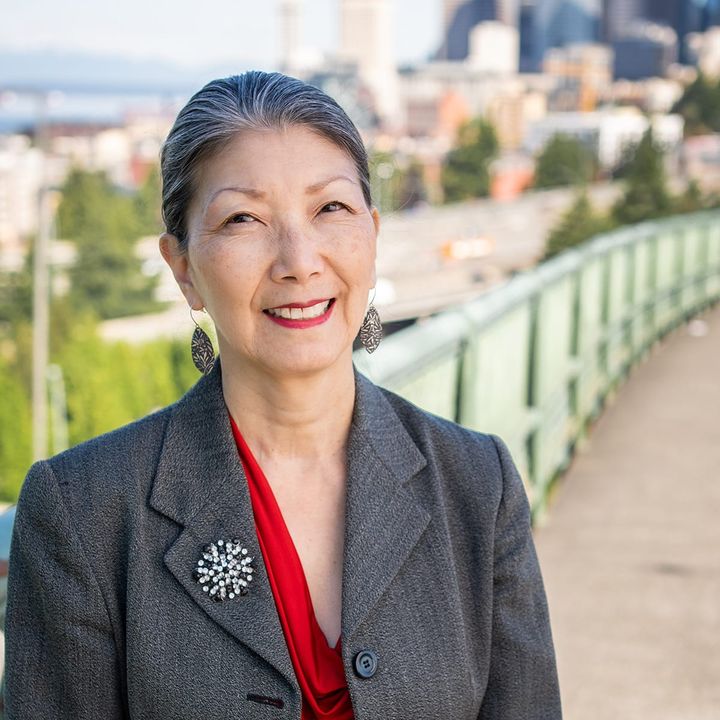

Rebecca Saldaña Makes Her Case for King County Council
Rebecca Saldaña leaving the State Senate to run for the open King County Council District 2 seat. She spoke with Hacks & Wonks about her priorities, including addressing the county's budget deficit, homelessness, public safety, transit equity, and environmental justice.
The King County Council rarely gets the public attention it deserves, but the decisions made there shape daily life across the region whether residents know it or not.
The nine-member body serves as the legislative branch of county government for more than 2.3 million people across 39 cities and a vast swath of unincorporated land. Councilmembers set the county's biennial budget, a multi-billion dollar spending plan that funds public health, Metro transit, the criminal legal system, parks, and housing programs. They exercise budgetary and policy oversight of the King County Sheriff's Office and the jail system, set funding for the prosecuting attorney and public defender services, serve as key funders and board members for the King County Regional Homelessness Authority, and hold seats on the Sound Transit Board. For the roughly quarter-million people living in unincorporated King County, the Council also functions as their local municipal government entirely. In short, nearly every aspect of daily life in the region runs through this body in one way or another.
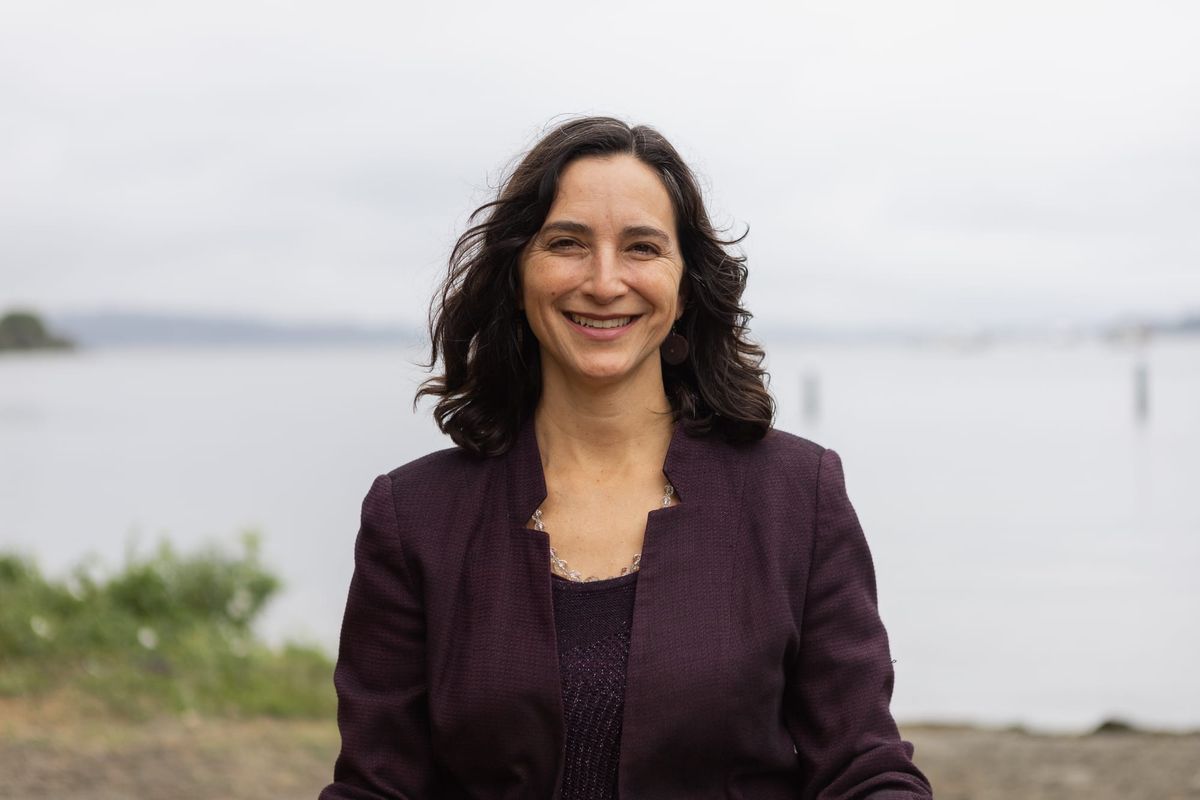
Rebecca Saldaña wants a seat at that table. Currently a state senator from the 37th Legislative District, she is stepping down from Olympia to run for King County Council District 2. The district stretches from the University District, Laurelhurst, Ravenna, and Eastlake in the north, through Capitol Hill and the Central District, and south through South Seattle to Skyway and the Allentown neighborhood of Tukwila. Skyway, which sits on unincorporated land between Seattle and Renton, is one of the areas where the County Council functions as the direct local government for residents. Also running for the District 2 open seat is Port of Seattle Commissioner Toshiko Hasegawa, in what is shaping up to be one of the more competitive races on the 2026 ballot.
In an extended interview on the Hacks & Wonks podcast with host Crystal Fincher, Saldaña laid out her positions on the most pressing issues facing King County, from a structural budget deficit and the homelessness crisis to public safety, transit, environmental justice, and federal threats to county funding.
Why Leave Olympia for the County Council?
Saldaña frames her decision to leave the state legislature after a decade as a move toward greater urgency and proximity to the communities she wants to serve.
"As an organizer, this is the longest job I've ever had - 10 years," she said. "And I feel a real urgency to come and be closer to community at this moment, with facing the second year of a second term of Trump and recognizing that the things that we can change at the local level are really what makes people's lives better."
She points to her legislative record, including paid family and medical leave, rent stabilization, a capital gains tax, and expanded protections for domestic workers, as evidence she can translate organizing into policy wins. But she says she is also drawn to the county because of deep personal experience with the criminal legal system.
"When I was in middle school, one of my childhood friends got involved in gangs and running on the streets," she said. "The violence he got involved with took the life of one of our neighbors. And at age 14, he was locked up and sentenced to life without parole. It took 20 years for the Supreme Court to rule that his sentence was unconstitutional and that he was eligible to be released. And now he graduated from law school and he's the Ombuds of the Department of Corrections."
That experience, she said, drives her commitment to criminal legal reform and behavioral health investment at the county level.
The Budget Crisis: A Structural Deficit and Hard Choices
King County faces a continuing structural deficit; last year's budget shortfall was approximately $150 million. Counties in Washington state have more limited taxing authority than cities, and the state legislature has so far failed to provide a meaningful fix. Any incoming councilmember will face immediate and painful budget decisions.
Saldaña argues her decade of relationships in Olympia is a direct asset. "I have 10 years and have built really strong relationships at the Legislature," she said, adding that she hopes to help the new county executive "come up with a better strategy about how we engage the Legislature in coming up with solutions."
In the short term, she opposes top-down austerity measures. She specifically criticized the idea of forcing county staff to return to downtown offices, saying it "is not actually going to save us dollars and doesn't actually address transportation challenges that we have."
Instead, she would convene a roundtable of directors and frontline staff to apply an equity lens to budget decisions, scrutinize the county's use of outside contractors, and look at diverting people away from expensive jail beds. "We're looking at deaths in our jails and the high cost of continuing to put people in situations that make them worse," she said. "That is a place where we could definitely be saving dollars."
She does not support reducing the county's overall workforce or privatizing county services, and she believes the county relies too heavily on outside contractors. She also said she does not believe King County government is currently sufficiently transparent with the public.
She flagged wage theft enforcement as a potential revenue source: "Looking at fines and ways that we're actually bringing revenues into our county might be also a place where we could be looking."
Federal Threats to County Funding: Holding the Line, With Limits
The Trump administration has escalated threats to withhold federal funding from counties and cities that decline to cooperate with immigration enforcement or that continue offering services to immigrants, transgender people, and other communities targeted by federal policy. For King County, those dollars touch everything from public health to transportation.
Saldaña says the first line of defense is legal. "Making sure our attorney general and our local prosecuting attorney have all the authority they need to be able to sue our federal government is really important in this moment," she said.
She also acknowledged the difficult tradeoffs that can emerge. During the most recent state budget session, she said, the legislature adjusted how certain health care services are structured and funded, not to reduce who is covered, but to reduce the data vulnerability of those populations. "The way that we had structured our health care was actually making the data more vulnerable for the populations that we want to keep covered under health care," she said. "So I do think there are some short-term compromises that are not ideal in terms of what we know the best kind of delivery of service is."
The deciding factor for her is whether people can still actually access care. "It doesn't help if we keep it, but then people are too afraid to actually access it," she said.
On cooperation with federal immigration authorities, she was unambiguous: the county should not share any data with ICE or other federal authorities.
Gender-Affirming Care and LGBTQ+ Protections
Saldaña supports King County continuing to fund and provide gender-affirming care, and she supports the county explicitly codifying protections for gender identity in public accommodations, including county-run athletic facilities and sports programs. She views both as foundational issues of civil rights and public health, not as policy positions subject to federal pressure.
Housing Affordability: Land, Infrastructure, and Pre-Development
Saldaña says the county has underutilized tools to bring down the cost of housing, particularly in unincorporated areas and in partnership with faith communities and tribes.
She advocates for a systematic look at county-owned land and land held by churches and religious organizations to identify sites that can be leveraged for housing quickly. She also points to water and sewer infrastructure as a hidden driver of costs, arguing that the county could reduce per-project expenses by doing upfront neighborhood-level planning so that individual developments do not each have to solve the same infrastructure problems from scratch. "So much of the cost is upfront - every single plot having to go through certain issues, having to go through their own sewer and water and hookups," she said. "I think there's a lot that we can do to streamline."
She also proposed that vacant lots sitting idle while developers wait years for construction to become financially viable should be put to immediate use. "For the three to five years that people are putting their money together and they have land, that should have tiny homes on," she said. "So how we, as a region, are looking at things at a scale - at scale to be able to make sure that we're putting housing in everywhere."
On rental housing, she said the county should explore bulk-leasing entire vacant apartment buildings, including vacant hotels, and pairing them with wraparound services to create functional shelter and stable housing. She supports King County playing a more active role in regulating short-term rentals like Airbnb, which she views as a contributor to reduced rental housing stock and affordability pressures.
She supports the rent stabilization bill passed in the recent legislative session, legislation she was a prime sponsor of years before it finally passed, and said she supports exploring stricter rent stabilization measures at the county level for unincorporated areas.
Homelessness: Crisis Care Centers and Behavioral Health
Saldaña is direct that the county's homelessness response, despite significant investment including in the King County Regional Homelessness Authority, has not kept pace with the scale of the crisis, and that the primary gap is in behavioral health infrastructure.
"I would be an unapologetic booster for building out the crisis care centers that we need in every part, in every neighborhood, throughout our county as quickly as possible," she said. "We needed these yesterday."
After getting trained in how to administer Narcan at an East African Community Services Youth Summit, she said community members helped her understand the physical reality of fentanyl addiction. "Once you're in, it is so hard to get out," she said. "You have a high maybe for a month, is what he said. But after that, it's just you're in constant pain. It's like having your whole body with broken glass and being hit by a train and all you're trying to do is ease that pain for a quick minute."
Her argument is that crisis care centers available around the clock are the necessary precondition for people to accept help at all. "If a person has a moment of wanting relief and getting out of that trap at two in the morning, they should have a place to go," she said. "What we don't have is enough of those places right now. And that is what is going to allow people to get the help they need when they need it, so that they can have enough clarity in their mind to want to accept shelter."
Public Safety: Prevention, Not Just Policing
Saldaña rejects the premise that a larger visible law enforcement presence is the most effective way to reduce crime. Her definition of public safety is expansive.
"Real public safety is that everyone feels that they can live and have opportunity in their communities," she said. "It means having a safe place to live. It means having meaningful opportunities to contribute to your community, whether that's in your workplace or in your commutes. It is not just responding to crime, but it means preventing harm, supporting people in crisis, strengthening our communities, ensuring that our public safety systems are fair, effective, and accountable."
She does not believe the King County Sheriff's Office budget should be increased in the next biennial cycle. She says the size of the office is currently about right, and she supports significant investment in non-deputy crisis response teams, diversion programs, and restorative justice instead, particularly for young people.
On community violence intervention programs, she committed not just to maintaining funding but to ensuring the money gets deployed. "I commit to making sure that we have all those funds there and that more of it gets out the door," she said.
On gun violence, she highlighted the work of the Regional Office of Gun Violence Prevention following a recent tragedy in Rainier Beach, calling for scaling that model across the county. She called for investments in youth employment, paid internships, and after-school programs as upstream prevention. "Expanding diversion and restorative justice programs for our young people, investing in our culturally competent prevention and intervention that are led by our community-based organizations" are, she said, how you disrupt the school-to-prison pipeline.
She also called for early identification and treatment of behavioral health conditions and learning disabilities, framed not as deficit-fixing but as recognizing "the brilliance of every one of our children."
On surveillance technology, she supports banning the county's use of facial recognition, noting it has been banned since 2021, and supports only limited, traffic-safety uses of automated license plate readers, opposing any broader deployment.
She supports reducing the county's current reliance on jail beds for nonviolent offenses and prioritizing restorative justice programs over traditional incarceration for nonviolent offenders.
Public Defense: A Constitutional Crisis in the Budget
The Washington State Supreme Court has mandated a 10-year phase-in of new public defender caseload standards that will effectively triple the cost of indigent defense in King County, at a time when the county is already running a structural deficit.
Saldaña committed to voting to significantly increase funding for public defender services, calling it a fundamental civil right. She acknowledged it will not be easy to fund, but argued that upstream prevention reduces downstream cost. "The more that we can have people in diversion and the more that we're investing in our youth" means fewer people cycling through the criminal legal system requiring public defenders, she said. But she was candid that prevention alone is not a complete answer. "It is not going to be easy. And I think that's part of my desire to come to the county right now is that I know it won't be easy."
Transit: Sound Transit Accountability and Metro Service
As a county councilmember, Saldaña would have control over King County Metro and influence at Sound Transit, the regional agency responsible for the light rail expansion voters approved in 2016.
She is frustrated with how Sound Transit has managed public expectations and community equity in the current financial crunch. "It seems like it's now all about who can scream the loudest in terms of whose services will stay on time and whose are going to be pushed out, as opposed to actually how do we build a system that saves lives on our right of ways, that saves time, and that makes us all more connected to opportunity and health," she said.
On executive compensation, she was pointed: "Sound Transit top employees, I think, should all consider taking severe salary cuts to put that money into actually engaging with our regional communities to look at how do we keep the vision and keep building for the light rail."
She also argued for a more systemic, equity-focused approach to regional transit planning that includes DART services, community connectors, and buses, rather than centering the conversation exclusively on light rail. She recalled organizing with "the grandmas of Rainier Beach" and the emerging Transit Riders Union during the 2008 recession to fight proposed bus stop cuts, which ultimately resulted in the creation of the Route 50, the first east-west bus connection in that part of the city. "It's these kinds of connections that actually will make it a safer and robust service," she said.
She said she is open to tolling on King County roads beyond existing toll lanes to fund transportation projects, supports prioritizing pedestrian and cycling infrastructure over new road construction, and supports using municipal bonding and infrastructure bank financing to help ensure the full ST3 plan is delivered as voters approved.
Environmental Justice: Bringing the HEAL Act to the County
Life expectancy in some parts of King County is up to 10 years shorter than in others, a gap driven largely by pollution, proximity to highways, and decades of disinvestment in communities of color.
Saldaña says her answer is to bring the framework she helped pass at the state level, the HEAL Act, which requires the seven largest state environmental agencies to embed environmental justice principles into their strategies and investments, to county government.
"As a County Councilmember, I would be working with communities and our agencies to incorporate real outcomes and put environmental justice into our county statutes," she said.
The Endorsement Question: Balancing Principle and Pragmatism
In a pointed question submitted by her opponent Toshiko Hasegawa, Saldaña was asked to square her 2016 op-ed calling for more women of color in politics with her endorsement of incumbent State Senator Jamie Pedersen, a white man, over Hannah Sabio-Howell, a woman of color, in the 43rd District Senate race.
Saldaña's answer: she is endorsing both.
"I actually am endorsing both Jamie Pedersen and Hannah Sabio-Howell," she said. She explained that she evaluates all candidates on a set of questions about their plan to win and their accountability to working communities, and that both cleared that bar.
She credited Pedersen specifically for legislative accomplishments they achieved together. "It wasn't until we had both Noel Frame and Jamie Pedersen in leadership in the Senate that we were able to get the wealth tax voted on last year. And then finally, the Millionaires' Tax, which is our first income tax - a progressive revenue that is going to make the wealthiest among us pay."
Of Sabio-Howell, she said: "I've known forever as well. She was a staffer for me and others in the Senate. She's been super savvy, and I'm so excited that she's been working at Working Washington to help us build the coalition of domestic workers to be able to get that legislation passed."
What Her Donors Signal About Her
Asked what her donor list and endorsements signal about who she is, Saldaña said she hopes they reflect a record of coalition-building across labor, racial justice, and youth organizations.
"I'm not wealthy," she said. "I rely on, you know, many different people to be able to show up because I don't have all the answers. But I do think that I've demonstrated that I'm willing to make sure that the voices most impacted and the people with frontline experience of doing the work are the ones that I center to and try to amplify their voices, elevate their leadership so that those are the policies that we actually get passed."
The Democratic primary for King County Council District 2 is scheduled for August 4, 2026.
About the Guest
Rebecca Saldaña
Rebecca is the daughter of a Mexican immigrant who worked as a farmworker before becoming a machinist at Boeing, and a mother who was a social worker. She grew up understanding both the challenges working families face and the power of community and unions to improve people’s lives. That foundation led her to become a union organizer, working alongside janitors and farmworkers to win better wages, safer workplaces, and dignity on the job.
In the State Senate, Rebecca has delivered real results. As Chair of the Senate Labor Committee, she has passed landmark legislation to raise standards for workers and expand opportunity, including the Domestic Workers Bill of Rights, stronger wage theft enforcement, unemployment insurance for striking workers, and one of the most progressive Paid Family & Medical Leave programs in the country. She has also led efforts to rebalance our upside-down tax code—helping pass the Capital Gains Tax and advancing the Millionaires Tax so the wealthiest pay their fair share.
Rebecca has been a leader on affordability, housing, and economic justice—championing major investments in affordable housing, advancing policies to allow more housing to be built in every community, and supporting community-led solutions like land trusts and equitable development. She has also fought for working families by expanding access to childcare, investing in behavioral health, and supporting pathways into union apprenticeships and family-wage careers.
On environmental justice, Rebecca helped pass landmark laws like the Climate Commitment Act and the HEAL Act, ensuring that communities most impacted by pollution—often low-income communities and communities of color—receive the investments they deserve.
Now, Rebecca is running for King County Council because the same challenges she has taken on in Olympia—rising costs, housing instability, inequity, and a system that too often puts corporations ahead of people—are being felt acutely at the local level.
On the County Council, Rebecca will continue her fight to lower costs, build more housing, strengthen public safety through prevention and care, and ensure public investments create good union jobs. She will work to make King County a place where working families can afford to live, where communities are safe and healthy, and where every person—no matter their background—has the opportunity to thrive.
Rebecca Saldaña has spent her life organizing, legislating, and delivering results. She knows how to take on a system that is rigged against working people—and win.
Resources
Podcast Transcript
[00:00:50] Crystal Fincher: This is Hacks & Wonks, where we talk politics and policy in Washington state and cover what's happening, why it's happening, and what you can do about it.
Today we're going to talk to a candidate for King County Council. King County is one of the largest counties in the country. Home to more than 2.3 million people across 39 cities and a vast swath of unincorporated land, the nine-member King County Council serves as the legislative branch of this government, balancing two distinct roles - acting as a regional authority for all residents and as the local municipal government for the quarter million people living in unincorporated areas. Councilmembers set the county's biennial budget, a multi-billion dollar budget that funds public health, the criminal legal system, Metro transit, parks, and housing programs. While the executive branch manages daily operations, the Council exercises budgetary and policy oversight of the King County Sheriff's Office and the jail system. They set the budget for the County's prosecuting attorney and establish policy and funding for public defender services, environmental programs, and emergency management, often serving as the critical link in implementing federal and state policy at the local level. They also serve as key funders and board members for the King County Regional Homelessness Authority. They confirm department heads and hold several seats on the Sound Transit Board. In short, the decisions made by the King County Council touch nearly every aspect of daily lives for residents across the region, whether they know it or not. To pull back the curtain on these decisions and how they'll shape the future of our neighborhoods, we're talking to the people running to represent you on the Council so we can get to know who they are and how they plan to navigate the challenges facing the county. Today, we're joined by Rebecca Saldaña, a state senator from the 37th Legislative District who is now running for King County Council District 2. Welcome!
[00:03:04] Rebecca Saldaña: Thank you so much for having me, Crystal.
[00:03:07] Crystal Fincher: Well, as you are probably aware, we start with a lightning round when we're interviewing candidates - of just very quick yes, no, one-, two-word answers. We fly through these. These are not meant to be huge thought provokers, long form answers. We can get to your detailed answers in just the regular Q&A portion, but we will get started with these questions now.
So, do you own or rent your residence?
[00:03:38] Rebecca Saldaña: Own.
[00:03:39] Crystal Fincher: Are you a landlord?
[00:03:41] Rebecca Saldaña: No.
[00:03:42] Crystal Fincher: Have you ever been a member of a union?
[00:03:45] Rebecca Saldaña: Yes.
[00:03:46] Crystal Fincher: Have you ever walked on a picket line?
[00:03:48] Rebecca Saldaña: Yes.
[00:03:49] Crystal Fincher: Have you ever crossed a picket line?
[00:03:52] Rebecca Saldaña: No way.
[00:03:54] Crystal Fincher: Is your campaign staff unionized?
[00:03:58] Rebecca Saldaña: Not right now.
[00:04:00] Crystal Fincher: If your campaign staff wants to unionize, will you voluntarily recognize their effort?
[00:04:06] Rebecca Saldaña: Yes.
[00:04:07] Crystal Fincher: What political party do you identify with?
[00:04:11] Rebecca Saldaña: Working Families. Democrat.
[00:04:14] Crystal Fincher: Have you used the library system in the past month?
[00:04:18] Rebecca Saldaña: Yes.
[00:04:19] Crystal Fincher: Have you or someone in your household ever relied on public assistance?
[00:04:26] Rebecca Saldaña: I don't think so.
[00:04:29] Crystal Fincher: Have you ever been stopped or questioned by police in Seattle?
[00:04:33] Rebecca Saldaña: Yes.
[00:04:35] Crystal Fincher: Have you ever worked in a retail job or a job where you had to rely on tips?
[00:04:39] Rebecca Saldaña: Yes.
[00:04:41] Crystal Fincher: Have you ever owned a business?
[00:04:44] Rebecca Saldaña: Yes.
[00:04:45] Crystal Fincher: Have you managed a team of 10 people or more?
[00:04:48] Rebecca Saldaña: Yes.
[00:04:50] Crystal Fincher: 100 or more?
[00:04:51] Rebecca Saldaña: No.
[00:04:53] Crystal Fincher: Have you ever reported someone's misconduct in your workplace?
[00:04:57] Rebecca Saldaña: Yes.
[00:04:58] Crystal Fincher: Have you ever fired someone?
[00:05:01] Rebecca Saldaña: No.
[00:05:02] Crystal Fincher: Do you have a favorite sports team you actively follow?
[00:05:07] Rebecca Saldaña: Cleveland High School Eagles softball.
[00:05:10] Crystal Fincher: Hey, hey.
Do you believe King County should reduce its overall number of employees to cut costs?
[00:05:17] Rebecca Saldaña: No.
[00:05:19] Crystal Fincher: Do you believe the County relies too much on contractors?
[00:05:22] Rebecca Saldaña: Yes.
[00:05:24] Crystal Fincher: Are you open to privatizing some County services if it proves more efficient?
[00:05:29] Rebecca Saldaña: No.
[00:05:31] Crystal Fincher: Do you believe King County government is currently sufficiently transparent?
[00:05:37] Rebecca Saldaña: No.
[00:05:38] Crystal Fincher: Do you support King County issuing more bonds to fund large capital projects?
[00:05:45] Rebecca Saldaña: Yes.
[00:05:47] Crystal Fincher: Would you support tolling on King County roads beyond existing toll lanes to fund transportation projects?
[00:05:54] Rebecca Saldaña: Open to that idea.
[00:05:57] Crystal Fincher: Should King County prioritize investments in pedestrian and cycling infrastructure over new road construction?
[00:06:04] Rebecca Saldaña: Yes.
[00:06:06] Crystal Fincher: Should King County Assessor John Wilson resign immediately as he's facing charges for violation of a no-contact order and allegations of domestic violence and stalking?
[00:06:17] Rebecca Saldaña: Yes.
[00:06:19] Crystal Fincher: Should the King County Assessor be an appointed rather than an elected position?
[00:06:27] Rebecca Saldaña: I don't think so.
[00:06:31] Crystal Fincher: What's your favorite park in the district?
[00:06:35] Rebecca Saldaña: Seward Park. And Kubota.
[00:06:38] Crystal Fincher: What's your favorite restaurant in the district?
[00:06:41] Rebecca Saldaña: Ooh. My favorite restaurant is actually Cabritos - not in my district, but very good. In district, it's much harder to say. I'll go with Sunset Cafe.
[00:06:56] Crystal Fincher: What was the last live performance you saw in the district?
[00:07:04] Rebecca Saldaña: Again, the last performance was not in district - it was Jazz Alley - The True Loves. And in district, probably have to be some live music in Columbia City.
[00:07:19] Crystal Fincher: What's your favorite song?
[00:07:22] Rebecca Saldaña: My favorite songs - depends. So for driving and surviving the legislative session, it is Woman Is a Word by Empress Of. For dancing, it is anything by Los Hijos de la Niña Luz.
[00:07:42] Crystal Fincher: What's your favorite album?
[00:07:44] Rebecca Saldaña: Las Cafeteras - It's Time.
[00:07:47] Crystal Fincher: Who's your favorite local artist?
[00:07:49] Rebecca Saldaña: Son Los Que Son, and they're playing at Sea Monster this Saturday.
[00:07:55] Crystal Fincher: What's the last song you listened to?
[00:08:01] Rebecca Saldaña: I was listening to NPR on the way here, so the last one was probably this morning. And it was La Jaula de Oro from Los Tigres del Norte.
[00:08:13] Crystal Fincher: Nice. What's the most recent book you read?
[00:08:16] Rebecca Saldaña: The Firekeeper's Daughter by Angeline Boulley.
[00:08:21] Crystal Fincher: What's your top book recommendation for listeners?
[00:08:23] Rebecca Saldaña: Borderlands by - oh my goodness - Gloria Anzaldúa. And Undrowned.
[00:08:36] Crystal Fincher: What was the last sports event you attended?
[00:08:39] Rebecca Saldaña: The UW fast pitch game versus Minneapolis.
[00:08:42] Crystal Fincher: Ooh, they've got a good team.
[00:08:45] Rebecca Saldaña: So good.
[00:08:47] Crystal Fincher: What's your favorite cafe or coffee house?
[00:08:50] Rebecca Saldaña: Okay, by neighborhood - most walkable to me is Redwing. And Cafe Calaveras is my new favorite in Yasler Terrace. Hood Famous in CID.
[00:09:02] Crystal Fincher: Have you ever contested a traffic ticket?
[00:09:05] Rebecca Saldaña: Yes.
[00:09:06] Crystal Fincher: Have you ever served on a jury?
[00:09:09] Rebecca Saldaña: I was not selected.
[00:09:12] Crystal Fincher: Have you ever been arrested?
[00:09:14] Rebecca Saldaña: No.
[00:09:16] Crystal Fincher: Have you taken transit in the past month?
[00:09:18] Rebecca Saldaña: Yes.
[00:09:19] Crystal Fincher: In the past week?
[00:09:21] Rebecca Saldaña: No.
[00:09:22] Crystal Fincher: Have you ridden a bike in the past month?
[00:09:26] Rebecca Saldaña: No.
[00:09:28] Crystal Fincher: Do you prefer dogs or cats?
[00:09:30] Rebecca Saldaña: Birds.
[00:09:32] Crystal Fincher: What's your favorite season?
[00:09:35] Rebecca Saldaña: Spring.
[00:09:36] Crystal Fincher: And wait, what kind of birds?
[00:09:39] Rebecca Saldaña: Well, I love birds. My birds at home are parakeets or budgies, but outdoor free birds are my preference.
[00:09:47] Crystal Fincher: Have you attended a No Kings or other public protest?
[00:09:51] Rebecca Saldaña: Yes.
[00:09:53] Crystal Fincher: Do you believe a larger visible law enforcement presence is the most effective way to reduce crime in the county?
[00:10:00] Rebecca Saldaña: No.
[00:10:02] Crystal Fincher: Do you believe the size of the King County Sheriff's Office is too small, too large, or just right?
[00:10:08] Rebecca Saldaña: Currently, it's probably about right.
[00:10:11] Crystal Fincher: Do you support implementation and expansion of non-deputy crisis response teams?
[00:10:17] Rebecca Saldaña: Yes.
[00:10:19] Crystal Fincher: Do you support the use of automated license plate readers in King County?
[00:10:24] Rebecca Saldaña: Limited use around traffic safety.
[00:10:28] Crystal Fincher: Should facial recognition be banned in county use?
[00:10:31] Rebecca Saldaña: Yes, and I believe it is since 2021.
[00:10:34] Crystal Fincher: Will you vote to significantly increase funding for public defender services?
[00:10:39] Rebecca Saldaña: Yes.
[00:10:41] Crystal Fincher: Do you believe the King County Sheriff's Office budget should be increased in the next biennial budget?
[00:10:46] Rebecca Saldaña: No.
[00:10:48] Crystal Fincher: Should King County reduce its current reliance on jail beds for nonviolent offenses?
[00:10:54] Rebecca Saldaña: Yes.
[00:10:56] Crystal Fincher: Should King County prioritize investment in restorative justice programs over traditional incarceration for nonviolent offenders?
[00:11:04] Rebecca Saldaña: Yes.
[00:11:06] Crystal Fincher: Should King County fund and provide gender-affirming care?
[00:11:10] Rebecca Saldaña: Yes.
[00:11:12] Crystal Fincher: Should King County cooperate with or share any data with federal authorities?
[00:11:18] Rebecca Saldaña: No.
[00:11:20] Crystal Fincher: Do you commit to maintain or increase funding for community violence intervention programs?
[00:11:26] Rebecca Saldaña: I commit to making sure that we have all those funds there and that more of it gets out the door.
[00:11:33] Crystal Fincher: Should King County explicitly codify protections for gender identity and public accommodations, including county-run athletic facilities and sports programs?
[00:11:43] Rebecca Saldaña: Yes.
[00:11:44] Crystal Fincher: Do you plan to increase funding for investigations of labor violations like wage theft and illegal union busting?
[00:11:51] Rebecca Saldaña: Yes.
[00:11:53] Crystal Fincher: Do large corporations in King County pay their fair share of taxes?
[00:11:59] Rebecca Saldaña: Not yet.
[00:12:01] Crystal Fincher: Do small businesses in the county pay their fair share of taxes?
[00:12:05] Rebecca Saldaña: Yes.
[00:12:07] Crystal Fincher: Do you support the rent stabilization bill that passed in a recent legislative session?
[00:12:12] Rebecca Saldaña: Yes.
[00:12:14] Crystal Fincher: Do you support stricter rent stabilization measures in King County?
[00:12:20] Rebecca Saldaña: Definitely open to exploring and yes.
[00:12:24] Crystal Fincher: Is that a maybe or is that a yes?
[00:12:26] Rebecca Saldaña: Well, I think it's yes, but I think part of it is like understanding what it is right now in unincorporated. And I think how the state can actually, or how the county can actually have best practices for the 39 cities that they don't have direct jurisdiction over.
[00:12:44] Crystal Fincher: Do you support using county funds to purchase vacant hotels for immediate homeless shelter?
[00:12:50] Rebecca Saldaña: Yes.
[00:12:52] Crystal Fincher: Do you support King County playing a more active role in regulating short-term rentals like Airbnb?
[00:12:58] Rebecca Saldaña: Yes.
[00:13:00] Crystal Fincher: What's your go-to karaoke song?
[00:13:03] Rebecca Saldaña: I'm very shy about karaoke, but if I can't find one, Bidi Bidi Bom Bom - Selena.
[00:13:10] Crystal Fincher: What's the most recent show you watched that you love?
[00:13:16] Rebecca Saldaña: Oh, show? Um, okay, but it's more my binge that I do - is Queer Eye.
[00:13:27] Crystal Fincher: Your Favorite Seattle sports moment?
[00:13:31] Rebecca Saldaña: Ooh, the first time the Storm won their championship.
[00:13:34] Crystal Fincher: Nice. First concert you ever attended?
[00:13:37] Rebecca Saldaña: That'd be UB40 at Bumbershoot - in high school.
[00:13:42] Crystal Fincher: Wow, that takes me back.
What's your favorite comfort food?
[00:13:47] Rebecca Saldaña: That's easy. Rice and beans with homemade tortillas - rolled up.
[00:13:51] Crystal Fincher: Are you an early bird or a night owl?
[00:13:56] Rebecca Saldaña: Early bird, but less so since I've been living with an owl for a very long time.
[00:14:03] Crystal Fincher: Okay. A literal owl?
[00:14:05] Rebecca Saldaña: No, a night owl.
[00:14:07] Crystal Fincher: Okay. I mean, you like birds. I wasn't sure.
[00:14:09] Rebecca Saldaña: Yeah, yeah, yeah.
[00:14:11] Crystal Fincher: What's a hobby people wouldn't expect you to have?
[00:14:17] Rebecca Saldaña: I don't know if they expect it or not, but my hobbies are weeding and playing softball.
[00:14:24] Crystal Fincher: Nice. Okay. What position do you play?
[00:14:26] Rebecca Saldaña: Infield - shortstop or second base.
[00:14:30] Crystal Fincher: Nice. Okay.
What's your favorite neighborhood in the district?
[00:14:36] Rebecca Saldaña: Again, that's very hard to say, but I'll say walking around Mount Baker when my kid is at taekwondo - I really enjoy walking around that neighborhood. But Rainier Beach is my neighborhood, so I have to be loyal.
[00:14:48] Crystal Fincher: What's your favorite rainy day activity?
[00:14:52] Rebecca Saldaña: Reading a good book, either in bed or on my couch. And second, hiking in mud.
[00:14:59] Crystal Fincher: What's your favorite sound transit station name?
[00:15:03] Rebecca Saldaña: Symphony, since it's the only one that actually invokes imagery and music.
[00:15:09] Crystal Fincher: Have you voted in every general election in the past four years?
[00:15:12] Rebecca Saldaña: Yes.
[00:15:14] Crystal Fincher: Primary election in the past four years?
[00:15:16] Rebecca Saldaña: Yes, but I did miss the Conservation District this year during session. I know, it's so bad.
[00:15:24] Crystal Fincher: Have you made any political endorsements that you regret?
[00:15:29] Rebecca Saldaña: No.
[00:15:30] Crystal Fincher: Have you made any political donations that you regret?
[00:15:34] Rebecca Saldaña: No.
[00:15:36] Crystal Fincher: Last year, did you vote for Bruce Harrell or Katie Wilson for Seattle Mayor?
[00:15:42] Rebecca Saldaña: Katie Wilson.
[00:15:44] Crystal Fincher: Did you vote for or endorse Sara Nelson or Dionne Foster for City Council?
[00:15:50] Rebecca Saldaña: Dionne Foster.
[00:15:51] Crystal Fincher: Did you vote for or endorse RobSaka or Maren Costa for City Council?
[00:15:58] Rebecca Saldaña: Maren Costa - if I endorsed? Sorry, it's a little vague - my memory.
[00:16:03] Crystal Fincher: Did you vote for or endorse Maritza Rivera or Ron Davis?
[00:16:09] Rebecca Saldaña: I don't think I endorsed in that race.
[00:16:12] Crystal Fincher: Did you vote for or endorse Joy Hollingsworth or Alex Hudson?
[00:16:19] Rebecca Saldaña: That's a hard one. I do not remember. I know I endorsed Joy, but I can't remember if I did a dual.
[00:16:30] Crystal Fincher: Let's see. Did you vote for Tammy Morales or Tanya Woo?
[00:16:35] Rebecca Saldaña: Tammy. Morales.
[00:16:38] Crystal Fincher: Did you vote for Adam Smith or Melissa Chaudhry for Congress?
[00:16:44] Rebecca Saldaña: Melissa Chaudhry.
[00:16:46] Crystal Fincher: Did you vote for the reauthorization of Seattle's Democracy Voucher program?
[00:16:52] Rebecca Saldaña: Yes.
[00:16:54] Crystal Fincher: Did you vote for Eddie Lin or Adonis Ducksworth for City Council?
[00:16:59] Rebecca Saldaña: Eddie Lin.
[00:17:01] Crystal Fincher: Did you vote for Girmay Zahilay or Claudia Balducci for King County Executive?
[00:17:05] Rebecca Saldaña: Girmay Zahilay.
[00:17:08] Crystal Fincher: Did you vote for Seattle's social housing initiative last February? Well, February of 2025.
[00:17:15] Rebecca Saldaña: Yes. Every time I had a chance to vote, I voted yes for social housing.
[00:17:20] Crystal Fincher: And the option that passed.
[00:17:21] Rebecca Saldaña: Yeah, exactly.
[00:17:24] Crystal Fincher: Did you vote for the Automated Fingerprint Identification System Levy?
[00:17:29] Rebecca Saldaña: Yes.
[00:17:31] Crystal Fincher: Do you support the upcoming Proposition 1 Parks and Open Space Levy?
[00:17:35] Rebecca Saldaña: Yes.
[00:17:37] Crystal Fincher: Have you made an endorsement in the 37th LD open seat for State Representative?
[00:17:45] Rebecca Saldaña: Yes, I've endorsed Jaelynn. Scott.
[00:17:49] Crystal Fincher: Have you made an endorsement in the 46th legislative district race that includes Ron Davis and Representative Gerry Pollet?
[00:17:56] Rebecca Saldaña: I have not.
[00:17:59] Crystal Fincher: Do you plan to endorse Leesa Manion for reelection as King County prosecutor?
[00:18:04] Rebecca Saldaña: Yes.
[00:18:06] Crystal Fincher: All right. Well, thank you for your responses - that is the lightning round. Hopefully that wasn't too bad, pretty much flew through that.
Now we are going to get into the heart of the convo with our regular open-ended questions. So just to start, why are you running for King County Council? What motivated the change from our legislature to the county? And what will your top priorities be if you're elected?
[00:18:34] Rebecca Saldaña: All right. Well, thank you so much for the question. I mean, what's motivating me right now is my life's work - of both working inside and outside of the Legislature to stand up to powerful, special interests and deliver for people. I've always believed that the kind of change we take takes more than just a leader. It takes our community and a movement. And my experience of organizing my community to propose and win policy is what makes me the best candidate for this position right now. And I'm a union organizer by background. And I will say that when I went to the Legislature, it was to make change. And I feel really proud about the work we've done - from working to balance our upside down tax code, to delivering some of the strongest protections for workers in our entire country - like paid family medical leave and including workers that have been historically excluded from protections - capping rent increases and ending the apartment ban in our cities, and really making historic investments in housing of all shapes and sizes.
But as an organizer, this is the longest job I've ever had - 10 years. And I feel a real urgency to come and be closer to community at this moment, with facing the second year of a second term of Trump and recognizing that the things that we can change at the local level are really what makes people's lives better. So one of the big important issues for me is transforming our criminal legal system into one that truly works to keep everyone safe. You know, when I was in middle school, one of my childhood friends got involved in gangs and running on the streets and was part of - the violence he got involved with, you know, took the life of one of our neighbors. And at age 14, he was locked up and sentenced to life without parole. You know, we've stayed in touch over the years, but it took 20 years for the Supreme Court to rule that his sentence was unconstitutional and that he was eligible to be released. And now he graduated from law school and he's the Ombuds of the Department of Corrections, where he is working to make sure that the conditions of our jails and prisons are safer. It is my own lived experience, along with my experience of legislating and organizing and trying to undo historic harms, that has me coming back to make sure that we're building out a behavioral health system that has a quilt that's caring for people. That we are delivering regional solutions to finally find a hous- bring everyone into shelter and housing. And making sure that we are doing everything we can, when budgets are really difficult, to show that we will put people first.
[00:21:55] Crystal Fincher: Thank you. Now, last year, the King County budget faced a $150 million shortfall, and it has a continuing structural deficit. Counties, unlike cities, have more limited options in their taxing authority. And even though lots of people from the county have spoken for the need, advocated for the State Legislature to provide a better solution for funding for the county - that has not really happened yet. Since that hasn't happened, where would you prioritize investments and potential cuts in the biennial budget?
[00:22:31] Rebecca Saldaña: Yeah. Well, I think - I think, first of all, it's part of why I'm coming to serve - is I have 10 years and have built really strong relationships at the Legislature. I have been organizing within that body. And so I do think that bringing that experience, be the only one with recent experience at the county level - to be able to help our new executive be able to come up with a better strategy about how we engage the Legislature in coming up with solutions. In the short term, though, what I would not do is unilaterally force all of our staff to come back to downtown offices because it's not actually going to save us dollars and doesn't actually address transportation challenges that we have. I would, first of all, convene a roundtable of our directors and frontline staff to look at how do we put an equity lens on our decision making and what are programs that we should be ending, including - you know, looking at all the consultants that we're using and really look at the talent and the skill that we have in our public sector workforce, as well as with community. I think there's definitely - we're looking at deaths in our jails and the high cost of continuing to put people in situations that make them worse. That that is a place where we could definitely be saving dollars - looking at how are we making sure that people are actually diverted and not going into the jails, particularly the King County Jail.
[00:24:19] Crystal Fincher: Now, we're seeing across the country threats from the federal government and federal authorities to funding for localities if they don't adhere to the federal administration's policies when it comes to things like health care, transportation, reducing services for immigrants, trans people, people of color. How should the County respond when millions of dollars of funding are pitted against your constituents for services they currently rely on?
[00:24:53] Rebecca Saldaña: Yeah. I mean, this is a place where making sure our attorney general and our local prosecuting attorney have all the authority they need to be able to sue our federal government is really important in this moment. And that has been something that I'm proud that we were able to do at the, at the state level. I think at the local level, we obviously need to make sure that we are protecting the dollars that we have. But we cannot do it in a way that, that does not include making sure that everyone has the care that they need. This is a place where I'm looking at our local communities about how do we shore up funds and make sure that we have the resources to be able to do that. So again, we did work with the county and the counties this year at the state level to make sure that we were providing flexibility for the county to be able to be as creative as possible with the resources that we have to be able to protect the foundation of public health and people's access to critical services.
[00:26:11] Crystal Fincher: Is there ever a situation you could envision where you might change your vote or change the substance of a policy - say, supporting gender affirming care or providing services to immigrants - in response to a threat of massive loss of funding?
[00:26:33] Rebecca Saldaña: Well, I mean, I think that's what we faced this budget cycle. And I fought until the very end to make sure that as many immigrants that rely on care right now are able to keep their care. What we did is adjusted how we paid for those services. Because, for instance, we went to pay for - fee for our services - because the way that we had structured our health care was actually making the data more vulnerable for the populations that we want to keep covered under health care. So I do think there are some short-term compromises that are not ideal in terms of what we know the best kind of delivery of service is. But because we have such a hostile federal government, you know - working with community to figure out how do we keep the care while protecting people's data and trying to limit the backlash from the federal government. I mean, I think that is something that I would do with community, with impacted folks to make sure that it actually serves because it doesn't help if we keep it, but then people are too afraid to actually access it.
[00:27:57] Crystal Fincher: What can you do to make housing more affordable in both incorporated and unincorporated King County?
[00:28:04] Rebecca Saldaña: Yeah. So, I mean, I think this thing, right? One thing that I'm thinking about - one is, of course, working with SHARE / WHEEL. And, you know, they just had another faith summit, you know, looking at the current land of our county lands - what's held in with churches and religious organizations, what's held in community - and looking at how do we leverage that land as quickly as possible. I think the other is looking at how we do water sewer infrastructure and how we could be working at a neighborhood level or an unincorporated area to look at how we can make it easier by doing some of that pre-development or some pre-planning so that development can just happen. So much of the cost is upfront - every single plot having to go through certain issues, having to go through their own sewer and water and hookups - I think there's a lot that we can do to streamline. I think the other piece that the county can do in terms of saving dollars is building again, like pre-design and pre-development of plans that could already be streamlined. And I think the other piece, another piece is working with our tribes and communities to make sure that we are building upfront policies around cultural resources. And so all of that is already designed into how we then build the housing.
[00:29:42] Crystal Fincher: Now, homelessness is up in the county, despite a lot of investment, including in the King County Regional Homelessness Authority and other county initiatives. What specific changes, if any, would you make to better address the homelessness crisis and reduce the amount of people who are out on the streets?
[00:30:06] Rebecca Saldaña: Well, I think one thing that I would do is just make sure that I am an unapologetic booster for building out the crisis care centers that we need in every part, in every neighborhood, throughout our county as quickly as possible. We needed these yesterday. When I was at the, taking my kids - late, unfortunately - to the Sounders game, you know, we parked by Inscape and, you know, just again reminded of like how much tragedy is out in our streets right now. The addiction to fentanyl and meth is heartbreaking. And it is so - once you're in, it is so hard to get out. I just got trained up by folks at the East African Community Services Youth Summit on how to apply Narcan. And in talking with folks there about what it - you know, so many people don't understand that what it feels like, you know - you have a high maybe for a month is what he said. But after that, it's just you're in constant pain. It's like having your whole body with broken glass and being hit by a train and all you're trying to do is ease that pain for a quick minute. And so, if a person has a moment of wanting relief and getting out of that trap at two in the morning, they should have a place to go. And what we don't have is enough of those places right now. And that is what is going to allow people to get the help they need when they need it, so that they can have enough clarity in their mind to want to accept shelter.
The other piece, too - I was just thinking about, but I mean, I don't have it built out - is we have so many properties that are underdeveloped right now because of inflation and, you know, increased costs because of tariffs and just the cost of living in general, right - that we could be putting to use right now. I think of a plot just a little bit from where we are right now that is ready for housing. And so really being able to make sure that we are streamlining how we do our processing of planning, so as a project is coming online - we automatically have tiny homes on those properties, that it is just built in to how we develop. So for the three to five years that people are putting their money together and they have land, that should have tiny homes on. So how we, as a region, are looking at things at a scale - at scale to be able to make sure that we're putting housing in everywhere and then meeting the needs as we're building that housing. And the last thing I'll say is that we have a bunch of vacant studios and one bedrooms. And I do think that, you know, working regionally, we should be looking at how we do broad rental of a whole building and then put together with that the right kinds of services to make sure that people are able to be safe in that housing. But I think there's a lot of options and a lot of opportunities right now to bring people in.
[00:33:50] Crystal Fincher: How do you define public safety and how do you plan to make the county more safe for its residents?
[00:33:59] Rebecca Saldaña: So for me, I mean, public - real public safety is that everyone feels that they can live and have opportunity in their communities. For me, everyone deserves to have - it means having a safe place to live. It means having meaningful opportunities to contribute to your community, whether that's in your workplace or in your commutes. It is not just responding to crime, but it means preventing harm, supporting people in crisis, strengthening our communities, ensuring that our public safety systems are fair, effective, and accountable. But I think you had another part of that question that I just want to make sure I answered too.
[00:34:49] Crystal Fincher: How do you define public safety and how do you plan to make the county more safe for residents?
[00:34:55] Rebecca Saldaña: Sure, so that second part. So one is about making sure we continue to reduce gun violence and the community harm when we have those tragic situations. It's not just the victim or the person that did the violence, but it ripples throughout our whole community. You know, we just unfortunately had this tragedy in our own neighborhood of Rainier Beach. And the work that the Regional Office of Gun Violence Prevention has been continuing to do in our communities is what we need to be able to scale for every community when there is a crisis. It means making sure that we're investing in prevention, youth opportunity, and behavioral health. So making sure that we are creating youth jobs in our public sector and making connections for folks to be meaningfully employed, to have meaningful after-school programs, having paid internships. These are really critical resources. It means disrupting the school-to-prison pipeline. How I would do that, right, is expanding diversion and restorative justice programs for our young people, investing in our culturally competent prevention and intervention that are led by our community-based organizations. It means making sure that we are doing early identification and treatment for behavioral health and being able to address learning disabilities in a way that actually empowers and recognizes the brilliance of every one of our children.
And I think to the piece I talked about earlier, right, is just making sure that we are continuing to expand our crisis care centers and access to behavioral health treatment. I've been able to be a champion, advocate for that at the state level. And now coming back to the county to actually make sure we make this happen - because it is the county that is responsible for building out and building the political will locally. Just making sure to see what else. I mean, I think, you know, it's about making sure that people have access to a counsel, whether they're facing evictions or whether - no matter what the issue is - is making sure that they actually have a public defender. To be able to provide that and for victims to make sure that they have, also have support. These are fundamental rights in our democracy. And it's building on the good work that the County Council is doing right now to make sure that we are not in any way aiding or supporting the federal government's terrorizing of our neighbors. And so, you know, making sure that we are not cooperating with ICE. So those are some things, but I actually have a whole policy platform on what real public safety looks like - it's on my website.
[00:37:56] Crystal Fincher: Now, you just mentioned public defenders, and I want to talk about that a little bit because the state Supreme Court has mandated a 10-year phase-in of new public defender caseload standards that will effectively triple the cost of indigent defense within King County. At the same time, the county's facing a huge structural deficit in the general fund. Now, the county general fund is dominated by public safety and criminal legal system spending. How do you balance those priorities in order to fund public defense that is central to everyone's civil rights here in this county?
[00:38:38] Rebecca Saldaña: Yeah, it's not going to be easy, to be sure. But I think part of it is, again, building political will within our communities and looking at like where are we expending our dollars and where - part of it is like making sure that we're not putting people in jail if they don't need to be, because that is very costly. And the more that we can have people in diversion and the more that we're investing in our youth, right? I mean, I think this is a part of the Best Starts for Kids - our investments in early education, our investments in making sure that we are disrupting violence and crime before it happens - is really important. And I think, you know, the other piece that I'll just suggest is, you know, by investing in the largest theft - which is wage theft. And, you know, looking at fines and ways that we're actually bringing revenues into our county might be also a place where we could be looking. But it is not going to be easy. And I think that's part of my desire to come to the county right now is that I know it won't be easy. And I've had to make really hard decisions and find ways to come up with revenues at the state level. And I feel that there will be opportunities to be able to bring that experience to come up with new solutions at the county level.
[00:40:16] Crystal Fincher: Now, as a County Councilmember, you have influence over Sound Transit and control over Metro. What can be done to expand Metro bus service and ensure the entire Sound Transit 3 plan is delivered, as voters approved in 2016, with no cuts to lines or stations?
[00:40:39] Rebecca Saldaña: This is a great question. One, I think this is a place where if we look at the Green Bank or infrastructure banks and the opportunities to think about bonding and municipal bonding. I think that is one solution. I think the other is - Sound Transit top employees, I think, should all consider taking severe salary cuts to put that money into actually engaging with our regional communities to look at how do we keep the vision and keep building for the light rail? You know, when the recession was here - I'm just going to go back and give an example of how I think about this. So when we were first doing the first round of light rail and we had the recession, there was proposals to actually severely cut and remove critical bus stops. And grandmas of Rainier Beach organized to say - you can't take my bus stop because, yeah, for a planner, it might look like it makes sense to remove a bus stop. But when you look at hills and you look at actual - the real walkability of a region - it was not actually helping. And instead, what we did is we organized with the grandmas of Rainier Beach, with the emerging Transit Riders Union, with TCC, with Puget Sound Sage, with the drivers to be able to push for a proposition. And again, it's not the best revenues. We want progressive revenues, but Proposition 1. And we were able to actually add more services. And we added the 50 - That was the first East-West bus. And it's these kinds of connections that actually will make it a safer and robust service.
I think when we're thinking about light rail, the challenge, of course, is that voters 40 or 50 years ago decided that they didn't want to have a subway. And so we lost federal funding at a critical moment for our region. And so we're trying to build light rail to be both heavy rail, like, you know, and to be a connector. And so it is a challenge that we're trying - because we're trying to make light rail a unicorn. And instead, what we need to do is recognize that our buses, the DARTs, the unionized minivans in our neighborhoods - like we have to think about it as a whole regional connectivity as opposed to just about light rail. And we need to make sure that we're, again, looking at equity, looking at - from a climate perspective of which sections pull more cars off of our roads to free it up for those that have to drive to make a living. And so I think when we're thinking about it, what I'm really frustrated about it is that it seems like it's now all about who can scream the loudest in terms of whose services will stay on time and whose are going to be pushed out, as opposed to actually how do we build a system that saves lives on our right of ways, that saves time, and that makes us all more connected to opportunity and health. And so I think it's very frustrating the way it's being led right now. I would love for a little reset. And this is definitely how I'm thinking about building it out in terms of - because in terms of the money, the money comes when people feel that we're all actually moving to a vision that includes them. And right now, they came to us with a ridiculous ask at the state level. And it's all not necessarily adding up to actually include people. So - a little long-winded, but I would start with our CEO, you know, voluntarily giving back some of his money.
[00:45:04] Crystal Fincher: Now, life expectancy in some parts of King County is up to 10 years shorter than in other parts of the county, largely due to pollution, highway proximity, and historic disinvestment. What would you do to address these health disparities and environmental injustices in the county?
[00:45:23] Rebecca Saldaña: Well, I would bring the HEAL Act to the county. So we passed and put into statute environmental justice at the state level, and it requires our seven largest agencies that deal with environmental policy to embed environmental justice principles into their strategy, into how they do community outreach, and into how they invest their programs. So it is an iterative process, and I know this is something that in talking with communities on North Beacon Hill and both neighbors in the South Park that are not in the district, but I still care about them, that that has been a frustration for them. And, you know, wanting to have the Port and the County both included. But as a County Councilmember, I would be working with communities and our agencies to incorporate real outcomes and put environmental justice into our county statutes.
[00:46:29] Crystal Fincher: All right. Now we are going to be asking you a question that is from your opponent, Toshiko Hasegawa. We did the same in her interview with a question that you asked. So her question for you is - In 2016, you wrote an op-ed called Why We Need More Women of Color Leaders Representing Us in Politics. In it, you wrote, "As citizens, we need to champion women of color and queer people of color. We need them to champion progressive platforms that can actually improve the lives of women of color and our communities." My question is - if you believe we need more women of color in politics, why are you endorsing Jamie Pedersen over Hannah Sabio-Howell in the 43rd District State Senate race?
[00:47:23] Rebecca Saldaña: That's a great question. And actually, I am endorsing both Jamie Pedersen and Hannah Sabio-Howell. Because it is true that I support queer women of color stepping up and bravely support - running for office. And I have actually a set of questions that I send to all candidates before I decide to endorse them. And timing is part of that and making sure that they have a plan to win. And at the end of the day, who are they going to be accountable to when things get tough. And in this case, I believe both of them were able to answer that in a way that helped me believe that whoever wins in the 43rd is going to continue - is going to deliver for working families and for those that have been historically disenfranchised. And I'll just make the - in the case of Jamie, of why he earned my dual endorsement is because I've seen how he's changed as a colleague over the 10 years. And I've seen also what it takes to get really hard policy done. I was a prime sponsor of rent stabilization in my early time at session, when I was a new legislator. But it took another eight years for us to actually get that rent stabilization bill passed. I was a prime sponsor of the capital gains many, many years ago, and it wasn't until we had both Noel Frame and Jamie Pedersen in leadership in the Senate that we were able to get the wealth tax voted on last year. And then finally, the Millionaires' Tax, which is our first income tax - a progressive revenue that is going to make the wealthiest among us pay. And that is not guaranteed yet until we defend it at the ballot box again, and in the courts. And so that leadership was really important. And he has been an accomplice that helped me get the Domestic Worker Bill of Rights passed.
And Hannah, I've known forever as well. I mean, she was a staffer for me and others in the Senate. She's been super savvy, and I'm so excited that she's been working at Working Washington to help us build the coalition of domestic workers to be able to get that legislation passed. So the 43rd is really lucky to actually have two great candidates that are going to and have shown that they're willing to do hard work - both for them about how they transform themselves as public servants and how they are responsive to the people that they have the honor to represent.
[00:50:25] Crystal Fincher: Now back to the Hacks & Wonks questions, that's the only question from an opponent. I guess as we're coming to a close in our conversation today, I'm wondering what you think your donor list and your endorsements say about you and your campaign.
[00:50:44] Rebecca Saldaña: Yeah, so I think my donor list and my endorsers - hopefully they look very similar - is that I am someone that does build coalitions and movements of labor, working people, racial justice warriors, youth, people from across our region, and that I'm able to bring folks together to make change. For me, running a campaign has to be about winning every day - because the way that I structure my campaign, the way that I prioritize where we put our resources is really about trying to change the system so that when we get - if we are successful, that we'll be ready to make change immediately because we've built the political will and built the community. So that's what I hope it says - is that I'm not wealthy. I rely on, you know, many different people to be able to show up because I don't have all the answers. But I do think that I've demonstrated that I'm willing to make sure that the voices most impacted and the people with frontline experience of doing the work are the ones that I center to and try to amplify their voices, elevate their leadership so that those are the policies that we actually get passed.
[00:52:32] Crystal Fincher: Well, thank you so much for joining us today, for sharing who you are and what you stand for with our listeners. We really appreciate it.
[00:52:41] Rebecca Saldaña: Thank you so much.
[00:52:43] Crystal Fincher: Thank you for listening to Hacks & Wonks, which is produced by Shannon Cheng. You can follow Hacks & Wonks on Bluesky @HacksAndWonks. You can find me on Bluesky at @finchfrii - that's F-I-N-C-H-F-R-I-I. You can catch Hacks & Wonks on every podcast service and app - just type "Hacks and Wonks" into the search bar. Be sure to subscribe to get the full versions of our Friday week-in-review shows and our Tuesday topical show delivered to your podcast feed. If you like us, leave a review wherever you listen. You can also get a full transcript of this episode and links to the resources referenced in the show at officialhacksandwonks.com.
Thanks for tuning in - talk to you next time.