Rep. Chipalo Street on Tax Reform, Budget Deficits, and Federal Threats to Washington
Washington State Representative Chipalo Street is entering the upcoming 2026 legislative session with an ambitious agenda that includes fixing structural problems in juvenile rehabilitation, reforming the state's regressive tax system, and protecting residents from federal overreach.
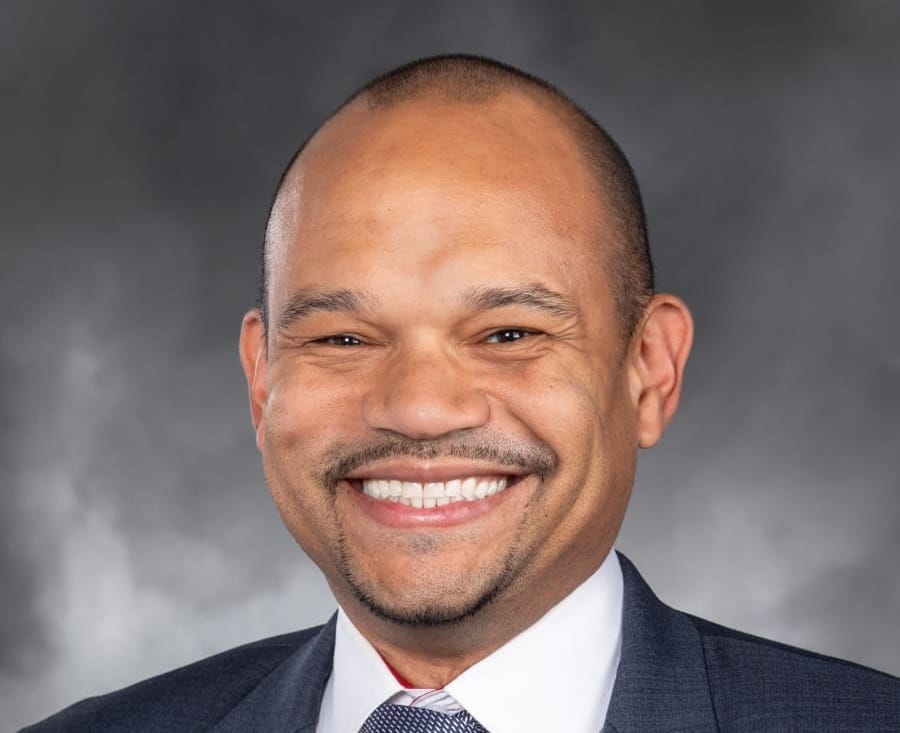
Washington State Representative Chipalo Street is entering the upcoming 2026 legislative session with an ambitious agenda that includes fixing structural problems in juvenile rehabilitation, reforming the state's regressive tax system, and protecting residents from federal overreach.
Juvenile Rehabilitation Crisis Demands Immediate Action
Street identified the dire conditions at Washington's juvenile rehabilitation facilities as his top priority. The situation has deteriorated to the point where incarcerated youth are urinating in bottles due to understaffing.
"There are youth peeing in bottles because we don't have the staff to take them to the bathroom," Street said. "That is just atrocious. And when I think of roles of the state, incarcerated people and foster kids are two of the primary jobs. Like those are our kids, those are our people that we are responsible for."
Last session, competing proposals from Republicans and Democrats both died. Republicans wanted to transfer youth to adult Department of Corrections facilities when overcrowding hit certain thresholds. Democrats proposed requiring judges to demonstrate a need for incarceration rather than community-based alternatives.
"We wanted to move those bills together as a package. Unfortunately, they both died, and so nothing happened," Street explained. "Our situation in JR continues to be dire."
Progressive Income Tax Essential to Solving Budget Problems
As Vice-Chair of the House Finance Committee, Street argues the state's structural revenue problems require more than short-term fixes. Washington ranks as the 49th most regressive state for taxation, meaning lower-income residents pay a higher percentage of their income in taxes than wealthy residents.
Street points to a clear example: municipalities and counties can only increase revenue by 1% annually, even as inflation regularly exceeds that rate.
"I think everyone feels the impact of inflation on their budget and they know that inflation is more than 1%," Street said. "And so if a city or county can only raise the revenue they're bringing in by 1%, but inflation is higher than that, then they can't even provide the same services year after year, much less expand services for things that people need."
While supporting short-term solutions like increased business taxes or a payroll tax on high salaries, Street believes only a progressive income tax will solve the long-term problem.
"I really think that we're not going to be out of this situation until we have a progressive income tax," he said.
Street advocates for starting with an income tax on millionaires, acknowledging concerns about the tax eventually expanding to middle-income residents. Any proposal will face ballot challenges and court review, with Street estimating it could take three to four years before revenue materializes.
To make an income tax more palatable, Street supports pairing it with reductions in regressive taxes like property and sales taxes.
"If you're writing a $5,000 check and you're taking 3% or 4% off of it, that's real money that you see that you're saving and can appreciate the work done by your legislators in Olympia," Street said.
Federal Budget Cuts Create New Challenges
The Trump administration's policies are compounding Washington's budget problems. H.R. 1, the federal budget reconciliation bill, will remove many residents from food assistance programs and cut federal funding for state services.
The Legislature plans to update the Keep Washington Working Act, originally passed during Trump's first administration. Street supports new provisions requiring law enforcement officers to identify themselves and prohibiting the use of masks during enforcement actions.
"Law enforcement running around with masks, snatching people up off the streets" is a new development, Street noted. He supports legislation "to make sure that law enforcement aren't wearing masks to snatch people off streets and make sure that they are identified, so that you know it is a legit law enforcement officer and not just someone kidnapping you and abducting you."
Street is exploring additional revenue sources to replace federal cuts, including a soda tax that would fund food assistance programs.
School Funding and Environmental Justice
Street identified school funding as another area where income tax revenue could make a difference. Several school districts across the state are currently in receivership, with the state threatening to take over their budgets if they can't balance them. He pointed to Massachusetts as an example of a highly taxed state where residents accept higher taxes because they receive excellent schools.
The 37th District, bordered by Interstate 5 and located under the SeaTac Airport airport and Boeing Field flight paths, also faces unique environmental challenges. Residents experience significantly higher pollution exposure than most other Seattle-area communities, contributing to life expectancies in some neighborhoods that are up to a decade lower.
Street's first priority is protecting Climate Commitment Act funding from being raided to plug budget holes. He also noted the importance of the HEAL Act, championed by Senator Rebecca Saldaña, which requires 30% of Climate Commitment Act revenue to go to overburdened communities like the 37th District.
Street is working on legislation to require recycling of electric vehicle batteries, creating a circular economy for critical minerals like cobalt and lithium. The bill has attracted interest from Republicans concerned about China's control over critical mineral supplies.
"This is one place where I hope that we can find more and more Republicans to come support this to make sure that we try and keep these minerals within the U.S. in this closed economy and can sort of promote energy independence from folks like China," Street said.
Data Centers and Tax Break Accountability
Street is watching the rapid proliferation of data centers with concern about their impact on the state's electrical grid and water resources. He is working with the Society of Professional Engineering Employees in Aerospace (SPEEA) on legislation to clarify the public benefit requirements for tax breaks, using Boeing's aerospace tax incentives as an example.
"Every time that gets reviewed, JLARC comes back and says, 'The Legislature hasn't told us what it means for this to be a public good,'" Street said. "I think that's something that we should define so that we can understand if we are getting value for that tax break."
He expects multiple bills addressing different aspects of the data center challenge, from power generation to grid capacity.
Bipartisan Cooperation and Senate Plans
Despite deep partisan divides, Street emphasized the importance of maintaining working relationships with Republican colleagues, noting that many bills passing through the Legislature have bipartisan support.
Street recently announced his intention to run for the state Senate seat being vacated by Senator Rebecca Saldaña, who is running for King County Council. He credited both Saldaña and Representative Sharon Tomiko Santos with helping him become a better legislator.
"I've been so blessed to have two great seatmates in Senator Saldaña and Rep Santos. Like their expertise and their amount of history in the Legislature is literally unparalleled," Street said. "I am such a better legislator because of the two of them that I just, I can't express my gratitude to them."
Street plans to continue his work on tax reform and environmental issues if elected to the Senate.
Street also highlighted the 37th District's diverse food scene and vibrant small business community as hidden gems that deserve more attention from the broader Seattle community.
About the Guest
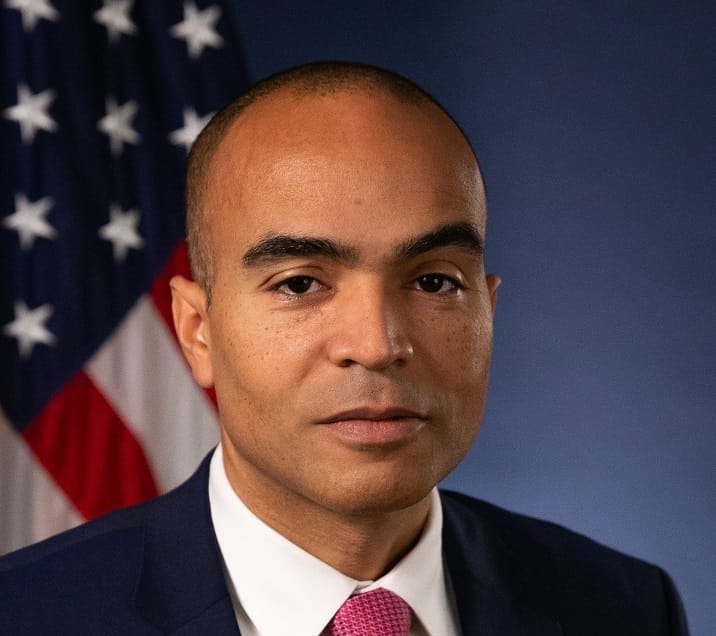
Representative Chipalo Street
Chipalo Street was raised with his sister by two loving parents in a working-class African American community. He was lucky enough to discover a love of technology at his public school, a passion that pushed him to earn a Bachelors and Masters in Computer Science from Brown University. While at Brown, Street co-founded a start-up in remote cardiac rehabilitation.
After graduating from Brown, Chipalo joined Microsoft where his work starting the Azure IoT Edge product helped direct Microsoft’s approach to edge computing. He has had four patents granted and now works for Microsoft’s Chief Technology Officer as an advisor on emerging technologies.
Recognizing that the education that provided him with such great opportunities was not available right in his own neighborhood, Chipalo co-founded the Teacher Scientist Partnership at Technology Access Foundation Academy. In this role, he developed and taught a computer science curriculum in south Seattle. He has also gives back to his community with the Public Policy Impact Council at the United Way of King County.
In addition to his work at Microsoft, Chipalo started a small real estate company that views rental homes as partnerships between the owner and tenants. Despite around 1/3 of his tenants losing work during the pandemic, he was able to ensure that all of his tenants remained housed.
Chipalo also recently concluded a successful side career as a soccer referee for international, professional, and collegiate matches. He has refed games for the Seattle Sounders, OL Reign, Tacoma Defiance, Portland Timbers, Inter Milan, and Paris Saint Germain!
In the House, he serves as Vice Chair of the Finance Committee as well as on the Environment & Energy and Innovation, Community & Economic Development, & Veterans committees.
Chipalo lives in the Central District in Seattle.
Resources
Representative Chipalo Street | Washington State Legislature
Representative Chipalo Street | Washington House Democrats
“Data centers guzzle power, threatening WA’s clean energy push” by Lulu Ramadan and Sydney Brownstone from The Seattle Times
Podcast Transcript
[00:00:00] Crystal Fincher: Welcome to Hacks & Wonks. I’m your host, Crystal Fincher. On this show we talk with policy wonks and political hacks to gather insight into local politics and policy in Washington state through the lens of those doing the work, with behind-the-scenes perspectives on what’s happening, why it’s happening, and what you can do about it.
So today I am very happy to be welcoming the 37th's own Chipalo Street - state Representative. Welcome back to the program, Chipalo!
[00:00:45] Representative Chipalo Street: Thank you for having me - it's been a while.
[00:00:47] Crystal Fincher: It has been a while, but so excited to see all of the work that you've done and hear everything going on. So I guess starting out - I'm just wondering what have you been working on and what are your priorities for this upcoming session?
[00:01:02] Representative Chipalo Street: Yeah, there's been a lot. So this is my third year going into fourth year in the Legislature, and it's been quite the ride. We've done everything from passing rent stabilization to working on bills that better define when police can pull you over - that one hasn't gotten over the finish line, but we're still continuing to work on that. There's been a bunch of great work in the environment and energy sector in terms of creating climate resiliency plans for Washington state. I mean - as we talk about right now, we're under a flood watch from two atmospheric rivers that have come through. So making sure that we have resiliency plans - not only for the damage that's been done to our climate currently, but going forward as things will get worse - is super important. And it's just been really, really an honor to get to serve the people of the 37th and bring back records amounts of money for capital projects. There's a great, great organization called Tubman Health that's setting up the first Black-owned healthcare organization and we got them $11 million in the capital budget, which was unheard of. And so like, just those are some examples of some of the really exciting work that makes it worthwhile being down in Olympia.
[00:02:14] Crystal Fincher: Absolutely. So as you're looking forward to this next session, what is top of mind to address?
[00:02:22] Representative Chipalo Street: Yeah, the first thing that I look forward, in the new session, is fixing some things that we missed in the last session. So for example, I hope that people are aware of how bad some of our juvenile rehabilitation locations are in terms of overcrowding. Like it's gotten to the point where there are youth peeing in bottles because we don't have the staff to take them to the bathroom - that is just atrocious. And when I think of roles of the state - incarcerated people and foster kids are two of the primary jobs. Like those are our kids, those are our people that we are responsible for. And so, the state of Green Hill and other JR facilities is unacceptable. Last session, there were two bills. One was around allowing youth to be moved from JR facilities to Department of Corrections if the staffing levels hit certain thresholds.
[00:03:20] Crystal Fincher: And JR being juvenile rehabilitation?
[00:03:22] Representative Chipalo Street: Correct. JR is juvenile rehabilitation. There's Green Hill, Echo Glen - I believe one or two others. And so, one of the bills is around moving youth from JR to Department of Corrections, DOC. As many would note, DOC is not a rehabilitative environment for youth to be in - and so that should be a last resort. That was a bill that came from the Republicans that did not pass. Another bill that came from the Democrats was around having judges show a need for a youth to be incarcerated, as opposed to having time in a community facility or remote monitoring. That would help stem the flow of youth into the system, whereas the Republican bill would move some of them out of JR and into DOC when certain thresholds were met. We wanted to move those bills together as a package. Unfortunately, they both died, and so nothing happened - and our situation in JR continues to be dire. And so we need to go back to the drawing board and make sure that we can get versions of those bills through so that we both stem the tide and in extraordinary circumstances have options to deal with the overcrowding. That's the first thing that I think of - of what do we need to do in this next session - is fix JR because that's somewhere where I believe we dropped the ball last session.
[00:04:45] Crystal Fincher: And what committees are you on?
[00:04:48] Representative Chipalo Street: So I get to sit on Finance. I'm the Vice-Chair of Finance, so that's our tax policy. I also get to serve on Appropriations, which is how we spend our money. And then the third committee I sit on is Environment & Energy.
[00:05:00] Crystal Fincher: Well, definitely want to talk about the finances of the state - and taxation is a big topic of conversation as we go into this session. Lots of conversations about the state of Washington being the 49th most regressive state in our country when it comes to taxation - meaning people with the lowest incomes pay the biggest percentage of their income in taxes, people at the top pay a smaller percent, the smallest percentage of their income in taxes. And that being one of the biggest contributors to the situation that we find ourselves in with the budget - in that we are asking a lot in terms of progressive taxes and fees from people and still facing a significant budget deficit that is going to require some significant changes to address. Either significant cuts, which it looks like Governor Bob Ferguson is proposing in his budget that he'll submit to the Legislature. Or some new revenue and conversations about potentially a new payroll tax for high salaries - kind of similar to the JumpStart Tax in Seattle, if people are familiar with that - that being led by one of your colleagues in the 37th, Rebecca Saldaña and others. And also conversations just about wealth taxes overall and others. So I guess, where do you stand in terms of why we're facing this deficit and what we should be doing to solve it?
[00:06:39] Representative Chipalo Street: Yeah, I think you've done a good job pointing out that we have a structural issue with our tax code. If we could even just boil it down to one example - like there are multiple ways where we have structural issues - but I think one easy example for people to understand is that our municipalities and counties, like local spending is only allowed to rise by 1%. I think everyone feels the impact of inflation on their budget and they know that inflation is more than 1%. And so if a city or county can only raise the revenue they're bringing in by 1%, but inflation is higher than that - then they can't even provide the same services year after year, much less expand services for things that people need. And what we've also seen is - not even adding new services - but the services that we provide are becoming more and more popular, so more and more people are using them. So this isn't necessarily about like Democrats going wild and like giving people free things all willy nilly. This is just people using the basic services of government that already exist, that are already popular, and being able to pay for that.
And so, yes, you mentioned a bunch of good ways to raise more revenue in a progressive way. And when we say progressive revenue, it's not left versus right. It's just, as you also pointed out, making sure that people are paying proportionate portions of their income to taxes so that one person isn't paying a higher portion of their income to taxes than another. And while JumpStart or different B&O taxes are often progressive ways to do that, I really think that we're not going to be out of this situation until we have a progressive income tax. Right now, we can have an income tax, but it would be a flat tax - I believe at 1% across everyone. And again, that doesn't get back to it being progressive. If everyone's paying that 1% - the folks who have less income - they have to spend more of their income as a part of just living, right? Like if you're making $40,000 or $50,000, you don't have the ability to save and put money away, whereas someone who has a higher income does have that ability. And when they put that money away, they're not being taxed on that money, they're saving. Whereas the lower income person is being taxed on all of their income because they have to spend it just to survive. So something like a progressive income tax would be extremely interesting.
It has been rumored by the Senate - and the House is very excited - to work on a companion bill. That said, that is not a thing that will bring in money tomorrow. There will be multiple steps for income tax. I'm sure the voters will want to have a word on that at the ballot. If the voters say that they're okay with it, I'm sure that some deep-pocketed Republican will take it to court and challenge it because of various court histories around income taxes and whether income is property or not and how that gets taxed. So there will be multiple gates for income tax to pass. And we really need to start working on that now because that money won't come in for three to four years. And in that interim, we are going to continue to have budget deficits - when more people use these services, when inflation goes up to raise the cost of delivery of those services - that is going to require more money. And if revenue growth isn't keeping up with that, just in terms of how our economy is growing, which it looks like it's not going to - and I can tell you these tariffs that are coming down from Washington, DC are not helping. The Big, Beautiful Bill H.R.1 is not very beautiful, especially when you look at its impacts on state budgets and for our neighbors who are dependent on state provided healthcare. Those are going to have very real impacts on our ability to raise revenue and support the programs that we already had. So, I think some of these conversations around a head tax or increased B&O taxes - I think those are only short-term solutions to a long-term problem, which is solved by income tax. And being on the Finance Committee, I am very excited to work on that - because that's one of the main campaign promises I said going in, is like - we need to rebalance our tax code.
[00:10:42] Crystal Fincher: Absolutely. Now, how do you address people's concerns? I mean, certainly I think it is fair to say that the idea, the concept of taxing the wealthy is a pretty popular one right now. But when a lot of people hear and consider an income tax, they're like - Oh, I'm not wealthy and that hits my pockets. That's not good. And it's on top of all of these other taxes I pay. And is this just a sneaky way to get a new tax in? It's going to start at this level, but then they're going to jack it up when they need more money. - and that creating a lot of anxiety. How do you address those concerns?
[00:11:18] Representative Chipalo Street: I mean, I think we start with an income tax on millionaires. And that's my understanding of the proposal from the Senate - is that this starts on folks making a million dollars or more. I would like to make a million dollars at some point in my life - I hope to - I hope I can get to that point sometime, but that is not where I am. And I think many, many of our neighbors are not there either. I don't think it's a bad thing if you make over a million dollars. But if you do, we should be making sure that whatever amount you're paying is proportional to the less fortunate, and make sure that everyone pays their fair share. It's not a thing to villainize folks who make a lot of money, but we want to make sure that they're contributing to the well-being of our society, just like everyone else does. That's sort of part of our civic bond and civic engagement.
[00:12:04] Crystal Fincher: Absolutely. Well, that's going to be a big conversation and we are excited to follow it as it goes through. Now, I do want to talk about something you alluded to - and that is the impact that changes to policy, lots of things being defunded, shifting funding, shifting priorities from the federal administration, in addition to the enforcement from ICE and other immigration authorities that we're seeing in the state. People being very concerned about all of these issues - putting people's civil rights in jeopardy and making budget woes even deeper, even more pronounced as things that used to be funded no longer are. How do you think you can take action to best prepare for and mitigate what is happening from the federal administration?
[00:13:00] Representative Chipalo Street: Yeah, this is kind of an all-hands-on-deck type thing. Like there's legislation that we can do. There are moving money around in the budget. There's supporting our great Attorney General Nick Brown. His office is funded by the Legislature and he has higher expenses than usual because he is filing a high number of cases against all these illegal things that the federal government is doing. So we will make sure to continue funding Attorney General Nick Brown's work - he's been doing yeoman's work there, and so we are glad to have partners in other branches of government who are supporting us. That's one way. Back in 2016 - when Trump came in the first time - the Legislature passed the Keep Washington Working Act, which was a great way to insulate us from some of the activities coming out of Washington, D.C. And I expect to see additions to that Keep Washington Working bill. So, for example, it's novel and new that we have law enforcement running around with masks, snatching people up off the streets. And so I've heard conversation of bills to make sure that law enforcement aren't wearing masks to snatch people off streets and make sure that they are identified, so that you know it is a legit law enforcement officer and not just someone kidnapping you and abducting you. And so tweaks like that will come to the Keep Washington Working Act.
And then there's other - other things that we can do around funding. So for example, H.R.1 is going to kick a bunch of people off of food assistance - trying to find new streams of revenue to supplant that, I think is super important. So one of the things I'm looking at is a soda tax. So the taxes aren't super popular, but at least there is a nexus between using a food product that is not necessarily very healthy for you and can be replaced so people can avoid that tax and taking that revenue to support food assistance for our community members who don't have enough. And so there's a bunch of different ways that we can try and insulate our state from different effects of Trump and the federal government. And those are just a couple ideas that I think you'll see coming down through the Legislature this year. I mean - it hasn't been a year yet. It is absolutely crazy to think that the last 11 months or 12 months feel like three or four years. So I can't wait to get to the midterms fast enough so that hopefully we can take back the House and get one more place where Democrats can push back against the things coming out of D.C. But it is absolutely exhausting just dealing with the torrent of stuff coming out of D.C. and making sure that we're mitigating it as much as possible.
[00:15:35] Crystal Fincher: Yeah, absolutely. Are you supportive of legislation that would require federal agents on the ground to be unmasked and identify themselves?
[00:15:44] Representative Chipalo Street: Yeah, for sure. I mean, they're doing their job. I find this conversation slightly humorous - like not the actual fact that they are masked, but just the interestingness of how we went from three or four years ago, Republicans saying like - No masks ever. There's like this allergicness to masks where they would burst into flames if you touch the mask. And there was, like, police officers resigning from the force when mask mandates went out. And now - no problem with masks at all, like it's a part of our daily job in uniform and must be used. And obviously, that is a very, very broad stroke to paint law enforcement by, which is not fair to many of them who are doing a very good job and don't wear masks. So I don't want to paint the impression that, like, every police officer out there is running around with a mask on. It is often my understanding - folks from ICE, from the federal government coming into communities that they are not a part of and snatching people off the streets, that's just detrimental. I mean, the other sad thing is that those types of things degrade trust with our more local law enforcement agencies so that people don't want to go to them when there's a crime. People don't want to work with them when they have an issue. And so these things to me are counterproductive in so many different ways that it's really sad to see us sort of lose ground and degrade trust with law enforcement when making sure that we have as good a relationship as possible is a hard job that we've been working on.
[00:17:12] Crystal Fincher: Yeah. Well, I want to talk about school districts and school funding. Districts across the state, including Seattle Public Schools, have been wrestling with significant structural deficits that are basically putting on the table massive layoffs, school closures, big changes in how they operate, having to slash a lot just to make their budgets. And them saying this is a structural issue across the board fundamentally caused by faulty funding from the Legislature. They just aren't living up to what our constitution, State Constitution, says is the paramount duty to fully fund public education - that doesn't appear to be happening and districts are in dire financial straits. What can be done or what do you plan to do in the Legislature to help fully fund our schools and keep conversations away from school closures and layoffs?
[00:18:11] Representative Chipalo Street: Yeah, I think that would be a great use of funding from, say, income tax. So if we're going to do income tax, I think we should also consider lowering some other taxes on everyday people. So like lower property tax, lower sales tax. But I don't think it should be revenue neutral. Like you mentioned, we have a structural issue with funding our schools. I think it's like something like 9 to 12 school districts are in receivership, where receivership is a process that the state takes over their budget or threatens to take over their budget if they don't pass sort of balanced budgets. And that is a scary place to be. And it's even more sad when you have teachers - like not only is it the funding for the school systems, like insurance has been going through this roof, heating bills have been going through the roof, but also just simple supplies, what is called MSOC, Materials Operating & Supplies - when that gets shortchanged, teachers really care about their job and then they go out and buy these things out of their salaries, which is not fair to them. So the way we fund our schools is backwards in so many different ways. And so I think that would be a great thing to help fix and push through with income taxes. Everyone cares about how schools are doing. Everyone wants kids to have the best education possible. If you look at places like Massachusetts - Massachusetts is one of the most highly taxed states, but people are relatively okay paying that because they have a great school system. And so if we can make sure that we have a great school system, show people that they are getting real value for their money - I think that makes a income tax even more palatable for folks, especially when we apply it to our highest earners.
[00:19:47] Crystal Fincher: So I want to talk about one thing you just mentioned, because I think it may be the key - in my little opinion over here - in the taxation conversation coming to fruition. It's - yes, the implementation of an income tax, progressive tax while reducing a more regressive tax or something like that. Do you know what any of those scenarios may look like? It feels like that can definitely allay some concerns about this being just another way to tax everyone and increase revenue without the prioritization of reducing the burden on those who can least afford it. And really show some goodwill and intention to right size how our budget is really composed. Do you have in mind any more specific scenarios on what types of taxes may be reduced or what those scenarios may look like?
[00:20:47] Representative Chipalo Street: This is me sort of spitballing off the top of my head - we'll have a lot more of those conversations during session. There's multiple ways to look at it. Number one, I think whatever legislation gets passed is going to have to be very carefully crafted because of the likely challenge on the ballot, because of the likely challenge in the courts. And so I think it will have to be more narrow than some of us, like myself, would like. Like I would love to see a large set of like - here's income tax, here's reductions to other taxes. I think we'll probably have to tailor it more narrowly, given the path that this will have to being passed and then surviving challenges both at the ballot and in the court. That said, I think we need to work towards that longer term vision. And like, we can cut sales tax. To me, everyone should be on board with that. That is a tax cut to both individuals, but it's also a business tax cut. So I really hope that we can get business buy-in on that. Property tax would be very meaningful to folks. Like sales tax - I think for people would be meaningful, but they may not feel it in their pocketbooks immediately because it is such a small percentage of something that they do every day. When they're saving one or two pennies here or there, it builds up and adds up - but they don't necessarily notice it. Whereas some people pay their property taxes in one big check, right? So if you're writing a $5,000 check and you're taking 3% or 4% off of it, that's real money that you see that you're saving and can appreciate the work done by your legislators in Olympia. So I think how people feel these tax cuts is important. And I think understanding the path for whatever legislation passes through the courts and through the initiative process is also important. But we have to keep our eyes on a long-term goal - so I would expect it to be multiple bills over a couple of years, just in terms of the logistics. And then as we've already talked about, that money won't come in for three or four years and we still have structural issues right now because with tariffs, with H.R.1 things are not going to get better for our budget situation.
[00:22:56] Crystal Fincher: Yeah. Well, I think you make several great points there. I'm fascinated to see how this unfolds in these sessions. I do want to also talk about climate pollution and mitigation, particularly looking at impacts in the 37th District in south King County, where so many neighborhoods in the district have people with lower life expectancies - up to a decade - that are primarily attributed to pollution and being exposed to much more pollution because of proximity to freeways, flight paths, polluted ground that aren't present in other areas. And historically people being redlined and steered into these areas knowing that this is the case - and that people are really paying for this with their health and with their lives. What can be done to better mitigate these impacts and protect residents, particularly as so many federal regulations are being rolled back and the state really is on the frontlines now of this issue?
[00:24:10] Representative Chipalo Street: Yeah, for sure. Like, as you mentioned, the 37th is a long and narrow district. And one of those long and narrow borders is the I-5 freeway. So we have cars and trucks driving up and down it all day long. And then at the southern tip of the district is SeaTac - and so there's a nice flight path that flies right over the district. So we are uniquely impacted by a lot of sort of existing environmental damage and then continuing pollution that goes on just as a part of everyday life here in Seattle. To me, the first thing that we have to do is - this is a year of protection. The CCA, the Climate Commitment Act, which is the carbon tax, brings in a bunch of money that is then supposed to be used for decarbonization and mitigating impacts from climate change. We have to make sure that we protect that money because in times of budget deficits, I would not be surprised if people try and raid those funds for unintended purposes. Those unintended purposes are probably very good, but that is not what this money is for and we should find other money to make sure that we are still continuing to fund our government. The other thing that I'd mention there too is Senator Saldaña - I think one of her big legacy bills is the HEAL Act, which states that 30% of that CCA money needs to go to underrepresented or overburdened communities. And that is exactly what the 37th is by and large. Like we used to be the most diverse district, we are now one of the most diverse districts in the country. And as we just pointed out, there are many different climate impacts to our district and environmental pollution to our district. And so HEAL Act goes above and beyond to make sure that we are not left out and we have equitable - not necessarily equal, but equitable - funding from the CCA. So making sure that we can protect that revenue stream is one.
Looking forward into the future is also something that I'd love to do on the Environment & Energy Committee. And so last year, I introduced a bill around recycling EV batteries. EVs are great, and we want to electrify our economy as much as possible. With that electrification comes the creation of batteries to store that power. It takes a lot of energy to get the minerals for those batteries out of the ground. And then at the end of the life of those batteries, they can start fires in our waste stream or leach toxic chemicals into the ground. We have to make sure that we have a way to prevent those harms and ideally recover the minerals that we're using in them so we don't have to mine them again and have a sort of circular economy here for those batteries. I have a bill to make sure that we have that economy through a bill about recycling these EV batteries. And so, working with environmentalists, working with the car industry to make sure that we can make sure that we keep those resources here. And it's actually kind of a weird bill because I'm finding some odd bedfellows with the Republicans. They are very concerned about China hoarding - like a lot of our cobalt and other minerals and lithium that go into these batteries are mined by China. And China is now starting to hoard these and use them as sort of economic leverage over the U.S. And so this is one place where I hope that we can find more and more Republicans to come support this to make sure that we try and keep these minerals within the U.S. in this closed economy and can sort of promote energy independence from folks like China.
[00:27:32] Crystal Fincher: Yeah, I think you raise a really good point there, because understandably, justifiably, a lot of people think - Oh, environmental issues, Republicans are up and down across the board going to be opposed to anything. But especially with trade being such a huge part of our economy, with all different forms of energy being such a huge part of our state's economy, with farming and agriculture being such a great part of our economy - there are some really interesting alliances that can be formed that we don't typically see from a federal perspective, but once you get to the state level some different things become possible so i'm hoping that we see the same this session.
[00:28:17] Representative Chipalo Street: Yeah, and is just one more reminder of reasons why we should always try and keep as friendly relations with the Republicans as possible. We're going to see many issues differently, but that does not mean that there's not going to come along issues that we do agree on. And many of the bills actually that pass through the Legislature are bipartisan in some nature. And so just understanding that we can find ways to work together is really important. And that's one of the things that I am so appreciative of in Washington state. You see state legislatures like Tennessee or something like that, where they're going at each other all day long - that has to be exhausting. And while we definitely have our disagreements and fights here in Washington state, there are a fair number of folks on the Republican side who are very reasonable - and we can work together on issues just to make sure that folks on the eastern side of the state and the western side of the state have better environment.
[00:29:07] Crystal Fincher: Now, another issue - just kind of in the environmental sphere that a lot of people have their eye on, that people are very concerned about - is the increase in proliferation of data centers and what that impact is. The Seattle Times has actually had an excellent series on data centers' impact on Washington's energy grid - kind of taxing our hydroelectric capacity and going back to needing to rely increasingly on fossil fuels to generate energy. People being concerned about the impacts on water, on electrical grids and the reliability of the electrical grid. And being concerned about tax breaks that are being given to entities that may not be providing a public benefit commensurate with some of the breaks that they're getting. How do you view the proliferation of data centers and what do you think is the right stance for the state to be taking?
[00:30:08] Representative Chipalo Street: Yeah, we need to make sure that with any tax benefit, that we are seeing public good from that. That actually brings me to another bill - I will come back to your question. That comes back to another bill that I'm working with SPEEA [Society of Professional Engineering Employees in Aerospace] on is - we have what's called JLARC, the - I can't tell you exactly what it stands for, but basically it-
[00:30:26] Crystal Fincher: Joint Legislative...
[00:30:27] Representative Chipalo Street: Legislative...
[00:30:29] Crystal Fincher: I don't even...
[00:30:30] Representative Chipalo Street: A-R...
[00:30:31] Crystal Fincher: Now I got to Google this really quick.
[00:30:33] Representative Chipalo Street: Anyway, it's a committee - while you look that up, it's a committee that reviews tax breaks and tells Washingtonians whether we're getting a good deal for them or not.
[00:30:40] Crystal Fincher: Joint Legislative Audit and Review Committee.
[00:30:43] Representative Chipalo Street: There you go. [laughter] Google for the win. So one of the well-known tax breaks that we have here is for Boeing. However, every time that gets reviewed, JLARC comes back and says - The Legislature hasn't told us what it means for this to be a public good. I think that's something that we should define so that we can understand if we are getting value for that tax break. And let's be clear, the aerospace industry is a hugely valuable industry to this state. Not only is Boeing valuable to the state, the machinists and all of the ancillary and supporting industries around that are a huge source of jobs and economic drivers. So we want to keep them there and we want to incentivize them to grow. We just want to make sure that whatever tax incentives we're giving them to do that, the goals are being met. So I'm working with SPEEA on that bill.
Going back to your other question, we should apply that similar type of lens to other tax breaks given to other industries - and data centers is one of the latest and hottest. I think the governor had a Data Center Task Force to look at some of these questions, and they are going to be giving recommendations. I think they were released on the 1st, I have not had a chance to look at them. Our chair for the Environment & Energy Committee, Representative Doglio, is a huge environmental champion and she was on that committee. So I have confidence that we are having the right input into that committee. And I would expect to see some bills coming out of that- not only around making sure that - you touched on something, right? There's the power creation - these data centers are using up tons of power that we didn't anticipate before. Some companies are doing a great job of trying to use carbon neutral sources for that. Others, not so much. But we have to figure out a way to create more power. Even if we were able to create more power, that power needs to be moved across the grid and we have an aging grid. And so we need to be able to upgrade our grid. I think Rep Ramel had a very interesting bill about reconductoring. So basically taking the power lines that we have, right - to put a new power line, you have to go through a really long permitting process. Reconductoring would just say - hey, we already have these big towers up there. If we put up new power lines, we can make them larger and more efficient so that we can move more power without going through this whole permitting process. How can we figure out a way to do that that respects both tribal sovereignty and any other environmental impacts that would have, but expedite the permitting process. So I think there's a lot of different bills and approaches that we'll have to take to actually make progress on this because they are all interleaved. If we just create more power but can't distribute it, it's going to be a failure. If we just create bigger power lines without putting more energy on the grid, that will also be a failure. So I expect this to be a multi-bill, multi-year area of investment for the Legislature.
[00:33:34] Crystal Fincher: You know, a lot of times people - one, I find that there are a shocking amount of people in Seattle, particularly those who live north of the Ship Canal, who never make it south of the Ship Canal or to the 37th, which is just such a cool area, cool district. There's so much that is in the 37th, that is in south Seattle and the surrounding communities - Skyway and White Center and all of those. But you have a unique lens into the district, especially working with so many constituents, businesses, just being really familiar with so many folks and organizations. What do you feel like flies under the radar about the 37th that people may not know? Or what do you wish people would realize about the 37th that you find that they often don't?
[00:34:28] Representative Chipalo Street: I mean, we'll first just go to a place that's near and dear to my heart - is food. Like, I love to eat. And I think as Pacific Northwesterners, we all sort of view ourselves as some level of foodie, right? Like, we may not be the biggest foodie, but like a non-foodie here is a huge foodie to like an East Coaster or something like that. And the diversity and the different types of cuisine that we have in the 37th, I think, is so underappreciated unless you sort of live, work, or play in the 37th and know about it. I mean, I'm discovering new restaurants and new places to eat all the time. And it doesn't have to be the most expensive $20 martini place. Like, there are so many holes in the walls. Or just you have an auntie in the back cooking up great food. And you're just like - Oh, this is bomb. Like, how have I not come here before? And so just the small business community in the 37th is so vibrant - whether it be food, whether it be arts and crafts. And to some degree, I'm kind of glad it's a secret because I don't want these restaurants to be overrun and then I have to wait and stuff like that. But it is such a gift that everyone should be coming in, should be patronizing business because I do want to see them succeed. So like, to me, that is just one of the coolest things about the 37th - is all the places to eat and play.
[00:35:46] Crystal Fincher: Yeah, I absolutely agree with that. And doubling down on the play aspect of it, too. There are so many cool small businesses, cool art galleries, music venues, artistic venues, parks - just so many cool spaces and places in every neighborhood. Like you really can't walk very far without encountering them through the district. And so, yeah, I'm a fan. And really more people should get into it because it is unparalleled.
So I guess as we close, one of the things that was recently announced - that we'll be talking about more in a future show - is your plans to run for the Senate seat in the district that is being vacated by Senator Rebecca Saldaña, who will be running for the King County Council position that was just vacated by now-new King County Executive Girmay Zahilay. Yup, yup - all of those musical chairs going around. What, I guess, went into your decision to make this move? And what do you think you can accomplish in the Senate?
[00:37:00] Representative Chipalo Street: Yeah, I mean, I've been so blessed to have two great seatmates in Senator Saldaña and Rep Santos - like their expertise and their amount of history in the Legislature is literally unparalleled. I mean, I think you could look at Rep Santos by herself and be unparalleled. And then you add in Senator Saldaña, who had another decade of experience. And like, I am such a better legislator because of the two of them that I just, I can't express my gratitude to them. Senator Saldaña did decide to go to County Council. And so I would love to just sort of carry on her legacy as she has carried on others' legacies in the past in the Senate, and make sure that we continue to have a great relationship between the House and the Senate for our district. And then it'd be super exciting to have new blood come into the House, and I'd be excited to work with whomever comes in so that we have such great unity. Because you look at some districts and some of those seatmates don't talk to each other, and I just think it's such a shame - for very understandable reasons sometimes - but i think your district is far better served when everyone's working in lockstep together.
And so yeah, just carrying on the work that I've been doing in terms of making sure that our tax system gets reformed. There are some great champions for that in the Senate, like Senator Frame. But understandably, again, tax policy is kind of dull and dry, even though it's important. And so I'm happy to be a leader over there with Senator Frame, as others may not necessarily want to dive into the details, but are supportive of the general policies. Like that's a passion of mine. The environment and energy side of things is still super important, and they have a great Environment & Energy Committee over there. Senator Shewmake's not coming back - she's the chair of that committee in the Senate - so having other folks who are interested in the environment over in the Senate, I think would be super important.
And so, yeah, it's just - it's an exciting time. And like I've told Senator Saldaña, this is her seat as long as she wants it. But she has made it official that she will not run, and so I will go over there. And like, thankfully I was also like - zero drama within our coalition. Senator Saldaña had previously run for Commissioner of Public Lands. And at that point, Rep Santos and I had a conversation about - if she were to be successful, who would go over there, what were different folks' desires in terms of what they would work on and how this district could be served. And Rep Santos was supportive of me going to the Senate at that time. We checked in again when we heard that she may be running for the King County Council. So I'm so appreciative - not only for our past working relationship, but the working relationship that we'll have going forwards.
[00:39:36] Crystal Fincher: Well, we will talk a lot more about that in the future. But for now, I really appreciate you taking the time to talk to us here today.
[00:39:43] Representative Chipalo Street: My pleasure - it's been too long.
[00:39:44] Crystal Fincher: It has been too long - my goodness. But glad to reconvene today and reconnect with you. Really looking forward to your work in this upcoming session, and please keep us updated on what is going on.
[00:39:59] Representative Chipalo Street: For sure. Looking forward to coming back.
[00:40:02] Crystal Fincher: Thanks so much.
Thank you for listening to Hacks & Wonks, which is produced by Shannon Cheng. You can follow Hacks & Wonks on Bluesky @HacksAndWonks. You can find me on Bluesky at @finchfrii - that's F-I-N-C-H-F-R-I-I. You can catch Hacks & Wonks on every podcast service and app - just type "Hacks and Wonks" into the search bar. Be sure to subscribe to get the full versions of our Friday week-in-review shows and our Tuesday topical show delivered to your podcast feed. If you like us, leave a review wherever you listen. You can also get a full transcript of this episode and links to the resources referenced in the show at officialhacksandwonks.com.
Thanks for tuning in - talk to you next time.