
Rep. Shaun Scott Pushes Revenue Plan to Counter Austerity
Representative Scott introduces the Well Washington Fund corporate tax proposal aimed at protecting housing, healthcare, and education funding
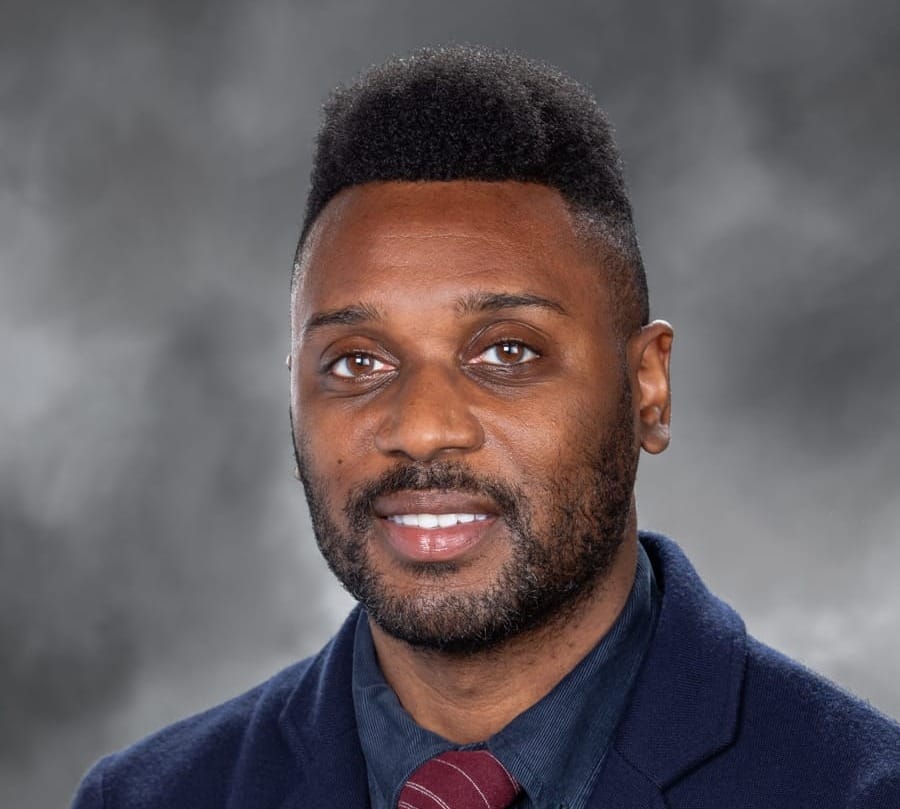
As Washington state braces for devastating federal budget cuts, State Representative Shaun Scott is leading a progressive revenue effort he says could protect critical services from austerity measures contained in the Trump administration’s proposed budget.
Scott, who represents the 43rd Legislative District covering Capitol Hill, the University District, Wallingford, Fremont, and Montlake, has introduced House Bill 2100—the Well Washington Fund—which would impose a corporate payroll tax modeled after Seattle’s successful JumpStart program.
Federal Cuts Threaten State Programs
The federal budget known as H.R. 1, or Trump’s “Big Beautiful Bill,” poses severe threats to Washington state’s social safety net, according to Scott. “The federal H.R. 1 budget, Trump’s so-called Big Beautiful Bill, is going to be responsible for a hit to state Medicaid spending to the tune of anywhere between $30 and $50 billion—B as in Bill Gates—dollars, over the next decade,” Scott said during an interview on the Hacks & Wonks podcast.
The cuts extend beyond Medicaid. The legislation would restrict access to federal student loans and grants, reduce Supplemental Nutrition Assistance Program (SNAP) benefits, and slash hospital safety net funding. Scott warned that 14 rural hospitals in Washington could be forced to close their doors as a result.
The Well Washington Fund Proposal
House Bill 2100 draws inspiration from both Seattle’s JumpStart Payroll Tax and the Workforce Education Account championed by Scott’s predecessor, the late Speaker Frank Chopp. The proposal would establish a board of House, Senate, and gubernatorial appointees to study federal divestment trends and recommend state investments to protect housing, healthcare, and higher education programs.
Unlike other revenue proposals under consideration, Scott emphasized the urgency of his bill’s timeline. “This is a bill that actually would be able to begin collections as soon as 2026, late in 2026. Meaning that by the time the full impacts to cash assistance, to Medicaid, to housing, and higher ed are seen from the federal budget after midterms in 2027, we will have that funding in place,” he explained.
The tax structure differs from Seattle’s JumpStart in one crucial aspect: the income threshold is lower, at $125,000. Scott justified this by noting that workers earning this amount already pay the additional Medicare tax federally. “The Well Washington Fund in a lot of ways is an invitation for major corporations to join in with their employees in supporting the social safety net,” Scott said.
Building a Coalition
The bill has attracted early support from several urban district representatives, including Representatives Mena, Parshley, Reed, and Thomas. Scott acknowledged the need to broaden the coalition beyond urban areas, noting that reliance on federal programs like SNAP and Medicaid is actually higher in some Republican-represented districts than in King or Snohomish counties.
“If you live in a Republican—red—legislative district, you actually have a statistically higher likelihood of relying on food stamps there than you do in King County or Snohomish County,” Scott pointed out, emphasizing the bipartisan impact of federal cuts.
Contrasting Revenue Approaches
Scott’s proposal comes as Governor Bob Ferguson announced support for an income tax on millionaires. While praising the governor’s position, Scott highlighted key differences between the approaches. The income tax proposal would likely face legal challenges and a potential referendum, meaning revenues wouldn’t materialize until 2028 or 2029.
“We’ve got three more years of federal austerity measures that we’re going to have to fend off,” Scott said, noting that the governor’s supplemental budget already contains echoes of federal austerity, including behavioral health reductions and a 3% spending cut to the University of Washington and Washington State University.
JumpStart’s Proven Track Record
Scott pointed to Seattle’s JumpStart Payroll Tax as evidence his proposal could work at the state level. Far from driving businesses away, revenues from JumpStart have grown every year since implementation—from approximately $230 million in 2021 to $360 million in the most recent year.
“There are more businesses paying it now than there were five years ago,” Scott noted, pushing back against claims that such taxes harm the business climate. He also highlighted research from the Washington State Department of Social and Health Services showing that every dollar of SNAP spending generates $1.50 in economic activity.
Protecting Immigrant and Vulnerable Communities
Beyond revenue, Scott discussed his support for Representative Cortes’ No Secret Police bill, which would address ICE enforcement tactics in Washington. He also called attention to civil asset forfeiture programs and equitable sharing laws that he believes disproportionately impact immigrant communities.
Scott framed economic justice as interconnected with social inclusion. “Having a social order where there are immense amounts of wealth hoarded in very, very few hands is not good for anybody. But when that happens, you’re more likely to see people lash out and talk about—Well, what about trans people receiving gender-affirming care? Or what about immigrants who we believe are stealing our jobs?” he said.
Public Support for Progressive Taxation
The representative cited Seattle’s Shield Initiative, which lowered taxes on small businesses and increased taxes on large corporations and passed by approximately 50 points in November, as evidence of strong public support for requiring corporations to pay their fair share.
With the legislative session beginning January 12, Scott emphasized the stakes for working families who depend on childcare, education, and healthcare services that face cuts without new revenue sources. He encouraged constituents to follow their representatives on social media, engage with local reporting, and connect with others around shared political goals at the state and local level.
“Right now, politics are really that space in a lot of ways,” Scott reflected on the opportunity for civic engagement. “People are now looking to what we can be doing at the state level, at the county level, at the city level, to create real connection, shared prosperity for everybody that we care about in our communities.“
About the Guest
Representative Shaun Scott
State Representative Shaun Scott of the 43rd Legislative District represents central Seattle neighborhoods including Capitol Hill, Downtown Seattle, South Lake Union, Eastlake, Wallingford, Fremont, University District, and more in the Washington State House of Representatives. He is the author of the book “Heartbreak City: Seattle Sports and the Unmet Promise of Urban Progress.” In office since January 2025, Representative Scott serves as Vice Chair for the Labor & Workplace Standards Committee and on the Finance and Education committees. Rep. Scott is the first socialist elected to the Washington State Legislature in over a century.
Resources
Representative Shaun Scott | Washington State Legislature
Representative Shaun Scott | Washington State House Democrats
“Rep. Shaun Scott Unveils “Well Washington Fund,” a Progressive Payroll Excise Tax to Protect Washington Families from Trump’s Austerity Budget” from Washington State House Democrats
Podcast Transcript
[00:00:00] Crystal Fincher: Welcome to Hacks & Wonks. I’m your host, Crystal Fincher. On this show we talk with policy wonks and political hacks to gather insight into local politics and policy in Washington state through the lens of those doing the work, with behind-the-scenes perspectives on what’s happening, why it’s happening, and what you can do about it.
Today, I am thrilled to be welcoming - for the first time to Hacks & Wonks - Representative Shaun Scott. Thank you so much for joining us.
[00:00:43] Representative Shaun Scott: Crystal, how's it going? It's great to be with you.
[00:00:45] Crystal Fincher: Really excited to have you and talk about this. Well, you are preparing for the legislative session that's going to be starting just a - almost a couple weeks from now - it's really coming up here. What are your priorities for this session?
[00:01:00] Representative Shaun Scott: Well, my priorities are the priorities of the people of the 43rd Legislative District - in Capitol Hill, the University District, Wallingford, Fremont, Montlake. I think we are a very, very smart district, a district that tends to pay pretty close attention to national politics and how it's interacting with what we need to be doing locally and at the state level. And I had a "Tax the Rich" themed town hall earlier this year in October, where I had the chance to hear from my constituents about what they think the number one or two issues that the State Legislature could be taking leadership on. And that has to do with making sure that we're fully funding basic services that are right now on the defensive because of austerity budgeting, both at the state and especially at the national level. So I'm going to be looking to contribute to the conversation and to the movement around funding basic services - specifically housing, healthcare, and higher education - in the legislative session that begins on January the 12th in 2026.
[00:02:03] Crystal Fincher: Yeah, absolutely. You have a reputation for being a good listener to people and really having your ear on the ground - staying in communication with your constituents, folks in the community. How has that shaped your perspective and policy? And what are you hearing from people?
[00:02:24] Representative Shaun Scott: Well, I appreciate you saying that. I got a little bit nervous when you said, "You have a reputation" and then paused. I was like, I wonder what's going to be on the other end of that. But no - I think it's the 43rd LD that has a real reputation for being one of the most progressive - if not the most progressive - left-leaning LDs in the entire state. And for me, it's very, very important with as many people who are students in this district, union members in this district, renters - we are the district that has the highest proportion of renters, 73% of us in the 43rd LD. And so I think that my constituents and people who are in my community, people I've organized with, keep me really grounded and rooted a lot more than I would be by myself in some of the material struggles that we need to see progress on. And I do believe that that is why I was elected to the State Legislature to represent this district.
[00:03:11] Crystal Fincher: So what is it going to take to provide these basic services and to fix the challenges that we're facing?
[00:03:18] Representative Shaun Scott: Well, I think it's important for us to take a step back and realize the full scale of what it is that we are up against. The federal H.R. 1 budget, Trump's so-called Big Beautiful Bill, is going to be responsible for a hit to state Medicaid spending to the tune of anywhere between $30 and $50 billion - B as in Bill Gates - dollars, over the next decade. That is a bill that is going to make it harder for people to access loans and grants for higher education. It is going to restrict access to Supplemental Nutrition Assistance Program spending - food stamps that are an economic lifeline for so many people in our state. That is a bill that is going to reduce the hospital safety net program - Medicaid matching program spending to medical facilities across our state, including rural hospitals, 14 of which are potentially going to have to close their doors.
[00:04:12] Crystal Fincher: Wow, 14.
[00:04:14] Representative Shaun Scott: That's right. And, you know, in the 43rd Legislative District - with the University of Washington, with the medical services that are provided there, with a district that has as many renters as we do, and with a district that I think just cares as much about making sure that we're on the correct side of these issues politically, I have really no choice but to say, What is it that I'm going to do to try to be part of the solution to this? So that was why a couple of weeks ago I dropped House Bill 2100, which is the Well Washington Fund bill. This is a bill that is explicitly designed to help protect investments in housing, healthcare, and higher ed that are at risk due to federal austerity budgeting. It is funded by a corporate payroll tax that is in many ways modeled after the JumpStart Tax that now Mayor-Elect, soon-to-be Mayor Katie Wilson, helped to shepherd a number of years ago. So I think that in the 43rd, we have the chance to be on the cutting edge of this conversation about using progressive revenue to fund services that make the state what it is.
[00:05:18] Crystal Fincher: You know, this is a huge conversation. You talked about the threat of austerity budgeting. We've certainly seen its impacts here in the state before, to the detriment of a lot of residents here. And we are facing so many upcoming threats and are in the midst of a big budget challenge with a real structural budget deficit. What does that mean for what we're facing today? And how does your proposal help address that?
[00:05:49] Representative Shaun Scott: It is true that I think sometimes when we talk about the state budget, we think about really big, abstract, almost very, very hard to comprehend percentages and figures in the hundreds of millions of dollars. And we don't often enough center the conversation, I think, on the human impact of what it is that state services provide. I'm somebody who came out of the University of Washington, was able to piece together grants and loans in order to go to school. There are tens of thousands within my district who are in the same position that I was - I guess that was 20 years ago as a student. There are a number of people who are reliant on behavioral health, supportive housing services that flow through either the state or the county level. And certainly the federal funding decisions are going to have a really big impact in making sure that those services are available for people. So for me, it's about making sure that House Bill 2100 is at the center of the conversations that we're going to be having about revenue and funding these services in the upcoming legislative session. It is a bill that - unlike some of the other also worthy, very also important revenue proposals that are going to be coming forward - this is a bill that actually would be able to begin collections as soon as 2026, late in 2026. Meaning that by the time the full impacts to cash assistance, to Medicaid, to housing, and higher ed are seen from the federal budget after midterms in 2027, we will have that funding in place to make sure that people are not going to be going without in terms of food stamps, people will not be seeing reduced coverage if they rely on Medicaid, that people can still continue to rely on housing and behavioral health services that they need. So there's a real sense of urgency that I know that people within my district and across the state have.
And just because the 43rd is a hyper-urban district - in fact the most dense district in the entire state - doesn't mean that this policy, House Bill 2100, that's coming through won't be of great benefit to people across our state. If you live in a Republican - red - legislative district, you actually have a statistically higher likelihood of relying on food stamps there than you do in King County or Snohomish County. You see higher rates of reliance on Medicaid in the 35th and 19th LDs, which are represented by GOP representatives in the State House of Reps, than you do even in my own district. So it's about recognizing that there are some things that really should not be up for discussion. Food and education and a roof over your head - in a perfect world - would not be partisan issues. They are. And it's going to be on us to show that our ideas and the ideas that come out of my office as a Democratic Socialist in the State House of Representatives are going to be able to meet this moment by using revenue to fund basic services that people depend on.
[00:08:39] Crystal Fincher: Absolutely. I want to talk a little bit more about House Bill 2100 and what specifically it does. You said it's modeled somewhat off of the JumpStart Payroll Tax here in the city of Seattle. What does it do for the state? How is it structured and why did you choose that structure over others?
[00:09:01] Representative Shaun Scott: So my predecessor and my mentor was the late Speaker of the House, Speaker Emeritus Frank Chopp, who passed away earlier this year. And in the lead up to session last year, which was my first year in the State Legislature, and especially after it, I had the chance to review some of the bills that I know that he was most proud of passing. You talk to him - and his record of legislative achievements, I mean, was so long - but he did have a way of coming back to two or three bills that I think he was most proud of. And the Workforce Education Account was, I would say, one of those two or three bills. And so the way that the Well Washington Fund is structured is in many ways modeled after what the Workforce Education Account does. A board is established where a number of House, Senate, and gubernatorial appointees study macro trends in federal divestment with respect to housing, healthcare, and higher education. They would meet three times a year, and they will then make recommendations to the State Legislature on investments that it has to make to protect these programs as a result of macroeconomic trends, especially ones related to how state funding relates to federal funding.
As far as the spend policy, it focuses primarily on housing, healthcare, and higher education because those are three of the areas that the Washington State Office of Financial Management has said are most at risk due to H.R. 1, as well as other cuts to the Department of Housing and Urban Development. So the spend side of the policy would go primarily towards those silos of public sector spending. And then on the tax policy side of it, there's a crucial difference between the way the Well Washington Fund works and the way that JumpStart works, only in the respect that the income threshold that large operating businesses are subject to paying payroll taxes on is lower. It's $125,000 in my bill. And the significance of that is the fact that if you make that amount, there are millions of taxpayers nationwide who make that amount and already have to pay what's called the additional Medicare tax on their federal tax returns. So the Well Washington Fund in a lot of ways is an invitation for major corporations to join in with their employees in supporting the social safety net. And if a worker, somebody who's making $125K in Washington state, which is becoming increasingly less and less affordable for many people, if a worker can make that sacrifice to support our social safety net federally, then some of the largest companies in our state that have really enjoyed the privilege of doing business in Washington state - generous subsidies, a well-educated workforce, great natural climate, public subsidies in many pockets of our state. Those same companies can then pay into the social safety net that is going to make sure that prosperity is shared for everybody at a time when some of these services seem to be in decline.
[00:11:50] Crystal Fincher: Absolutely. And logically, that makes a lot of sense. Now, who already do you have in support of this? What do the prospects look like?
[00:12:03] Representative Shaun Scott: Well, I'm glad you think it's a good idea. I need about 49 or 50 other people to say the same thing who also serve in the State House of Representatives. And it's part of the reason why I wanted to come on your show, because I know that there are some people within the Legislature who really listen to what it is that you have to say on Hacks & Wonks, but I would say that I'm really proud right now to have approaching half a dozen co-sponsors of the Well Washington Fund. We dropped the bill very, very early - pre-filed it - in fact, I think it came out on Wednesday. So two days - that was like December the 3rd or the 4th. So like two or three days after you could pre-file any bill. And in that space of time have earned a few co-sponsors. Representative Mena, who I'm proud to serve on the House Finance Committee with. Representative Parshley, who used to serve on the House Finance Committee last year. And others that have signed on - Representative Reed in the 36th Legislative District and Representative Thomas in the 34th as well. So it's going to be a bill that is, I think, just by the nature of it, going to attract the attention of people that represent very, very urban districts first, because we see in really, really clear terms - just because of the constituencies that we represent - just how much opposition there might be to federal austerity measures. But we're going to be building this coalition out and making sure that if you're somebody that stands to lose rural health access or somebody who might be seeing a funding reduction because of other budgetary rollbacks that have to be made in the State Legislature to make up for some of those federal cuts - we want to build that coalition to include them as well. And I think it's going to be a great effort and hopefully will result in getting this win for the people of our state.
[00:13:41] Crystal Fincher: Yeah, I'm really interested in seeing how the coalition develops - seems to be attracting more people even at this early stage. But there really does seem to be statewide - in red and blue corners of the state, Democratic and Republican areas - a real sense that large corporations are not paying their fair share. The wealthy are not paying their fair share. They're not participating in building and maintaining the kind of community that people really believe they should have, believe that tax dollars should be supporting. And this seems like it's really moving in the direction of trying to directly address that concern and belief. And certainly in Seattle, it's been a really interesting ride seeing it viewed as - Oh, you know, initially it's a progressive proposal. But what you saw later on after its implementation is that people from across the spectrum looking to the source of funds here and looking to say - This is actually a really valuable and pretty clutch tax. And as we're dealing with these structural deficits, it has actually been really crucial in balancing the budget of the city of Seattle. And certainly, especially because of the timeline issues that you talked about and the cuts that we're facing, look like it could be poised to do a lot of the same at the state level. Is that how you see it?
[00:15:10] Representative Shaun Scott: Absolutely. Well, the JumpStart Payroll Tax was indispensable in helping to stabilize the city of Seattle's budget through some very difficult times. The point that is not often made enough is that every single year that the JumpStart Payroll Tax has been assessed in the city of Seattle, the revenues resulting therefrom have increased. It was something around on the order of $230 million when it was first assessed in 2021, to the next year $255 million. The year after that was $315 million. Last year, JumpStart brought in $360 million. So in other words, there are more taxpayers and more revenues resulting from JumpStart today than there were when JumpStart eventually passed, which is a pretty inconvenient fact if you want to argue that this is a tax that would be bad for business. Well, then how would you explain that there are more businesses paying it now than there were five years ago?
And of course, the answer to that is that a bill like the Well Washington Fund, which, as we've talked about, takes a bit of inspiration from the payroll tax that the Council had passed five years ago, is one that's actually healthy for the overall climate in our state. I mean, the Washington State Department of Social and Health Services has explained that for every dollar of federal Supplemental Nutrition Assistance Program spending that is doled out in Washington State, a $1.50 of economic activity is generated. So that SNAP benefits, to name one of the programs that the Well Washington Fund funds, kind of amount to a corporate subsidy for large grocery stores and other food providers. Part of the reason why large businesses - some of whom begrudgingly, others more enthusiastically - supported the Workforce Education Account. Part of the reason they did that was because they knew that well-educated workforce - people that are up to date in worker retraining, the new generation coming up in science, tech, and math, hopefully we add civics to some of that spending with the Workforce Education Account as well. They knew that that was going to be good for business as well. So I'm not often in the habit of talking about what's great for really, really large corporations, but with some of the talking points that you do see, it's important to kind of bring up some of those facts. And then there's the incontrovertible fact that this is definitely going to be good for working people, people who are trying to get an education, veterans, disabled people that rely on housing services that are in danger because of cuts to HUD. People that care about healthcare and Medicaid - about as universal a need as you can find as far as healthcare is concerned. It's going to be good for everyday people in our state, and it's going to water the economy by watering it at the grassroots.
[00:17:44] Crystal Fincher: I think those are all excellent points. Now, I do want to talk about this in the context of other revenue proposals. I think that there's a lot of people, including now Governor Ferguson, that we have learned today that he has announced his support for an income tax on millionaires here in Washington state, which is a new development here. But there are people hearing these various tax proposals. And even if they are feeling like - Hey, people aren't paying their fair share, especially the billionaires, millionaires among us, these mega corporations. They're feeling a little bit of anxiety seeing so many tax proposals and feeling concerned that this is just going to land squarely on my head and I'm still just trying to make ends meet. What are the other tax proposals out there? How does yours compare to those? Are we looking at passing more than one of these types of taxes? Is this only one survives? What is this landscape?
[00:18:47] Representative Shaun Scott: Well, I think of the Well Washington Fund in a lot of ways as a funding proposal. When people are going to be unable to access student loan repayments in the same ways that they historically have and might rely a little bit more on the state's college grant. If you're somebody that cares about access to reproductive healthcare, postpartum care, doula services - a lot of those covered under Medicaid, a lot of those in danger because of H.R. 1. Some of the housing services that we've seen county and city leaders - in specific, King County Councilmember Mosqueda, in collaboration with Seattle City Councilmember Alexis Mercedes Rinck - have done work on addressing some of these funding gaps that we're seeing at the city and county level. And the state budget has a much larger financial imprint as far as the size of the budget, which means I think that we need to be taking our inspiration from those leaders at the county and city level to make sure that we're funding the services that people really depend on.
Now, it was very great to see Bob Ferguson come out, Governor Ferguson come out a little bit earlier in support of an income tax proposal that I know has some real traction in the Legislature. But that's going to be a proposal that's going to have to be won three times, right? It's going to have to get out of the State Legislature - no guarantees there, as optimistic as we might be. It's probably something that's going to have to withstand a legal challenge. And also probably going to have to win at the ballot box as well, in the event that there's a referendum. Meanwhile, by the governor's own admission, that is a revenue source that we are not going to be able to bank on - certainly not in the 2026 budget, but probably not until 2028 or 2029 - which is to say we've got three more years of federal austerity measures that we're going to have to fend off. I have to say that I did have the chance before we jumped on to record today to look at some of the details of the supplemental budget that the governor rolled out today. And it does contain a few echoes of H.R. 1. There are real reductions to behavioral health, an across-the-board reduction to our state colleges - a 3% spending reduction to the University of Washington and Washington State University - continued cuts to childcare in our state. And so it's not really - I don't think there's anybody who's going to be interested in hearing the State Legislature celebrating their progress when about $7 billion worth of cuts was made earlier this year. And we're probably, if we were following the governor's cue, going to get ready to make another $2.3 billion of cuts next year. So that's where the Well Washington Fund comes in, that's where the idea of asking some of our largest corporations to pitch in to support a state that has really, really made doing business quite easy and quite profitable for them here in the state of Washington. And these are funding proposals, I should like to say, that are going to make it so that people can continue to rely on childcare, on K-12 education, higher education. And all of those are going to be facing significant headwinds if the governor's proposed budget is any indication, which I believe it is.
[00:21:45] Crystal Fincher: I think that's so important. I do want to talk a little bit more about what's really at stake. What are we really choosing between here? You talked about some of those cuts. What does it mean in the lives of your constituents and people on the ground across the state if we don't pass these revenue proposals? And particularly over the next few years, if we don't plug the holes that it seems like nothing else is poised to be able to plug.
[00:22:13] Representative Shaun Scott: Well, in my district, we have, in addition to the University of Washington, quite a few public schools. And I had the chance last year on the campaign trail to hear directly on a regular basis from residents of the 43rd Legislative District about what they thought some of the biggest priorities for state spending could be. And one of the things that I heard most frequently had to do with - housing, number one, and the cost of housing. And second to that, wanting to see a quality education and a network of childcare support - not only for people who have families, but for aspiring families, people who are looking at turning into that next chapter in life, but understanding that the cost of education, the cost of childcare can be prohibitively expensive, especially in a city like Seattle. So we can't really talk about working families and wanting to support working families - I mean, if we had - I think if the state of Washington had a nickel for every time somebody talked about working families, we would not be facing some of the deficits that we are facing. It's constantly something that is discussed. And then you also see, on the other hand, where life for working families is made much harder. And those are really the stakes for some of the reductions that we are talking about that we're going to have to do our best to fight in this upcoming year.
[00:23:28] Crystal Fincher: Where do your seatmates stand on this? We have Representative Nicole Macri, Senator Jamie Pedersen. Have they indicated? Where they stand on these various revenue proposals?
[00:23:40] Representative Shaun Scott: I do know that Representative Macri is somebody who cares a lot about housing and healthcare, in specific, and has been such a champion on those issues since before I even got to the Legislature. And for some of the time before I even knew exactly what it was that our State Legislature did, She was in Olympia pushing for a rent stabilization bill that eventually did become law. I was disappointed to see that that bill was watered down somewhat in the Senate. Maybe some of my colleagues in that chamber could talk a little bit about why that was the case. But I have found that the policy priorities that Representative Macri cares a lot about are shared priorities within our district, naturally. And so I look forward to working with her as best as we can within the confines of a very, very short legislative session to make sure that those silos of public sector spending stay supported by state funds.
[00:24:35] Crystal Fincher: Now, we've talked a lot about these revenue and funding proposals. There's a lot on your plate. You are kind of having to just deal with everything in what some might call an unreasonably short time, but certainly a short period of time. This is not a full-time legislature. We have a fairly short legislative session and a lot of concerns that you're trying to address that people are dealing with. One, I know that's on so many people's minds, has again to do with some of the activity that we're seeing from the federal government. But enforcement actions in our communities - this heightened immigration enforcement - people being very concerned with what they're seeing as violations of civil rights, civil liberties here on the ground. What can you do legislatively to help protect our immigrant communities, our trans and queer communities - people who have been targeted directly by the federal administration - and where we're increasingly seeing federal agents and actors on the ground in those efforts here in Washington state and in your district?
[00:25:51] Representative Shaun Scott: Absolutely. I mean, it's a part-time legislature where - I think the lawmakers that are most effective recognize that they're having to address full-time concerns. And that just as soon as legislative session adjourned earlier this year in late April was when we started to see the full impact not only of the federal austerity budgeting but also of these immoral and illegal ICE raids that I believe are really designed to keep segments of the working class pitted against one another. When people have the feeling that their political enemies are horizontal to them rather than vertical to them, we see the kinds of hate and intolerance and exclusivity imposed that we have seen as a function of Trump's policies. And so in talking with people that are to my right and maybe to the political center, it's about refocusing the conversation and saying - having a social order where there are immense amounts of wealth hoarded in very, very few hands is not good for anybody. But when that happens, you're more likely to see people lash out and talk about - Well, what about trans people receiving gender-affirming care? Or what about immigrants who we believe are stealing our jobs? And those kinds of differences tend to be inflamed, I think, when people are operating with a scarcity mindset. So I look at a few things. Number one, the roots of economic injustice in our state do fuel, I think, some of the social exclusivity. The fact that the Supplemental Nutrition Assistance Program - part of the reason why we're seeing the reductions to that program that we're going to see is because new eligibility and citizenship naturalization requirements are being applied where formerly they had not. So if Washington wants to be a truly inclusive state, we have to tackle the roots of economic inequity by making sure that those benefits don't go away for people. Those benefits, which I should say are relied on to a much higher rate by some of our communities in white, rural, working class areas. So that's going to be important that we see that through.
I'm going to be very, very proud to support Representative Cortes' House companion to Senator Valdez's No Secret Police bill. You see versions of that bill across the country where if you're an ICE agent abducting people with a mask, that's just not something that should be happening in Washington state. I would also call attention to the fact that we have in Washington state a civil assets forfeiture program. This is really police seizure of innocent people's belongings under the guise often as not of fighting the drug war. Well, those policies tend to be wielded much more against our immigrant communities - people who have maybe a more difficult time navigating the American court system because of a language barrier, perhaps. So if not in this legislative session, then in coming years, I would like to take a closer look at repealing what are called equitable sharing laws, which make it so that local law enforcement has a real incentive in assisting federal drug raids that often come attached with them, the same kinds of draconian ICE and immigration enforcement and proceedings that we have seen. And that's something that we have to get right in our state in addition to addressing those roots of economic justice that we've been speaking about.
[00:29:07] Crystal Fincher: And one thing that I think people are waking up to increasingly is that while you're in Olympia, it still really helps to have the public pushing and engaged in order to get some of these especially transformative policies. It seems like the policies that help people the most often take the biggest pushes with people in community in cooperation with our elected representatives to get them over the line. For people who are more curious about these policies or in support of them, what should they be doing to help make sure this gets through our Legislature?
[00:29:45] Representative Shaun Scott: You mean other than subscribing to the Hacks & Wonks podcast and listening regularly?
[00:29:51] Crystal Fincher: Oh, sure.
[00:29:52] Representative Shaun Scott: You know, I would say that there - I really have to shout out my colleague in the 36th, Representative Reed, on this because I think that she was one of the first lawmakers that I saw use social media really effectively to communicate with people. And I sometimes, you know, we have floor debates that can go on into quite late, quite early into the morning. And I oftentimes will just check Representative Reed's Bluesky - I don't think she's on X anymore - but I'll check her Bluesky and actually get clear on something that I had just heard. So I would say finding how your state representatives tend to communicate. And if you're one of the lucky ones - like reps in the 36th - to have a rep like Rep Reed that actually wants to increase the points of contact with constituents, follow them in those early months of the year from January to, you know, down to March or to April. I would also say we're in a place right now where there's a real decline in print media, but that does not mean that there are not people that are doing their absolute best to keep people very, very informed. In this most recent round of city elections, I think we really, really saw the value of just day in, day out reporting that people can do on some of the individual issues and that actually being a real difference maker, particularly for young and diverse working class people that are not used to seeing themselves reflected in politics. As a Democratic Socialist, I mean, I'm always going to be a little bit more partial to left media, but I think that remaining open to all sort of ways of looking at an issue can only help us make our points a little bit that much more effectively when we're talking to people that don't already agree with us on everything.
And I would say, just looking at the, you know, the last point on this, I think looking at the mayoral race in New York City and our mayoral race here in Seattle, you can really see the fact that people are feeling so isolated and atomized right now. So secluded from anything that's bigger than ourselves, that when we get the opportunity to actually join in, to go knock doors, to actually talk to our neighbors around issues that we care about - that can really capture a lot of people's imagination. So I think it comes down to just kind of wanting it. And if you want that kind of connection, which I think is about as basic a human striving as you can - the desire to connect with other people over shared goals and shared ambitions - right now, politics are really that space in a lot of ways. And just as much disenchantment as there is in a lot of ways with what's going on at the federal level, the silver lining of that, I think, is that people are now looking to what we can be doing at the state level, at the county level, at the city level, to create real connection, shared prosperity for everybody that we care about in our communities.
[00:32:30] Crystal Fincher: That makes a lot of sense. Well, thank you so much for joining us today. It's been great hearing from you, getting more insight into your proposals, and we will be eagerly following how this proceeds through the Legislature. Thank you so much.
[00:32:45] Representative Shaun Scott: Absolutely, Crystal. Great to be with you.
[00:32:48] Crystal Fincher: Thank you for listening to Hacks & Wonks, which is produced by Shannon Cheng. You can follow Hacks & Wonks on Bluesky @HacksAndWonks. You can find me on Bluesky at @finchfrii - that's F-I-N-C-H-F-R-I-I. You can catch Hacks & Wonks on every podcast service and app - just type "Hacks and Wonks" into the search bar. Be sure to subscribe to get the full versions of our Friday week-in-review shows and our Tuesday topical show delivered to your podcast feed. If you like us, leave a review wherever you listen. You can also get a full transcript of this episode and links to the resources referenced in the show at officialhacksandwonks.com.
Thanks for tuning in - talk to you next time.