Seattle's Creative Economy at a Crossroads: Randy Engstrom on What's at Stake
Seattle's creative economy drives 18% of city GDP but artists can't afford to live here. Randy Engstrom, co-leading Mayor-Elect Wilson's arts transition team, argues culture must be central to solving housing, education, and economic challenges - not treated as expendable when budgets get tight.
Seattle's reputation as a creative city didn't happen by accident. From Jimi Hendrix to Pearl Jam, from independent films to a thriving video game industry that generates $13.9 billion annually, the region's cultural DNA runs deep. But that foundation is cracking under the weight of affordability pressures, venue closures, and shrinking public investment.
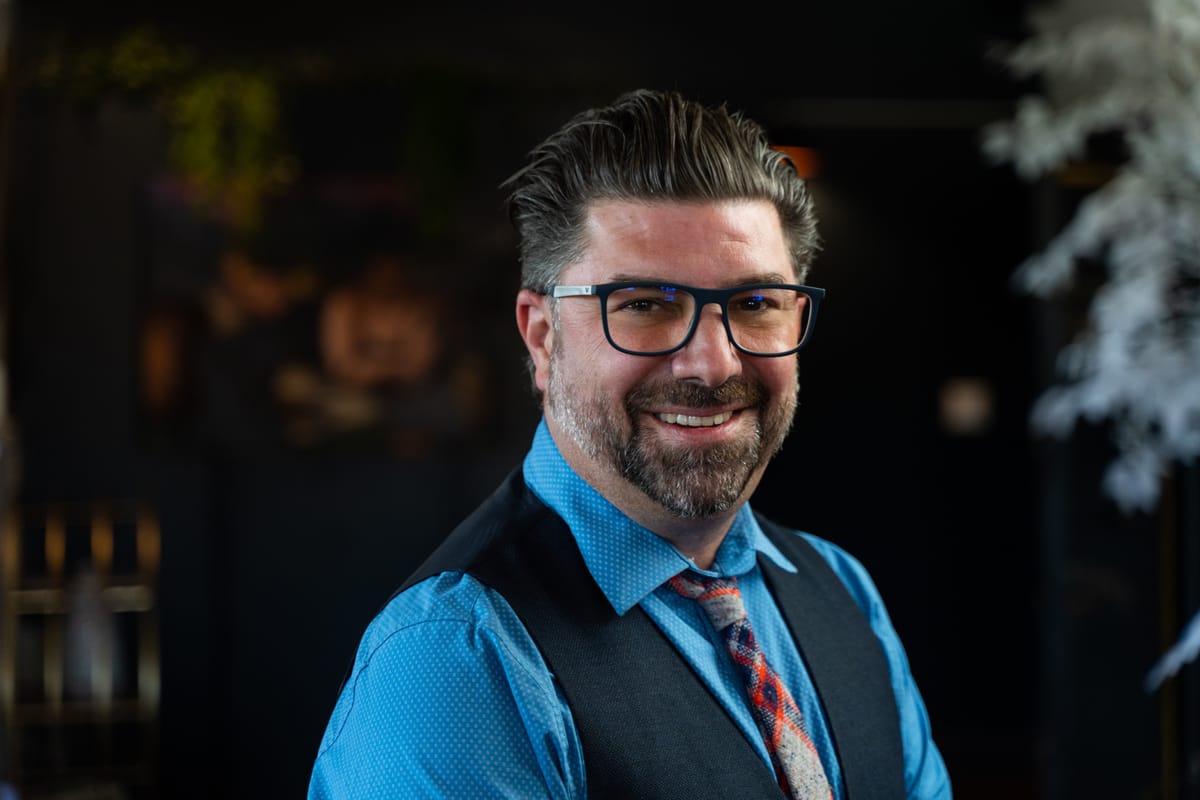
Randy Engstrom knows this tension intimately. With over 20 years working in cultural policy - including nine years as director of Seattle's Office of Arts and Culture - he's watched the city's creative ecosystem bend under mounting pressure. Now, as co-lead of Mayor-Elect Katie Wilson's transition team on Arts, Culture, and the Creative Economy, he's working to make sure culture isn't just preserved, but positioned as an engine for solving Seattle's biggest challenges.
The numbers tell a complicated story: Seattle's creative workforce drives 18% of the city's GDP - four times the national average. The creative economy is projected to grow 10% by 2028, representing 250,000 jobs across film, music, gaming, design, and related fields. Yet a 2019 city report found that Seattle has both the highest-paying creative tech jobs in the country and some of the worst wages for individual artists and performers. It's a tale of two creative economies - one thriving in the tech sector, another struggling to survive.
"I think arts and culture is the expression of the human condition," Engstrom told Hacks & Wonks host Crystal Fincher. "It's how we understand ourselves. It's how we understand the world around us. It's how we tell our story to each other and to the world."
Why This Matters Now
Engstrom's path to Seattle mirrors the city's creative draw. Growing up in suburban Chicago in the mid-1990s, he discovered the Pacific Northwest's independent music scene - Sub Pop, Kill Rock Stars, K Records - through his high school radio station. "I saw Seattle as this young, emergent city where anything was still possible," he recalled.
That promise brought him west to Evergreen State College and eventually to Seattle, where he founded the Youngstown Cultural Arts Center in Delridge and led the Seattle Arts Commission before heading the city's Office of Arts and Culture. During his tenure, he expanded grant programs and public art investments while launching initiatives around arts education, cultural space affordability, and racial equity.
But his time inside city government also revealed how disconnected different departments can be - and how much potential gets lost in those gaps. "You'd be at some community meeting in whatever neighborhood and community people would be like, but I already told the City - like last week in this room because somebody else had a different meeting," Engstrom explained. "Most people aren't parsing which unique work the 40 different departments of City government are doing."
That fragmentation extends to the creative economy itself. There's no shared definition of what "creative economy" even means. Working with the Washington State Department of Commerce, Engstrom helped develop a framework that includes nonprofit arts and culture, film and music, architecture and design, culinary and hospitality, creative tech, and other sectors.
"I think if we can say these nine sectors are how we are defining - for our region, our city, our county, our state - the creative economy, using that common definition, we can then build economic and workforce development strategies," he said. "We can look at policy interventions. We can look at incentives or regulatory opportunities."
The $96 Billion Question
The creative tech sector presents both the biggest opportunity and the biggest puzzle. In an analysis Engstrom worked on for King County, the creative economy accounted for $106 billion in GDP. Of that staggering sum, $96 billion came from creative tech - everything from video games to Amazon Prime to multimedia startups.
The challenge? Career pathways into those high-paying jobs remain murky. "I think we could build a career pipeline for our young people - for the kids like my daughter in Seattle Public Schools right now, up through the colleges, up through the universities - into those sectors because they are producing a lot of living wage jobs, but I think the pathways are unclear," Engstrom said.
He sees an opportunity to create more connection between the well-funded tech sector and struggling nonprofit arts organizations and individual artists. "How do we create a bigger tent and a broad enough marketplace that the creative economy, the nonprofit arts and cultural ecosystem, and the creative tech ecosystem can all coexist and create a little bit more of a circular economy?" he asked.
Beyond the Arts Versus Everything Else
When Seattle faces budget crunches, arts funding is often among the first things cut. Engstrom rejects that framing entirely.
"I think that binary choice between arts and human services, or arts and education, or arts and housing is a false binary," he said. "Instead, it's how can that creative, entrepreneurial, innovative engine of arts and culture drive outcomes for those other things."
He pointed to his work with Watershed Community Development, a Georgetown nonprofit aiming to build 600 units of affordable housing without using low-income housing tax credits. There are essentially two ways to build housing in Seattle: market rate and tax credits. Tax credits are valuable but limited and insufficient to meet demand.
"I think it's interesting that the low-income housing tax credit model was developed in the 1980s," Engstrom said. "And we haven't developed another way to build housing at scale in - what - forty years? That's crazy."
His answer: bring creative thinking and entrepreneurial approaches into housing policy. "Can we bring some of that creative thinking, some of that entrepreneurial thinking into the housing development space?" he asked. "Because I think there are more ways to attack that problem."
What's at Stake
Without serious investment and policy changes, Engstrom warns Seattle risks losing what makes it distinctive.
"I think it will mean a Seattle that I don't really want to raise my daughter in," he said. "I think it'll mean a city that I don't recognize." If only people making $200,000 or more can afford to live here, "it's not going to feel like a city that's vibrant and has culture and has creativity. I worry that it will become a fancy suburb, basically."
The urgency is compounded by federal realities. "We are going to have to figure this out on our own," he said. "And we're going to have to figure out interdependent strategies by which to do that."
Despite the challenges, Engstrom sees the current moment as ripe with possibility. Mayor-Elect Katie Wilson, new King County Executive Girmay Zahilay, and Governor Bob Ferguson all represent fresh leadership willing to think differently.
"These blue progressive cities need to show results," Engstrom said. "We need to be able to govern and get things done. And I think there are ways to do that, but it's going to take vision and leadership and collaboration."
Connecting the Dots
Through the transition process, Engstrom and co-lead Ben Hunter are prioritizing "urgent listening" - gathering ideas from across the cultural ecosystem and developing concrete timelines. What can be done in 90 days? Six months? One year?
One immediate step: facilitating collaboration. "The City has a big bully pulpit, and I think it can bring people to the table when it wants to around things that it deems important," Engstrom noted. The transition team itself is an example of convening power in action - empowering departments to be thought partners in developing policy from the ground up, consistent with Mayor-Elect Wilson's background as an organizer.
He's also building bridges between sectors through events like Scenius - a series he's producing with nonprofits Shunpike and Future Arts. The next event features Mayor-Elect Wilson and Councilmembers Alexis Mercedes Rinck and Dionne Foster discussing how culture can advance their priorities.
"I think there's a lot of what-can-you-do-for-the-arts kind of conversations, which I understand and I want people to do more for the arts," Engstrom said. "I also think there's an interesting conversation to be had of how can the arts drive the things that are important to you."
The power of simply getting people in the same room shouldn't be underestimated. "I really believe in the power of convening," Engstrom said. "You need to be able to be in community to build deep and lasting relationships and to build trust. I really think it's critical in order to tackle hard things."
He sees missed opportunities in thinking beyond downtown. "I think there's an opportunity to think about neighborhood reciprocity and think about how we get people from neighborhoods within the city to want to come Downtown for an experience economy," he explained. "And then bring people who are Downtown - who are coming in off cruise ships, who are coming in from Pike Place Market or the Waterfront - and get them out to our neighborhoods via our light rail and our bus system."
During his time at the city, he counted nine different downtown planning initiatives that weren't necessarily coordinating with each other. "We have probably mountains of community feedback about what people want," he said. "But instead of doing the thing, we just go back out and ask again."
What You Can Do
For people who aren't artists but want to support a sustainable creative economy, Engstrom's advice is straightforward: participate and communicate.
"Have pride in your city and pride in the stories that your city is telling," he urged. "And use your platform - whatever that is - to evangelize and to encourage people to participate."
He recalled advice from a mentor, Danielle Brazell, who now runs the California Arts Council. She once asked a room of 300 arts professionals how many had 50, 100, or 1,000 connections on social media - and then reminded them of their power. "You can share annoying takes about things that bother you, or you could evangelize the things that actually inspire you," Engstrom said.
Simple actions matter. Attend events like Walk the Block. Buy tickets. Tell people about shows and performances you enjoyed. Word of mouth remains one of the most powerful tools for building audiences and community.
Engstrom also encouraged people to think beyond just funding. "Besides money, what could the City do for you?" he asks in planning processes. "What other roles could the City play? Or could the county play?"
With Girmay Zahilay taking over as King County Executive, Engstrom sees potential for creative collaboration. King County benefits from 4Culture and the Doors Open funding stream - "the greatest life raft in North America," as Engstrom put it. But even that significant resource isn't enough on its own for the region's 3.5 million residents.
The question facing Seattle is whether the city will treat its creative economy as integral to its future or as expendable when times get tough. Engstrom's message is clear: arts and culture aren't separate from housing, education, public safety, or economic development. They're connected to all of it.
"How can arts and culture be the engine to drive the other civic priorities that we have?" he asked, echoing what he's heard from Mayor-Elect Wilson. "What can it do around housing? What can it do around education? What can it do around safety and well-being? What can it do around economic and workforce development? I think there's a real untapped potential in what the creative community of this city can do."
Whether Seattle seizes that potential or lets it slip away will shape what kind of city this becomes - not just for artists, but for everyone who calls it home.
About the Guest
Randy Engstrom
Randy Engstrom has been a passionate advocate and organizer of cultural and community development for over 20 years. He is currently the owner and principal of Third Way Creative, a collaborative consulting studio focused on cultural policy, racial equity, and creative economy. Their clients have included Creative West, Grantmakers in the Arts, Friends of Waterfront Park, and the Cities of Seattle, Indianapolis, and Ottawa, Canada. He is also Adjunct Faculty at the Seattle University Arts Leadership Program teaching cultural policy and advocacy, and regular lecturer at the Evan’s School of Governance and Public Policy at the University of Washington.
Most recently he served as Director of the Office of Arts and Culture for the City of Seattle where he expanded their investments in granting programs and Public Art, while establishing new programs and policies in arts education, cultural space affordability, and racial equity. He also led several multi-department subcabinets, including Affordability and Livability, Youth Opportunity, Future of Work, and COVID Recovery. He served as Chair of the Seattle Arts Commission in 2011 and was Chair of the Facilities and Economic Development Committee from 2006 to 2010. Before joining the City he owned Reflex Strategies, a cultural and community-based consulting practice. From 2005-2010 Engstrom was the Founding Director of the Youngstown Cultural Arts Center, a multimedia and multidisciplinary community space.
In 2009 Randy received the Emerging Leader Award from Americans for the Arts and was one of Puget Sound Business Journal’s 40 Under 40. He is a graduate of The Evergreen State College, and holds a Master’s in Public Administration from the University of Washington’s Evans School of Governance and Public Policy.
Resources
Growing and Strengthening the Creative Economy | Washington Department of Commerce
There's Something About Seattle | City of Seattle
Podcast Transcript
[00:00:00] Crystal Fincher: Welcome to Hacks & Wonks. I’m your host, Crystal Fincher. On this show we talk with policy wonks and political hacks to gather insight into local politics and policy in Washington state through the lens of those doing the work, with behind-the-scenes perspectives on what’s happening, why it’s happening, and what you can do about it.
Today, we're talking about Seattle's creative economy. And this is a conversation that matters way more than people realize. When you think about what makes Seattle Seattle, it's not just the tech companies. It's Jimi Hendrix and Pearl Jam. It's the independent film scene, the theaters and galleries and music venues that give this city its character. But here's the thing - that creative ecosystem is under serious pressure. And if we lose it, we lose something fundamental about who we are as a city.
My guest today is Randy Engstrom, who's been a passionate advocate and organizer of cultural and community development for over 20 years. He's currently owner and principal of Third Way Creative, a consulting studio focused on cultural policy, racial equity, and creative economy. He also teaches cultural policy at Seattle University's Arts Leadership Program and lectures at the University of Washington's Evans School of Public Policy. Randy is a former director of Seattle's Office of Arts and Culture where he expanded investments in grants in public art, while creating new programs for arts education, cultural space affordability, and racial equity. He also led multiple subcabinets on Affordability and Livability, Youth Opportunity, the Future of Work, and COVID recovery. Before that, he founded the Youngstown Cultural Arts Center and chaired the Seattle Arts Commission. And right now, he's co-leading Mayor-Elect Katie Wilson's transition team on Arts, Culture, and the Creative Economy.
The numbers tell a story that's both promising and concerning. Seattle's creative economy is projected to grow 10% by 2028. We're talking about 250,000 jobs across film, music, gaming, design, and more. The region ranks second in the nation for video game industry output - $13.9 billion annually. Seattle's creative workforce drives 18% of the city's GDP - that's four times the national average. But while we have some of the highest paying creative tech jobs in the country, individual artists and performers are dealing with some of the lowest wages. Venues are closing. Artists are leaving because they can't afford to live here. And as Seattle faces budget pressures, arts and culture are often the first things on the chopping block.
Randy's here to talk about why that's a huge mistake. He makes the case that this isn't about just being nice to artists. It's about economic development. It's about solving our housing crisis. It's about creating pathways for young people to build careers. The creative economy isn't separate from our other priorities - it's connected to all of them. We're at an inflection point. We have new leadership coming in - Mayor-Elect Katie Wilson at the city, Girmay Zahilay as County Executive, and Governor Bob Ferguson at the state. We have major events on the horizon like the 2026 World Cup. And we're not going to get help from the federal government - we know that. So what do we do? How do we build a creative economy that works for everyone, not just the wealthy? How do we connect the dots between the nonprofit sector, the creative tech industry, and the individual artists who are the foundation of it all? Randy's been in the rooms where these decisions get made and now he's helping shape what comes next. This conversation is about understanding what's really at stake and what we can do about it. So let's dive in. I'm thrilled to welcome Randy Engstrom to Hacks & Wonks - thanks so much for joining us.
[00:04:05] Randy Engstrom: Thank you for having me. First time, long time. Nice to be on the Hacks & Wonks.
[00:04:11] Crystal Fincher: Appreciate it. So excited to have you. I have followed your work for quite some time. But for those who are unfamiliar, just starting off - why is arts and culture so important to you personally? And why have you felt the pull to really dedicate so much of your life and work to this?
[00:04:32] Randy Engstrom: I really think arts and culture saved my life. When I was a teenager, I felt sort of a little bit of aimless angst, as a lot of us did in the late 1900s. And it was through a combination - the origin story that I often tell is that when I was in high school in suburban Chicago, I was the program director of the high school's radio station. And through the radio station, I got access to the music library. This is like 1994 - this is pre-internet, right? Or very early internet. I discovered this entire universe of independent label music that was coming from all over the world, but an awful lot of it was coming out of the Pacific Northwest. That was sort of at the peak of grunge's moment - and K Records and Kill Rock Stars and Sub Pop - and I was just really taken by the potential that I saw through the soundtrack of a city that, I think, informed my perception of Seattle. Chicago is an amazing city - I love it, I'm very grateful to have grown up there. It's also very entrenched in the way that it is. And it's kind of a machine politics sort of town. And I saw Seattle as this young, emergent city where anything was still possible. And I felt like the music and the art that I was connecting with out of that place really called to me. And so I went to the Evergreen State College, ran the radio station there, ran the Student Arts Council there, and then was sort of hooked on the Northwest for life and ended up in Seattle after I graduated.
[00:05:58] Crystal Fincher: Makes sense. And you've done a lot of work here in Seattle - helping found the Youngstown Cultural Center - but kind of want to zoom out a little bit. So when we hear terms like the "creative economy," what does that really mean? What are we talking about there?
[00:06:14] Randy Engstrom: There's a lot of different definitions, which is one of the things that's really challenging about the creative economy. I am a fan of the definition that we created when a group of us did a Creative Economy Strategic Plan for the Department of Commerce at Washington State with our friends at WESTAF, which is now Creative West, and Cultural Planning Group - and I was the third part of that team. And what the creative economy is - is a collection of different sectors. So nonprofit arts and culture is one. Film, music, nightlife is another. Architecture and design is another. Food, culinary, hospitality is another. Creative tech is another. I think we landed on seven. I should probably have them all memorized, but they're in a report - I could point you to it - that lives on the internet.
And I think my hope for Seattle has long been that we could adopt that definition. Nothing is going to be perfect, right? But I think if we can say these nine sectors are how we are defining - for our region, our city, our county, our state - the creative economy, using that common definition, we can then build economic and workforce development strategies. We can look at policy interventions. We can look at incentives or regulatory opportunities. And we can then start to advance a shared agenda. And the places where it gets sticky are particularly, I think, around culinary hospitality and around creative tech. Because in the hospitality sense, I would argue that any craft brewery or local restaurant - you know, your Renee Erickson restaurant - I think those fall into the world of creative economy. They're small businesses, they're artisan in their craft. But I wouldn't say that about Burger King, right? A Burger King is probably not part of the creative economy. And it's very hard - we're working with pretty antiquated tools around data capture when it comes to these sectors. So it can be hard to parse restaurants because they all - McDonald's falls into the same category as a Tom Douglas restaurant. So that's one.
And then the other is creative tech, which based on the analysis that we did for Commerce - we worked with WESTAF on a related project to do an analysis for King County's creative economy. And it reflected $106 billion of GDP - billion with a B, like enormous impact. $96 billion of that was creative tech. And that's complicated because it's everything from video games and Amazon Prime. And there's very, very large companies who some of what they do is creative. There's very large companies who everything they do is creative - I would argue that a video game company is kind of center of the bullseye of what the creative economy is in people's mind. And then there's small organizations whose whole - small tech companies whose whole world is streaming or video content or multimedia. So I think that's the least understood and maybe the biggest opportunity - if we could really get under the hood of what represents that $96 billion. What are those jobs? What credentials are necessary to get them? I think we could build a career pipeline for our young people - for the kids like my daughter in Seattle Public Schools right now, up through the colleges, up through the universities - into those sectors because they are producing a lot of living wage jobs, but I think the pathways are unclear. And the way in which we think about end-to-end workforce development is still not tracking that particular opportunity - from my experience.
[00:09:34] Crystal Fincher: Well, I think you're right in that the pathways are unclear. And even stepping back a little bit - just in what people are facing who are in those careers today. I'm obviously looking at this from, in many ways, the outside-in and learning a lot as I go. But it seems like it's so much harder today for someone to make a living, to be comfortable - especially in a city as expensive as Seattle - in a creative position, in a creative vocation. What have you seen in terms of the ability to make a living, whether it's as a musician, a visual artist, a video game designer and entrepreneur across the different sectors in the creative economy? What are people facing today?
[00:10:23] Randy Engstrom: Well, affordability is absolutely the word of our time and I think will continue to be. And I'm grateful that we have a bunch of elected leaders who seem to really want to take that on in the coming year and years, both locally and nationally. There was a report that the Office of Economic Development published in 2019, I think, called There's Something About Seattle. And what that analysis showed was that we have the best and highest paying creative tech jobs in the country, and some of the worst wages in the country for individual artists and performers. And that imbalance represents a huge challenge, and I would say a bit of an opportunity. And I think that we need to figure out how to create a bigger tent and a broad enough marketplace that the creative economy, the nonprofit arts and cultural ecosystem, and the creative tech ecosystem can all coexist and create a little bit more of a circular economy. I think there's a lot of good things happening, but we're not good as a city at braiding together the different streams - there's lots of different pockets and silos. And I think there's sort of an inherent gap between nonprofit and for-profit creative work. Or individual artists, individual workers versus institutions or businesses. And I think that happens at the city level too, where you have multiple departments trying to support artists, but not always working in alignment or in collaboration. So I think part of the solution is to connect where the resources are to where the resources are needed. I think part of the solution is to articulate a vision that's inclusive of all of those things. And we're not trying to tear down the tech ecosystem because we're blaming them for everything, but instead trying to say - how can we all benefit from the resources that are being generated from this part of our local economy?
And I think we need a better story about how and why we value artists and creative people. I mean, Seattle is known globally as a creative city, as a music city. Our artists are sort of known all over the world. You know, you don't - Columbus, Ohio is actually a much bigger city than Seattle, but I don't hear a lot about like the arts and culture world of Columbus, Ohio. No offense to Columbus, Ohio - they're very nice, I know the folks that run the arts and culture world there. But that's just been part of our - from Jimi Hendrix and Quincy Jones to Pearl Jam and Sir Mix-a-Lot - I mean, there's such a story of how creativity drives this place. And there's a frame that I love that like Seattle's the city that invents the future, right? We invented air travel. We invented desktop computing. We invented online commerce. We invented $8 coffee drinks. All of these things are what Seattle is sort of known for in a commerce sense - and so clearly that's in who and how we are as a place. How do we create a big enough tent wherein those things can mutually reinforce one another and not be limited to the circles where - I talk a lot about Arts Island, where artists are good at talking to other artists about artist stuff. We need to talk to everyone else. And I think a huge opportunity with the incoming administration and something that I've heard Mayor-Elect Wilson say herself is - how can arts and culture be the engine to drive the other civic priorities that we have? What can it do around housing? What can it do around education? What can it do around safety and well-being? What can it do around economic and workforce development? I think there's a real untapped potential in what the creative community of this city can do. And if we can create a coalition approach where we're trying to figure out ways to work together towards a common goal of the health and well-being of our city, I think there's a great opportunity there.
[00:13:57] Crystal Fincher: I absolutely agree that there's a great opportunity. Well, one thing I run into with people is just beyond not being familiar with the creative economy, but just the value of arts and culture and creativity overall. And as we have conversations about affordability from a civic standpoint, about budgets and budget deficits - that the arts are viewed as almost frivolous, not essential, not recognizing their value. And feeling we need to get down to basics - that's not included, it's not important, something that's a nice to have but not a necessity. How do you address that kind of sentiment and convey how crucial it is in every aspect of life and the economy?
[00:14:47] Randy Engstrom: I mean, I think arts and culture is the expression of the human condition. It's how we understand ourselves. It's how we understand the world around us. It's how we tell our story to each other and to the world. It's how we are seen and see ourselves and see our neighbors. And I don't think you can have comprehensive community development without creativity and expression. Unless you want to live in like Brutalists Eastern Bloc cement apartment buildings, I think culture is inherent to how human beings navigate the world. Creativity is something everyone has in them if they choose to use it. And arts and culture enhances our lives in direct and indirect ways all the time. I think that binary choice between arts and human services, or arts and education, or arts and housing is a false binary. Instead, it's how can that creative, entrepreneurial, innovative engine of arts and culture drive outcomes for those other things. And I think we get trapped in false binaries a lot in the policy world, right? Tall buildings versus single family homes, bike lanes versus parking. There is always more than two answers to a question. And I think that's something that creative practitioners, creative workers, cultural workers do every day of their lives.
I'll give you an example - I've been working for the last year with a nonprofit down in Georgetown called Watershed Community Development. They're aiming to build 600 units of affordable housing without low-income housing tax credits on a area of 4th Avenue South where it's legal to build up to 85 feet mixed-use residential commercial. And in thinking about it - I've been in and around government for the last 20 years of my life - I have arrived at the conclusion, as many have, that I think affordable housing is kind of the underlying issue from which so many other challenges arise. Whether that's income inequality or houselessness or mental health or addiction - all these things are a function of there's not enough places that people can afford to live. That's also why artists and a lot of working class folks are leaving the city because they can't afford $3,000 a month for a one-bedroom apartment or whatever. And in thinking about that, there's two ways we build housing - market rate and low-income housing tax credits. And tax credits are great - they're also a Rube Goldberg machine that come with a lot of restrictions and there's not enough of them. And even if every affordable housing developer we had was building to their maximum capacity, it still wouldn't be enough. And I think it's interesting that the low-income housing tax credit model was developed in the 1980s. And we haven't developed another way to build housing at scale in - what - forty years? That's crazy. So can we bring some of that creative thinking, some of that entrepreneurial thinking into the housing development space, into the housing development and policy arena? Because I think there are more ways to attack that problem. There are more ways to try to create the outcomes that we want. I mean, I think social housing is a good example. I'm excited to see what they do. I hope that that is a successful project - whatever way I can help them, I'm happy to. But I think we need more options. We need more ideas. We need to take more chances. We need to pilot more things. Because the tools that we've been using for the last several decades have brought us to where we are, and where we are feels like an unacceptable place for most people that I talk to.
[00:18:00] Crystal Fincher: Yeah, absolutely unacceptable. And I guess one of the things I'm wondering - and that in reality we're facing - is the prospect of what happens if we don't invest time, money, expertise, passion into figuring this out now - to making investments, to making these connections? What happens if we don't solve these problems that folks are facing and this sector continues to atrophy? What does that mean for Seattle?
[00:18:30] Randy Engstrom: I think it will mean a Seattle that I don't really want to raise my daughter in. I think it'll mean a city that I don't recognize. And I don't say that like Seattle was perfect the day I moved here and shouldn't change - I'm a little alarmed by that mentality. But what I mean is this city has such a rich tapestry of culture and creativity and nature - and there's so many things that are special about Seattle. And if we make it a place that only people making $200,000 can afford to live, it's not going to feel like a city that's vibrant and has culture and has creativity. I worry that it will become a fancy suburb, basically. And that, to me, would be a tragedy because I think the mix of people, the mix of incomes, the mix of backgrounds is what makes a city a magical place. And I think we need to be very sober about the fact that federal support is not coming anytime soon. We are going to have to figure this out on our own, and we're going to have to figure out interdependent strategies by which to do that. And so I think there's just sort of a laissez-faire capitalist what happens if we do nothing and it just all goes away and becomes too expensive. There's also a more urgent external threat part of that that's going to put downward pressure on a lot of things that we care about, from climate to human rights to immigration stuff. And I think we're being given an opportunity - like a moment of urgency - to try new and different things. I mean, I've heard you and others on this podcast debate the abundance agenda. And I personally agree with the sentiment that these blue progressive cities need to show results. We need to be able to govern and get things done. And I think there are ways to do that, but it's going to take vision and leadership and collaboration. And we're going to have to figure out ways to be in this together and to stop like kicking each other in the shins so that we can actually meet the moment that we find ourselves facing.
[00:20:26] Crystal Fincher: I think that's right. And I think right now is both an appropriate and an exciting time to be talking about and talking through some of the possibilities, solutions, ideas. To start to try and implement a lot of them as we have new leaders coming in - in so many places here locally - both the city of Seattle, King County, have Mayor-Elect Katie Wilson coming in, new King County Executive Girmay Zahilay. We have relatively new Governor Bob Ferguson at the state level. And a growing recognition, as you said, that we are going to have to figure this out on our own. There is not going to be a federal safety net provided here - or leadership and prioritization of this from the federal level, it seems. So as we do think about this and looking at - what are concrete steps that can be taken to fix this in both the short-term and the long-term? What is top of mind for you?
[00:21:31] Randy Engstrom: Right now, I am thinking a lot about how to support Mayor-Elect Wilson's transition team. I was honored to be asked to be a co-lead for the Arts, Culture & Creative Economy with my friend and colleague Ben Hunter and a remarkable group of people also brought on as policy area partners in that work. I feel a lot of urgency to have as many conversations and gather as many ideas as possible from the widest range of voices in our cultural ecosystem. And then work, through this transition team, to synthesize - What can we do in 90 days? What can we do in six months? What can we do in one year? What can we do in 18 months? And timeline it out. So urgent listening and really trying to ensure that we're genuinely hearing what people are struggling with and what people see an opportunity for.
The second is - I think the other thing you can do more quickly is facilitate collaboration. The City has a big bully pulpit, and I think it can bring people to the table when it wants to around things that it deems important. The transition plan that the Mayor-Elect is offering is actually a pretty great example of that. And they're asking each of us to go and work the streets within our networks in our various ecosystems, and figure out ways to work together and to be in collaboration - and model that. In the materials that I've read from the transition team, there's a real sense of empowering departments to be thought partners in developing policy together from the ground up. I think that's very consistent with the Mayor-Elect's background as an organizer, where it's like - we're gonna work with the people who are impacted by these conditions to then develop the policy that can then be implemented. And I think taking that approach with community engagement and then taking that approach within city policymaking are both things - some of that can be quick, some of that will take time. But I think connecting the dots is something we could start doing right now. Turning those dots into policy will take a little bit more time, but that could be the medium-term, right?
[00:23:33] Crystal Fincher: Absolutely. So when you say connecting the dots, what are examples of that?
[00:23:38] Randy Engstrom: Well, I'll give a plug for an event that I'm helping to produce on Monday evening with Shunpike and Future Arts. Shunpike is a wonderful nonprofit that supports - they fiscally sponsor like 2000 different artists and programs and organizations. They're sort of a backbone for a lot of smaller arts and culture projects throughout the region. And Future Arts is really looking at the intersection of art and technology in a very, very thoughtful way. And we've been producing this series of events called Scenius. which is a Brian Eno term for the collective genius that is all of us together. And we sort of set out with this idea of - how do we position Seattle as the global leader of culture, creativity, and innovation? Culture being that nonprofit ecosystem, creativity being the creative economy, and innovation being sort of a frame for the creative tech world. What would it take to bring all of those things together? So we started producing this event series - about 150, 200 people came to the first two. The third one and final one of this year is next Monday. And the panel is going to be Mayor-Elect Katie Wilson, Councilmember Alexis Mercedes Rinck, and Councilmember-Elect Dionne Foster. And we want to hear from them - what's their vision for the future of the city and what role can culture play in driving that? And what are the ways they could see better connecting these different facets of our local economy and local ecosystem? And how can we - I think there's a lot of what-can-you-do-for-the-arts kind of conversations, which I understand and I want people to do more for the arts. I also think there's an interesting conversation to be had of how can the arts drive the things that are important to you. When I look at, for example, Alexis Mercedes Rinck's first year in office, I don't think I've seen a more impressive first year in a job - maybe of any kind. I mean, to accomplish what she accomplished against the headwinds that she had, to be running for election for two continuous years while governing for one of those two years. I'm like, what can we do to help? How can we deploy the creative ecosystem to advance the city that we all want to see? So I guess that's one way of connecting the dots - is bringing those three particular ecosystems together.
Another - I worked with a couple of colleagues on this plan called Cultural Strategies for Downtown Revitalization. And one of the findings in our discovery phase was that there was like nine different downtown planning efforts that weren't necessarily talking to each other - so many plans, so many conversations. And I remember this when I was at the city because I was there for nine years. You'd be at some community meeting in whatever neighborhood and you'd be talking about whatever the issue of that particular time was - maybe it's MHA or maybe it's the Education Levy or whatever, whatever the issue is. And community people would be like, but I already told the City - like last week in this room because somebody else had a different meeting about issues in the city. And most people aren't parsing which unique work the 40 different departments of City government are doing. They're like - I work really hard and this city is really expensive and I really wish the buses would run on time. Or whatever their issues are. And we have probably mountains of community feedback about what people want. But instead of doing the thing, we just go back out and ask again. And I'm not putting that on any one bureaucrat or one department or one even government entity. I think that is just a pattern I've seen as someone who worked inside for a long time that I think we could do better. And I think if we can help people understand how the dots are connected and we can start modeling that within, for example, the city, that would be really terrific.
And then I think there's a missed opportunity when there's a hyper focus on Downtown, which is super important because Downtown is facing a unique set of challenges - because all downtowns in America are basically Detroit, but instead of disused auto factories, it's disused office space. So we have a unique challenge there. But I think there's an opportunity to think about neighborhood reciprocity and think about how we get people from neighborhoods within the city to want to come Downtown for an experience economy. And then bring people who are Downtown - who are coming in off cruise ships, who are coming in from Pike Place Market or the Waterfront - and get them out to our neighborhoods via our light rail and our bus system. So, I mean connecting the dots in like really, really big ways and also just in really specific and granular ways. There's a lot of good work happening. There's a lot of inspiring things going on in the city. And we have to find ways to better put them in conversation with one another.
[00:28:01] Crystal Fincher: I think that makes a lot of sense. And I think people underestimate sometimes, or don't necessarily clock how important convening is and can be - how powerful they can be. And it's not X amount of dollars allocated or a strict plan to do Y, but the first step is always getting people talking to each other. And sometimes the biggest barriers are that people aren't talking to each other. And it's amazing what can be unleashed when you just get the right people in the room together.
[00:28:31] Randy Engstrom: Amen to that. I think one of the things the pandemic really broke in us was how to just be with each other and be around other people. In that sort of forced time of isolation, people curated their own universe, their own media, their own social networks, their own communities. And particularly coming out of the heavier days of the pandemic in like '21, '22, I remember people like forgot how to hang out. I forgot how to hang out. I forgot how to have small talk. Are we elbow bumping? Are we hugging? What are we doing? It was such a strange thing. And I think you need to be able to be in community to build deep and lasting relationships and to build trust. And I really believe in the power of convening - that's a lot of the work that I've done with my practice since I left the City. And if the City can offer convening as a piece of its way of connecting the dots, I think that's fantastic. I think also we could empower other folks who do that work really well throughout our city and various sectors to do that work as well. So I hope we can get back to it. I hope we can do more of it because I really think it's critical in order to tackle hard things, right?
[00:29:45] Crystal Fincher: Absolutely. So finally, I guess for our listeners who aren't artists, but want to be active participants in building a sustainable creative economy here, what's the most effective thing they can do beyond buying a ticket, although it should definitely include buying tickets?
[00:30:04] Randy Engstrom: It's participation. It doesn't have to be buying a ticket. It doesn't have to be buying artwork. But I think participate. Walk the Block is one of my favorite events that happens in Seattle every year. And you could engage that as passively or as actively as you want to. Have pride in your city and pride in the stories that your city is telling. And use your platform - whatever that is - to evangelize and to encourage people to participate. One of my friends and mentors, a woman named Danielle Brazell, who now runs the California Arts Council, but ran the city of Los Angeles' Cultural Affairs Department for a long time when I was at the City - she was the keynote at an event I went to like 15 years ago. And she was running an arts advocacy group at the time, and she asked the room - like probably 300 arts and culture people from around the state - How many of you have 50 friends on social media, 50 connections on social media? And like a lot of people raised their hand. How many have 100? How many have 1,000? And then she just gave this refrain that was like - You are so powerful. You have access to dozens or hundreds or thousands of people, and you can share with them whatever you want. You can share annoying takes about things that bother you, or you could evangelize the things that actually inspire you. And I think if you see a show and you like it, tell three people. If you had an experience that moved you, let people know. And maybe that's letting people know at the bar you hang out at, or maybe that's letting people know on whatever your social media platform is. I mean, social media - that was a long time ago - it's a little bit of a weirder place now. But I guess the first thing is participate. And the second thing is communicate - is tell people what you experienced, tell people what you did.
I like to ask folks in roundtables or planning processes - cultural planning processes or strategic planning processes - besides money, what could the City do for you? Besides writing a check - and we will write checks, and we should find more money to write more checks. We do not resource any part of our creative ecosystem adequately except arguably the tech side. And they have VC money, which is harder to get when you're a nonprofit and blah, blah, blah. But what else could drive your success? What other roles could the City play? Or city was my example when I was there, but could the county play? I'm so excited to see Girmay step into the County Exec role. I've been a fan of him for a very long time and the county is also positioned to do some really interesting and exciting things. And the county has a pretty easy way to bifurcate that question of money versus everything else, because 4Culture has created the greatest life raft in North America via Doors Open and bless them for that. And bless Inspire Washington and everybody else that made that happen. And it's still probably not enough - that funding source is not enough to keep the entire cultural ecosystem of the 3.5 million King County residents going on its own. So, what else can we do? How else can we drive participation? How else can we drive pride and sense of place in our cities and our community?
[00:32:59] Crystal Fincher: Absolutely. Well, thank you so much for joining us today. Really pleased and thankful to have your insight and expertise with us today and through this transition and beyond with Mayor-Elect Katie Wilson. And just really excited to see what's possible here - so thanks so much.
[00:33:18] Randy Engstrom: Thank you. Thanks for having me, Crystal.
[00:33:21] Crystal Fincher: Thank you for listening to Hacks & Wonks, which is produced by Shannon Cheng. You can follow Hacks & Wonks on Bluesky @HacksAndWonks. You can find me on Bluesky at @finchfrii - that's F-I-N-C-H-F-R-I-I. You can catch Hacks & Wonks on every podcast service and app - just type "Hacks and Wonks" into the search bar. Be sure to subscribe to get the full versions of our Friday week-in-review shows and our Tuesday topical show delivered to your podcast feed. If you like us, leave a review wherever you listen. You can also get a full transcript of this episode and links to the resources referenced in the show at officialhacksandwonks.com.
Thanks for tuning in - talk to you next time.