
Senator Rebecca Saldaña Maps Out Legislative Priorities for 2026 Session
Senator Rebecca Saldaña outlined her 2026 legislative priorities, including protecting healthcare access, defending immigrants, and reforming Washington's regressive tax system with a payroll tax on high earners
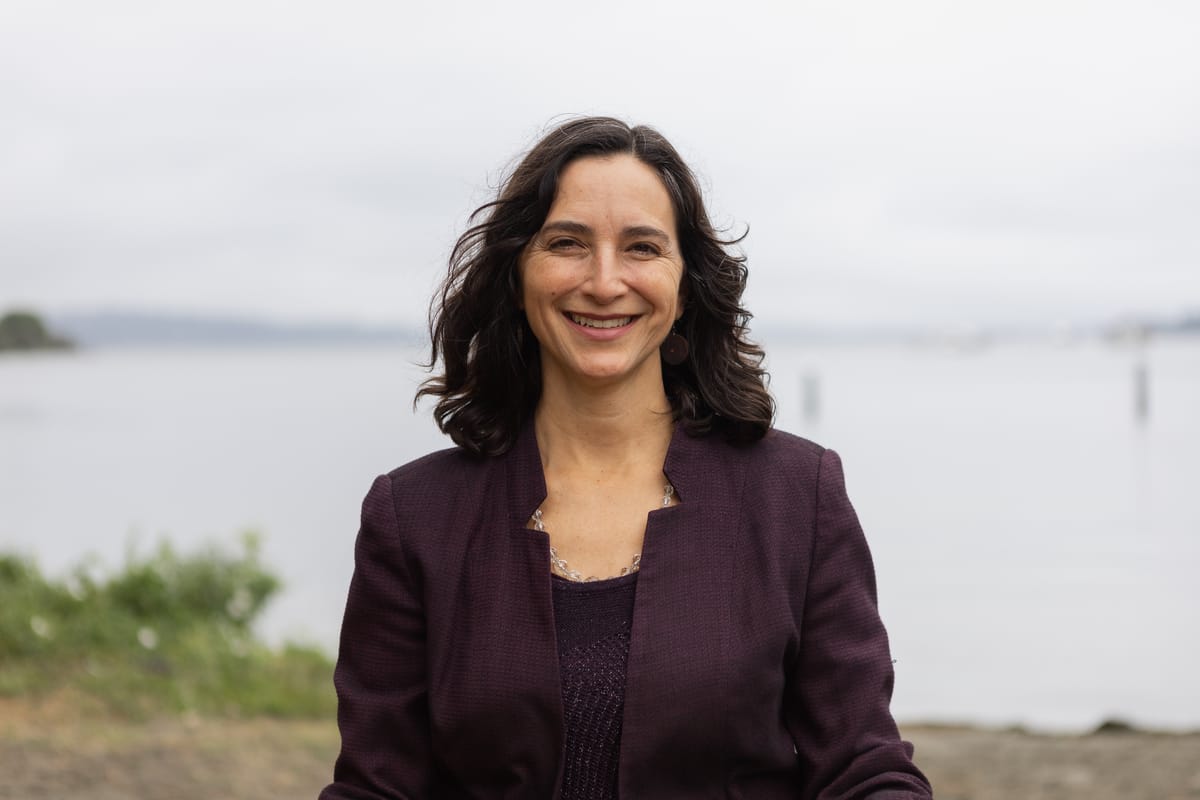
Senator Rebecca Saldaña is preparing for her 10th year representing South Seattle's 37th Legislative District with plans to address healthcare access, immigration protections, and Washington's budget shortfall.
In a recent interview on the Hacks & Wonks podcast, Saldaña outlined her priorities for the January legislative session. She said her work remains grounded in the experiences of immigrant and refugee families, working people, LGBTQ residents, and those fighting displacement in her district.
Healthcare and Social Services Under Threat
Federal cuts to Apple Health and Medicaid threaten funding for public health infrastructure. Saldaña said the state is working on multiple fronts to respond.
Washington is partnering with Attorney General Nick Brown to sue the federal government over patient privacy. "Like when you're going to their doctor, what kind of insurance you're using - that should fall under HIPAA and should not be used for other purposes," she said.
The state is also working with the health care authority and community health clinics "to figure out how we manage through both the federal government's attacks and trying to change and manipulate healthcare for their own political gains as opposed to respecting that healthcare is a human right."
Washington has brought its uninsured rate down to about 6% and has been working to ensure healthcare insurance covers behavioral health and to compensate doulas equitably. Saldaña said protecting healthcare in the 37th District includes supporting the Tubman Health Center, "a model of community-driven health, healing, and justice."
She was frank about the limits: "We cannot actually fill the gap of what the federal government provides. We saw this when we were facing SNAP cutoff. We're going to see this as work requirements become stricter around being able to access food. Again, this is cruelty coming from a federal government and we can't prevent all harm."
Despite challenges, Washington is moving forward on portable benefits. The long-term care trust fund is "finally coming online next year" to help people avoid bankruptcy as they age. She also highlighted paid family medical leave as "one of our most popular programs."
On universal healthcare, Saldaña pointed to Cascade Care as Washington's strategy. Cascade Care is the state's public option health insurance program, available through Washington Healthplanfinder for people who don't have employer coverage and don't qualify for Medicaid or Medicare. She said the state is working to "tighten up our laws so that they stand alone, regardless of what's happening at the federal level."
Immigration Legislation
Saldaña said she's focused on "Trump-proofing the state of Washington and making sure that here in this Washington, that we stick with all of our neighbors."
This includes protecting healthcare access and reproductive justice for all, including trans and non-binary community members. On immigration specifically, she outlined several legislative efforts.
She will prime-sponsor legislation with Attorney General Nick Brown to clarify that Immigration and Customs Enforcement (ICE) agents need proper warrants to enter businesses. The bill would spell out that businesses and workers have rights and don't need to allow ICE onto their properties without warrants showing actual law violations.
"It means that I will be working with our Attorney General, Nick Brown, and prime-sponsoring legislation to continue to clarify and say that ICE is not welcome. And that businesses and workers have rights and do not need to let ICE into their properties if they do not have the actual warrants and aren't able to make the case that there's actually laws being broken," she said.
She's also working with Senator Valdez and House colleagues on legislation addressing masked individuals detaining community members. "And that we also are working with Senator Valdez in the Senate and with our House colleagues and making sure that masked people are not kidnapping our neighbors."
Another priority is adding immigrant status (both perceived and actual) to the Washington Law Against Discrimination. "It means doubling down and focusing on building on all the work we've done to protect immigrants by putting the immigrant status - perceived and real - into our WLAD, which is our Washington Law Against Discrimination."
Tax Reform Proposals
She explained the current problem: most workers have payroll taxes taken out of every dollar they earn, but once someone's salary goes above the Social Security cap, they stop paying in on those additional dollars. "If your salary is above that - on that above dollars, you're not having anything taken out of that and that's just straight cash into your pocket," she said.
The issue, according to Saldaña, is that when high earners don't pay into these programs above the cap, the programs become underfunded. "But what we know is our Social Security, a lot of our benefit programs are not sustainable because more and more people are making so much more over that threshold that it is making all of our programs that are part of the critical safety net not solvent or having fiscal challenges."
This means regular people who rely on these benefit programs don't get adequate support. "So that then has ripple effects in that people don't have enough money then to be able to pay for their healthcare, or they don't have enough money to be able to pay for their rent increases, and they don't have enough money to be able to fully fund our education system."
Washington ranks 49th out of 50 states for tax fairness, with low-income residents paying the highest percentage of their earnings to taxes. The proposed payroll tax would work similarly to Seattle's JumpStart program and "would then go into funding where our gaps are and help us buy affordability for the rest of Washingtonians."
She noted that the problem is getting worse with recent federal legislation signed by President Trump. "And especially with the federal government and their HR1 that was just passed, all of these ultra-wealthy individuals that are overcompensated for their work are getting a huge continuance on even more tax cuts and benefits in their favor." HR1, signed in July 2025, extended tax cuts for high earners and is projected to add $3.2 trillion to federal deficits over the next decade.
"And so what we're saying is that in Washington state, we want a state that works for everyone. And so they have even more opportunities to be able to pay in to help fully fund our education so that we have kids that are healthy and happy and ready to learn - to become the workforce that we need, to become the entrepreneurs that we need, to become the next elected officials that we need to make our democracy vibrant."
School Funding
Saldaña said fully funding public schools will remain challenging and that this legislative session will likely focus on holding the line rather than making gains. Seattle Public Schools and other districts face funding crises that have put school closures and staff layoffs on the table.
"This legislative session, we are looking at holding the line. So last legislative session, we did put in significant investment and made some adjustments to how we fund and allocate for special education. Also addressing our ways that we can help partner with our locals to be able to address that funding," she said.
She acknowledged the difficulty parents face. "I wish I had better news in this space. As a parent myself and going to our local PTSA meetings, this is something that's very much top of mind for all of our folks. And we're looking and seeing that it has disparate impacts."
Saldaña said she'll work closely with Seattle's new school board and superintendent to figure out "ways that we keep on patching until we get these kinds of revenues and how we stand together in this moment to keep things together when we have a federal government that is defunding and not being a partner."
The payroll tax proposal is part of her strategy to eventually fully fund education, but significant gains won't come this session.
Climate Policy
Saldaña discussed environmental issues in the 37th District, where some Seattle neighborhoods have life expectancies up to 10 years shorter than others because of pollution from automobiles and industrial sources.
The Climate Commitment Act and the HEAL Act remain in effect, requiring big polluters to pay into programs that fund community projects. Washington's Move Ahead Washington transportation plan continues its 16-year focus on clean transportation, including free transit for kids.
She's working with colleagues from the 34th and 37th districts on a letter to the Puget Sound Clean Air Agency. Over 400 signatures from the Duwamish River Community Coalition express concerns about a rushed permitting process for an energy-intensive factory in Georgetown.
Saldaña highlighted the state's healthy housing investment program, which addresses polluted properties that could become affordable housing. She pointed to the Estelita's Library and Solidarity House projects on Beacon Hill as an example.
"Our newest project that we've invested in is Estelita's on Beacon Hill. And they're turning a former gas station into…they're going to soon be breaking ground on affordable housing and a permanent home for the community social justice library that is Estelita's," she said.
What's Next
Saldaña was frank throughout the interview about the limits of what the state can do. With a hostile federal government working to cut state programs, Washington can't fill all the gaps that will be created.
But she said the state needs to stick to its values and focus on the most vulnerable communities. She encouraged constituents to contact her office and join advocacy groups for lobby days at the Capitol.
Saldaña enters what will likely be a tough legislative session with clear priorities: protect healthcare, defend immigrants, reform taxes, and maintain services, even as federal policies threaten to undermine those efforts. Whether the state can generate enough revenue to maintain its safety net while filling federal gaps remains an open question.
About the Guest
Senator Rebecca Saldaña
Senator Rebecca Saldaña represents Washington state’s 37th Legislative District, which includes parts of South Seattle, Renton, Madrona, the Central District, Leschi, Beacon Hill, Columbia City, Rainier Valley, and Bryn Mawr-Skyway. A proud Chicana of Mexican and German heritage, Saldaña grew up in Seattle’s Delridge neighborhood. Her upbringing, shaped by economic and environmental challenges, instilled a deep commitment to conservation, resilience, and justice.
Her father, a Mexican immigrant and former farmworker who became a machinist, worked in Georgetown near one of Seattle’s largest polluters. Her mother, a social worker, came from a family of Midwest farmers. These experiences fueled Saldaña’s determination to advocate for communities disproportionately affected by environmental and social injustices.
Saldaña earned a degree in theology and humanities from Seattle University, where she studied theology, Spanish, and feminist philosophy. She began her activism in college, organizing farmworkers in Oregon as part of Movimiento Estudiantil Chicano de Aztlán (MEChA), gaining firsthand experience in multiracial organizing. After graduation, she dedicated herself to labor and community organizing, working with Oregon’s farmworker union PCUN, the United Farm Workers, and SEIU Local 6 in Seattle. Her advocacy career later led her to serve as executive director of Puget Sound Sage, a nonprofit focused on affordable housing, transportation equity, environmental justice, and workers’ rights.
In 2016, Saldaña was appointed to the Washington State Senate, where she quickly became known as a tireless advocate for historically oppressed communities. As a legislator, she has led efforts to protect workers’ rights, promote sustainable development, create equitable transportation solutions, and expand voter access.
Saldaña chairs the Senate Labor & Commerce Committee and serves on the Agriculture & Natural Resources, Rules, and Ways & Means committees. She is an active member of the Senate Members of Color Caucus and the Latino Democratic Caucus. She previously served on the Social Equity in Cannabis Task Force and the Joint Legislative Audit and Review Committee, where she worked to advance equity in policy and legislative processes.
Her legislative achievements include sponsoring and passing the HEAL Act, the first statewide law addressing the disproportionate environmental hazards faced by Black, Indigenous, and other communities of color, and the Washington Voting Rights Act, which has expanded access to democracy for historically marginalized groups.
Saldaña lives in the Rainier Beach/Skyway area with her husband and their two youngest children. She continues to challenge traditional policymaking by bringing impacted communities directly into the legislative process, ensuring voices from all walks of life shape Washington’s future.
Resources
Senator Rebecca Saldaña | Washington State Legislature
Senator Rebecca Saldaña | Washington Senate Democrats
Podcast Transcript
[00:00:00] Crystal Fincher: Welcome to Hacks & Wonks. I’m your host, Crystal Fincher. On this show we talk with policy wonks and political hacks to gather insight into local politics and policy in Washington state through the lens of those doing the work, with behind-the-scenes perspectives on what’s happening, why it’s happening, and what you can do about it.
So today I am thrilled to be welcoming Senator Rebecca Saldaña back to the program. Thank you so much for coming back, and we're so thrilled to have you.
[00:00:45] Senator Rebecca Saldaña: Thank you - I'm really excited to be here.
[00:00:48] Crystal Fincher: Senator Saldaña is the state Senator for the 37th Legislative District, covering lots of South Seattle. So I just kind of want to start - there's a lot on the docket that needs to be addressed, there's a lot that people are dealing with. So as we look forward to this legislative session that's going to be starting pretty soon in January - What are the priorities? How are you preparing for this session?
[00:01:15] Senator Rebecca Saldaña: Well, thank you so much for having me. And this is a time where I'm meeting with constituents and stakeholders and anyone that is interested in what's happening at the state level to prepare. And I think, first of all, what I do when I'm preparing for next session is to just take a pause and ground myself in where we've been and to help inform where we're going. So I had the honor to begin representing the 37th Legislative District when Trump first came in office in 2016. And next year will be my 10th year. And in that time, especially once the Democrats took majority in 2018, we've been consistently focusing on putting people first. And for me, that means keeping my work grounded in lived experience of our communities in the 37th - our immigrant and refugee families, our working people, our LGBTQ neighbors, and longtime residents that have been fighting against displacement. And so we must continue asking - Are we undoing harm? Are we expanding opportunity? Are we advancing racial equity? And so that is the lens that I am bringing into this upcoming session. And so that means continuing to undo historic harms and strengthening worker protections. It means building the safety net and fighting off the federal government that is looking to rip it apart - but instead making sure that we are strengthening our safety nets, our community infrastructure that our communities deserve. And so over the last decade, that's been about affordable housing, investing in behavioral health systems, community-led economic development, and supporting local infrastructure that's built with and not for community - but it's with and for. So that's why we're doing it.
And it's centering racial equity and doubling down that Black Lives Matter in our state and in our communities. And so I was part of the leadership that championed to try to undo I-200, the anti-affirmative action policy. And unfortunately, as we all know, there was a misleading campaign that kept voters from affirming our work that we did in the Legislature. It's continue to defend the Community Reinvestment Act that the Black Caucus and Representative Morgan and I were able to put in place - and making sure that we don't lose any traction - that we did lose some last year and that we can't go further back. And it's about supporting the work of Representative Street, my colleague, and calling for a reparations study - and making sure that we continue to see that work through and continue to be a partner with our communities. And it's supporting and continuing - making sure that as our healthcare is under attack, that here in the 37th, we are wrapping our arms around and protecting the kind of healthcare that our communities deserve. And that means continuing to support the work of the Tubman Health Center, which is a model of community-driven health, healing, and justice rooted in the 37th that will be a beacon of what healthcare should look like for all of us - by making sure we stand there.
And it's really protecting our communities and continuing to strengthen what we already started of Trump-proofing the state of Washington and making sure that here in this Washington, that we stick with all of our neighbors. And so that's protecting our communities from Trump's chaos and cruelty. This means that we will continue to shore up and support healthcare access, reproductive justice for all - including our trans and non-binary community members. It means doubling down and focusing on building on all the work we've done to protect immigrants by putting the immigrant status - perceived and real - into our WLAD, which is our Washington Law Against Discrimination. It means that I will be working with our Attorney General, Nick Brown, and prime-sponsoring legislation to continue to clarify and say that ICE is not welcome. And that businesses and workers have rights and do not need to let ICE into their properties if they do not have the actual warrants and aren't able to make the case that there's actually laws being broken. And that we also are working with Senator Valdez in the Senate and with our House colleagues and making sure that masked people are not kidnapping our neighbors. So these are some of the things we're working on.
And I'll say, like the last thing, of course, is that we do have a challenge with our budget and that we continue to have a somewhat upside-down tax code, even though over the last 10 years we have been diligently trying to hack at that. We've made big banks pay and we've made those that are wealthiest with capital gains - of unearned capital gains - being able to invest that into building out and starting to work towards having childcare workers work valued, with the dignity and the wages that they deserve - with our Fair Start for Kids. We've put a price on carbon that makes the biggest polluters pay and have embedded our HEAL Act with environmental justice and making sure that we're investing into the clean-fueled energy future by investing in our communities and partnering with our sovereign nations. And last session, the Senate did take a vote on that wealth tax. And so I know that I'll be working with Representative Scott to bring back a payroll tax as one of the options that we're looking at. I know we're actively in conversations about how do we take the next step to make sure the wealthiest among us - those that have the most means - are able to pay their fair share and be able to provide some relief to the folks that are feeling overburdened because everything's going up. And so the taxes that they're paying through sales tax is feeling untenable, right? And so those are definitely all on the table next year for the Legislature. And we'll be working hard with our executive, Governor Ferguson, to figure out what we can get him to support and what will make sense this next session. But definitely all that will be part of the conversation - and I'm excited to be a support and a vote because I know that's what my district wants and needs.
[00:08:37] Crystal Fincher: Absolutely. Now I want to talk a little bit more about the state's budget situation, the revenue situation. As we've covered, we still have one of the most regressive taxation systems in the country - we're currently number 49 out of 50 - meaning that people with the lowest incomes pay the biggest percentage of their earnings to taxes. The people with the highest incomes - and we're in a very high income area with a lot of billionaires, a lot of hundred millionaires, ten millionaires - we're not talking about people who are in the six figures. We're talking seven, eight, nine, and beyond here. But they're not paying much. And a lot of times when you hear things like - Whoa, Washington doesn't have an income tax, that's great for everyone, right? Well, really, it's great for extremely high wealth individuals. Not great for basically anyone who has a job - would generally be doing better in a less regressive system than what we have now. So you talked about a wealth tax, potentially a payroll tax. Is the payroll tax that you're looking at kind of similar to JumpStart and what we have in Seattle? What would that look like? And what do you think that would be able to accomplish?
[00:10:00] Senator Rebecca Saldaña: Yeah, so it will look similar. And what it would do, and I haven't gotten the new fiscal on the new version of the legislation - and I definitely need to give props to Representative Scott, who is going to be taking the lead on the House. And I will be his partner in the Senate. But the idea is that it would raise a significant amount of dollars. And for people that know, like the wealth tax, what it is is that all of us, the majority of us when we work a job, we have payroll tax that's removed. But if your salary is above the Social Security cap, so I think it's $127,000 - something in that range, $150,000. If your salary is above that - on that above dollars, you're not having anything taken out of that and that's just straight cash into your pocket. Which is great for those individuals. But what we know is our Social Security, a lot of our benefit programs are not sustainable because more and more people are making so much more over that threshold that it is making all of our programs that are part of the critical safety net not solvent or having fiscal challenges. So that then has ripple effects in that people don't have enough money then to be able to pay for their healthcare, or they don't have enough money to be able to pay for their rent increases, and they don't have enough money to be able to fully fund our education system. And especially with the federal government and their HR1 that was just passed, all of these ultra-wealthy individuals that are overcompensated for their work are getting a huge continuance on even more tax cuts and benefits in their favor. And so what we're saying is that in Washington state, we want a state that works for everyone. And so they have even more opportunities to be able to pay in to help fully fund our education so that we have kids that are healthy and happy and ready to learn - to become the workforce that we need, to become the entrepreneurs that we need, to become the next elected officials that we need to make our democracy vibrant. And so what the payroll tax would be is that over that certain threshold, we would charge a commensurate rate that would then go into funding where our gaps are and help us buy affordability for the rest of Washingtonians. So that's the concept of that bill. And like I said, I do know that there's active conversations about what is our strategy to - in lieu of a progressive income tax - that we create a pathway for people on the highest end to be able to contribute income to help fund our state government and fully fund our education system.
[00:13:08] Crystal Fincher: Absolutely. And I also want to talk a little bit more about funding the education system. This is a really hot topic of conversation in Seattle Public Schools and in so many other school districts around the state. There is a funding crisis - both in Seattle Public Schools, in many other districts - where structurally they just don't have the revenue to continue operations as they currently are. School closures have been talked about - they're on the table. Laying off significant amounts of staff has been talked about and is on the table - and is very concerning to a lot of parents in the district. What can be done, what needs to be done to fully fund our schools and how close can we get in this legislative session?
[00:14:01] Senator Rebecca Saldaña: This legislative session, we are looking at holding the line. So last legislative session, we did put in significant investment and made some adjustments to how we fund and allocate for special education. Also addressing our ways that we can help partner with our locals to be able to address that funding. So I think this year - it's going to be a really hard year to make significant gains. So I think that's the part that we are challenged at. I wish I had better news in this space. As a parent myself and going to our local PTSA meetings, this is something that's very much top of mind for all of our folks. And we're looking and seeing that it has disparate impacts. We do have a new school board and we have a new superintendent. So I know we'll be working closely with them as we're trying to figure out ways that we keep on patching until we get these kinds of revenues and how we stand together in this moment to keep things together when we have a federal government that is defunding and not being a partner and actually looking to undermine all the public education from higher ed to our K-8 program.
[00:15:23] Crystal Fincher: Well, and you talk about the defunding. One of the major areas of strain and potential defunding is with Apple Health and Medicaid and the loss of revenue there, which is responsible for really so much of funding a lot of our public health infrastructure, the services that so many residents - so many kids - rely on to have access to healthcare and that being in jeopardy. And healthcare overall - people with private insurance are facing significant increases in premiums coming up next year, on top of all of the other people who are potentially facing losing access. So this is kind of a tidal wave that's getting ready to hit us. How can we be prepared as a state for what's coming?
[00:16:15] Senator Rebecca Saldaña: Yeah. So, I mean, first of all, this is where we are partnering with our attorney general to sue the federal government as often and as regularly as we can to hold the line on protecting our patients and our constituents' privacy. Like when you're going to their doctor, what kind of insurance you're using - that should fall under HIPAA and should not be used for other purposes. This is where we are working closely with our health care authority to monitor, and with our community health clinics to figure out how we manage through both the federal government's attacks and trying to change and manipulate healthcare for their own political gains as opposed to respecting that healthcare is a human right. So I think - we're working closely with them to figure out how do we, again, hold the line. In Washington state, we have been the most creative, the most inventive about how do we leverage the Affordable Care Act to ensure as many people have access to health insurance. Thanks to the last two years where we finally were able to get out of some of the bad policies that we had to make during the recession and get everyone covered again - we're at Washington State have been at a 6% coverage. And then have been working to try to make sure that our healthcare insurance actually covers behavioral health as healthcare, making sure that we compensate equitably doulas and more culturally competent care in general. And so this is a place where I think - it's essential - this is where our budget conversations are going to be focused on, is doing everything we can to retain the current level of coverage that we have and mitigate the impacts of the federal government. And it's going to take every single moment for us to be able to figure out how we do this because we cannot actually fill the gap of what the federal government provides. We saw this when we were facing SNAP cutoff. We're going to see this as work requirements become stricter around being able to access food. Again, this is cruelty coming from a federal government and we can't prevent all harm - that is going to be our challenge next session. But what we must do is make sure that we are centering our values, working with our community to be able to make the best decisions that we can to protect and stand with our most vulnerable in this moment.
[00:18:56] Crystal Fincher: Now, we have an insurance commissioner who has said that she wants to help establish universal healthcare in Washington. And a lot of people renewing their call for this in the wake of all of the reduction of benefits, lack of access to healthcare being exacerbated by the federal government. Is this something that we're able to move towards? Will this help potentially provide independence from the federal government? Or is that still something that has a lot of foundation that still needs to be laid?
[00:19:33] Senator Rebecca Saldaña: Yeah, well, I think a couple of things. One is that Cascade Care is our strategy towards universal care in Washington state. And what we have done, right, is try to match for those that didn't qualify on the subsidies - created that system in Washington state for people. The challenge, of course, is like, how do we keep the levels up when the federal part of it is just being cut? The other piece is that we have built our AppleCare and our Cascade Care on matching the levels. And so when those go away, I think one of the things that we are going to be having to look at is how do we make sure that we're matching it based on the best practice that we had before this federal government. And so I do think that we're looking at different ways to tighten up our laws so that they stand alone, regardless of what's happening at the federal level. So that's a real issue.
The other piece that I'll say is - even in the midst of all the cuts, Washington state is pushing forward on creating portable benefits that address some of the needs of healthcare. So one is that our long-term care trust fund, which is about helping people stay in place without having to go bankrupt as they're aging or they need accommodations and assistance - that is finally coming online next year, where our first beneficiaries are going to be able to receive that benefit. We're going to be working hard on our paid family medical leave to make sure that it is solvent and sustainable. It's one of our most popular programs that we have - again, that provides critical assistance and support when people are celebrating momentous times, but also when they're having to face really challenging times with their health. Being able to provide that program that's available to all Washingtonians that meet the work and the qualifications. So I think that our challenge is we're going to keep on pushing forward, but it is going to be really hard because even if we do all of the revenue and change the laws, the gap that we're going to have - if that federal partnership goes away - we know is real. I definitely am hearing from folks about how untenable it is to keep their insurance if they don't have the subsidies.
[00:22:05] Crystal Fincher: Yeah. Absolutely. Now, I also want to talk about just how we're progressing on climate and pollution mitigation. This has been a longstanding priority of yours, of the Democratic majority in our State Legislature. And right now, in addition to so much that we're seeing from the federal government, are the elimination of regulations to prevent pollution, to prevent CO2 emissions - a lot of companies rolling back their targets to reduce that. And so we're seeing some of the impacts potentially accelerate that people are facing. And particularly in the 37th District, where there are Seattle neighborhoods in the 37th that have life expectancies up to 10 years shorter than those in other Seattle neighborhoods - largely because of the proximity to pollution, whether that's from automobiles, prior pollution and spills. We're having this conversation as there's a pipeline leak right now that's impacting our area. What are the priorities, or what can be done to help mitigate these impacts for residents of the 37th and beyond?
[00:23:27] Senator Rebecca Saldaña: Yeah. So first of all, our Move Ahead Washington 16-year transportation investment plan is still in effect in terms of where we're putting those investments, which is in clean transportation sector investments - into our buses, into getting kids free access to transportation. Those continue. Washington state is partnering with California and Oregon and British Columbia to create a West Coast front where - again, still big polluters are paying, they're having to pay in. That money is being reinvested back into our communities. That continues to be an issue. When we passed the Climate Commitment Act and the HEAL Act, which is our environmental justice and statute, that still is the law for our seven agencies that are governed by the HEAL Act and Climate Commitment dollars. That we have our air quality monitoring that is still not just in the 37th but throughout Washington state, where we as a state have commitments to not just reduce carbon, but to reduce other co-pollutants as well.
I know that right now the Duwamish River Community Coalition has over 400 signatures because of their concerns of a permitting that is being steamrolled through Puget Sound Clean Air Agency and EPA - that they feel like it's being steamrolled - that is not providing partnership with community to make sure that we're building in the monitoring and the independent testing about one of our energy intensive factories in Georgetown. And so I'm currently working with my colleagues in the 34th and the 37th to do a letter that will be asking the Clean Air Agency - they're not beholden by the HEAL Act, they're independent - but much of our state where they do not have an independent or have the capacity to have something like the Clean Air Agency, it is the Department of Ecology that oversees the monitoring of air quality in much part of our state. And so we believe that the 37th and the people under Puget Sound Clean Air Agency deserve to have the same kinds of commitments and protections and want to make sure that they are actually partnering and working with community as they're making decisions around permitting. So that is one really specific thing that is there.
But I think while those numbers are true, we have worked hard to get mitigation. So we have the healthy housing investment that is run by our Department of Ecology. And that is how in the 37th, we are slowly addressing the harms of a pollution economy. So, where we have property that could be affordable housing, but because there was a laundromat there before, or there was a gas station - there's pollutants, right? And so our newest project that we've invested in is Estelita's on Beacon Hill. And they're turning a former gas station into - I think they're going to soon be breaking ground on affordable housing and a permanent home for the community social justice library that is Estelita's. And we will continue to work on that. It is harder, of course, when we have a federal government that's trying to undermine that. But we still have our state laws in place. And we're building a strong foundation and partnership with the West Coast to be an alternative to what the other coast is trying to do to us.
[00:27:27] Crystal Fincher: Absolutely. And I'm so excited for that project coming up - that's going to be incredible. Well, thank you so much for joining us today, Senator Saldaña - for your insight and an overview of what is upcoming and what we can expect this session. If people want to get in contact with you or your office, what can they do?
[00:27:47] Senator Rebecca Saldaña: They can find me on most of the social medias - not all of them, but I'm there. And also they can write to me directly - rebecca.saldana@leg.wa.gov. My legislative assistant is amazing. Her name is Teresa Arciniega-Ruiz, and she takes in hundreds of emails and requests for meetings - so we're definitely trying to squeeze in as many in-person meetings as we can before session starts. But also hope that the 37th will consider - whatever their cause is, there is an association or a group of folks that organize a Lobby Day to come down - come down, make their voices heard. You're not alone. Whatever you're caring about, there's other neighbors that care about that too. And you can be part of a bigger community - advocating and making sure that your voices are centered as we are making decisions this next session.
[00:28:47] Crystal Fincher: All right. Well, thank you so much for joining us today, Senator Saldaña.
[00:28:51] Senator Rebecca Saldaña: Thank you so much - appreciate it.
[00:28:54] Crystal Fincher: Thank you for listening to Hacks & Wonks, which is produced by Shannon Cheng. You can follow Hacks & Wonks on Bluesky @HacksAndWonks. You can find me on Bluesky at @finchfrii - that's F-I-N-C-H-F-R-I-I. You can catch Hacks & Wonks on every podcast service and app - just type "Hacks and Wonks" into the search bar. Be sure to subscribe to get the full versions of our Friday week-in-review shows and our Tuesday topical show delivered to your podcast feed. If you like us, leave a review wherever you listen. You can also get a full transcript of this episode and links to the resources referenced in the show at officialhacksandwonks.com.
Thanks for tuning in - talk to you next time.