
Week in Review: April 17, 2026 - with Robert Cruickshank
Crystal Fincher and Robert Cruickshank break down the news of the week

On this week-in-review, Crystal Fincher and Robert Cruickshank discuss:
⚔️ Progressive Democrats take on moderate incumbents
🚈 Sound Transit 3 in crisis
🏘️ Mayor Wilson’s housing proposals
💯 Katie Wilson’s first 100 days
🧑🏫 Seattle Public Schools debates how to handle educator misconduct
About the Guest
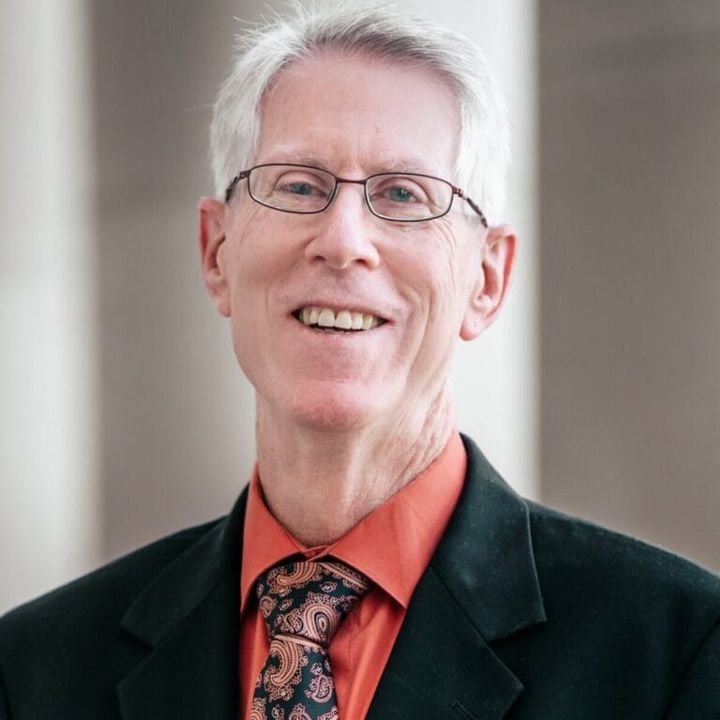
Robert Cruickshank
Robert Cruickshank is a long-time communications & political strategist.
Find Robert on Bluesky at @robertcruickshank.com.
Resources
“As Trump craters, it’s Democrats in WA going at one another” by Danny Westneat from The Seattle Times
“Ballard Pushes to Save Its Light Rail Station” by Doug Trumm from The Urbanist
Save Ballard Rail - March to Save Ballard Rail on Sunday, April 19 at 1PM in Ballard
“Op-Ed: Reconnect and Automate Ballard to West Seattle Rail to Save ST3” by Scott Kubly and Trevor Reed for The Urbanist
“Wilson, Housing Advocates Rally for Bolder Seattle Growth Plan” by Doug Trumm from The Urbanist
“‘Where’s the action?’ Seattle Schools superintendent pledges to streamline handling of sexual misconduct cases” by Sami West from KUOW
“Issue 25 – Notorious Principal Gets Assigned to Another SPS Elementary School” by Robert Cruickshank from The Bulletin
“Seattle Public Schools boss unafraid to turn the mirror on district” by The Seattle Times Editorial Board
Find stories that Crystal is reading here
Listen on your favorite podcast app to all our episodes here
Podcast Transcript
[00:00:50] Crystal Fincher: Welcome to Hacks & Wonks. I'm your host, Crystal Fincher. On this show, we talk with policy wonks and political hacks to gather insight into local politics and policy in Washington state, through the lens of those doing the work, with behind-the-scenes perspectives on what's happening, why it's happening, and what you can do about it.
Today we are continuing our Friday week-in-review shows where we review the news of the week with a co-host. Welcome back to the program, friend of the show and today's co-host: longtime communications and political strategist Robert Cruickshank.
[00:01:37] Robert Cruickshank: Hey, thanks for having me back again, Crystal. It's always nice to be on.
[00:01:40] Crystal Fincher: Absolutely. Great to have you on. Well, we've got a few things to talk about today. I want to start off talking about the legislative elections that are taking place here in Washington state. They're shaping up. We've still got about a month to go until the filing deadline for everyone to declare - definitively once and for all - whether or not they're going to be running. But we know about a number of races. And Danny Westneat had a column talking about these and his framing. But some people were expecting - because of the unpopularity of federal policies, Trump at the federal level, how they're polling here in Washington - to see a lot of Republican challenges. But what we are seeing is a number of challengers to incumbent Democrats. What are we seeing and what's driving this?
[00:02:31] Robert Cruickshank: Well, I think it's a really interesting development at the state legislative level where a number of longtime incumbent Democrats - including the state Senate Majority Leader, Jamie Pedersen, who represents the 43rd District in Seattle, Capitol Hill, Downtown - are facing challenges from more progressive opponents. And these aren't just, you know, sort of like random activists who are showing up unhappy with the direction of the party. A lot of these challengers are longtime insiders, people have been working in politics for a long time. People like Ron Davis, for example, running against Gerry Pollet in Northeast Seattle in the 46th District. Pedersen's challenger, Hannah Sabio-Howell, has been a longtime progressive advocate - worked for Working Washington, which is a labor-backed organization to support workers' rights. Over on the Eastside, there are two Redmond City Councilmembers, Vanessa Kritzer and Jessica Forsythe, who are taking on incumbent centrist Democrats in the legislature.
And it's sort of modeled, I think, in many ways on what Katie Wilson did last year running against Bruce Harrell as Seattle mayor. Katie Wilson obviously was new to elected office, but not new to Seattle politics. She was a longtime political insider as well. And what you're seeing is this trend then of people seeing that the State Legislature needs to be doing better - that they have failed on tax reform, they have failed on funding schools, they have failed on funding transit, they have failed on housing. They even failed to pass simple bills like tackling copper theft and improving the ferry system. And what has started to happen is these people who do that work - inside Olympia, inside the State Capitol - are getting fed up and recognize that we don't have to tolerate a Democratic majority in Olympia that can't deliver. As Washington state becomes bluer, as Republicans struggle to win elections - we're no longer in a situation where we were 10 years ago, where Republicans had a narrow control of the state Senate and almost had the state House. Stable majorities now mean greater expectations. And people are expecting more from Democratic incumbents. And when they're not delivering, progressives are willing to step up and challenge.
[00:04:42] Crystal Fincher: I think you got that exactly right. While there certainly have been a number of people who've been surprised by the number of challengers to Democratic, mostly centrist or moderate incumbents, a lot of people aren't. This has been percolating for a long time. We've seen similar races leading up to it and growing sentiment encouraging things in this direction. What do you think is at the root of - some people would call it a disconnect between where moderates are in the party and progressives, or between the donor class and the actual voting base of the party? What's driving this?
[00:05:21] Robert Cruickshank: I think it is - anytime you have incumbents who've been in power for a long time and have not really faced a strong challenge, it becomes easy for them to sort of take the path of inertia and not really have to do the difficult work. Now, there is one notable exception to this, which is Jamie Pedersen himself championed the Millionaires' Tax. So that is a big achievement. But he's now going to have to go defend that and his entire record, which has not always been as progressive, at the ballot box. And that's healthy. Because when you get challenges to incumbents, even if the incumbent winds up winning, they still have to show that they are being responsive to the public. And I think that what has happened over the last 10 years is that it became easy for the Democratic majority in Olympia to not stick their neck out as much, to not really take voter concerns seriously, especially when it comes to - whether it's school funding, or problems with healthcare, problems with housing. They've done some things on that - I don't want to say they've done nothing. They have tried to pass a few bills here and there. But as we saw in this last session, so many good things failed. Or even with the Millionaires' Tax - when it passed - it came laden with other tax cuts to benefit the rich and to benefit some corporations.
And so there is this disconnect that has grown over time. What incumbent Democrats will often say is - Well, this is just what we have to do to protect our majority. If we don't cut these deals, then these big corporations will spend a bunch of money to elect Republicans and then we'll have a MAGA majority in Olympia. But people recognize that's not going to happen - that's not a credible threat anymore. And now what is up for grabs is not whether Republicans or Democrats control Washington state. It's whether the Democrats, who everyone agrees will control Washington state, are actually going to deliver to solve people's problems and do so in ways that the public wants. And that is a disconnect that is coming home to roost for over half a dozen incumbent Democrats so far just around the Puget Sound region this year.
[00:07:16] Crystal Fincher: You know, that's a great point. And this is even carrying over into Congressional races, in a situation where Democrats are much more concerned with achieving the majority again in the House - where that's very much in question in both chambers. And they're fighting for that right now and really saying those are the stakes. Yet we're still seeing challenges in the First District, Tenth District, Ninth Congressional District, and now even in southwest Washington with Representative Marie Gluesenkamp Perez - all with challengers to their left, people paying more attention than I ever recall to the votes that our members of Congress are taking. Is the same kind of motivation behind these races and these challenges?
[00:08:02] Robert Cruickshank: I think so. And I think that when people look at what's likely to happen in the midterms, there's a widespread expectation that Democrats are going to take control of the U.S. House. Maybe even the U.S. Senate - we'll see what happens. And then that raises the next question - Well, what does that mean? What will that Democratic majority do with that power? And that voters are starting to look and think - I'm not entirely happy with the direction of this Democratic Party. I mean, that is one of the many factors that led to Trump's victory again in 2024 - was discontent at the direction of the Democratic Party. And that resurfaces here. As you believe that Democrats can take power, people want to make sure that that Democratic majority is going to deliver for people, going to deliver on priorities such as ending support for the war in Iran, ending - we just saw this morning - ending support for Israel's own military attacks on civilians all over the Middle East. What is the Democratic majority going to do about taxing the rich, about growing the economy, all these problems. And voters are demanding change. They are not going to just fall in line behind the way the Democratic Party has done things in the past. And I think that is an important part of the political moment we're in, both at the state and federal level. And Democrats who don't understand this, don't see this coming, and don't respond to it are honestly increasingly putting their own seats at risk.
[00:09:24] Crystal Fincher: Well, we'll certainly continue to pay attention to this and talk more in detail about races and talk directly to candidates as these races unfold.
Now I want to turn to talking about Sound Transit 3, which is in crisis. We have seen absolute enthusiasm, ridership exceeding projected expectations right off the bat with the opening of the 2 Line going all the way across the Eastside into and through Seattle. Yet there is news about exorbitant cost estimates continuing to skyrocket and that putting potential expansion plans that have already been approved by voters in danger. What's happening and how is the community responding?
[00:10:11] Robert Cruickshank: Yeah, well, 10 years ago - 2016, at the same time Trump won the presidency - we in the Puget Sound region passed ST3, a massive expansion of the rail network. We're going to connect West Seattle and Ballard and Everett and Tacoma and Kirkland and Issaquah - it's going to be great. 10 years later, not much has progressed in terms of the planning for this, but the cost estimates have soared. Some of that is unavoidable because of inflationary pressures that have happened all over the country and all over the world. But a lot of it is due to the fact that Sound Transit's construction costs are just higher anyway. We are so much more expensive to build transit here in Seattle - and in the US, generally speaking - than anywhere else in the world, including Europe. Like there are studies that show Madrid, Rome, Istanbul - these ancient cities where if you dig a tunnel for a train, you're going to unearth all these ancient artifacts, they have strong labor protections, environmental protections - can build subways for significantly less than we do here in the United States and in the Puget Sound region.
So what that has done is create a $35 billion budget gap between what was projected it would cost to build the ST3 system and what they believe it actually will cost. And so that has to be solved. And Sound Transit has three options before it - it can seek more money from the legislature or from voters. It can figure out how to bring those construction costs down. Or it can say - You know what, we're not going to be able to build the entire system. Someone is going to get the short end of the straw and we're cutting you off. And increasingly, it's the Sound Transit leadership seems to say - We're going to cut off rail to Ballard. They presented last month at a board retreat a proposal that would stop the Ballard line short at Seattle Center potentially. And just this week, up at a public meeting in Everett, Snohomish County Executive and Sound Transit Board Chair Dave Somers and Everett Mayor Cassie Franklin both said - The solution here is to cut off rail to Ballard - which I think is absurd. We talk about whether Democrats can govern, whether blue cities and blue states can govern and deliver. Sound Transit should be able to build this system as voters approved it to all of these destinations - the entire ST3 system - without having to cut anything off. And their inability to pursue those revenue options or those cost-cutting measures that still get the whole system built is really surprising to me. And there's a growing amount of anger and pressure from the voters who strongly supported this saying - What are you doing here? We need to solve this rather than cut people off.
[00:12:44] Crystal Fincher: Well, and this is a huge question here. Now, the budget deficit is real, as is the threat of further loss of funding potentially from the federal government - as we see that used as a lever for broader policy initiatives from the federal administration and the willingness to use that as leverage. So what are the options to reduce costs? Because there is a deficit - so how can they accomplish it? I think people want to see it, but some people are going - Well, if the money isn't there, what do we do?
[00:13:18] Robert Cruickshank: Well, there's one proposal that actually just came out this week in The Urbanist from former SDOT Director Scott Kubly and transit advocate Trevor Reed. They wrote a proposal to automate rail - modeled on what Copenhagen does - build automated trains more like Skylink, or SkyTrain rather, in Vancouver. You can have shorter trains that come more frequently, which means you have smaller stations. And shrinking the size of those stations means you can build much more cheaply. Again, as cities like Copenhagen have found. They got transportation experts, former U.S. Department of Transportation leaders to weigh in on this. They sent it to Sound Transit two weeks ago and haven't heard a thing back, which I think is really concerning. That may not be the only solution. There are people who have said - Well, maybe we need to build elevated tracks rather than subways. Okay, let's look at all of these options. The Sound Transit has received from a technical working group over the years, a series of recommendations for how to change the permitting process, how to change the construction process so that it's still safe, still protects workers and pays them well, while delivering at a lower cost. But Sound Transit has not really looked closely at any of these solutions, and that's really surprising to a lot of people. But there are a number of technical experts out there around - not just our state, but around the country - who look at ST3 as a ambitious, bold thing that we need to be able to do and think - How do we make this happen? And are increasingly shaking their heads at Sound Transit leadership not really exploring these and just going straight to the idea that we have to cut the system back.
[00:14:50] Crystal Fincher: What does it mean if they do proceed without building Ballard? If they you do cut back on these stations that have been built, and areas around them have been built with density in expectation of this voter-approved initiative coming to fruition.
[00:15:09] Robert Cruickshank: I think it's catastrophic. This is one of the most important infrastructure projects we're looking at in our region, in our city this century. What we build now will last into the 22nd century - as far away as that sounds, it's only 75 years away. Our ability to reduce carbon pollution, our ability to get around without having to pay these exorbitant gas prices, our ability to meet that density that you described. Ballard is a regional center. They've built so much new housing in expectation that they will have a rail line. They've done their part. They voted yes on ST3. They're paying hundreds or even thousands of dollars a year in car tab fees to help fund the system. And they built the housing. I think if they get cut out, it's catastrophic politically as well. I think it'll make it very, very difficult for Sound Transit to pass anything at the ballot box in the future. And I think it could really come back to bite some of Seattle's elected officials. Mayor Katie Wilson was not part of this problem - she is brand new to the Sound Transit board. County Executive Girmay Zahilay - same thing, brand new to the Sound Transit board. They were not part of the problem, but I think their political futures really depend in large part on how they respond to this. If they come through and figure out how to get this whole system built, that is a huge feather in their cap. If they fail, if this project gets cut back on their watch - I think it's going to be really difficult for them at the next reelection.
[00:16:35] Crystal Fincher: Sounds so. Well, there certainly are a number of community advocates, organizations organizing to save Ballard Rail. Certainly, I think there's an event this weekend that's coming up. Is that correct?
[00:16:48] Robert Cruickshank: There is a huge group of people from Ballard - and from really around the city - who want to save this project, who are meeting at Gemenskap Park in Ballard that's on 14th, just east of 15th, near Ballard High School. They're going to actually march along the proposed rail line - through Interbay, down 15th - to Smith Cove, near Expedia, to demonstrate their support for the project. They're getting support from elected officials who will be there. And it's gathering a lot of momentum. And you're seeing this - not just in Ballard. Issaquah is showing up in big numbers. West Seattle has shown up in big numbers. There's huge turnout at the Everett Town Hall this week. People want more rail. They love it. They love riding across Lake Washington now. We want to see more of this and our politicians should be able to deliver.
[00:17:31] Crystal Fincher: Seems like it - they certainly should be. Well, I want to talk about Mayor Katie Wilson and her pretty significant housing proposal that she announced this week that is in-line with what she has campaigned on, and that helped lead her to victory. What did she announce?
[00:17:49] Robert Cruickshank: Yeah, well, I think, again, the two big things that Katie Wilson's administration are really going to be judged on, I think, are ability to deliver transit and ability to deliver housing. And she's really stepped up on the housing side. She's proposed several big things, including accelerating the Comprehensive Plan. Now, what Bruce Harrell was planning to do was - you know, we're going to upgrade our Comprehensive Plan, which determines what housing goes where. He really dragged it out and dragged his feet, which should have been done by the end of 2024, is still in process here in 2026. Katie Wilson said - We're going to accelerate a lot of this plan, that there would be a third and fourth phase that Harrell had envisioned happening years out in the future towards the end of the decade. Mayor Wilson says - We're actually going to do that in the next year or two. We're going to build more housing. We're going to have more neighborhood centers. We're going to expand the areas where we upzone and make it easier to build that density that our city needs. And that is a big deal. She said we're going to build faster, smarter, denser, taller. That is music to a lot of people's ears - recognizing that one of the biggest problems we face in Seattle is housing, and it ripples through everything. If you wonder why it is that it's hard to find workers who can stay at a job, it's because it's hard to afford to live here. Restaurants struggle with the cost of rent because there aren't very many places to open a restaurant and landlords have them over a barrel. And so Mayor Wilson recognizes this as a priority and is, I think, proposing this major upzone on an accelerated timeline - is her recognizing the urgency of the matter. Now it's obviously going to take the City Council - that has to go along and vote Yes - and where they stand remains to be seen.
[00:19:34] Crystal Fincher: Does certainly remain to be seen. And the Council seems like the biggest wild card in this scenario, because although we have certainly a difference in approach - motivated by voters - certainly Katie Wilson comes in with a mandate to certainly increase density, go more aggressive on the Comprehensive Plan, or less unaggressive is probably more of an accurate term. But the Council isn't necessarily as progressive as Katie Wilson. We have a Council that approved that plan, but has had some new members who were also significantly - running significantly pro-density platforms, pro-housing platforms. So what does the Council look likely to do?
[00:20:23] Robert Cruickshank: I think it is a significant change from the Council we had even just last fall. Having Eddie Lin - a housing expert, who's worked in the City Department of Housing - representing the South End and District 2, is a big win. He's made it very clear he wants to go along the lines of what Mayor Wilson has proposed. Dionne Foster winning one of the citywide seats from Sara Nelson is a big upgrade. There's going to be a new councilmember later this year from up here in North Seattle, District 5 - Debora Juarez's seat is up. And there are a number of other swing votes on that City Council - people like Dan Strauss, Bob Kettle, Joy Hollingsworth, who've kind of gone back and forth on where they stand on housing. And many of them did cast good votes last fall around the Comprehensive Plan, that first phase of it. But they're also cross-pressured. They get pressure from NIMBY residents. They also get pressure from people who want more housing built. I think the thing that's changed is they now have a mayor who really is going to make it a top priority to get more housing built, and they have more allies in the City Council who want that to happen.
I feel hopeful about what we'll see, but these councilmembers are also well aware their own re-elections in large part are coming up next year. Those district council seats are all up in 2027. And I think they can look back and see what's happened in 2024 with Alexis Mercedes Rinck winning big. In 2025 with, again, the folks I mentioned - Mayor Wilson, Councilmembers Foster and Lin - winning big. If you're on the City Council and looking forward to a reelect in 2027, you've got to get on board with building more housing - that is where the electorate is at. And if you fight back against it, you are putting your own seat at risk.
[00:22:03] Crystal Fincher: I think that's right. Now, I do want to talk about a milestone that Mayor Katie Wilson just reached - 100 days in office. Certainly, we've seen a different direction in many areas than her predecessor, Bruce Harrell. What's your evaluation of her first hundred days? What has she faced? And what do you think this means moving forward?
[00:22:30] Robert Cruickshank: I think she's had a good first hundred days overall, especially showing that she knows how the city works. The argument that you heard against her election last fall is - Oh, Katie Wilson is inexperienced. That's not the case, I think you've seen that. She has been an insider for a long time, understood City Hall very well, came in and still had some learning to do about precisely how it works to be a mayor, but anyone elected to that office is going to have that experience. I think it was Ryan Packer who pointed out on social media earlier this week that when The Seattle Times covered Bruce Harrell's first 100 days back in 2022, he said - Wow, I still have a lot of learning to do. And they thought - Oh, wow, isn't that really smart and clever of him? If Mayor Wilson had said that, they would have eaten her alive. You would have had an editorial immediately calling on her to resign or something. But, that's not where Mayor Wilson is at. She's already been able to go out there and propose these big housing solutions. She's been working on getting immediate shelter stood up. She got the Council to pass a proposal this week to try to get as many as 500 new units of shelter built by the World Cup in June - that's coming up fast. And that took a lot of work. And that's only the sort of thing you can do if you have a sense of how the city works. And she really just jumped right in and did that.
There's obviously a big fight happening over surveillance cameras, and some of her own base is unhappy with this. That is going to happen. There are sometimes moments where a mayor will make a decision that a thing's the right thing, and some of their base is unhappy about it. But I am impressed with how Mayor Wilson has handled it. She hasn't shrunk from the criticism. She's gone out and held town halls and talked to people who are critical of her, heard them face to face. And I think that is another sign of a mayor who is confident in their ability to make decisions and defend them, even if you don't always agree with what the content of that decision is. And so I think she started off very, very well as a mayor. But the big fights are coming up. The fights over her housing plan, the fights over what's going to happen over ST3. How is she going to take on SPOG and get the CARE team up and running? And there's a SPOG contract that will have to be negotiated. All these things are looming. I think she's well prepared to meet them, but those are going to be tough challenges for anyone.
[00:24:43] Crystal Fincher: I think they are going to be tough challenges for anyone. I do think that what you mentioned is notable in that we're seeing a very different approach to criticism in this administration than we have - you know, really in the last three, where there was a defensiveness, kind of a circle-the-wagons mentality that we saw in really each of the prior three administrations. We're seeing Katie Wilson sit down with people, have roundtables, have town halls, send her and her staff to listen, being responsive to questions. So I do think that's a posture that we haven't seen that is appreciated by people. But there is concern from, I think, a really meaningful percentage of her base that - Wait, wait a minute. We were under the impression, whether or not the official words were said, that you were going to govern in one direction and it looks like you're going in another. I think - we are just at the 100-day mark, and lots of times by the time you get to the four-year mark, people have no recollection of what happened at that 100-day mark.
But I do think, kind of what you pointed out, Katie Wilson's really going to have to multitask and is going to be evaluated on how well she does that. There's a lot to manage in the city. And even when you come in with a strong housing focus, with a strong transit focus - you've got to deal with climate, you've got to deal with the arts, you've got to deal with the economy and revenue. You've got to deal with bridge maintenance and road construction and all of these things happening in the city. You've got to do it all at the same time. I think sometimes people forget how much is really involved in that and also underestimate how much management is involved in the city - it's not just these policy proposals that you're submitting to the Council. We've had City departments under a different kind of direction for a long time now, and they're having to change how they're operating and really redefine how they work under the direction of Mayor Wilson. And so that - we're going to see, I think, the impacts of over time. There's a lot having to do with public safety. My goodness, we have to get through this World Cup. What's going to unravel with the federal administration? is a really big question in terms of seeing federal forces perhaps on the ground here. What types of immigration actions will continue? What the situation with just incarceration and our jails and how those are utilized and staffed and operated are a big issue. So there's a lot to come.
I think she's kind of being compared to a couple people here. One, obviously, her immediate predecessor, Bruce Harrell. I think a lot of people are feeling that she's a breath of fresh air in many ways in that immediate aftermath. But also there's another mayor across the country - Mayor Mamdani in New York, who is extremely visible, who is very active and has a very forward thinking administration, is certainly multitasking and taking a lot of action. And I think she's getting compared to Mayor Mamdani. Fairly or unfairly, how do you see that shaking out?
[00:28:09] Robert Cruickshank: Zohran Mamdani is such a generational talent as a politician. The ability to speak to the public with a smile on your face directly in ways that connect with people is something you find once every 20 years - Obama being the only one I can really compare him to. At the same time, he's a mayor. And the policy substance is really strong with Zohran Mamdani. And he's always out there - seemingly almost every day - talking about a new thing he's solving. It could be a minor thing, like fixing a bike lane. Or a big thing, a new tax on second homes that he announced this week. Katie Wilson's approach is different, and she's the first to admit that. She is not Zohran Mamdani and should not try. And she recognizes that. She recognizes her strength is in being who she is - the friendly wonk who's got her kid because, you know, you are a parent in this city. That makes her approachable. That makes her someone you can talk to and you can trust what she's doing. She's also getting out there and solving problems - trying to get people into shelter - getting out there and addressing the concerns that she is. I think that her ability to thrive in Seattle is going to be on how she can solve the big things. And I think the big things are really housing with homelessness being a part of that, transit, and as you mentioned, public safety.
And I - I think the big challenge she's got to face, the same challenge almost every mayor in the city has faced for the last 25 years, and that's SPOG and SPD. No one has solved it. No one has figured out how to deal with it effectively. And Katie Wilson, I think, in some ways will be judged on that. And I ultimately think that's part of the fight that's happening right now over these surveillance cameras, which is - do we trust SPD with this type of tool? A lot of people are understandably saying - No, we don't. We may trust you, Katie Wilson, but we don't trust them. And I think that is another example of where - for her ability to deliver her agenda, including a safer city, she's going to have to figure out how to manage SPD and SPOG. And that has bedeviled all of her predecessors.
[00:30:10] Crystal Fincher: Yeah, completely agree. We'll keep an eye on that.
The final thing I want to talk about today is an issue at Seattle Public Schools, and really a debate and a conundrum about how to handle educator misconduct and educators that have been accused of misconduct bouncing around to different schools. What's unfolding?
[00:30:34] Robert Cruickshank: Yeah, so there's a larger question here about what do you do with teachers or principals who've committed some sort of misconduct? And a lot of people have listened to this excellent podcast at KUOW called Adults in the Room, which looks at what happened in the 1990s at Garfield High School where teachers were assaulting students and when this was pointed out, the people who pointed out got attacked themselves. The system rallied to defend the educator. And it turned out - through the podcast, the reporters doing the research - that this person had already been investigated several years earlier and nothing was done. And now we're at a point here where a principal, Anitra Jones, who had been at Rainier View Elementary in the 2010s - had racked up a series of complaints, including from teachers, that she was fostering a toxic working and learning environment, is how The Seattle Times put it. They filed a labor complaint, which was upheld by a state arbitrator that said that this principal had retaliated unlawfully against these educators for protected union activity. She was removed from being principal at Rainier View, but is now being placed at Adams Elementary in Ballard. And parents there are concerned, as they are across the city, not just because of this one placement, thinking - How can you put a principal who had such an awful record, how can you place a principal anywhere else in SPS?
But it raises the larger questions that that podcast raised, which is - What is the district doing when educators do things that are unsafe for students or teachers? What do you do when they commit misconduct? These people have union contracts - that's a good thing, that's a healthy thing. You cannot fire people in SPS at will, at random. There are rules that have to be followed - they have rights - and that is a healthy thing. We should not live in an autocracy. We want unions to have good contracts. But if SPS isn't really managing this well, and the accusation for years is that they look the other way when misconduct happens - either because they're protecting somebody or they think it's too hard to deal with - it's students and teachers who pay the price. And that's what the public is really asking right now. It's maybe less about an individual teacher or individual principal. They're asking the new superintendent - What are you going to do to fix this? And he said he wants to reorganize how HR is done at the school district. He's made some big promises. But parents are now starting to wonder - Are you actually going to deliver? This is a thorny problem, but you have to protect these students. You have to protect these teachers from other adults when they commit misconduct. And people kind of waiting, tapping their wrists saying - Come on, Superintendent Shuldiner, what are you going to do?
[00:33:07] Crystal Fincher: Yeah, it's a big question. And even the question of what is misconduct is one that they're having a problem answering. How is that playing out in the district?
[00:33:19] Robert Cruickshank: Well, it's a big question because you had, for example, this principal at Rainier View - in 2024, just a litany of parents and teachers telling awful stories about how students weren't allowed to wear coats walking between class in winter, how teachers who had just given birth were not allowed to pump breast milk, like crazy things like that. These are clear cases of misconduct, but SPS didn't really substantiate that. Not because it wasn't true, because they didn't investigate. And if you don't investigate, can you actually hold someone accountable for it? These are the challenges that people are pointing out - that there are all sorts of stories that happen across the district, some of which may be true, some of which may not be, we don't know. But there's a lack of faith among a lot of teachers and a lot of parents, and certainly among high school students, that they're being protected, that concerns will be taken seriously. And that's what most people want. There are obviously always going to be people who say - I want that person fired. Well, there needs to be a process. But what most people want is their concern to be heard, to be taken seriously, to know there's going to be an independent investigation conducted and that if there is misconduct, it is defined, understood, investigated and acted upon. And right now, that faith doesn't exist among the community in Seattle Public Schools.
[00:34:38] Crystal Fincher: Completely agree. There was one other concern that I think is really valid that was brought up in that Adults in the Room podcast - and that's the issue of grooming, which a lot of other states have taken really definitive action on, have defined that as a legal offense, as specific misconduct. But that's actually not defined as misconduct in Washington state, is it?
[00:35:02] Robert Cruickshank: No, and this is something that the superintendent correctly pointed out. This is his first time leading a school in Washington state. He came from New York City and then was a superintendent in Lansing, Michigan, where these laws exist. And he was surprised to find that Washington state does not have a defined law about or against grooming, which is where adults slowly get a child comfortable and then commit an act of assault. This should obviously be in state law. There should be clear protections for students against that. The fact that they're aren't, again, comes back to the State Legislature - needs to step up and act to do their part to help protect kids as well.
[00:35:42] Crystal Fincher: Absolutely. Well, we will continue to focus on this. Do you know if anything has been taken up in the legislature about this or if anyone is talking about that?
[00:35:53] Robert Cruickshank: That is a good question. I don't know, but I certainly hope that in the 2027 legislative session, this does get tackled.
[00:36:00] Crystal Fincher: Absolutely. Well, we'll continue to focus on that as we go. And with that, I thank you for listening to Hacks & Wonks on this Friday, April 17th, 2026. Hacks & Wonks is produced by Shannon Cheng, who's amazing. Our insightful co-host today was longtime communications and political strategist Robert Cruickshank. You can find Robert on Bluesky at @robertcruickshank.com. You can follow Hacks & Wonks on Bluesky at @HacksAndWonks. You can find me on Bluesky at @finchfrii, spelled F-I-N-C-H-F-R-I-I. You can catch Hacks & Wonks on Apple Podcasts, Spotify, or wherever else you get your podcasts - just type "Hacks and Wonks" into the search bar. Be sure to subscribe to get the full versions of our Friday week-in-review shows and our Tuesday topical show delivered to your podcast feed. If you like us, please leave a review wherever you listen. You can also get a full transcript of this episode and links to the resources referenced in the show at officialhacksandwonks.com.
Thanks for tuning in and we'll talk to you next time.