
Week in Review: May 1, 2026 - with David Kroman
Crystal Fincher and David Kroman break down the news of the week

On this week-in-review, Crystal Fincher and David Kroman discuss:
🚧 Governor comms sign-off rule delays info flow
🧊 WA tries to gain access to privately-run ICE facility
❌ Calls for dissolution after KCRHA audit
🧒 Wilson expands free student meals and childcare
🚓 SPD Chief questions LEAD program
🛑 Judge halts law to oust decertified sheriffs
About the Guest
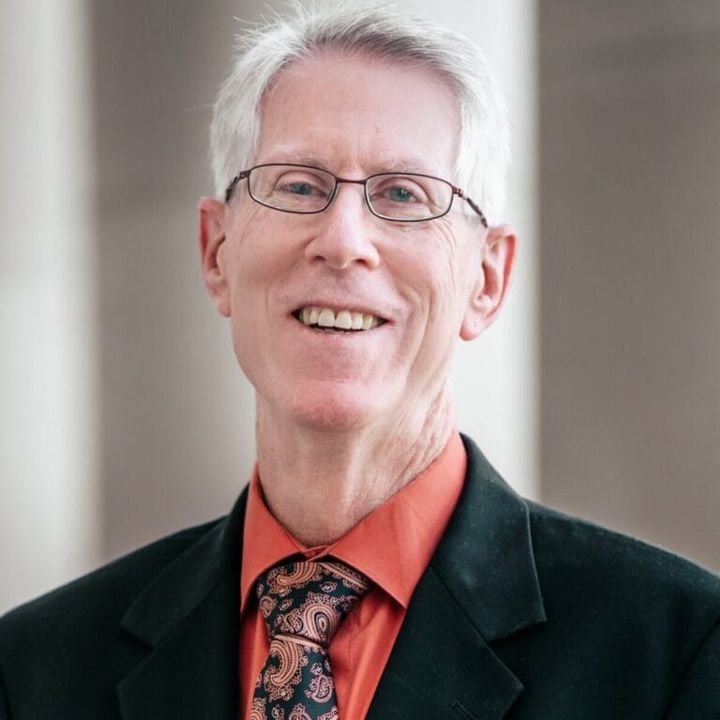
David Kroman
David Kroman is City Hall reporter for The Seattle Times.
Find David Kroman on Bluesky at @kromandavid.
Resources
“Scoop: Governor sign-off rule snarls flow of information in Washington” by Melissa Santos from Axios
“WA seeks to force ICE facility owner to allow state health inspections” by Alexandra Yoon-Hendricks from The Seattle Times
“Seattle, county officials demand reform to homeless authority, file for dissolution” by Stephannie Stokes and David Kroman from The Seattle Times
“Lawmakers call for dissolving King County homelessness agency following audit” by David Kroman from The Seattle Times
“After Board Meeting on Damning Audit, Talk Turns to "Winding Down" Homelessness Authority” by Erica C. Barnett from PubliCola
“Wilson expands free student meals, childcare for Seattle families” by Claire Withycombe from The Seattle Times
“Mayor Katie Wilson rushed away following gunfire near news conference” by Caitlyn Freeman from The Seattle Times
“SPD Chief Questions Whether LEAD Diversion Program is "Meeting Expectations"” by Erica C. Barnett from PubliCola
“Judge halts WA law that would oust decertified sheriffs” by Jake Goldstein-Street from Washington State Standard
Find stories that Crystal is reading here
Listen on your favorite podcast app to all our episodes here
Podcast Transcript
[00:00:50] Crystal Fincher: Welcome to Hacks & Wonks. I'm your host, Crystal Fincher. On this show, we talk with policy wonks and political hacks to gather insight into local politics and policy in Washington state through the lens of those doing the work with behind-the-scenes perspectives on what's happening, why it's happening, and what you can do about it.
Today we're continuing our Friday week-in-review shows where we review the news of the week with a co-host. Welcome back to the program, friend of the show and today's co-host: Seattle Times City Hall reporter, David Kroman.
[00:01:35] David Kroman: Hello. Hi.
[00:01:37] Crystal Fincher: Hey, good to have you back. We've got a number of things to talk about this week, starting with news that Governor Ferguson's communication sign-off rules are causing delays and snarls in the flow of information out of state agencies. What's happening here?
[00:01:57] David Kroman: I mean, I think that sums it up. I mean, this is from Melissa Santos at Axios - that they have this official policy of essentially filtering everything up toward the governor's office and with occasionally the governor himself signing off on communications. It's stark to see it written out in this way. At the same time, I think Governor Ferguson's reputation in the first year of his term has been clearly less kind of open and transparent with the press than his predecessor, Jay Inslee. For whatever you want to say about Jay Inslee, he was a guy who liked to kind of chit chat with reporters and was always out in front and answering questions. And I didn't do a lot of reporting directly with that office, so I don't know what the response was like. But Ferguson has clearly been a little more closed off and a little more hesitant to kind of do those same freewheeling question-and-answer sessions. And it sounds like it was getting difficult to even get answers out of departments.
I think this is an unfortunate trend in government. Beyond just state government, I think we've seen a lot - well, I'd say the Wilson administration, they're still kind of figuring out their communications policies. But the last two, you know, Harrell and Durkan administrations in particular, it was similar that if you reached out to City Light, for example, and wanted to talk, everything had to get filtered up to the mayor's office. And it really did slow things down. I think there just wasn't a lot of trust from the top offices in the department's abilities to speak for themselves. It was a bit of a pain. I think that's probably even multiplied further if you're talking about state government, which is just bigger and more complicated. And I think it does say something about Governor Ferguson's kind of fear of how he's perceived. And it's certainly not great for people like myself and Melissa for getting information out of the state.
[00:03:45] Crystal Fincher: Yeah, absolutely not. And I think you're absolutely correct that this is a troubling trend. Not good for transparency, I think. Overall, I think that is really challenging. And there were some really troubling instances written about in this article, just a couple ones I'll read here from Melissa Santos' Axios article.
Last week, we were instructed by the governor's office to decline all interview requests related to WIC to avoid questions related to the state's budget shortfalls and why there was no backup funding for the program - spokesman for the Department of Health wrote.
Another agency official in communications that were uncovered said it's increasingly difficult to get any actual work done because all our time is spent on sending things in for reviews, tracking reviews, and reminding their comm shops of our deadlines. They were saying that they're spending time preparing responses for reporters, only for the governor's office to miss those reporters' deadlines.
Another person from inside an agency saying, I'm not exaggerating when I say we cannot effectively manage agency communications to our high standards with this system in place in the long run.
And I think what I was surprised by here is that this isn't just kind of some of the policies that maybe were in coordination with the governor's office - that this affected health information that had to go out to people. Here in this article talking about Ferguson personally reviewing interview talking points before the state epidemiologist was cleared to speak with Politico about bird flu last July. I don't know why the governor would need to intervene with a health professional on what he's talking about bird flu. These are things that definitely seem like overreach on its face, but are certainly much more aggressive in terms of trying to control communication than his predecessors.
[00:05:45] David Kroman: Yeah. And again, it is stark to see this written out in policy and to kind of see the behind the scenes haggling over this issue. I think you could, to an extent, blame the - I'm a little cynical about this - but the vast disproportionate ratio of PR and communications professionals to reporters. And I think we're just getting into this reality where every message is just kind of workshopped to death. And as a result, it just leads to a lot of - we're seeing this more and more - a lot of government people asking for questions in advance, or were demanding that "interviews" happen over email, and that everything is cleared with their bosses. And I don't know exactly why. I mean, I guess, like I said, some of it, I think, has to do with, I think there's like a three-to-one PR professional to reporter ratio these days in the workplace. And that's a problem because they all have to justify their existence and want to workshop everything. And I think also another piece of it might be that there is just not the feeling among elected officials and important people that - I don't know that they feel as obligated to talk to the press as maybe they used to. Some of that has to do with social media and just the decline of traditional print and broadcast media generally - that maybe they just don't feel like they. have to go through and meet the deadlines of reporters in the same way that they used to. I find that frustrating.
But again, it's not particularly surprising coming out of Ferguson's office. Our paper had already written pretty early on in his tenure frustrations about how he wouldn't hold his end-of-the-session press conference in the same way that Inslee did. And when he would hold a press conferences on specific issues, was maybe less willing to take questions on other issues. You know, I'll say - so that I'm an equal opportunity critic here - I'll say that Mayor Wilson has had a little bit of that too. Mayor Harrell before her, when he would do press conferences, he would frequently take questions on other issues and he would, maybe he would demand, you know, the first three or four questions has to be on whatever I'm giving the press conference on. But then if you had questions on other issues, you could send them to him. Mayor Wilson has been less willing to do that. She's been either will leave before answering more questions or kind of put down her foot on saying, you know, I'm only answering questions about this thing. I think that's also been a little frustrating for me. I'll say she sometimes does follow up later and will call you and kind of do asides. But as far as that kind of public facing, freewheeling, like, let's just talk, let's just be human beings here. With every new administration, I would say that the ability to just kind of have open and honest conversations has retracted a little bit in a way that I find quite troubling and sad.
[00:08:40] Crystal Fincher: I certainly hope this trend reverses itself because I don't think it's healthy overall.
Now, I do want to talk about a press conference that Bob Ferguson did have this week to talk about the court action that Washington state is taking to force the ICE facility owner to allow state health inspections. Why aren't these allowed and why are they seeking to inspect?
[00:09:04] David Kroman: The idea behind this is - this is a privately run facility is with not a lot of insight directly into them. And so there's these laws that exist that say lawmakers are supposed to be allowed inside. And from what I can tell, that hasn't been followed in the same way. I mean, this is what happens when GEO Group that runs the detention center in Tacoma - is a private corporation, they have facilities all over the country. That I think makes a lot of people pretty uneasy because it is a private-public partnership in a way, in an industry that you really do want to have a lot of vision into and oversight into. And just the fact of it being run by a private company makes that more difficult. And so I think the reason this is made such a big deal is because there were supposed to be these new regulations to allow lawmakers inside, and they're saying that they're having a hard time doing that in getting to those inspections.
[00:10:00] Crystal Fincher: Yeah, and this has been a longstanding issue that essentially moved Washington state to take legislative action. A number of cities, counties, state agencies have tried to intervene and inspect over time - and they've been turned away. And this is really troubling because these are people in the custody and care of our government. Unfortunately, this private contractor has not held itself to any kind of public scrutiny, even though they are receiving public dollars and are in the care of actual people. There have been deaths at this facility. There have been illnesses, challenges at this facility. A recent one - in an article this week in The Times - talks about water, concerns about water contamination that are taking place and seeking to inspect because they suspected the water might have Legionella and that not being able to be followed through. There have been reports of moldy food, contaminated food - just a lot of really challenging, troubling reports that have not been able to be adequately followed up on. And in a facility that many government entities have said that they wish didn't exist in the state. At the bare minimum, if they are going to be here, they should be able to be inspected, scrutinized, and held to the standard of competent, basic care of the people that they're charged with caring for.
[00:11:39] David Kroman: Yeah. And you can kind of contrast it with the King County Jail, for example. Years ago - I don't remember exactly what year - but as part of being a jail, you have a constitutional right to provide basic life and safety services to the people who are in your care. And that includes food and medical care. And years ago, the King County Jail was found to not really be doing that. And that triggered this whole round of basically a consent decree, a judge overseeing and making sure that all of these conditions were being improved upon and being met. Not to say that the King County Jail is some great place right now, but just to draw the distinction between the sort of oversight that a publicly owned and operated jail goes under when there are reports of mismanagement versus the private facility where - and we've heard this all over the country - of Democratic lawmakers in particular being denied entry to privately run facilities. And it's hard to, it's not like any jail is going to be some perfect place. But that actually makes it even more important that you have some eyes into what's happening there. Most of the reports about what's going on in that facility in Tacoma come out of advocacy groups that have connections and clients and people who are in the facility. And they report out when there's a hunger strike, for example, or something like that. And it just when elected officials are not allowed to enter there, it makes it really difficult to hold that space accountable.
[00:13:10] Crystal Fincher: So the state's seeking a preliminary injunction, currently, that will have to go through the courts. We'll see. When asked - Hey, okay, if you get this injunction and they still don't allow you to go in, are you going to seek legal action, criminal action against the GEO Group? Bob Ferguson said - Hey, let's go. We need access first. We'll see what the courts say. We'll see if we can get in and then determine what penalties may be necessary. But it certainly doesn't seem like the GEO Group is likely to let people in absent a court order. And even then we'll have to see. So it seems like it's going to take some kind of escalating action or incentive by the state for this to happen.
[00:13:55] David Kroman: Yeah. And again, I mean, that's just like such a stark contrast to say - because again, the person who runs the King County Jail and oversees the King County Jail is works at the pleasure of the County Executive and the County council. And if they feel like they're not getting what they need out of him, they can make a change. You can't do that with Geo Group. It's got a CEO. It's got shareholders that it reports to. It doesn't answer to the government. And so it does kind of leave only litigation and I guess contempt of court fines. But, you know, there's plenty of examples of those being levied and then just not being paid. I mean, you, just at a certain point. Yeah, you do need a federal, probably a federal judge, to step in if things don't change.
[00:14:38] Crystal Fincher: Yep. Well, the next story I want to talk about is one that you wrote about this week, and that's Seattle and King County officials demanding reform of the King County Homelessness Authority, or maybe even ending it because of troubling reports of lack of financial and operational controls. What was the problem here and what was found?
[00:15:04] David Kroman: There's kind of two levels to the King County Regional Homelessness Authority saga. One is the bigger question of - is it doing what people wanted it to do, which is create a "regional" solution to the regional problem of homelessness. So that's kind of the first question. The more specific one that has triggered this latest round of hand-wringing and questioning is this audit. And that's kind of a little bit more into just the nuts and bolts of how it's actually being run. The answer to that question is apparently not very well. The homelessness authority depends on this financial model that is not totally rare, but is very precarious, which is that they go essentially deep into debt to pay providers and then they are reimbursed by Seattle and King County. And that can succeed, the auditor said, but for it to work, it requires a lot of really careful following of the money and documentation and timely invoicing and accountability. And the audit said - None of that was happening here. The top line numbers that grabbed the headlines was this, you know, $8 million that they couldn't find the paper trail on, plus some other money that went out the door that's never going to be recouped. But in some ways, you know, we're talking about a $200 million a year organization. It's less about, for my money, the specific $8 million, but more about what that says. And that says that they're just not following the inflow and outflow of money particularly well. And that sets it up for essentially, at best, sloppy record keeping and inefficiency, at worst outright fraud. The audit said they couldn't find fraud, but part of that just had to do with the fact that the documentation was so bad that they couldn't actually trace all of the money specifically to make sure it was not being used in a fraudulent way.
So the results of this audit - well, I should say first - this isn't the first time that audits have been critical of the King County Regional Homelessness Authority. It's probably the most critical, but there were reports in 2023 and even earlier than that faulting the agency for some of these practices. But what this round has done is emboldened the people who I think wanted out anyway and maybe didn't believe that this agency was doing what it was supposed to do. And for those people who wanted, who maybe were a little more optimistic, I think it has shaken their belief in the agency. So, you know, there're been some motions filed to dissolve it. As Reagan Dunn, who's been a longtime critic of the agency, told me - he thinks it's doomed. That was his words. And I've heard from other people, too - that the momentum seems to be firmly in the direction of disillusion here. And then, of course, that raises a lot of questions about what comes next.
[00:17:52] Crystal Fincher: Yeah. And one of the questions that a lot of people have is how regional is this organization really?
[00:17:59] David Kroman: Yeah. No, it's a good question. It's very wonky. So there are a few problems here. One, the basic hope was - hey, look, a lot of people are becoming homeless in King County, but Seattle is really the only jurisdiction that's providing kind of meaningful services. And for Seattle, that was not tenable. They wanted more help from the outside cities. And then for the cities, what you could get is probably some financial support from Seattle and King County and organizational support that small cities maybe don't have. And that was the idea - is that everybody gets something out of this. Seattle gets to kind of spread the burden a little bit, while the outside cities get a little additional support bureaucratically and organizationally and even financially. What really has happened is that it was a really painful process to bring all of these contracts over to the agency. I think the most cynical view of it is it has put enough distance between the elected leaders in Seattle and King County and the issue of homelessness that it has made it a really easy scapegoat. So that when there are issues with the fact that maybe the progress isn't moving as quickly as people want, it just has become easier for local elected officials to say - hey, this is the fault of this organization that we've created over here. Don't look at me.
And so I think the flaw that people are saying is it was supposed to be kind of this collaborative approach, but really what it's become is a stepchild that nobody wants to talk about. And it's just too easy to kind of offload all of the political heat onto. When, in fact, perhaps keeping political heat on the people who actually directly answer to voters is maybe what we actually want at the end of the day, rather than it being the blame of this agency, which, though there is elected oversight, is made up of people who are unelected and appointed. And it's just too easy, I think, as we're hearing now, to lay the blame on those unelected staff, basically. And so I think that is kind of where the rubber is finally meeting the road, is saying, you know, this underlying weakness of this agency - which is that it was kind of living separate from direct accountability from voters - is now coming to roost, as we're seeing in this audit. Because there were just not enough eyes on how this agency was being run and it was allowed to get really bad, and now we're in a place that it's - at least this is what some people are now - we're in a place that basically can't be saved.
[00:20:38] Crystal Fincher: Yeah, I think there's a lot of that feeling. And I think that you're onto something there. Long-time listeners know that it's no surprise that, although I think there are a lot of people working for this agency that are well-intentioned and that are trying to do excellent work, that the creation of this - from Ed Murray talking about the intentions and the need for a regional approach, to Jenny Durkan to Bruce Harrell not necessarily want to own this. Although when you look at the funding of the agency, the only cities kicking in are almost entirely Seattle, with just a few other suburban cities. But the overwhelming majority of this is coming from Seattle. So people, I think, are justifiably asking - well, Seattle's basically funding this thing from a city perspective him anyway. Why are we going through a middleman instead of just trying to address this on our own, given the challenges that have happened. And not just under one leader of this organization. Like you said, there have been prior problems found, challenges that have continued to occur - that it just doesn't seem like they can get on the right footing. And perhaps it is because that there is no one to really answer to. And I would also toss in, maybe not a firm North Star that they're really shooting for. It seems like the one thing that that agency has been successful at doing is removing responsibility from elected people, but not necessarily making progress and moving forward on a problem that almost every elected official is saying is at a crisis level, it's one of the top priorities that they have for government. And we've been moving backwards in terms of actual people on the street. So this will be something that will be interesting to continue to pay attention to. Now, you said that there are - certainly momentum's in the direction of looking like the end is near for this agency. So what are they saying is next? Because this is still a problem. Have there been any indications on a direction that they want to move if this is ended?
[00:22:48] David Kroman: Yeah, not exactly. I mean, all we're really hearing now is - okay, if we're going to dissolve this, then we have to be really careful about not repeating the mistakes that we made when we created it in the first place. I think probably the most logical solution is you send the contracts, which now live in the King County Regional Homelessness Authority, back to Seattle and King County and let them administer it. That doesn't really solve the problem of like, what is the role of the suburban cities right now? Though I think you can make an argument that maybe their role is muted even in the homelessness authority. That's going to be hard though because the departments that ran this stuff before the authority don't really exist in the same way that they did anymore. There were a lot of people who got laid off when they made this move, and I'm sure they've gone on to find other things. And so it's not like you can just flip this switch and kind of return back to where you were. So it's going to be hairy either way. And I would say it's notable that Rod Dembowski, the King County Councilmember who has been the most ardently in favor of tearing this down - even he says he can't guarantee that what replaces the authority is going to be an improvement over what exists now. He's just saying - look, I think we're in a hole and we need to stop digging. And that means tearing this down. But even he isn't saying I have some clear idea of what the next step is. He's just saying, I don't think this step is working.
And so you're not hearing a lot of full-throated defense of the homelessness authority itself. To the extent that there are people who are hesitant to tear it down, it's that they think the time and energy that it would take to tear this thing down and put those contracts back to Seattle and King County is more difficult than what it would take to invest in just improving the authority itself. I think if it is saved, it's going to be not out of some love for the authority, but out of a fear for what it would mean and how complicated and expensive it would be to tear it down. Which isn't really a huge vote of confidence for the state of things right now - that it's essentially people being asked to decide between two not very appealing options, rather than having a really positive outlook on the future. But that is where we are.
[00:25:09] Crystal Fincher: It is where we are. We'll continue to follow this. And I would just say, we're at a time now where we're just about at the filing deadline for candidates. There are a number of people running for State Legislature, running for - we have a City Council race actually here in the city, County Council race currently. And so this, as we just talked about, is one of the biggest issues facing every level of government. And so it would make a lot of sense for people, as you're talking to candidates, as you're talking to people running for reelection, to ask what the plan is. Looks like there's major change afoot and it's going to be really important that they're prepared and that they're willing to stand up and talk about what their priorities are to actually make progress on the challenge of getting more people who are on the street to be housed.
[00:26:00] David Kroman: Yeah, and I will say, it is important to note that both Seattle and King County had kind of already started making moves - they wouldn't put it this way, but I would - to undercut the King County Regional Homelessness Authority. Both Mayor Wilson and Executive Zahilay have announced plans to bring on new shelter and new housing units. But not only are they sidestepping KCRHA, they are arguing that it is essential to the success of their promises that it not go through the Regional Homelessness Authority. The Wilson administration just passed a bill to basically cut out the authority altogether in order to get to its 4,000 unit. And so I think you can set aside the audit and just look at the actions of the recently elected leaders of both Seattle and King County. And it was pretty clear that this agency was already on weak footing. And so I guess that could be how this unfolds - is just one piece at a time of the response is sort of folded back into Seattle and County government. Because I think the agreement with Seattle and King County dictates that it has to take a year - that once you vote to dissolve it, triggers a year-long process to break it apart. That's a good amount of time, so I guess the kind of best case scenario is you're able to kind of slowly bring one piece at a time back into the local governments. But again, you know, it's just who staffs it and how much that costs are real questions.
[00:27:26] Crystal Fincher: That makes a lot of sense.
Now, I do want to talk about another campaign promise that Katie Wilson made and a step that she took toward it with her announcement this week that she is expanding free student meals and childcare for Seattle families. She made a campaign promise to work with legislative and government partners towards free universal childcare. And this looks to be a step in that direction, if she's able to gain Council approval. What is she proposing here?
[00:28:00] David Kroman: Yeah, I mean, as you said, you know, expanded free lunches and free meals and expanded childcare as part of the Families and Education Levy. These have to be the best announcements to make as a mayor, because what she's doing here is allocating money that the city, that she already has. Or at least proposing to, because this comes from the $1.3 billion Family and Education Levy that passed before she took office. And so here she is kind of just allocating the money. So it's not like this is some radical new program that she is rolling out herself. She's picking up where previous administrations have left off. But I'm sure that as mayor, she's certainly happy to get up there and say that we're going to do free childcare and free meals.
[00:28:48] Crystal Fincher: Yeah, I mean, I do - certainly, this is money that is allocated, I think that's important. But I do think that this is work that could have been done before. These are things that could have been done before, and they're finally being done now. And I think it is because of that stated priority and actually making the plans on what's going to happen. One that I think is really meaningful to a lot of parents is expanding the hours that childcare programs are available. A number of the childcare programs currently end in the afternoon before a lot of parents are off of work. And many people understand the challenge of caring for children and trying to get to and from daycare and that whole arrangement. It's really challenging if those hours don't meet up - that makes child care inaccessible for a lot of people if you don't have some kind of backup plan to get to pick up kids and make sure they're watched and for that to be still compatible with work. So certainly expanding access, expanding the number of childcare sites and programs that are available is going to be a really big deal.
There were some other things here that I saw that didn't make the top line, but that were really interesting to me. One is keeping the program that ensures that if a student graduates from a Seattle high school, that they get to attend a Seattle community college for free. This looks like it maintains that program, which - I don't know how much of a question was around there, but it looks like that wasn't necessarily guaranteed before or at least set out in the prior budget. And it would also provide new school-based health centers and free mental health care to all Seattle teenagers and young adults, and connect students with mentors. So it certainly seems like these are valuable investments. There's so much research and evidence to talk about how important early investment in kids and youth is. That we get so much more of a return and so much of a difference is made when we invest early in providing these services and supports instead of waiting for something to go wrong and then trying to correct it in people's lives. So like you said, this is not like she has to find a new source of money, but it does seem like there's a renewed momentum and pushing forward what the city can do in support and fighting to protect what's already there.
[00:31:22] David Kroman: Right. Yeah. And it should be noted that this education levy is quite a bit bigger - I think about double the one before it. So she does have a lot more resources here to play around with. I mean, a lot of it is going to go toward the preschool programs, the three and four and I think five-year-old preschool programs. And then the Seattle Promise program to send people through community college. So there's - a lot of it's encumbered already. But I think the previous levy was like high $600 million, and this one's $1.3 billion. So it's quite a bit bigger. There's some inflation, of course. But the way that the former mayor, Harrell, was writing some of his levies, I think to me, suggested he thought he was going to be reelected because they were written vaguely and therefore was giving whoever was mayor, a lot of latitude for how to direct this funding. You know, if you remember when, say, Ed Murray years ago passed the Move Seattle Transportation Levy, it had a lot of really specific categories and projects that it was supposed to fund. And people in City Hall found that they didn't like that because then, A) they had to meet all these promises that they were not necessarily always able to meet. And it kind of dictated how this money was going to be spent ahead of time. Since then, the levies that have been proposed, particularly under Harrell, have been very vague and without a lot of specific promises. And I think that was done in a way to give the mayor a lot of latitude for how this money would be directed. It's funny now that what he ended up doing was essentially give Mayor Wilson some blank checks on education and transportation. And I would say to the extent that she has ability to kind of make a quick mark on Seattle as mayor, it is in areas like this and how you spend this levy dollars because it comes to her office. She does have to get some Council approval, but she doesn't have to convince them to give her money. She can really direct those dollars in a pretty freewheeling way that I think gives her - that's probably the area that she has the most kind of unilateral power, is how do you spend these levy dollars.
[00:33:30] Crystal Fincher: I think you're right on there. Now, this press conference ended in a pretty frightening way - with gunfire. What happened there?
[00:33:39] David Kroman: Yeah, I mean, I wasn't there. My colleague was. But from what I've read, it sounds like there was some gunfire nearby and she had to be rushed off. Doesn't appear that it was directed at her or the press conference or had anything to do with the press conference. But certainly scary. And I don't remember ever being anywhere near a mayor where the security detail really had to jump into action like that. This is the first time I can remember, but certainly anytime that happens is scary.
[00:34:09] Crystal Fincher: Very scary. And a reminder that this is something residents are facing across the city right now. And certainly action needs to be taken to keep people safe from gun violence here.
Now, I want to talk about another issue this week in the city of Seattle, where Seattle's police chief questioning whether the LEAD - Law Enforcement Assisted Diversion, I believe it is - program, whether it's meeting expectations. What is he questioning and what brought this about?
[00:34:42] David Kroman: Yeah, I mean, what brought this about is data that shows - so under the city's drug law, it is encouraged for officers to divert people to the Law Enforcement Assisted Diversion program, which is a pre-arrest diversion. So they never actually end up in court there. The cops approach them, say - hey, either you're under arrest or you've got to go and talk to this case manager. There was a pretty big drop in the number of diversions that were happening between 2024 and 2025, and a correlating increase in arrests at the same time. And they were pretty dramatic. They were like 40 percent in either direction. And whenever something like that happens, you kind of question what is going on there. Lisa Daugaard of the Purpose Dignity Action organization that oversees LEAD kind of chalked it up to staffing and capacity issues, that there were some kind of technical changes around their budget. They lost some budget, which then has since been restored and saying that that's some of what's going on. And, you know, Chief Barnes, though, focused a lot on the fact that the city's drug law - the officers are given a lot of discretion to decide what to do. And there's this pretty long list of criteria that have to be met for them to make an arrest and they have to kind of tick through all of them. The way he was talking it sounds like there's a bit of frustration around the extent of that list, but i think this is kind of what happens when you give so much frontline discretion is you can see these kind of big swings in behavior and not always fully understand exactly what's going on. He was raising doubts about LEAD's ability to kind of wrap its arms around the drug crisis in Seattle and seemed to basically be advocating for more arrests to disrupt activity around 12th and Jackson.
Interesting to see a little bit of that because, you know, LEAD, I think, has really been a cornerstone policy for City Hall for a few years now, particularly in the aftermath - coming out of 2020, it was essentially unanimously embraced by City Hall as a way that we can tackle kind of low-level drug use or low-level crime without leading directly to people being sent to jail. So it's interesting now to hear some doubt about that approach creeping into Council presentations. I don't know where it goes from here, though. I don't know what the end game of that conversation is.
[00:37:13] Crystal Fincher: Yeah, it's pretty interesting. We got here because of a mountain of data showing that not only was arresting people for the types of nonviolent crimes that LEAD usually addresses - that arresting them, prosecuting them was not only really expensive and very hard on municipal budgets, but also ineffective, less effective than diversion. So it's interesting to hear this come back now. And I'm wondering, is he asking about this - hey, are we getting our money's worth? Or is there any comparison to where we were actually at before when we were arresting a lot more people? Are we comparing budget expenditures on LEAD activity to all of the other criminalization activity? I need to track down the exact numbers, but what is actually spent on LEAD is a very small percentage of the overall SPD budget. So I'm wondering why we're questioning these relatively small expenditure items and not looking at where most of the budget, most of the activity, most of the opportunity to directly intervene in practices, procedures from a police standpoint is. Was there any indication about - hey, they're questioning now, are they looking to gather more information? Are they, you know, expressing any intent to modify resources?
[00:38:44] David Kroman: I didn't hear that - no. LEAD has been around since 2011. And the reality of what is taking place on Seattle streets has changed quite a bit there. I think when LEAD was originally formed, it was mostly around crack cocaine. And of course, today, they're dealing with fentanyl, which is much more harmful and difficult to wrap your arms around. I think part of the reason that there's some more questioning here is just - we heard public comment from people from the Chinatown International District in the area, and they were talking about 12th and Jackson again. And so it fits into this larger frustration that I think people feel about perceived lack of progress. And I think arrest has probably become more appealing because it has the kind of immediate effect of removing people from the street. But that question of whether or not that actually represents a real solution to the problem - that's the kind of million dollar question is - How do you actually make it so you can wrap your arms around something like 12th and Jackson? And I don't want to use the term clean it up, but improve the conditions down there and keep them improved. That is the kind of main argument behind diversion, is that it could represent a more lasting solution. I think one essential problem underpinning a lot of the, you know, we have a few outreach efforts between LEAD and the CARE Department and Health One and probably a few others, but the issue is kind of what comes after that. It's one thing to make contact and have case management. It's another thing to find treatment and permanent housing for people. It does seem like until we've fully solved that issue, that there's going to continue to be debate around the value of case management and outreach.
[00:40:35] Crystal Fincher: Yeah, I think you're right on. And, you know, I think anyone who has spent any time recently around 12th and Jackson would agree that the conditions there are unacceptable. No one wants to see that, to see people in that condition. There does need to be intervention there. And I think the question is, what is the most effective way to go about it? And that there has to be a more effective way than what is currently happening, to go about it, certainly. So we can expect that conversation to continue and we will follow it as it does.
The last thing I want to talk about today is an update on a story we have discussed before, and that is regarding the law that would allow for decertification of sheriffs under certain pretty limited conditions. But a judge halting that. What did happen here? What did this judge decide?
[00:41:28] David Kroman: Yeah, I mean, this is interesting because it's kind of a meeting of like a desire for police accountability and also the freedom of voters to choose whomever they want. The judge in this case essentially said - look, you are allowed to run for office in this country with very, very few exceptions. And trying to limit who can hold elected office in this way is, I think, unconstitutional. And it should be noted that King County, for example, used to have elected sheriffs, and now we don't anymore. And I think there's a reason for that - to avoid conflict like this. But in the case that they're talking about here, it's talking about elected sheriffs. And the judge in this case is saying it's a pretty broad swath of people who is allowed to run for office. And Legislature, I think you overstepped your boundaries by limiting that.
[00:42:22] Crystal Fincher: Yeah, I do think that it is an interesting question that you bring up. Should there be higher standards? Should there be a standard? Should sheriffs have to have conducted themselves, even not just saying connect themselves with integrity, should they have been found not to lie? If they have been found to lie, if they have been found to have committed misconduct in particularly egregious ways, and due process through a commission that has been shown to be favorable to law enforcement overall. If even a favorable commission finds - hey, this person did do these things that are unambiguously against policy or dishonest, that they wouldn't be recertified and that you need to be certified to stand for office. Is it fair to set a minimum standard? We do set standards for running for office in several ways in several areas. I don't think that's new. But also, what I think should not be dismissed offhand is nullifying the will of the voters. If a voter has elected someone, should this be able to bar them out of office? I think that is something that is fair to scrutinize and that there should be a very high bar for handing unelected people the ability to take elected people out of office. And this is the tension here.
This judge in Thurston County came down very conclusively on the side that - hey, this is taking away a choice from the voters. The lawsuit that prevailed here in this Thurston County Superior Court said the people's choice is nullified not by the people, not by the courts, and not through constitutional removal process, but by an executive agency acting under its own rules. Supporters of this policy feel like - hey, the responsibility shouldn't be on the public to remove police leaders who commit misconduct. That bar is way too high. And there is due process in place. And we shouldn't be stuck with someone who very conclusively is misbehaving, is breaking the law or acting against policy. So this is going to be interesting to follow through the courts. This is not its last stop in court. This will almost certainly be appealed and we'll get a more conclusive finding. But this is going to be interesting as it travels to the court.
[00:44:54] David Kroman: Yeah, absolutely. Again, you know, I point back to King County. I can't remember what year it was that they switched from an elected sheriff to an appointed sheriff, which voters signed off on. That was approved by-
[00:45:07] Crystal Fincher: 2020 or 2022.
[00:45:08] David Kroman: Yeah, it was somewhere in there. I remember Mitzi Johanknecht was the last elected sheriff of King County. And that is one approach that, I think, at the time was seen as a move in favor of kind of more intense police oversight. Because the argument being that voters maybe didn't have all of the information. And by having an appointed sheriff, they basically have to continually justify their role there to the Executive and the Council. And if the Executive and Council decide that that person is no longer doing their job, they can remove them unilaterally. Whereas in a elected sheriff it's a lot harder to do that. And you know, we see this across the country we see sheriffs who kind of take on this almost godlike status because you are electing a sheriff and they have that position - it's very hard to remove them from that. And that, I can understand why that would make some people uneasy because there's just very few checks beyond the election every four years. But I can also sympathize with the judge in this case, which is the certification process around law enforcement is far from perfect and can be a little obtuse and sort of boils down to a government agency. And that's a lot of power to put in the hands of a government department to decide who voters are allowed to appoint to be their leaders. I'm sympathetic to that argument for sure.
[00:46:32] Crystal Fincher: Yeah, definitely. And this is happening while the elected Pierce County Sheriff - Sheriff Swank - is facing charges of misconduct and will stand before this commission that has the ability to create a finding that could lead to his decertification and then essentially his inability to continue to serve as sheriff. So there is an immediate application of this potentially. And he is one of the people who has been very outspoken against this. But I think, you know, also along with that, that there are people saying - hey, this is, they think they're seeing stuff that is buck wild happening in Pierce County and going, why can't we get someone who is alleged to have engaged in misconduct like this as the top law enforcement officer in the county? Why can't we get that person out and someone who they feel meets their standards? So it's going to be really interesting to follow. And we certainly will continue as this travels through the court system.
And with that, we thank you for listening to Hacks & Wonks on this Friday, May 1st, 2026. The producer of Hacks & Wonks is Shannon Cheng. Our insightful co-host today was Seattle Times City Hall reporter David Kroman. You can find David on Bluesky at @KromanDavid. You can follow Hacks & Wonks on Bluesky at @HacksAndWonks. And you can find me at @finchfrii, that's F-I-N-C-H-F-R-I-I. You can catch Hacks & Wonks on Apple Podcasts, Spotify, or wherever you get your podcasts - just type "Hacks and Wonks" into the search bar. Be sure to subscribe to get the full versions of each show. And if you like us, please leave a review wherever you listen.
Thanks for tuning in - we'll talk to you next time.