

Senator Jamie Pedersen Defends Millionaire's Tax, Budget Choices, and Progressive Record Ahead of Primary Challenge
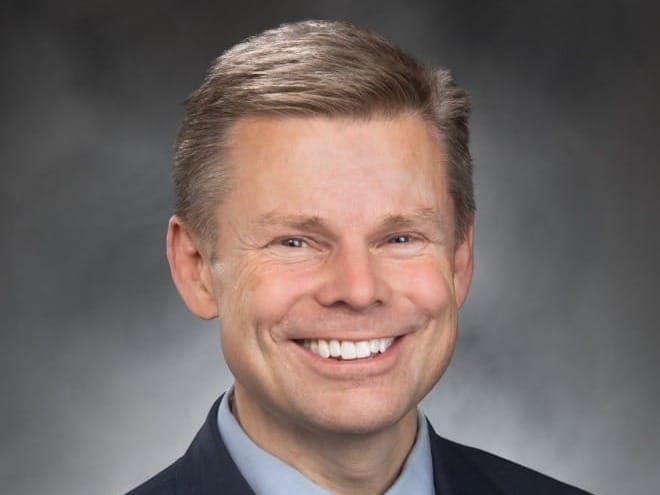
Washington Senate Majority Leader Jamie Pedersen is running for reelection in the 43rd District, defending his record and sharing his priorities on taxes, education, child care, immigration, and protecting Washington residents from a hostile federal administration.
Why State Senate Races Matter
Washington's 49 legislative districts are the backbone of state government, but the senators who represent them wield power that most residents rarely think about. State senators draft and vote on legislation covering education, housing, health care, criminal justice, environmental policy, and labor rights. They write the multi-billion dollar operating budget that determines how much money flows to public schools, whether community mental health centers are funded, and what resources are available for people with disabilities or in need of long-term care. They also set the capital budget, which funds construction and infrastructure across the state, and the transportation budget, which shapes everything from highway maintenance to public transit.
Beyond budgeting, senators set the tax policies that determine who pays for all of it, and Washington's notoriously regressive tax structure means those choices have an outsized impact on low- and middle-income families. They write the rules that govern landlords and tenants, employers and workers, and law enforcement and the communities they serve. When a family can't afford child care, a student with a disability isn't getting support at school, or someone sits in jail because they can't afford a lawyer, those are often downstream consequences of decisions made in Olympia.
In the 43rd Legislative District, covering Capitol Hill, First Hill, the Central District, and Madison Valley, the stakes are particularly high for a district that reliably elects Democratic legislators. The district's current senator, Jamie Pedersen, serves as Senate Majority Leader, the person who sets the legislative agenda for the entire chamber. Pedersen is seeking re-election and faces a primary challenge from Hannah Sabio-Howell.
The Millionaire's Tax: A Historic Shift in Washington's Tax Structure
The headline legislative achievement of this past session was the passage of the Millionaire's Tax, a new tax on income over one million dollars, which Pedersen called the most significant progressive change to the state's tax structure in nearly a century.
"I think the Millionaire's Tax is an unqualified progressive victory," Pedersen said. "It is probably the biggest progressive change that we have had in our tax structure since the 1932 initiative that the voters passed establishing an income tax in Washington."
Washington has long ranked near the very bottom nationally in tax fairness, relying heavily on sales taxes that consume a larger share of income for lower-wage workers. The capital gains tax passed in 2021 lifted the state out of last place, but just barely. Supporters say the Millionaire's Tax is designed to push the state further toward a more equitable structure.
Pedersen acknowledged that the final bill involved significant compromise, including the loss of two priorities he personally championed: using a portion of the revenue to reduce property taxes, and dedicating funds specifically for public defense. "Those things ended up falling by the wayside as the various compromises went through the process," he said. "Does that mean that it's not a progressive bill? Absolutely not."
He also cautioned against viewing the tax as solving the state's entire structural budget problem. "If that's the only thing that we ever do, that will be disappointing," he said, suggesting future legislatures will need to continue working to stabilize the budget.
Navigating the Budget Shortfall
Even with the Millionaire's Tax in place, Washington faces a significant near-term budget challenge. Washington's budget is expected to hit a low point in fiscal year 2028, before revenue from the new tax fully kicks in.
His plan to bridge that gap centers on redirecting surplus funds from the Law Enforcement and Firefighters' 1 pension plan. "The current working plan is to use the money from the surplus that we know is there, and has been for a long time, in the LEOFF 1 pension plan to get us through that period in 2028," he said. That plan, however, faces legal headwinds: retired police and firefighters whose pension funds would be affected have filed a potential class action lawsuit challenging the use of those surplus funds. Pedersen added that once the Millionaire's Tax revenue comes online, the budget should stabilize, though without a great deal of cushion.
He was candid about the external uncertainty complicating any projections: "If you could tell me what the Congress and the president are going to do, that would be great. It would help me be more certain about this."
Public Defense vs. Police Funding
Governor Ferguson has set aside $100 million for police recruitment and retention, but many jurisdictions are struggling to fill open positions while seeing reductions in crime with current staffing levels. Meanwhile, Washington's public defense system has been declared in constitutional crisis due to chronic underfunding. Pedersen was asked whether unspent police recruitment funds should be redirected to public defenders and behavioral health services.
He rejected the binary framing. "I don't particularly like either of those choices, I've got to be honest," he said. One-time money is the wrong vehicle for either problem, he argued, because you can't sustainably hire the public defenders the state needs with a one-time allocation.
Pedersen said the deeper issue is structural: cities and counties have been starved of resources by an artificial cap on property tax revenue growth, which has left core government functions including courts, prosecutors, and public defenders chronically underfunded. "One of the real problems that we have is that we have starved core city and county services through this artificial cap that we have on city revenue from property taxes," he said. "And that's caused all sorts of side problems. But one of the problems that it causes is that there's not adequate money to pay for public defense, for prosecutors, for courts, for that entire ecosystem that has to be working in order for law enforcement to be effective."
His preferred solution is not to redirect existing pots of money, but to generate new, sustainable revenue so the whole system can be adequately funded. Unspent police recruitment funds, he noted, would simply revert back into the general budget mix in the next biennium.
Immigration Enforcement and State Data
Reports have emerged that state data, including Department of Licensing records, has been accessed by federal immigration enforcement authorities, despite Washington's sanctuary laws and the Keep Washington Working Act. Pedersen said the legislature's position is unambiguous.
"I think our legislative policy is 100% plain. We do not want the federal government using state data for immigration enforcement, period," he said.
He acknowledged, however, that legislation alone hasn't stopped the problem. "I have not heard anyone make a convincing case that there's some statutory basis for why this continues to happen," he said. His proposed remedies include possible personnel changes and the creation of sanction authority for officials who violate the legislature's clear direction. He said he and the House Speaker are aligned with the governor on wanting the data sharing to stop, but is waiting for a better explanation from the executive branch about why it hasn't.
On the broader question of whether the state should share any data that could be used for immigration enforcement purposes, Pedersen was direct: "No."
Standing Up to Federal Pressure and the Costs of Doing So
The Trump administration has threatened to withhold federal funding from states that don't align with its policy priorities, a direct challenge to Washington's approach on immigration, transgender rights, and other issues. Pedersen said that pressure will not change the state's direction.
"I think we have to be true to our values, right? We want to protect immigrants. We want to protect transgender people. So that's what we're doing," he said. He pointed to the Attorney General's office, which has been equipped with expanded staff and budget to push back in court against what he called "ill-advised policy directives of the Trump administration."
He expressed hope for relief from the 2026 midterm elections: "Hopefully it's closer than that. Hopefully we're more like seven months until there will be a dramatic change in the Congress that will put a stop to a lot of the nonsense that we are dealing with."
On transgender rights specifically, Pedersen said he supports state codification of protections for gender identity in public accommodations, including athletic facilities and sports programs, and that he supports the state funding gender-affirming care.
Child Care: Demand Outpaced the Program
Washington passed the Fair Start for Kids Act in 2021, designed to make child care more affordable in a state where costs have become prohibitive. Pedersen, who has four children, described what the issue means personally: "When I had four kids in just a part-day child care early learning facility, we were paying something like $2,800 a month."
The problem, he said, is that uptake for child care subsidies has far exceeded projections, and that's actually one of the drivers of the current budget shortfall. The state has had to "retrench a little bit" on those programs in recent years.
As part of the Millionaire's Tax compromise, 5% of the tax's revenue was dedicated to Fair Start for Kids investments, a signal of intent, Pedersen said, to return to expanding access once the new revenue is flowing. He was honest that it may not be enough: "I don't know if that'll be adequate, but that's what we did this session."
Climate Goals vs. Climate Spending
Washington's Climate Commitment Act has distributed over $1.5 billion across state agencies, but state reports show the state is not on track to meet its 2030 or 2040 emissions targets. Pedersen pushed back on critics who argue the spending is misaligned with actual emissions reduction.
He defended the broader portfolio approach, which includes investments in overburdened communities that have historically borne disproportionate pollution burdens, as well as forest thinning and other climate mitigation efforts that don't directly reduce emissions but respond to climate change's effects.
He was also skeptical of who's making the "ineffectiveness" argument: "I look always with some skepticism on the really strong claims about the ineffectiveness of the law. Where are they coming from? Are these people who supported it to begin with, or are these people who are making excuses about why we ought not to be taxing carbon emissions?"
He acknowledged there is room for improvement in coordination across the three state budgets that draw on CCA funds, and said his office now convenes regular meetings among operating, transportation, and capital budget staff to better align spending. He also noted that when voters had a chance to weigh in on the CCA, they supported it, which he called a meaningful signal about public support for the overall approach.
On the specific question of reserve-versus-spend, he described a tension between the House, which tends to commit all available funds, and the Senate, which prefers to hold reserves for shovel-ready projects. "What that means is that sometimes things get funded in a budget that aren't actually used yet, because the projects are more speculative, aren't ready to go," he said.
AI Data Centers and Energy Ratepayers
House Bill 2515, which would have required large AI data centers to bear the full cost of the energy infrastructure they demand and protect residential ratepayers from subsidizing that expansion, passed the House but failed to advance in the Senate after intense lobbying from Microsoft and the tech industry.
Pedersen was a co-sponsor of the companion Senate bill and made clear he thinks Washington should think twice before becoming a data center hub at all.
"I think absolutely those facilities ought to pay the full cost of the energy and water that they use. And by the full cost, I mean the additional capacity that has to get built to meet those peaks in usage," he said. He raised water scarcity as an additional concern, given declining snowpack. "They're not making more water."
He went further: "I would not feel bad if we left it to other places to build big data centers. Because I think we have other policy goals in our state, trying to get our grid to 100% clean, trying to reduce carbon emissions, and I don't think that big data centers are a big part of that."
Federal Medicaid Cuts and the Health Care System
Pedersen identified the looming federal reductions to Medicaid and the addition of work requirements as a crisis unfolding in slow motion that the state will have to confront in the next legislative session.
"We have a health care system that is in a federal-induced crisis," he said. "The dramatic reductions in Medicaid spending and the impending work requirements are putting pressure on every piece of the health care system, from hospitals to multi-specialty practices to primary care providers."
He predicted a surge in uninsured residents: "After literally 20 years of bending the number of uninsured folks down, we're about to see a dramatic spike in people who don't have adequate access to health care."
He also cited the broader federal pullback, including cuts to research funding, reductions in SNAP benefits, and what he described as the undermining of science-based vaccine recommendations, as forcing the state into an unfamiliar posture. "I just never thought that I would be in this situation where one of the primary purposes of the state government has to be protecting the people of the state against a hostile, malevolent federal administration," he said. "We’re hamstrung by a bad revenue structure, an inadequate tax system that doesn't give us breathing room to be able to make those kinds of investments when the federal government fails to do what we expect of it."
Endorsements and a Primary Challenge
Pedersen highlighted an early coordinated endorsement from a broad coalition of labor unions, including SEIU 775, SEIU 925, UFCW 3000, Teamsters 117, and SEIU 1199NW, which he framed as validation of his track record on labor issues. He pointed to the passage of unemployment insurance for striking workers during his first year as Majority Leader as emblematic of the kind of coalition he has built.
Pedersen faces two primary opponents, including fellow Democrat Hannah Sabio-Howell, whom he described as "quite an impressive person," but said his record speaks for itself. "I have a long record in this position. And people can look at that and make their own evaluations, but I think I have been pretty effective at getting the values of the 43rd District to be the policy of Washington State," he said.
He acknowledged that some of his political choices, including endorsing Bruce Harrell for mayor and Sara Nelson for Seattle City Council, may not sit well with all progressive voters. He explained his general approach to endorsements: "As a general matter, the way that I have approached endorsements is that if it's an incumbent with whom I have worked well [and] successfully, I either tend to stay out, or I vote, or I support the incumbent." The one exception he named was former Councilmember Kshama Sawant, whom he opposed in favor of Egan Orion, citing what he called her "utter disinterest" in constituent services and in collaborating on district-level issues.
About the Guest
Jamie Pedersen
Jamie Pedersen grew up in Puyallup, graduated from Puyallup High School and worked at McDonald’s to help put himself through Yale College, where he studied Russian and history, and graduated summa cum laude. After spending a year living in Russia and collecting oral histories of Soviet Afghan war veterans, Jamie attended Yale Law School. He clerked on the U.S. Court of Appeals for the D.C. Circuit and then returned to Seattle – and Capitol Hill – in 1995. He practiced law at Preston Gates & Ellis (now K&L Gates) for 17 years. In May 2012, he went to work at McKinstry, a Seattle-based construction and engineering firm with substantial expertise in green building, where he is Executive Vice President and General Counsel.
Jamie was elected to the House of Representatives in 2006 and was appointed to the Senate in December 2013 and elected in 2014, 2018, and 2022. He served four years as chair of the Senate Law & Justice Committee. In November 2024, he was elected Senate Majority Leader after serving three years as Majority Floor Leader. He continues to serve on the Ways & Means Committee and the Rules Committee.
During his tenure in the House, he served for five years as chair of the House Judiciary Committee. He also served on the House Appropriations Committee, the Appropriations Subcommittee on General Government, the Higher Education Committee, the Health Care & Wellness Committee, the Business & Financial Services Committee, and the Capital Budget Committee. Jamie is also a commissioner in the National Conference of Commissioners of Uniform State Laws.
He helped to organize and was a plaintiff in League of Education Voters v. State of Washington, the case that overturned several Tim Eyman initiatives that purported to require 2/3 majorities to pass tax increases in the legislature.
Jamie is actively involved in many community and nonprofit organizations. He is the past President and current Treasurer of Central Lutheran Church on Capitol Hill, where he helped to establish a nonprofit to run a community lunch program that feeds hundreds of people each week.
Jamie chaired the board of the national civil rights organization Lambda Legal, and served as Lambda’s lead volunteer lawyer on the state’s marriage equality case. He also provides free legal services to a variety of nonprofits, such as Social Venture Partners, Seattle Girls’ Choir, and Flying House Productions. He has sung in the Seattle Men’s Chorus since 1996. An Eagle Scout, Jamie is also an adult leader in Scout Troop 15, which meets at Epiphany School in Madrona.
Jamie lives on Capitol Hill with his husband, Eric Pedersen, and their sons Trygve, Leif, Erik and Anders, all of whom attend Seattle Public Schools.
Resources
Podcast Transcript
[00:00:50] Crystal Fincher: This is Hacks & Wonks, where we talk politics and policy in Washington state and cover what's happening, why it's happening, and what you can do about it.
Washington's 49 legislative districts form the backbone of state government, and the senators who represent them hold some of the most consequential and least understood power in the state. State senators serve four-year terms and sit in one of two chambers of the Washington State Legislature, which meets in Olympia each year to write the laws that govern nearly every aspect of life in the state. The scope of that work is broader than most people realize. State senators draft and vote on legislation covering education, housing, health care, criminal justice, environmental policy, labor rights, and more. They craft Washington's multi-billion dollar operating budget, the document that determines how much money flows to your child's school, whether community mental health centers are funded, and how much the state invests in affordable housing, and what resources are available for people with disabilities or in need of long-term care. They also set the capital budget, which funds construction and infrastructure across the state. And the transportation budget, which shapes everything from highway maintenance to public transit. Beyond budgeting, senators set the tax policies that determine who pays for all of it. And Washington's notoriously regressive tax structure means those choices have an outsized impact on working families. They also write the rules that govern landlords and tenants, employers and workers, law enforcement and the communities they serve. When a family can't afford child care, when a student with a disability isn't getting the support they need at school, when someone is held in jail because they can't afford a lawyer - those are often the downstream consequences of decisions made in Olympia.
In the 43rd Legislative District, covering Capitol Hill, First Hill, and the Central District, and Madison Valley, the senator holds particular influence. The 43rd is one of the most politically engaged districts in the state, and its senator today serves as Senate Majority Leader - the person who sets the legislative agenda for the entire chamber. Today, we're pleased to be joined by that senator - Jamie Pedersen - who's seeking re-election and faces a primary challenge from Hannah Sabio-Howell. Welcome!
[00:03:27] Jamie Pedersen: Thank you very much for having me.
[00:03:28] Crystal Fincher: Excited to have you and talk about your candidacy for re-election to the Senate. And you have a challenger in what may be a race this time. But we will get started with our usual lightning round of yes, no, or one- or two-word answer questions. Now, sometimes not everything has a yes or no answer, not everything is that simple and easy. So there may be a maybe or a waffle, which is fine - you'll have the opportunity to address that when we get into the long form questions. But if you're ready, we will get started with our Hacks & Wonks lightning round.
[00:04:07] Jamie Pedersen: Go.
[00:04:08] Crystal Fincher: All right. Do you own or rent your residence?
[00:04:12] Jamie Pedersen: Own.
[00:04:13] Crystal Fincher: Are you a landlord?
[00:04:16] Jamie Pedersen: No.
[00:04:17] Crystal Fincher: Have you ever been a member of a union?
[00:04:20] Jamie Pedersen: No.
[00:04:21] Crystal Fincher: Have you ever walked on a picket line?
[00:04:24] Jamie Pedersen: Yes.
[00:04:25] Crystal Fincher: Have you ever crossed a picket line?
[00:04:27] Jamie Pedersen: No.
[00:04:28] Crystal Fincher: Is your campaign staff unionized?
[00:04:33] Jamie Pedersen: I don't believe so.
[00:04:37] Crystal Fincher: If they want to unionize, will you voluntarily recognize their effort?
[00:04:41] Jamie Pedersen: I will.
[00:04:43] Crystal Fincher: What political party do you identify with?
[00:04:46] Jamie Pedersen: Democrat.
[00:04:47] Crystal Fincher: Have you used the library system in the past month?
[00:04:52] Jamie Pedersen: No.
[00:04:54] Crystal Fincher: Have you or someone in your household ever relied on public assistance?
[00:05:02] Jamie Pedersen: No.
[00:05:04] Crystal Fincher: Have you ever been stopped or questioned by police in Seattle?
[00:05:09] Jamie Pedersen: Yes.
[00:05:10] Crystal Fincher: Have you ever worked in retail or a job where you had to rely on tips?
[00:05:18] Jamie Pedersen: Yes.
[00:05:19] Crystal Fincher: Have you ever owned a business?
[00:05:22] Jamie Pedersen: Yes.
[00:05:23] Crystal Fincher: Have you managed a team of 10 or more?
[00:05:26] Jamie Pedersen: Yes.
[00:05:26] Crystal Fincher: 100 or more?
[00:05:33] Jamie Pedersen: I'm trying to total up the numbers right now. I think I'm probably pretty close to 100 among all of the folks that I manage.
[00:05:42] Crystal Fincher: Have you ever reported someone's misconduct in your workplace?
[00:05:50] Jamie Pedersen: No.
[00:05:51] Crystal Fincher: Have you ever fired someone?
[00:05:54] Jamie Pedersen: Yes.
[00:05:55] Crystal Fincher: Do you have a favorite sports team you actively follow?
[00:06:00] Jamie Pedersen: No.
[00:06:02] Crystal Fincher: Do you believe the state of Washington should reduce its overall number of employees to cut costs?
[00:06:08] Jamie Pedersen: No.
[00:06:09] Crystal Fincher: Do you believe the state government relies too much on contractors?
[00:06:17] Jamie Pedersen: No.
[00:06:19] Crystal Fincher: Are you open to privatizing some state services if it proves more efficient?
[00:06:26] Jamie Pedersen: It depends.
[00:06:28] Crystal Fincher: Do you support the state issuing more bonds to fund large capital projects?
[00:06:33] Jamie Pedersen: Yes.
[00:06:35] Crystal Fincher: Would you vote in support of requiring ICE agents to get court approval before entering schools and healthcare facilities?
[00:06:43] Jamie Pedersen: Yes.
[00:06:44] Crystal Fincher: Should electric vehicle makers like Rivian and Lucid be able to sell their cars directly to Washington residents at showrooms like only Tesla can currently do?
[00:06:54] Jamie Pedersen: Yes.
[00:06:56] Crystal Fincher: Do you support a statewide mandate requiring all employers to bargain with labor before implementing AI that could displace human workers?
This feels like a waffle.
[00:07:18] Jamie Pedersen: Yeah, well, no, I'm just trying, you know, one of my jobs, one of my jobs here - we have 77 collective bargaining agreements just at this work. And I'm thinking about that and thinking about the state. I think I'm-
[00:07:34] Crystal Fincher: There was a House bill. There was a bill to deal with this-
[00:07:39] Jamie Pedersen: Yeah, I supported that for the public - for public sector unions, I would say unequivocally, yes. I think that management should have to bargain about AI that could replace workers. I'm not...
[00:07:57] Crystal Fincher: Not necessarily...
[00:07:58] Jamie Pedersen: I'm not ready to say that for sure in the private sector.
[00:08:03] Crystal Fincher: Okay.
House Bill 2515, which would have protected ratepayers from massive energy demands of AI data centers, failed to advance in the Senate because of intense lobbying from Microsoft and the tech industry. Should that have passed the Senate? Do you support that?
[00:08:21] Jamie Pedersen: Yes. I was the co-sponsor of the Senate bill, and I supported it. Unfortunately, it did not have the votes to get out of Ways and Means.
[00:08:29] Crystal Fincher: Do you support the Well Washington Fund introduced by Representative Shaun Scott?
[00:08:35] Jamie Pedersen: I was a co-sponsor of a very similar bill by Senator Saldaña last year. And if it had the votes, I would have voted yes.
[00:08:43] Crystal Fincher: Do you support banning surveillance pricing by corporations doing business in the state?
[00:08:48] Jamie Pedersen: Yes.
[00:08:50] Crystal Fincher: Do you accept corporate PAC donations?
[00:08:52] Jamie Pedersen: Yes.
[00:08:54] Crystal Fincher: In response to growing fears of political violence across the country, do you support the use of campaign funds for personal security?
[00:09:04] Jamie Pedersen: Yes.
[00:09:06] Crystal Fincher: Should private detention facilities like the one in Tacoma be required to report abuse and neglect allegations as well as deaths and serious injuries to the State Department of Health?
[00:09:16] Jamie Pedersen: Yes.
[00:09:18] Crystal Fincher: Should corporations be prevented from buying more than 25 homes in the state?
[00:09:22] Jamie Pedersen: Yes.
[00:09:23] Crystal Fincher: What's your favorite park in the district?
[00:09:28] Jamie Pedersen: Volunteer Park.
[00:09:29] Crystal Fincher: What's your favorite restaurant in the district?
[00:09:34] Jamie Pedersen: Oh, wow. Right now I really like Lola.
[00:09:42] Crystal Fincher: What was the last live performance you saw in the district?
[00:09:48] Jamie Pedersen: Oh, let's see. We just watched [unintelligible]- Oh, that's embarrassing. I'm [unintelligible] or something like that - whatever was just at the Fifth Avenue that we saw.
[00:10:08] Crystal Fincher: What's your favorite-
[00:10:09] Jamie Pedersen: I can look it up and tell you.
[00:10:10] Crystal Fincher: Oh, go ahead. What did you say?
[00:10:11] Jamie Pedersen: I could look it up and tell you, but-
[00:10:13] Crystal Fincher: What's your favorite song?
[00:10:18] Jamie Pedersen: Boy, it depends. On mood or whatever. I sing in the Men's Chorus, we're doing a show from Wicked and The Wiz and The Wizard of Oz. And I really love For Good - from Wicked.
[00:10:38] Crystal Fincher: Yeah. What's your favorite album?
[00:10:51] Jamie Pedersen: Probably Simon and Garfunkel's Greatest Hits.
[00:10:54] Crystal Fincher: Who's your favorite local artist?
[00:11:01] Jamie Pedersen: Of any kind?
[00:11:06] Crystal Fincher: Musical and any other kind you want.
That's okay - we can-
[00:11:32] Jamie Pedersen: I'm having a tough time with that one - trying to figure out.
[00:11:36] Crystal Fincher: What was the last song you listened to?
[00:11:44] Jamie Pedersen: This morning I listened to a song that then Alexa turned into Puff the Magic Dragon - that was the last song I listened to before I left this morning. Yeah.
[00:11:55] Crystal Fincher: I mean, yesterday was 4/20. Is there a relation?
What's the most recent book you read?
[00:12:07] Jamie Pedersen: Let's see. So I just finished John Irving - John Irving's new book, um, [unintelligible] I don't see. Here we go. Queen Esther, yes.
[00:12:48] Crystal Fincher: What's your top book recommendation for listeners?
[00:13:02] Jamie Pedersen: Plenty of [unintelligible] - so, so different depending on who the listener would be. I have been on a perpetual John Irving kick for the last five years or so, and I probably just really - maybe it's because I'm a big Dickens fan too - but I really love his work. And Garp and Cider House Rules. So anyway, I was excited that he had a new book because I thought that The Last Chairlift was supposed to be his last book, and then I was really glad to see Queen Esther come out.
[00:13:38] Crystal Fincher: Nice. What's your favorite cafe or coffee house in the district?
[00:13:44] Jamie Pedersen: Victrola on 15th.
[00:13:47] Crystal Fincher: Have you ever contested a traffic ticket?
[00:13:49] Jamie Pedersen: I have not.
[00:13:52] Crystal Fincher: Have you ever served on a jury?
[00:13:55] Jamie Pedersen: I have not.
[00:13:57] Crystal Fincher: Have you ever been a... What'd you say?
[00:14:00] Jamie Pedersen: I've tried.
[00:14:01] Crystal Fincher: You know, I did last year for the first time.
[00:14:05] Jamie Pedersen: Really? They don't like lawyers to be on juries.
[00:14:08] Crystal Fincher: Yeah, yeah.
[00:14:10] Jamie Pedersen: So I've come close. I even got to sit in the box for about five seconds before I was then challenged and sent off.
[00:14:16] Crystal Fincher: Close, but no cigar. Have you ever been arrested?
[00:14:22] Jamie Pedersen: I have not.
[00:14:24] Crystal Fincher: Have you taken transit in the past month?
[00:14:27] Jamie Pedersen: Yes.
[00:14:27] Crystal Fincher: In the past week?
[00:14:29] Jamie Pedersen: Yes.
[00:14:30] Crystal Fincher: Have you ridden a bike in the past month?
[00:14:33] Jamie Pedersen: Yes.
[00:14:33] Crystal Fincher: In the past week?
[00:14:35] Jamie Pedersen: Yes.
[00:14:36] Crystal Fincher: Do you prefer cats or dogs?
[00:14:39] Jamie Pedersen: Cats.
[00:14:40] Crystal Fincher: What's your favorite season?
[00:14:46] Jamie Pedersen: Fall probably.
[00:14:48] Crystal Fincher: Have you attended a No Kings or other public protest?
[00:14:51] Jamie Pedersen: Yes.
[00:14:53] Crystal Fincher: Do you believe a larger visible law enforcement presence is the most effective way to reduce crime?
[00:14:59] Jamie Pedersen: No.
[00:15:01] Crystal Fincher: Do you believe the size of the State Patrol is too small, too large, or just right?
[00:15:12] Jamie Pedersen: I think it's probably a little too small.
[00:15:15] Crystal Fincher: Do you support implementation and expansion of non-officer crisis response teams?
[00:15:21] Jamie Pedersen: Yes.
[00:15:23] Crystal Fincher: Do you support the use of automated license plate readers in the state?
[00:15:36] Jamie Pedersen: Yes, with restrictions.
[00:15:39] Crystal Fincher: So that's a sometimes?
[00:15:42] Jamie Pedersen: That's an - it depends, yeah.
[00:15:44] Crystal Fincher: Should facial recognition be banned?
[00:15:50] Jamie Pedersen: Like on my iPhone?
[00:15:52] Crystal Fincher: For law enforcement purposes.
[00:15:54] Jamie Pedersen: Law enforcement purposes, okay. Um, no.
[00:16:03] Crystal Fincher: Will you vote to significantly increase funding for public defender services?
[00:16:08] Jamie Pedersen: Yeah.
[00:16:09] Crystal Fincher: Should the state prioritize investment in restorative justice programs over traditional incarceration for nonviolent offenders?
[00:16:17] Jamie Pedersen: Yes.
[00:16:19] Crystal Fincher: Should the state fund and provide gender-affirming care?
[00:16:23] Jamie Pedersen: Yes.
[00:16:24] Crystal Fincher: Should the state cooperate or share any data with federal authorities?
[00:16:31] Jamie Pedersen: Any data?
[00:16:34] Crystal Fincher: Data that could be used for immigration or federal enforcement purposes.
[00:16:38] Jamie Pedersen: No. Okay. No.
[00:16:41] Crystal Fincher: See, I've got to be really exact with my questions when I'm talking to the Majority Leader. This is my fault.
[00:16:47] Jamie Pedersen: It's more the lawyer thing.
[00:16:50] Crystal Fincher: You know what? That is true.
Should the state codify protections for gender identity and public accommodations, including athletic facilities and sports programs?
[00:17:04] Jamie Pedersen: Protections - meaning protecting the right of transgender people to access those facilities?
[00:17:07] Crystal Fincher: Yes, for people of any gender to access accommodations of their choosing.
[00:17:13] Jamie Pedersen: Yes. I mean, I believe we have, honestly, but...
[00:17:17] Crystal Fincher: Yes. Do you plan to increase funding for investigations of labor violations like wage theft and illegal union busting?
[00:17:28] Jamie Pedersen: I'd be happy to support it. I don't get to make the decision all by myself.
[00:17:35] Crystal Fincher: Would you vote for it?
[00:17:37] Jamie Pedersen: I would.
[00:17:38] Crystal Fincher: Do large corporations pay their fair share of taxes?
[00:17:44] Jamie Pedersen: Oh, wow. It probably depends on the corporation. As a general matter, I think particularly post-HR1, no.
[00:17:55] Crystal Fincher: Do small businesses pay their fair share of taxes?
[00:18:00] Jamie Pedersen: Too much.
[00:18:02] Crystal Fincher: Do you support the rent stabilization bill that passed in a recent legislative session?
[00:18:08] Jamie Pedersen: I'm - voted for it, yes.
[00:18:10] Crystal Fincher: Do you support stricter rent stabilization measures, particularly in the district?
[00:18:19] Jamie Pedersen: Does that mean should the city have a stricter one?
[00:18:22] Crystal Fincher: If the county or the city wanted to enact stricter measures, would you support that?
[00:18:28] Jamie Pedersen: I think that generally having local governments have more flexibility to adapt to local conditions is good, yes. So I would support their ability to make that choice.
[00:18:40] Crystal Fincher: What's your go-to karaoke song?
[00:18:45] Jamie Pedersen: It's been a while since I've done karaoke. The last time I did karaoke, I sang - I Am Woman.
[00:18:50] Crystal Fincher: Nice. What's the first concert you ever attended?
[00:18:56] Jamie Pedersen: John Denver.
[00:18:58] Crystal Fincher: Favorite Seattle sports moment?
[00:19:06] Jamie Pedersen: Well, I was lucky to go to the winning Mariners playoff game this last year - that was a pretty good Seattle sports moment.
[00:19:15] Crystal Fincher: I went to a losing Mariners playoff game, unfortunately. Are you an early bird or a night owl?
[00:19:23] Jamie Pedersen: Early bird.
[00:19:24] Crystal Fincher: What's your favorite comfort food?
[00:19:30] Jamie Pedersen: Oh, wow. Mac and cheese probably.
[00:19:34] Crystal Fincher: Not bad. What's a hobby people wouldn't expect you to have?
[00:19:44] Jamie Pedersen: You know, it's hard if you're a public figure for a long time because people know, people know things about you. I play the flute.
[00:19:51] Crystal Fincher: Do you? I did not know that about you, but I am-
[00:19:54] Jamie Pedersen: Well, look at that. I found something-
[00:19:56] Crystal Fincher: I used to play the flute a long time ago. What's your favorite neighborhood in the district?
[00:20:02] Jamie Pedersen: Capitol Hill.
[00:20:04] Crystal Fincher: What's your favorite rainy day activity?
[00:20:10] Jamie Pedersen: Reading.
[00:20:11] Crystal Fincher: What's your favorite Sound Transit station name?
[00:20:31] Jamie Pedersen: Do I like the sound of the name, or do I like the place that it goes to?
[00:20:34] Crystal Fincher: It's all up to you on whatever your criteria is - what's your-
[00:20:37] Jamie Pedersen: You know what, I'm going to say Judkins Park because I cannot tell you how much joy it gave me to be able to get off of Sound Transit at Judkins Park and get back on to Judkins Park.
[00:20:51] Crystal Fincher: Yeah.
[00:20:52] Jamie Pedersen: So let's say Judkins Park, even though it's not in the 43rd.
[00:20:56] Crystal Fincher: Have you voted in every general election in the past four years?
[00:21:00] Jamie Pedersen: Yes.
[00:21:01] Crystal Fincher: Every primary in the past four years?
[00:21:03] Jamie Pedersen: Yes.
[00:21:04] Crystal Fincher: Have you made any political endorsements that you regret?
[00:21:12] Jamie Pedersen: No.
[00:21:14] Crystal Fincher: Have you made any political donations that you regret?
[00:21:19] Jamie Pedersen: No.
[00:21:21] Crystal Fincher: Last year, did you vote for Bruce Harrell or Katie Wilson for Mayor?
[00:21:26] Jamie Pedersen: I voted for Bruce Harrell.
[00:21:28] Crystal Fincher: Did you vote for or endorse Sara Nelson or Dionne Foster for City Council?
[00:21:34] Jamie Pedersen: I endorsed and voted for Sara Nelson.
[00:21:39] Crystal Fincher: Did you vote for or endorse Rob Saka or Maren Costa for City Council?
[00:21:45] Jamie Pedersen: I don't live in their district. I did not make an endorsement.
[00:21:48] Crystal Fincher: Did you vote for and endorse Maritza Rivera or Ron Davis?
[00:21:53] Jamie Pedersen: I do not live in their district. I did not make an endorsement.
[00:21:58] Crystal Fincher: No endorsement in that race. Did you vote for Joy Hollingsworth or Alex Hudson?
[00:22:04] Jamie Pedersen: I voted for Joy Hollingsworth.
[00:22:06] Crystal Fincher: Did you endorse Tammy Morales or Tanya Woo?
[00:22:10] Jamie Pedersen: I don't live in District 2. I did not make an endorsement in that race.
[00:22:15] Crystal Fincher: Did you vote for the reauthorization of Seattle's Democracy Voucher program?
[00:22:20] Jamie Pedersen: I did.
[00:22:22] Crystal Fincher: Did you vote for Girmay Zahilay or Claudia Balducci for Executive?
[00:22:27] Jamie Pedersen: Voted for Girmay Zahilay.
[00:22:29] Crystal Fincher: Did you vote for the Seattle Social Housing Initiative that passed?
[00:22:35] Jamie Pedersen: I did.
[00:22:37] Crystal Fincher: Did you vote for the Automated Fingerprint Identification System Levy? Vote in support of it.
[00:22:44] Jamie Pedersen: I think so. Probably. I vote almost reflexively for levies.
[00:22:50] Crystal Fincher: Do you plan to support the upcoming Proposition 1 Parks and Open Space levy renewal at the county level?
[00:22:57] Jamie Pedersen: Yes.
[00:22:58] Crystal Fincher: Have you made an endorsement in the 37th Legislative District open seat race for State Representative?
[00:23:04] Jamie Pedersen: I have not.
[00:23:06] Crystal Fincher: Have you made an endorsement in the 46th Legislative District race that includes Ron Davis and Representative Gerry Pollet?
[00:23:14] Jamie Pedersen: And another guy, too. But I endorse Representative Pollet.
[00:23:19] Crystal Fincher: Do you plan to endorse Leesa Manion for reelection as King County prosecutor?
[00:23:24] Jamie Pedersen: I have already endorsed her.
[00:23:27] Crystal Fincher: Well, that is all of our lightning round questions. You survived.
[00:23:31] Jamie Pedersen: Can you call it a lightning round if it lasts for 25 minutes?
[00:23:34] Crystal Fincher: They're quick questions and answers, but it allows us to get a lot of stuff.
[00:23:37] Jamie Pedersen: That's like a Wisconsin kind of lightning storm that just goes on and on.
[00:23:41] Crystal Fincher: I mean, maybe I'm a fan of Wisconsin. Wisconsin's not that bad. I mean, it's no Washington, but it's not bad.
[00:23:46] Jamie Pedersen: My mom is from Wisconsin, so I can do Wisconsin.
[00:23:51] Crystal Fincher: Now, I will give you a minute if you want to talk about or clarify anything about your answers from the lightning round.
[00:24:00] Jamie Pedersen: Yeah. So, you know, I'll just say I - of all the things that you asked me, probably the one that will, would stand out the most to people is Sara Nelson, maybe Bruce Harrell. I don't know. As a general matter, the way that I have approached endorsements is that if it's an incumbent with whom I have worked well successfully. And I, you know, I try to work well with everybody that I can. I either tend to stay out, or I vote, or I support the incumbent. I don't, I can think of only one time in the last 20 years when I vote, when I endorsed against an incumbent.
[00:24:44] Crystal Fincher: What was that? Who was that?
[00:24:46] Jamie Pedersen: Kshama Sawant, who was my - supposedly my district representative - but I felt like she had absolutely no interest in representing the district. She had a, you know, an agenda platform that she was interested in pursuing. She had no interest in caring, you know, as we had moved into a district based system where the representatives of districts were supposed to be caring about streets that were, you know, had potholes or where people were speeding too fast, or capital investments in parks or facilities in the district. That was - she was utterly uninterested in that. Utterly uninterested in collaborating on things of mutual concern. Joy has just been a joy to work with, and a huge contrast in that way.
[00:25:42] Crystal Fincher: Does that mean you would have also endorsed - what was that - Egan Orion?
[00:25:47] Jamie Pedersen: I did put - I endorsed and voted for Egan Orion, yes.
[00:25:51] Crystal Fincher: Makes sense. Well, as we start our general conversation, I'm wondering, why are you running for re-election, and what will your priorities be if you are reelected?
[00:26:03] Jamie Pedersen: Yeah, so, you know, at this point, I would say that the biggest animating issues for me are education funding. You know, making sure that we have amply funded public schools, and then figuring out how fairly to pay for that, right? So continued work on the tax system. And I had two pretty big wins in the last two years in those two areas, but I feel like there are...
[00:26:31] Crystal Fincher: Yeah, a couple things, a couple little things there.
[00:26:34] Jamie Pedersen: A couple little things. But there's a lot of work left to do in both areas. You know, we made - I'm proud that in the face of a $16 billion shortfall, we got everybody to agree to put $1.5 billion of additional money into public schools. And it's not enough, right? We know that there are still significant deficiencies in basic - you know, materials supplies and operating costs funding, in special education funding, and in transportation funding, as well as a whole lot of other enrichment work that we ought to be doing to make sure that kids across the state succeed. We don't have anywhere near the resources available to us to make those kinds of investments right now. So the big reason for me to continue doing what I'm doing is to have a chance to do the next few steps. You know, I've gotten to this place in my legislative career where I can actually make some pretty neat things happen. That's a special privilege.
[00:27:47] Crystal Fincher: Now, as you just alluded to, the 2026 session that recently concluded finally saw the passage of the Millionaire's Tax, but it arrived alongside another projected budget shortfall. We have major challenges with our state budget. In your view, was the Millionaire's Tax passage a progressive win, a compromise of necessity, both, neither? And what specific revenue tools or cuts will you make to address the remaining budget challenges?
[00:28:25] Jamie Pedersen: That's a compound question. So let's see, starting with the Millionaire's Tax. I think the Millionaire's Tax is an unqualified progressive victory. It is the - probably the biggest progressive change that we have had in our tax structure since the 1932 initiative that the voters passed establishing an income tax in Washington. And, you know, obviously, with a big, complicated bill, there were a lot of compromises - and there's not one member of the legislature or the governor's office who got everything that they wanted. The bill that I wanted to propose - to begin with - for example, would have used a portion to reduce property taxes. That was my original objective. And, you know, to one of your earlier lightning round questions, I wanted the bill to provide dedicated funding for public defense. Those things ended up falling by the wayside as the various compromises went through the process. Does that mean that it's not a progressive bill? Absolutely not. The core idea that we are taxing income over a million dollars is hugely progressive and will vault us away from being at the bottom of the stack.
[00:29:52] Crystal Fincher: Yeah, literally 49 of 50, I think we are, right?
[00:29:55] Jamie Pedersen: And we're only 49th instead of 50th because of the capital gains tax, right? So, you know, this, it will help. It will help. And I would hasten to say, if that's the only thing that we ever do, that will be disappointing. So, you know, that's, but, you know, lots of steps between now and then, and the voters will have to weigh in, and the court will have to weigh in, and the department will have to - the Department of Revenue will have to administer the tax. You know, get it implemented correctly, and then we'll see what happens with it, right? How much revenue does it produce? What other effects does it have - good or bad - on the economy? And then we can, you know, future legislatures will make some decision.
In terms of the immediate problem, we have a trough essentially in our budget and hit a low point in cash in fiscal year '28. So the big challenge when we come back into session in 2027 is going to be figuring out how to get through that bridge period until the revenue from the Millionaire's Tax kicks in. And, you know, the current working plan, you know, obviously subject to changes as the situation around us develops. And if you could tell me what the Congress and president are going to do, that would be great - it would help me be more certain about this. But the current working plan is to use the money from the surplus that we know is there - and has been for a long time - in the Law Enforcement and Firefighters' 1 pension plan to get us through that period in 2028. And then, you know, we have, we should be at a sustainable level with the money from the Millionaire's Tax coming in - not with a ton of extra room, but with enough that the budget is not in a structural deficit.
[00:32:00] Crystal Fincher: Now, Governor Ferguson has set aside $100 million for police recruitment and training, but many cities are struggling to actually fill those seats. At the same time, as you've talked about, our public defense system is in a constitutional crisis due to a lack of funding. Would you vote to reallocate the unused part of that $100 million specifically to public defense and behavioral health? Or do you believe law enforcement recruitment remains the higher priority, particularly for the 43rd District's safety?
[00:32:35] Jamie Pedersen: I don't particularly like either of those choices, I've got to be honest. The $100 million is one-time money, and you're not going to hire the kind of public defenders at the level that we need with one-time money. I do think there's a big conversation that we're going to have to have, between now and when the new public defense standards that the Supreme Court has approved kick in, to try to figure out what the right balance is between state funding and local funding. And, you know, I've been very clear for years - I think that one of the real problems that we have is that we have starved core city and county services through this artificial cap that we have on city revenue from property taxes. And that's caused all sorts of side problems. But one of the problems that it causes is that there's not adequate money to pay for public defense, for prosecutors, for courts - for that entire ecosystem that has to be working in order for law enforcement to be effective. So I am absolutely dedicated to finding more revenue so that the whole system can be amply funded. I don't think that the $100 million that we allocated for new police would be adequate to that task.
[00:34:12] Crystal Fincher: So with it being one-time funding for that $100 million - certainly won't solve a structural deficit, but you're fine leaving that for its current purpose and not looking at repurposing that for any other needs.
[00:34:29] Jamie Pedersen: Well, I mean, look - if it's not spent, it is going to be repurposed for other needs, right? So I, you know, we call those reversions. It'll just come back into the mix of the resources that we have available in what's likely to be a very challenging biennium coming up before the Millionaire's Tax goes into effect.
[00:34:51] Crystal Fincher: Now, with the federal administration's current focus on mass deportations, we've seen troubling reports of state data being used by federal immigration enforcement authorities, despite our sanctuary laws and policies designed to prevent that. What is a specific legislative tool or bill that you would be in favor of introducing to prevent state resources - from Department of Licensing data to local jail rosters - from being weaponized by the federal government, even if it risks federal funding cuts?
[00:35:27] Jamie Pedersen: So we passed and I supported Keep Washington Working. And I think that we have all of the statutes that we need in force to prevent the release of data from state agencies - whether that's Licensing or Corrections - to the federal government. I think this is largely an executive branch question, and I know the governor has been frustrated by continued release of data from the Department of Licensing in particular, and has tried to get to the bottom of that. I'm certainly open to anything else that we might do, but I think our legislative policy is 100% plain. We do not want the federal government using state data for immigration enforcement, period.
[00:36:13] Crystal Fincher: I think you're right that you have certainly made that clear from a legislative standpoint. But since that's not happening, what should you do?
[00:36:25] Jamie Pedersen: Well, I think the Speaker and I have been both very clear with, with the governor. And I think he's on the same page that he wants to stop the release. And I have not heard anyone make a convincing case that there's some statutory basis for why this continues to happen. I don't know if it means that we need to make personnel changes, or if we need to put some sort of sanction power in place for officials that are contravening our clear legislative direction. And I guess I'm open to all of those things, but I'm hoping to hear a better explanation from the executive branch about why this continues to happen.
[00:37:24] Crystal Fincher: Now, alluded to federal government action. we've seen across the country where this current administration has threatened to withhold or revoke funding from states - from all levels of government, really - that are not aligned with their own policy priorities. Which fly in the face of a lot of our state policy priorities. How do you navigate those threats that - we're in a budget deficit already and we could be losing more funding if we press forward with the types of policies to protect Washington residents of all different identities, immigration statuses, ethnicities. But with the federal government saying - hey, if you walk down that road, that may cost you. Do you not walk down that road in those instances? How do you navigate that?
[00:38:17] Jamie Pedersen: I think we have to be true to our values, right? We want to protect immigrants. We want to protect transgender people. So that's what we're doing. And, you know, I think we have equipped our attorney general with an ample budget and lots of staff to be able to push back hard against the ill-advised policy directives of the Trump administration. And, you know, at this point - two years and nine months. And hopefully it's closer than that. You know, hopefully we're more like seven months until there will be a dramatic change in the Congress that will put a stop to a lot of the nonsense that we are dealing with.
[00:39:03] Crystal Fincher: Certainly there are a lot of people hoping for that. Now, what should the state be doing and what will you advocate for to make child care more affordable?
[00:39:17] Jamie Pedersen: Wow. Well, so we passed the Fair Start for Kids Act in 2021. Which the purpose of which was to make child care more affordable for people, because it's ludicrous how expensive it is. When I had four kids in just a part, you know, part-day child care early learning facility, we were paying something like $2,800 a month. I mean, it was fantastic when they went to kindergarten all - that was one of the biggest raises that I've ever gotten from not - you know, having free public school instead of having to pay for child care for them. We have been, I think, blown away by how much uptake there is for Working Connections and the other child care programs that we, you know, we're trying to fund through Fair Start for Kids. And that is, unfortunately, one of the great drivers of the budget shortfall that we're experiencing right now. So we've had to retrench a little bit. We dedicated in the Millionaire's Tax - 5% of the revenue from the tax to pay for the investments that we intend to make in Fair Start for Kids. And I don't know if that'll be adequate, but that's what we did this session - to try to signal our intention to go back in that direction.
[00:40:53] Crystal Fincher: Now, in this year, as we've seen in the past couple of years, the Climate Commitment Act is facing scrutiny not just on its existence but on its execution. Over one and a half billion has been funneled through a lot of different agencies, but state reports show we're still lagging on emissions reductions and are not looking to hit our 2030 or 2040 statutory benchmark. How do you justify spending CCA funds on administrative costs or the portfolio that is currently there, while it's failing to meet actual emissions hardware targets? And how would you change or justify what we're doing?
[00:41:43] Jamie Pedersen: We're trying to do a lot of things at the same time, right? So there are definitely people who advocate for an almost market-based system where the only investments that we would make are the ones that reduce carbon emissions the most. I think that ought to be part of the portfolio that we have of things to do. I think it's also the case that we have a lot of communities that over time have borne a dramatically disproportionate burden of our environmental pollution. And it is also easy to make the case that some of what we spend in the Climate Commitment Act funds ought to be making up for those deficits, for those failures to invest over many decades in overburdened communities. And then I'll say as well that there's also an important component of the funding that's available there for mitigation and sort of prevention - you know, for example, for thinning forests so that we're addressing some of the consequences of climate change. Now, that doesn't actually reduce carbon emissions to do that, but it is related to the climate. So I have to say, I look always with some skepticism on the really strong claims about the ineffectiveness of the law and where, you know, where are they coming from, right? Are these people who supported it to begin with, or are these people who are making excuses about why we ought not to be taxing carbon emissions and carbon-intense industries?
And, you know, the reality is there are always improvements that we could make. I think we're getting better about coordination among the three budgets that we have - making sure that we're spending the money in the best way possible. We have regular CCA coordinated meetings in my office with the operating budget folks, with the transportation budget folks, and the capital budget folks to make sure that we're doing a good job there. And one of my deputy leaders, Senator Lovelett, is in charge of coordinating all of that work. But I, you know, I think fundamentally, like we have the legislative process to work out the best that we can do in that way. And I note that the people having a chance to weigh in on the Climate Commitment Act - overwhelmingly, to many people's surprise, supported what we're doing. So, you know, I think that's an indicator that both the policy of taxing carbon and then the policy of spending it in ways that address those harms and that try to reduce future carbon emissions, prepare us for a carbon-free economy - that there's, that the public is with us on that direction.
[00:45:31] Crystal Fincher: I think your evaluation is right, that the public's with you on the policy. Do you think there needs to be more of a focus on making sure that those goals are actually being met and right-sizing the actual implementation to make sure that those goals are hit?
[00:45:50] Jamie Pedersen: I think, as with almost everything that the state government does, we benefit from more scrutiny and from sharpening pencils and being more targeted. There are clearly, there's some tension between the House and Senate about, you know, how much of the money is committed, how much we hold back, what's the curve on which we spend things. You know, we have generally wanted to save more in reserve and sort of keep our powder dry for things that, things that come up, and then to commit only when we have projects that are essentially shovel-ready, right, that we can spend on. The House tends to want to spend all of the money that is available, according to the budget writers. And what that means is that sometimes things get funded in a budget that aren't actually used yet, because the projects are more speculative, aren't ready to go. So, you know, I think we continue to work to get that balance correct.
[00:47:04] Crystal Fincher: Now, there is a bill that was aiming to protect rate payers from massive energy demands of AI data centers - and it passed the House, but it failed to advance in the Senate this year after a lot of lobbying from Microsoft and the tech industry. As a matter of policy, should emerging large energy users like AI data centers be required to pay a premium to protect residential rate payers? Or do you think that kind of regulation would drive the tech sector out of the state?
[00:47:37] Jamie Pedersen: Can't think - both of those things be true. I mean, I think absolutely those facilities ought to pay the full cost of the energy and water that they use. And by the full cost, I mean the additional capacity that has to get built to meet those peaks in usage, right? Or the addition. You know, and I don't even know what to say about the water because they're not making more water, right? And in fact, our big reservoirs in terms of snow pack are diminishing, right? Which goes to the second point that I was making. Like, you know, obviously I don't want to drive Microsoft and Amazon out of the state. But I'm not sure that Washington ought to be hosting more data centers. That's why I supported, I was a co-sponsor of 6716, which was the Senate companion to 2515 - the data center bill. And I voted for the robust form of the reduction in the tax exemption that we passed out of Senate Ways and Means. I would not feel bad if we left it to other places to build big data centers. Because I think we have other policy goals in our state - trying to get our grid to 100% clean, trying to reduce carbon emissions - and I don't think that big data centers are a big part of that.
[00:49:12] Crystal Fincher: What should be on our radar that we haven't discussed today?
[00:49:22] Jamie Pedersen: You know, wow, I think we have a health care system that is in a federal-induced crisis, right? The dramatic reductions in Medicaid spending and the impending work requirements are putting pressure on every piece of the health care system - from hospitals to multi-specialty practices to primary care providers. I think we're about, you know, after literally 20 years of bending the number of uninsured folks down, we're about to see a dramatic spike in people who don't have adequate access to health care. And that is a real challenge that we are going to be facing as a state that's going to have all sorts of ripple effects out - from an increase in the number of uninsured people that we have. You know, I think in addition to that, if you just go through everything that the federal government is trying to do - whether it's the reduction of research funding or the reduction of SNAP benefits or the undermining of science-based recommendations for vaccines - we are facing, I mean, I just never thought that I would be in this situation where one of the primary purposes of the state government has to be protecting the people of the state against a hostile malevolent federal administration. Wow, that is a unhappy place for us to be. So, you know, we are doing our best - welcome all good suggestions about ways that we can be better and things that we can take on and do to protect people here. But again, we're hamstrung by a bad revenue structure that we have - an inadequate tax system that doesn't give us breathing room to be able to make those kinds of investments when the federal government fails to do what we expect of it.
[00:51:31] Crystal Fincher: What do you think you and your endorsements and donations say about your campaign?
[00:51:40] Jamie Pedersen: About my campaign?
[00:51:42] Crystal Fincher: Yep. What do you think your endorsements and donations say about you and your campaign?
[00:51:49] Jamie Pedersen: Well, I was very proud yesterday to get a whole set of labor partners. So SEIU 775, the long-term care workers 925, the child care workers, and some folks at higher education institutions. 1199, the nurses, as well as UFCW 3000, the grocery care workers, grocery workers.
[00:52:15] Crystal Fincher: I feel like my grocery store people care for me, I guess - you know, that's appropriate.
[00:52:20] Jamie Pedersen: Absolutely. Absolutely. And Teamsters 117 - all to make an early joint coordinated endorsement. You know, I think I'm very proud of the work that we did together to think about - we passed a progressive income tax in a short session in an election year. In one session - like the idea came up since the last session, and we passed it in one session. Like that's a, that is a broad coalition team effort. And that, you know, I'm very proud of that. And I'm proud of those endorsements. And that's reflective, I think, of work that we've done over years. My first year as Majority Leader, we passed unemployment insurance for striking workers, which had been a goal of the labor movement for many, many years before that, right? So I think that that is kind of symbolic of the coalition, the work that I have done, the work that I've helped to sort of coalesce and lead. And making the Senate, instead of being sort of the block to progress in our state, be an instrument to try to make progress for the state. So I guess that's what I would say that my contributions and endorsements say about me and about my campaign.
[00:53:50] Crystal Fincher: Now you have a challenger in this race, at least when we haven't hit the filing deadline yet. But one fairly well known - Hannah Sabio-Howell - who I think most people would say is running to your left if they were covering it. There may be some quibbles and differences about that - but a progressive challenger, I would say. How do you differentiate yourself and what do you say to voters who are trying to decide between the two of you?
[00:54:22] Jamie Pedersen: Yeah. So, you know, look, I welcome competition. I think very highly of Hannah. I think she's quite an impressive person. I have a record, right? And so whatever you want to say about - there are probably some people who are not very happy that I passed Millionaire's Tax. Or that I, for that matter, passed marriage equality. Or, you know, all of the other things. But I do have a long record in this, in this position. And people can look at that and make their own evaluations, but I think I have been pretty effective at getting the values of the 43rd District to be the policy of Washington State. And if people like that and support that kind of progress, that kind of effectiveness, then I encourage them to send me back for another four years.
[00:55:19] Crystal Fincher: Well, thank you very much for joining us today - for sharing what you think and where you stand for the residents and voters of the 43rd District and beyond. Thank you so much, Senator Pedersen.
[00:55:32] Jamie Pedersen: Thank you for making the time.
[00:55:34] Crystal Fincher: Thank you for listening to Hacks & Wonks, which is produced by Shannon Cheng. You can follow Hacks & Wonks on Bluesky @HacksAndWonks. You can find me on Bluesky at @finchfrii - that's F-I-N-C-H-F-R-I-I. You can catch Hacks & Wonks on every podcast service and app - just type "Hacks and Wonks" into the search bar. Be sure to subscribe to get the full versions of our Friday week-in-review shows and our Tuesday topical show delivered to your podcast feed. If you like us, leave a review wherever you listen. You can also get a full transcript of this episode and links to the resources referenced in the show at officialhacksandwonks.com.
Thanks for tuning in - talk to you next time.