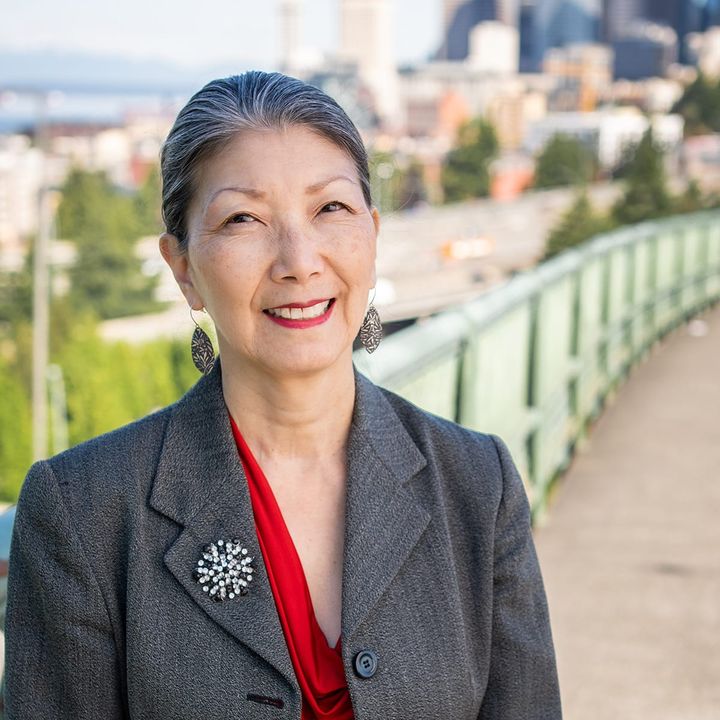

Jaelynn Scott Seeks Open State House Seat in Seattle's 37th District
Jaelynn Scott is running for the 37th District House and shares her priorities, including progressive revenue, social housing, care-based public safety, and sanctuary protections for immigrants and LGBTQ communities.
The Washington State House of Representatives is one of two chambers in the Washington State Legislature, alongside the Senate. Washington's House members serve two-year terms and are responsible for drafting and passing state legislation, setting the state budget, and conducting oversight of the executive branch. House members are elected by legislative district, with each district represented by two House members and one senator. The decisions made in Olympia shape nearly every aspect of residents' daily lives — from health care and housing costs to education funding, labor protections, and criminal justice policy.
The 37th Legislative District covers southeast Seattle neighborhoods including the Central District, Rainier Valley, Columbia City, Beacon Hill, and Skyway. It is one of the most racially and culturally diverse legislative districts in Washington state, with deep roots in civil rights organizing that has shaped statewide policy for decades.
Position 2 in the 37th LD is an open seat in 2026. Jaelynn Scott, Executive Director of the Lavender Rights Project, a Seattle-based organization focused on housing justice and legal advocacy for gender diverse communities, is a candidate for that seat. She says her years of frontline advocacy have shown her both where the Legislature can make a difference and where it keeps falling short.
Revenue and the Budget
Washington's 2026 legislative session passed the Millionaire's Tax, a significant step toward progressive taxation, but the state still faces a budget shortfall and residents are already experiencing cuts to health care, child care, and housing supports. Scott argues the Legislature has not moved boldly enough on revenue.
"2029 is too far," Scott said, referring to when the Millionaire's Tax is projected to generate significant revenue. "And we had the other options that were available."
Scott pointed specifically to the Well Washington Fund, introduced by Representative Shaun Scott, as a revenue tool she believes was dismissed too quickly. She supports pursuing a full suite of progressive revenue options: a corporate income tax, a wealth tax, maintaining capital gains taxes, and opposing the estate tax rollback that occurred in the recent session.
"We shouldn't have done a rollback of the estate tax. Capital gains, continue to hold fast on it. Our voters voted on capital gains — 37th overwhelmingly support it, right? The $250,000," she said. "And so we are supportive of progressive revenue to fund our community's needs...It's not pie in the sky, right? It is a reality if we're willing to be bold right now, in this moment, when we're facing some of the deepest cuts that we've ever seen from the federal government."
Scott draws a direct line between the urgency of the moment and the need for bolder action. She noted that while the Legislature delayed on new revenue, corporations and wealthy interests were actively lobbying against progressive proposals.
"When these same companies that are lobbying against progressive revenue are getting huge tax breaks from the Trump administration, and even to some extent lobbying and supporting their administration — we are in crisis, and it's time that we actually turn — we have to turn the tables around," she said.
Public Safety and Police Funding
Governor Ferguson has set aside $100 million for police recruitment and training statewide, even as many cities struggle to fill those positions. At the same time, Washington's public defense system is in what many legal advocates describe as a constitutional crisis, severely underfunded and unable to protect the civil rights of defendants.
Scott would prioritize the latter. She believes investing in care-based alternatives to policing produces better outcomes for communities of color in the 37th than expanding law enforcement capacity.
"If there's a question about training for more officers or building a force versus deeply returning to our commitments in 2020 that we were all, many of us were on board with, and investing in the public safety that we want to see 20, 30, 40, 50 years down the line, I'm going to go with that option," Scott said. "The one that cares for Black and Brown communities in the 37th. The one, the option that is proven to actually produce outcomes for people, individuals that are heads and tails above incarceration."
She drew on her own personal history to illustrate the point. "When I was in trouble when I was younger, it was not an officer or not the criminal justice system that would have served me well, but it was a social worker...A social worker that sat there and held a mirror up to me and told me that I was much better than where I was in that moment, that there was something brilliant and beautiful about who I could be."
Scott also identified a specific operational barrier to the crisis response model she supports: CARE team workers cannot currently self-deploy to respond independently. "We need to have their hands uncuffed in order to self-deploy, to go in and care for folks, to be independent, to be able to actually answer and show up in crisis to people who are in need."
On public defense, she would vote to significantly increase funding.
Defining Public Safety
Scott reframes the concept of public safety away from law enforcement numbers and toward economic and community conditions.
"For me, public safety is the ability of a community to care for its residents, its neighbors, their families, their children," she said. "...Public safety is correcting the economic conditions that produce violence in our community. That's what it is."
She pointed to the 37th as a district where community organizations are already doing this work every day, feeding people, celebrating culture, and taking social action. The gap, she argues, is not effort but resources.
"It's not that we don't have enough people to do the support needed to develop safe communities, it's that they're not supported well," she said. She noted the math facing families plainly: child care costs $3,500 to $4,000 a month in Seattle, while the average median income for a Black family in the area is roughly $55,000 to $65,000 annually. "You can't do that type of work if you can't afford to eat and live and take care of your kids."
Federal Threats and Protecting Vulnerable Communities
The Trump administration has threatened to pull federal funding from states that don't comply with its immigration and anti-LGBTQ priorities. Washington's existing protections for undocumented residents, trans people, and LGBTQ communities put significant federal funding at risk. Scott does not believe the state should back down.
"We have to lean in," she said. "We are the beacon, or one of the beacons on the hill at this point. And we have to live into our values because there's very few states that will."
Scott recently attended a national conference of more than 600 trans leaders convened by the Transgender Law Center in Minneapolis. She warned that new surveillance technologies present a specific threat to vulnerable communities in the current federal climate, and that the appeal of efficiency should not override the risks.
"New technology might be attractive — for example, CCTV or ALPR — and may make it slightly more efficient so you don't have to hire more people and etc., which I don't know if that should be your goal. We have to move at the speed of trust with this technology. And we don't trust it because it is vulnerable to federal attacks. So we have to take bold steps and say — no, absolutely not."
She also called for Washington to stop sharing data with federal agencies where that information could be used against immigrants or LGBTQ residents. "We still communicate through the Joint Terrorism Task Force, we still share data potentially with the Department of Corrections. Absolutely not. There's a line, right, that we have to draw — that in our state we protect. We protect trans folk. We protect undocumented folk. We protect people that take sanctuary here."
Scott connected the state's ability to resist federal pressure directly to revenue. "If they're going to pass H.R. 1 and strip our health care and punish Washington state, right, and threaten our gender affirming care — we don't have hospitals, we don't allow hospitals just to pull out. We build a health care system that works for Washingtonians built on our own values. And we do that by raising the revenue that we know we can raise through progressive taxation."
Child Care
Scott supports building a universal child care system, citing New Mexico and New York City as models worth examining. She is critical of recent cuts to the Working Connections program, which helps low-income families afford child care, and says changes in how enrollment and attendance are classified have reduced reimbursements in ways that are pushing providers to close.
"The cuts in Working Connections are hurting the ability of providers to stay open," she said. She views child care as inseparable from public safety and equity: the cost of care is "completely unreasonable for communities of color. It is a public safety issue. It's an equity issue...We have to build out a universal child care system. Everybody wants it, but it's going to require us to lean in. And whether we do models and trials — build out a universal child care system based on an attached revenue source."
Climate and Environmental Justice
Washington's Climate Commitment Act has raised more than $1.5 billion but the state is not on track to meet its 2030 or 2040 emissions benchmarks. Scott supports staying the course while making targeted corrections, and firmly opposes diverting CCA funds to non-climate purposes.
"I don't think that diverting funds from CCA for any other purpose than to reduce carbon emissions and those goals outlined in CCA is reasonable...I absolutely think that we cannot divert funds from CCA for any other program. It needs to fall within those benchmarks, and we absolutely need more time. We don't have the time because we're out of time, but we have to give it more time and not get off track," she said.
She frames the issue through a climate justice lens rather than purely environmental protection, noting that parts of the 37th have some of the highest asthma rates in the state and some of Seattle's shortest life expectancies, driven by highway proximity, pollution, and historic disinvestment.
She raised specific proposals for the district: a closer examination of leaded aviation fuel from the Boeing airfield, exploring a highway lid at the I-5 and I-90 interchange, and expanding the range of air pollutants tracked under the CCA. On transit-oriented development, she supports the general direction but insists it must be done with deep community input to prevent displacement. "We need to ensure that we're having conversations with communities of color, Black legacy homeowners, about how much the 37th takes on in terms of housing density goals and transit-oriented development. But if we can get it right where we have a right of return for folks, where we are finding ways to make it less expensive for communities of color who have been displaced to come home...If we get it right, we can build a system where people are less dependent on cars."
Education Funding
Washington's Constitution explicitly designates fully funding education as the Legislature's paramount duty. Scott says the state is failing that obligation, with education making up roughly 43 to 54 percent of the operating budget rather than what full funding would require.
She places the blame not on individual legislators but on the systemic influence of lobbyists and PACs, including those nominally aligned with progressive causes. "I think every legislator that I've talked with has the same deep concern and wants to fully fund education. But there's something in the system that's holding that back. And that is the way that we negotiate with even those PACs and those lobbyists that are friendly to us and our ability to say — You know, fine, fight me on this, but we're going to move forward this revenue source because we're going to meet our paramount duty of fully funding education in this state."
She called the recent cuts affecting rural school districts "just unacceptable at this point."
Social and Affordable Housing
Scott says social housing is among the issues she is most eager to champion in Olympia. She celebrated the recent acquisition of its first property by Seattle's Social Housing Developer and said she wants to move beyond just the Vienna-inspired model to a broader vision of publicly owned, community-operated housing across multiple categories.
"I want to be, and I will champion — deeply investing in social housing and socially-owned housing," she said. "If we could build a different model of affordable housing that a nonprofit like Estelita's or Africatown, right, can use community stewardship of land models where they can acquire the property — God forbid, be a nonprofit developer, right? — and build out their own properties to lower costs. Then I think that's the way forward."
Scott is critical of tax credit-based affordable housing models, which she says can drive up surrounding rents and leave units empty. She points to the permanent supportive housing facility run by the Lavender Rights Project as a working example of the model she has in mind.
"It is a home for many people with a beautiful culture built around — that's being built within the building — of folks that are loving and caring for each other. It's thriving, and people stay as long as they want. And it is publicly owned," she said. "But I see socially-owned housing having a function within the permanent supportive housing world, right?"
Endorsements and Campaign Finance
Scott said her donor base is primarily Washington-based and concentrated in the 37th, but also includes supporters from outside the state whom she has worked with in her organizing career. She does not accept corporate PAC donations.
"All of these people I've worked with in some form or capacity, and they are investing in me as a leader. Not all of them are in agreement with my politic at all, but they see me as a bridge builder and someone who can build a broad base of support for issues, and they know I will fight hard for them."
She described the fundraising response as humbling and said it reflects the hope people are investing in the campaign's platform. "Many of us who have lost so much hope over the years, right, especially since 2020, who were, who had found a little bit of hope for a second and then gave up — finding hope again in our campaign. It's so heartwarming. And I think that's what people are endorsing and that's what people are giving to."
About the Guest
Jaelynn Scott
Jaelynn Scott is running to be the next State Representative of WA’s 37th Legislative District. She is currently the Executive Director of Lavender Rights Project, a Black-feminist organization working for equitable economic security, social services, and freedom from mass incarceration for all Washingtonians. Jaelynn’s leadership has been measured by the tangible protections we build for our most vulnerable Washingtonians. Her career has been dedicated to building political power for those who have been silenced, ensuring every neighbor has a voice at the ballot box and a seat at the table. As a social justice minister and executive director of Lavender Rights Project, she has over 15 years of experience successfully fighting for protections for marginalized communities, including securing medical coverage for all, advocating for proven cash relief solutions to poverty, protection from state violence and surveillance, and fighting growing threats of authoritarianism.
Resources
Podcast Transcript
[00:00:50] Crystal Fincher: This is Hacks & Wonks, where we talk politics and policy in Washington State and cover what's happening, why it's happening, and what you can do about it.
The Washington State House of Representatives is one of two chambers in the Washington State Legislature, alongside the Senate. Washington's House members serve two-year terms and are responsible for drafting and passing state legislation, setting the state budget, and conducting oversight of the executive branch. House members are elected by legislative district, with each district represented by two House members and one senator.
The 37th legislative district covers southeast Seattle neighborhoods including the Central District, Rainier Valley, and the Chinatown International District, Columbia City, Beacon Hill, and Skyway. It's one of the most racially and culturally diverse legislative districts in Washington State, with deep roots in civil rights organizing that has shaped statewide policy for decades.
Today, we're speaking with Jaelynn Scott, a candidate for the open seat in Position 2. She's the Executive Director of the Lavender Rights Project, a Seattle-based organization focused on housing justice and legal advocacy for gender diverse communities. Welcome, Jaelynn.
[00:02:15] Jaelynn Scott: Thank you. Good to be with you.
[00:02:18] Crystal Fincher: Good to be with you. Good to get ready to get into these questions. As you know, we start with a lightning round - a very quick yes or no, one-word answer questions - that we'll just fly through before we get to our regular long form questions. So if you're ready, we'll get going.
[00:02:37] Jaelynn Scott: I'm ready.
[00:02:38] Crystal Fincher: All right. Do you own or rent your residence?
[00:02:42] Jaelynn Scott: Rent.
[00:02:44] Crystal Fincher: Are you a landlord?
[00:02:45] Jaelynn Scott: No.
[00:02:47] Crystal Fincher: Have you ever been a member of a union?
[00:02:49] Jaelynn Scott: Yes.
[00:02:51] Crystal Fincher: Have you ever walked on a picket line?
[00:02:53] Jaelynn Scott: Yes.
[00:02:55] Crystal Fincher: Have you ever crossed a picket line?
[00:02:57] Jaelynn Scott: No.
[00:02:58] Crystal Fincher: Is your campaign staff unionized?
[00:03:01] Jaelynn Scott: No.
[00:03:03] Crystal Fincher: If your campaign staff wants to unionize, will you voluntarily recognize their effort?
[00:03:09] Jaelynn Scott: Absolutely.
[00:03:11] Crystal Fincher: What political party do you identify with?
[00:03:14] Jaelynn Scott: Democratic. And I'm a Democratic Socialist - a member of Democratic Socialists of America.
[00:03:20] Crystal Fincher: Have you used the library system in the past month?
[00:03:24] Jaelynn Scott: Yes.
[00:03:26] Crystal Fincher: Have you or someone in your household ever relied on public assistance?
[00:03:31] Jaelynn Scott: Yes.
[00:03:32] Crystal Fincher: Have you ever been stopped or questioned by police in Seattle?
[00:03:36] Jaelynn Scott: Yes.
[00:03:38] Crystal Fincher: Have you ever worked in retail or a job where you had to rely on tips?
[00:03:43] Jaelynn Scott: Yes.
[00:03:44] Crystal Fincher: Have you ever owned a business?
[00:03:46] Jaelynn Scott: No.
[00:03:48] Crystal Fincher: Have you ever managed a team of 10 or more?
[00:03:51] Jaelynn Scott: Yes.
[00:03:51] Crystal Fincher: 100 or more?
[00:03:54] Jaelynn Scott: No.
[00:03:55] Crystal Fincher: Have you ever reported someone's misconduct in your workplace?
[00:04:03] Jaelynn Scott: Yes, and unpack - I was HR, so it's hard.
[00:04:09] Crystal Fincher: Do you have a favorite sports team you actively follow?
[00:04:14] Jaelynn Scott: It's a stretch, but Reign.
[00:04:16] Crystal Fincher: Okay, love the Reign.
Do you believe the state of Washington should reduce its overall number of employees to cut costs?
[00:04:25] Jaelynn Scott: No.
[00:04:27] Crystal Fincher: Do you believe state government relies too much on contractors?
[00:04:40] Jaelynn Scott: Not enough information, but we can unpack later.
[00:04:44] Crystal Fincher: Are you open to privatizing some state services if it proves more efficient?
[00:04:50] Jaelynn Scott: No.
[00:04:52] Crystal Fincher: Do you support the state issuing more bonds to fund large capital projects?
[00:04:58] Jaelynn Scott: Yes.
[00:05:01] Crystal Fincher: Would you vote in support of requiring ICE agents to get court approval before entering schools and health care facilities?
[00:05:08] Jaelynn Scott: Yes.
[00:05:10] Crystal Fincher: Do you support a statewide mandate requiring all employers - public and private - to bargain with labor before implementing AI that could displace human workers?
[00:05:21] Jaelynn Scott: Yes, absolutely.
[00:05:24] Crystal Fincher: Do you support the Well Washington Fund introduced by Representative Shaun Scott?
[00:05:29] Jaelynn Scott: Yes, 100 percent, 1,000 percent.
[00:05:33] Crystal Fincher: Do you support banning surveillance pricing by corporations doing business in Washington state?
[00:05:40] Jaelynn Scott: Yes.
[00:05:41] Crystal Fincher: Do you accept corporate PAC donations?
[00:05:44] Jaelynn Scott: No.
[00:05:46] Crystal Fincher: In response to growing fears of political violence across the country, do you support the use of campaign funds for personal security?
[00:05:54] Jaelynn Scott: Yes.
[00:05:56] Crystal Fincher: Should corporations be prevented from buying more than 25 homes in the state?
[00:06:01] Jaelynn Scott: Yes.
[00:06:03] Crystal Fincher: What's your favorite park in the district?
[00:06:07] Jaelynn Scott: I just realized that Kubota was a city park. So yes - Kubota Gardens.
[00:06:13] Crystal Fincher: What was the last live performance you saw in the district?
[00:06:19] Jaelynn Scott: Oh, in district? I think it was Ariyah Jané Albert at Black & Tan.
[00:06:29] Crystal Fincher: What's the last song you listened to?
[00:06:33] Jaelynn Scott: Anyone Who Has a Heart - Dionne - to calm me down today.
[00:06:39] Crystal Fincher: What is your favorite song?
[00:06:46] Jaelynn Scott: Casta Diva, Maria Callas singing.
[00:06:50] Crystal Fincher: What's your favorite album?
[00:06:53] Jaelynn Scott: Oh, Velvet Rope. I'll go Velvet Rope with Janet. I'm struggling - it's like Sign of the Times or Velvet.
[00:07:06] Crystal Fincher: Who's your favorite local artist?
[00:07:08] Jaelynn Scott: Same as before - Ariyah Jané Albert.
[00:07:11] Crystal Fincher: What's the most recent book you read?
[00:07:15] Jaelynn Scott: Foundation and Empire - and don't ask me what happened, but that's Asimov.
[00:07:22] Crystal Fincher: What's your top book recommendation for listeners?
[00:07:27] Jaelynn Scott: The Temple of My Familiar, Alice Walker.
[00:07:30] Crystal Fincher: What's your favorite cafe or coffee house in the district?
[00:07:34] Jaelynn Scott: So many. Stonehouse Cafe.
[00:07:38] Crystal Fincher: Have you ever served on a jury?
[00:07:42] Jaelynn Scott: No.
[00:07:44] Crystal Fincher: Have you ever been arrested?
[00:07:46] Jaelynn Scott: Yes.
[00:07:47] Crystal Fincher: Have you ever taken transit in the past month?
[00:07:51] Jaelynn Scott: No.
[00:07:53] Crystal Fincher: Have you ridden a bike in the past month?
[00:07:56] Jaelynn Scott: My body won't let me right now, no.
[00:07:59] Crystal Fincher: Do you prefer dogs or cats?
[00:08:02] Jaelynn Scott: Dogs.
[00:08:04] Crystal Fincher: What's your favorite season?
[00:08:06] Jaelynn Scott: Spring.
[00:08:08] Crystal Fincher: Have you attended a No Kings or other public protest?
[00:08:12] Jaelynn Scott: Yes.
[00:08:14] Crystal Fincher: Do you believe a larger, visible law enforcement presence is the most effective way to reduce crime?
[00:08:20] Jaelynn Scott: No, absolutely not.
[00:08:23] Crystal Fincher: Do you believe the size of the State Patrol is too small, too large, or just right?
[00:08:30] Jaelynn Scott: I don't have enough information - given I haven't seen them in our district, probably just right.
[00:08:37] Crystal Fincher: Do you support implementation and expansion of non-officer crisis response teams?
[00:08:42] Jaelynn Scott: Yes.
[00:08:44] Crystal Fincher: Do you support the use of automated license plate readers?
[00:08:49] Jaelynn Scott: No.
[00:08:51] Crystal Fincher: Should facial recognition be banned?
[00:08:54] Jaelynn Scott: For law enforcement purposes, yes.
[00:08:57] Crystal Fincher: Would you vote to significantly increase funding for public defender services?
[00:09:02] Jaelynn Scott: Yes.
[00:09:03] Crystal Fincher: Should the state prioritize investment in restorative justice programs over traditional incarceration for nonviolent offenders?
[00:09:12] Jaelynn Scott: Yes.
[00:09:13] Crystal Fincher: Should the state fund and provide gender-affirming care?
[00:09:17] Jaelynn Scott: Yes.
[00:09:18] Crystal Fincher: Should the state explicitly codify protections for gender identity in public accommodations, including athletic facilities and sports programs?
[00:09:27] Jaelynn Scott: Yes.
[00:09:29] Crystal Fincher: Should the state cooperate with or share any data with federal authorities?
[00:09:40] Jaelynn Scott: Depending on the agency. Can we unpack later? Or if it's with...
[00:09:46] Crystal Fincher: Yeah, we can unpack that later. We have a question about that.
Do you commit to maintaining or increasing funding for community violence intervention programs?
[00:09:55] Jaelynn Scott: Yes.
[00:09:57] Crystal Fincher: Do you plan to increase funding for investigations of labor violations like wage theft and illegal union busting?
[00:10:03] Jaelynn Scott: Absolutely, yes.
[00:10:05] Crystal Fincher: Do large corporations pay their fair share of taxes?
[00:10:09] Jaelynn Scott: No.
[00:10:10] Crystal Fincher: Do small businesses pay their fair share of taxes?
[00:10:14] Jaelynn Scott: Yes, probably too much.
[00:10:17] Crystal Fincher: Do you support stricter rent stabilization measures in the state?
[00:10:21] Jaelynn Scott: Yes.
[00:10:23] Crystal Fincher: Do you support extending or expanding the right to counsel legislation for tenants facing eviction?
[00:10:29] Jaelynn Scott: Yes.
[00:10:31] Crystal Fincher: Do you support using state funds to purchase vacant hotels for immediate homeless shelter?
[00:10:37] Jaelynn Scott: Yes.
[00:10:39] Crystal Fincher: What's the most recent show you watched that you love?
[00:10:45] Jaelynn Scott: Try not to make it too complicated. Opera? The show was Akhnaten in San Francisco - I flew down just to see it.
[00:10:55] Crystal Fincher: Oh, wow.
[00:10:56] Jaelynn Scott: With Philip Glass's opera.
[00:10:59] Crystal Fincher: What's your favorite Seattle sports moment?
[00:11:03] Jaelynn Scott: I don't have one. I'm not a sports fan.
[00:11:07] Crystal Fincher: What's your favorite comfort food?
[00:11:11] Jaelynn Scott: Oh, pizza.
[00:11:13] Crystal Fincher: I identify.
Are you an early bird or night owl?
[00:11:18] Jaelynn Scott: Night owl.
[00:11:20] Crystal Fincher: What's a hobby people wouldn't expect you have?
[00:11:24] Jaelynn Scott: I love to orca watch - from the shore, but chasing where they are in my car.
[00:11:32] Crystal Fincher: I haven't seen one yet. I'm determined to do that by the end of the year.
[00:11:36] Jaelynn Scott: There's a Facebook group. Guaranteed you'll see them.
[00:11:40] Crystal Fincher: What's your favorite neighborhood in the district?
[00:11:44] Jaelynn Scott: Oh. I will get in trouble if I don't say it, and I think I agree - Central District.
[00:11:49] Crystal Fincher: What's your favorite rainy day activity?
[00:11:55] Jaelynn Scott: When, um - I don't like getting wet - but when I had my pup, it was finding a trail with a deep canopy that I can walk through.
[00:12:06] Crystal Fincher: What's your favorite Sound Transit station name?
[00:12:10] Jaelynn Scott: Oh, Graham Street.
[00:12:13] Crystal Fincher: Have you voted in every primary and general election in the past four years?
[00:12:18] Jaelynn Scott: Yes, I believe so.
[00:12:20] Crystal Fincher: Have you made any political endorsements that you regret?
[00:12:24] Jaelynn Scott: No.
[00:12:25] Crystal Fincher: Have you made any political donations that you regret?
[00:12:28] Jaelynn Scott: No.
[00:12:30] Crystal Fincher: Did you vote for Bruce Harrell or Katie Wilson for Seattle Mayor?
[00:12:34] Jaelynn Scott: Katie.
[00:12:35] Crystal Fincher: Did you vote for Sara Nelson or Dionne Foster for City Council?
[00:12:39] Jaelynn Scott: Dionne.
[00:12:41] Crystal Fincher: Did you vote for Tammy Morales or Tanya Woo?
[00:12:45] Jaelynn Scott: I think - what year was that?
[00:12:47] Crystal Fincher: 20... what are we in? '26, '25? '25? Or '23?
[00:12:54] Jaelynn Scott: I think that was '23, so no - it wasn't on my ballot at the time.
[00:12:59] Crystal Fincher: What district were you in?
[00:13:01] Jaelynn Scott: I was in Tacoma at that time.
[00:13:03] Crystal Fincher: Oh.
[00:13:04] Jaelynn Scott: Commuting.
[00:13:05] Crystal Fincher: Did you vote for Ann Davison or Erika Evans for Seattle City Attorney?
[00:13:10] Jaelynn Scott: Erika.
[00:13:11] Crystal Fincher: Did you vote for Adonis Ducksworth or Eddie Lin for City Council?
[00:13:18] Jaelynn Scott: Not on my ballot.
[00:13:21] Crystal Fincher: What Council district are you in?
[00:13:23] Jaelynn Scott: So that would have been Joy.
[00:13:24] Crystal Fincher: Oh, so you had Joy. Did you vote for Joy Hollingsworth or Alex Hudson?
[00:13:30] Jaelynn Scott: Joy.
[00:13:31] Crystal Fincher: Did you vote for Girmay Zahilay or Claudia Balducci for King County Executive?
[00:13:36] Jaelynn Scott: Girmay.
[00:13:38] Crystal Fincher: Did you vote in favor of the reauthorization of Seattle's Democracy Voucher program?
[00:13:43] Jaelynn Scott: Yes.
[00:13:45] Crystal Fincher: Did you vote for Seattle's social housing initiative option 1A that passed?
[00:13:51] Jaelynn Scott: I don't think it was on my ballot at the time.
[00:13:55] Crystal Fincher: In the city of Seattle?
[00:13:56] Jaelynn Scott: What year was that?
[00:13:59] Crystal Fincher: Oh, so you were probably in Tacoma.
[00:14:01] Jaelynn Scott: I was in Tacoma at the time.
[00:14:02] Crystal Fincher: Okay. All righty. Well, thank you so much. That is all of our lightning round questions - appreciate it. Now we're going to get into our open-ended questions.
And so just starting off - why are you running and what will your top priorities be if you're elected?
[00:14:21] Jaelynn Scott: Sure. Do you want to unpack some of those other questions?
[00:14:24] Crystal Fincher: Let's do that throughout these questions.
[00:14:27] Jaelynn Scott: Yeah. So I'm running - you know, I have worked over the years with Lavender Rights Project, advocating for some of the most marginal folks in our community. Pushing forward housing justice, criminal justice work, as well as deep policy work around gender, race, equity. And over the years, my interactions with the Legislature has been mixed. We have a number of people who are quite sympathetic to our needs, but we always keep hitting a wall - a wall of urgency and a sense of urgency - that we have as community that oftentimes the people that are representing us either may not have to some extent or are firewalled by the system. We're seeing the attacks from the Trump administration and the federal government on our communities. We're seeing criminalization. We're watching as corporate powers grow and, you know, billionaires control - five billionaires controlling half of the world's resources. Many of those corporate powers and multinational corporations are housed right here in Seattle, built off the backs of people like you and me - the working people and working families. And yet they are negotiating behind closed doors against the very initiatives that we need to move forward in order to protect our communities. And so I am running because I know my value of being a community organizer - and what it means to bring community leadership to the table and to hold fast and strong and build a coalition of support behind us to get the gains that we need for our people.
And we need more representatives like that. There are some - I think Darya Farivar, Shaun Scott - there's so many, right? But we're building - we need to build more - a stronger and deeper progressive coalition, more socialists in office, more community organizers in office. We're seeing a wave across this country of people who are willing to take the helm to bring forward community voices who will be unrelenting in naming and addressing that - yeah, there is a crisis and we feel it in our bones and in our bodies. And it is a little more urgent than you think it is. And so we have to actually move quickly and with seriousness and deep intent on ensuring that our communities are supported. So that's why I'm running.
[00:17:16] Crystal Fincher: Now, the 2026 session earlier this year in our Legislature saw the passage of the Millionaire's Tax, but it arrived alongside a projected budget shortfall. So what specific revenue tools or cuts or strategies will you have to address the remaining budget challenges?
[00:17:36] Jaelynn Scott: Yeah, it is unfortunate that - it's fortunate. Let's start with the positive, right? We have the Millionaire's Tax. And whether or not that tax is, you know, the most radical or deeply progressive, I don't know, but we needed it. And it's giving us some options for potentially 2029. Potential and even the shakiness around it is not enough security for many of us who are facing cuts to our health care, long-term care, child care. And affordability - housing and housing stability, paying more in premiums for health care, right, on the health care exchange. 2029 is too far. And we had the other options that were available. And there's questions that I think community has, that the constituents that have - that I'm talking with when we're canvassing and door knocking - about why have we not moved forward on deep funding, progressive revenue funding in other areas? We didn't really take seriously the Well Washington Fund. Shaun Scott introduced it, and it was dismissed. And what people don't understand is that is where community is, that's where your constituents are. They need you to move boldly and take seriously revenue options that could have resulted in possibly 2027, 2028 revenue. That is the level of urgency I'm asking us to have.
And so we have to move forward on other progressive revenue options, the full suite of packages. Corporate income tax, we have to look at it. Wealth tax, we have to look at it. We shouldn't have done a rollback of the estate tax. Capital gains, continue to hold fast on it. Our voters voted on capital gains - 37th overwhelmingly support it, right? The $250,000. And so we are supportive of progressive revenue to fund our community's needs - to move forward on housing security, to move forward on building housing for our people, to move forward on initiatives that are very popular, like universal health care and universal child care. It's not pie in the sky, right? It is a reality if we're willing to be bold right now, in this moment, when we're facing some of the deepest cuts that we've ever seen from the federal government, right? When they're doing pass-through costs to states, when these same companies that are lobbying against progressive revenue are getting huge tax breaks from the Trump administration, and even to some extent lobbying and supporting their administration. Like, we are in crisis, and it's time that we actually turn - we have to turn the tables around.
[00:20:28] Crystal Fincher: Governor Ferguson has set aside $100 million for police recruitment and training, but many cities are still struggling to hire and fill those seats. At the same time, the public defense system is in a constitutional crisis due to the lack of funding, which impacts everyone's civil rights in the state. Would you vote to reallocate that $100 million specifically to public defense and behavioral health? Or do you believe law enforcement recruitment remains a higher priority for safety in the 37th district?
[00:21:02] Jaelynn Scott: The 37th was, and I think communities of color were very clear in the - I want to bring back the summer of 2020 and since, that we actually want to deeply invest in alternatives to policing. And whatever the political winds, how ever they have changed - our value, our commitment is finding a world where we have someone showing up, right, to a person in crisis with a hug and not with handcuffs and a gun. And many officers support not having to show up to a lot of these crisis, the calls that they have to respond to. Statewide, that's the case, too. We need to invest in diversion programs and alternatives to policing. And so if there's a question about training for more officers or building a force versus deeply returning to our commitments in 2020 that we were all, many of us were on board with, and investing in the public safety that we want to see 20, 30, 40, 50 years down the line, I'm going to go with that option. The one that cares for Black and Brown communities in the 37th. The one, the option that is proven to actually produce outcomes for people, individuals that are heads and tails above incarceration.
When I was in trouble when I was younger, it was not an officer or not the criminal justice system that would have served me well, but it was a social worker. It was actually labor putting me in front of a social worker, telling me to get my stuff together, right? And a social worker that sat there and held a mirror up to me and told me that I was much better than where I was in that moment, that there was something brilliant and beautiful about who I could be. And I believed that. And that's why I am who I am today. That story is the same for many of the clients that come through the organization that I work with, Lavender Rights Project. Many of them are in crisis or in trouble. And to offer them before they get, have any interaction with the carceral state - to offer them housing, support, love, care, to hold a mirror up to them and say, like, this is - what you're experiencing is the results of income inequality, of an unfair economic system, of a society who has given up on you. This is not you. This is not your fault. There's something more brilliant in you. And you see lives change. There's so many of these stories across the 37th of careworkers, of CARE team workers - who, by the way, needs to have their hands uncuffed in order to self-deploy, to go in and care for folks, to be independent, to be able to actually answer and show up in crisis to people who are in need. Like so many of these stories across the 37, across folks, with folks that I work with on a daily basis of how a little bit of care changes lives and pulls people away from the prison pipeline. And so, yeah, I'm going to want to and will always invest in diversion, in programs that prioritize care over incarceration.
[00:24:46] Crystal Fincher: How do you define public safety? And what will you do as a legislator to make the 37th more safe?
[00:24:53] Jaelynn Scott: Yeah, for me, public safety is the ability of a community to care for its residents, its neighbors, their families, their children. Public safety is the ability of a community to function as it should, of a neighborhood to be able to do deep neighborhood development and building. You know, going to all of these events during the campaign in the 37th, right - we have CID, and we have Beacon, and South Rainier, and Skyway, and Chinese American community, Japanese community, Khmer community, historical Black folk. And you are seeing daily, every day - there's too many events, I can't go to all of them - but there's an option every day. Two to three, right - community events by elders, youth, young folk who are either doing social action, they're feeding people, they're celebrating their culture. So it's not that we don't have enough people to do the support needed to develop safe communities, it's that they're not supported well. And we need to deeply invest in the supports for these community organizations, community leaders to build housing, right, and to develop community stewardship of land projects, to invest in diversion programs and diversion programs that work, to actually be able to take care of their children - because child care is $3,500, $4,000 a month and the average median income for a Black family is what, $55,000, $55-65,000. You can't do that type of work if you can't afford to eat and live and take care of your kids, right? Public safety is correcting the economic conditions that produce violence in our community. That's what it is.
[00:27:14] Crystal Fincher: Now, we have had a federal government who has been threatening local communities with a loss of funding for not agreeing with their priorities - many of them at odds with what we have said our priorities are here in Washington state and in your district, the 37th - particularly targeting immigrants and refugees, the LGBTQ+ community, especially the trans community, sanctuary city policies. And so we have a number of policies that potentially put us at risk for funding revocation or threats. How should you as a legislator in our state respond to those threats in light of the policies that we say matter to us? Should we stand by those policies? Should we change anything to maintain funding? And if we lose funding, what do we need to do?
[00:28:11] Jaelynn Scott: Yeah. We have to - you know, we, in Washington state, for - I was just at a conference of about, I think there was 600+ trans leaders from across the country in Minneapolis convened by the Transgender Law Center. And, you know, I don't want to paint our community as in crisis because many of us, especially the trans folk of color, have always operated under a level of a fascistic regime, right? However, in this moment, it feels more organized and hitting our everyday politics. And there is a lot of hope and power, a lot of hope in people and power being built and organizing. The good thing that has come from this moment is, to some extent I think, queer and trans infrastructure. The relations, the isolations or the isolating of communities, queer communities here, Black communities here, Latine communities there - those silos are being broken down. We're starting to organize with each other, a lot of power is being built.
Having said all of that, people are looking to our state. In many ways, they see us as a sanctuary, a possibility, a hope. They're looking to us for guidance in what they could possibly get done in their own states - us and Minnesota, I would say. And we have to live up to it. We are the beacon, or one of the beacons on the hill at this point. And we have to live into our values because there's very few states that will. You know, to - so much that has been given, much is required. Much of what is given has been built by the hands of communities of color, workers who have built these multinational corporations, communities who have built Washington to have enough revenue to be able to take some risks. Well, now it's time that we cash in those checks and start a little bit of taxation to get some of that revenue back so we can build out the sanctuary that we need in this state. We have to lean in. And we have - you know, we worked hard on shield laws for the state. We've worked hard on gender affirming care protections - I have and with our organization. And, and we have to hold fast. We also have to hold the line on security protection. So that means - you know, we need to take both steps to protect our communities from overreach with ICE and Homeland Security. And while, you know, new technology might be attractive - for example, CCTV or ALPR - and may make it slightly more efficient so you don't have to hire more people and etc., which I don't know if that should be your goal. We have to move at the speed of trust with this technology. And we don't trust it because it is vulnerable to federal attacks. So we have to take bold steps and say - no, absolutely not. We will hold the line, be the beacon on the hill, and show what it means to protect our communities over convenience.
We're watching the Trump administration who just put out counterterrorism strategy that particularly criminalizes trans folk, gender diverse people - really classifying us by no other reason but our gender as potential terrorists. The same approach with our undocumented community, immigrant community. And yet, we still communicate through the Joint Terrorism Task Force, we still share data potentially with the Department of Corrections. Absolutely not. There's a line, right, that we have to draw - that in our state we protect. We protect trans folk. We protect undocumented folk. We protect people that take sanctuary here. So we have to lean in. But that also is going to require us, like I said earlier, to raise the revenue to take care of ourselves. If they're going to pass H.R. 1 and strip our health care and punish Washington state, right, and threaten our gender affirming care - we don't have hospitals, we don't allow hospitals just to pull out. We build a health care system that works for Washingtonians built on our own values. And we do that by raising the revenue that we know we can raise through progressive taxation.
[00:33:43] Crystal Fincher: What should the state be doing to make child care more affordable?
[00:33:49] Jaelynn Scott: I think it's the same. I think the cuts in Working Connections, though, I would like to look a bit more deeply at the rationale for the cuts. What we're hearing from providers is this, I think, classification of um, versus number of people enrolled and attendance and some of the other changes that were cost and cost reductions are hurting the ability of providers to stay open. In addition to that, I named earlier the cost of child care, right - completely unreasonable for communities of color. It is a public safety issue. It's an equity issue. We're looking at New Mexico that has a universal child care system - it's new, we don't know how that's going to go. They're not facing the budget deficit that we're facing. But it's time. We're looking at other states - or cities, New York City and others, who are experimenting and willing to take risks. We have to build out a universal child care system. Everybody wants it, but it's going to require us to lean in. And whether we do models and trials - build out a universal child care system based on an attached revenue source.
[00:35:15] Crystal Fincher: Now, the Climate Commitment Act was a piece of landmark legislation passed here in Washington - and it's raised over $1.5 billion, but we're still not on track to meet our 2030 and 2040 emissions benchmarks. Some people say that's because it's the wrong policy strategy overall. Others say it's a matter of implementation and how those funds are being spent. Still other people say it just needs more time. What do you think we need to do to get the Climate Commitment Act, or our state, on track to meet our 2030 and 2040 emissions targets?
[00:35:58] Jaelynn Scott: I think we need to continue the course - give it more time and make practical corrections. I mean, almost - I hate to use the word - sewer socialist corrections of what's not working, be willing to slash that. Not the money, but the program and put it in places that are working. I don't think that diverting funds from CCA for any other purpose than to reduce carbon emissions and those goals outlined in CCA is reasonable. You know, the 37th and the residents of the 37th are - get the first and worst, right, of climate change and toxic air pollutants, some of the highest asthma rates in the state. It is, again, an equity issue. It is a public health issue. And we need to be thinking a little bit different - I think we still get caught up in - it's environment or environmental protection versus climate justice. But I think if we think of the CCA in terms of climate justice, we can be a bit more expansive in how we are balancing some of our other budget needs with the reduction of carbon emissions and some of the CCA goals. So I'm willing to look at it through a climate justice lens. I want to do a deep dive, but I absolutely think that we cannot divert funds from CCA for any other program. It needs to fall within those benchmarks, and we absolutely need more time. We don't have the time because we're out of time, but we have to give it more time and not get off track.
[00:37:57] Crystal Fincher: Now, life expectancy in some parts of Seattle is up to 10 years shorter than in other parts of the city, largely due to pollution, highway proximity, and historic disinvestment. Areas in the 37th district include some of these areas with much shorter life expectancies. What will you do to address these health disparities and environmental injustices?
[00:38:23] Jaelynn Scott: Yeah, I think we need to talk through some of the classification of air pollutants in the CCA and maybe considering a deeper investment and looking at a broader spectrum of air pollutants. I think in terms of - you know, I'm hearing mixed arguments on whether or not leaded fuel for particularly around Boeing, the Boeing airfield and some of those airplanes. Let's have a second look there. I think investments like lidding I-5 - the current plan or proposal doesn't really touch our district, my district? But thinking about that I-5, 90 interchange and what does it look like to really explore a lid that doesn't cause displacement, which I think is one of the deeper complications. And deep investment in transit and transit-oriented development. Now, I will say that, but speaking of gentrification and displacement, we need to ensure that we're having conversations with communities of color, Black legacy homeowners, about how much the 37th takes on in terms of housing density goals and transit-oriented development. But if we can get it right where we have a right of return for folks, where we are finding ways to make it less expensive for communities of color who have been displaced to come home that, you know, will hold up in court which i think is a challenge. If we get it right, we can build a system where people are less dependent on cars.
The other issue, I think, which often doesn't get in the mix is - we're thinking about Rainier and Rainier Ave. And, you know, particularly, you know, you having consistent and reliable bus service. There are some cultural pieces around queer and trans people and safety on public transportation. There's car culture things. My point is, we can't keep developing these transportation policies, nor our housing policies and transit-oriented development policies, in a vacuum and without deep conversations with the various communities that make up the 37th, which is, in my opinion, one of the most diverse districts in the state, although I know Hannah claims that for her district. But they but but that's going to take a little - we've got to do a little bit better in having those conversations as we're doing that planning out. And that's how we get to a place where communities of color can trust transit, utilize transit fully, and reduce our reliance on vehicles.
[00:41:42] Crystal Fincher: How can we fully fund education?
[00:41:47] Jaelynn Scott: Yeah, it's the paramount duty, right? That's the word I keep hearing over and over and we all hear over and over.
[00:41:56] Crystal Fincher: It's in the Constitution.
[00:41:57] Jaelynn Scott: Paramount duty - it's in the Constitution - the Legislature to fully fund education and we're failing. You know, I think we were at, I don't know if I have those numbers - 53% at some point. Closer to, you know, 40, 50, maybe 54%, 43% right now, the operating budget for education. That's not okay. And our failure to take seriously the urgent crisis that we're in, to not predict that we would have serious cuts from this administration - I mean, it was not a secret. And to plan forward has been a problem. Now, am I blaming the legislators? I think every legislator that I've talked with has the same deep concern and wants to fully fund education. But there's something in the system that's holding that back. And that is the way that we negotiate with even those PACs and those lobbyists that are friendly to us and our ability to say - You know, fine, fight me on this, but we're going to move forward this revenue source because we're going to meet our paramount duty of fully funding education in this state. That is the only way. And I think the cuts that we've seen recently, particularly for rural communities - deeply - it's just unacceptable at this point.
[00:43:30] Crystal Fincher: What should be on our radar that we haven't discussed?
[00:43:39] Jaelynn Scott: Yeah. You know, I haven't talked through - I think one thing I'm hoping to champion, and I've talked a little bit about housing, but I am so very excited that the social housing developer acquired their first property. Not in my district - that's okay, I got feels. But we need to be - I want to be, and I will champion - deeply investing in social housing and socially-owned housing. And I don't draw that line at the Vienna model, like the model that we're seeing with the social housing developer inspired by social housing in Vienna. But I see socially-owned housing having a function within the permanent supportive housing world, right? I run, we run a permanent supportive housing facility. It is a home for many people with a beautiful culture built around - that's being built within the building - of folks that are loving and caring for each other. It's thriving, and people stay as long as they want. And it is publicly owned. It's not funded the way that I would prefer to fund it, but if we could take that model of publicly owned, community operated and owned, public housing, shelter, emergency housing, transitional housing, affordable housing that's not connected to tax credits or other schemes where folks who are paying more are subsidizing the costs of folks who are paying less, driving up the market for housing, right, and the rent for housing and causing high prices to the point that many of those units are currently empty, right? If we could build a different model of affordable housing that a nonprofit like Estelita's or Africatown, right, can use community stewardship of land models where they can acquire the property - God forbid, be a nonprofit developer, right? and build out their own properties to lower costs. Then I think that's the way forward. That is the way forward. And I want to deeply invest in these models, right, of housing for our community.
[00:46:21] Crystal Fincher: So as we move to close this conversation today, what do you think your endorsements and donations say about your campaign? And why should voters select you on the ballot?
[00:46:37] Jaelynn Scott: Yeah, I think there's a wide variety of endorsements from a number of politicians. Some, I mean, all Democrat - most leftist - but different ideological perspectives, right? And with funding, there's heavy support in Washington and in 37th, but there's also funding from outside of the state. All of these people I've worked with in some form or capacity, and they are investing in me as a leader. Not all of them are in agreement with my politic at all, but they see me as a bridge builder and someone who can build a broad base of support for issues, and they know I will fight hard for them. So I think that's what the endorsements and the donations look like. And I have to tell you - when I was campaigning, you have this thing like, I don't know if anyone's going to like give and raise and like give to the campaign where I'm running. But it is humbling. A) it's not about me and them giving money to me, it's about the platform that we're building. But it's heartwarming to see their trust in me and their belief in the vision itself, of the platform. And that they - many of us who have lost so much hope over the years, right, especially since 2020, who were, who had found a little bit of hope for a second and then gave up - finding hope again in our campaign. It's so heartwarming. And I think that's what people are endorsing and that's what people are giving to.
[00:48:33] Crystal Fincher: Well, thank you so much, Jaelynn Scott, for joining us in this conversation today, for being open and letting people know who you are and what you stand for. And we will be following your campaign eagerly. Thank you so much.
[00:48:48] Jaelynn Scott: Thank you.
[00:48:51] Crystal Fincher: Thank you for listening to Hacks & Wonks, which is produced by Shannon Cheng. You can follow Hacks & Wonks on Bluesky at @HacksAndWonks. You can find me on Bluesky at @finchfrii, that's F-I-N-C-H-F-R-I-I. You can catch Hacks & Wonks on every podcast service and app - just type "Hacks and Wonks" into the search bar. Be sure to subscribe to get the full versions of our Friday week-in-review shows and our Tuesday topical show delivered to your podcast feed. If you like us, leave a review wherever you listen. You can also get a full transcript of this episode and links to the resources referenced in the show at OfficialHacksAndWonks.com.
Thanks for tuning in - talk to you next time.