
Silas James, District 5 Candidate, Outlines Plans to Address Housing, Safety, and Poverty
Silas James is running for Seattle City Council District 5 as a working-class Democratic Socialist focused on fixing failing systems
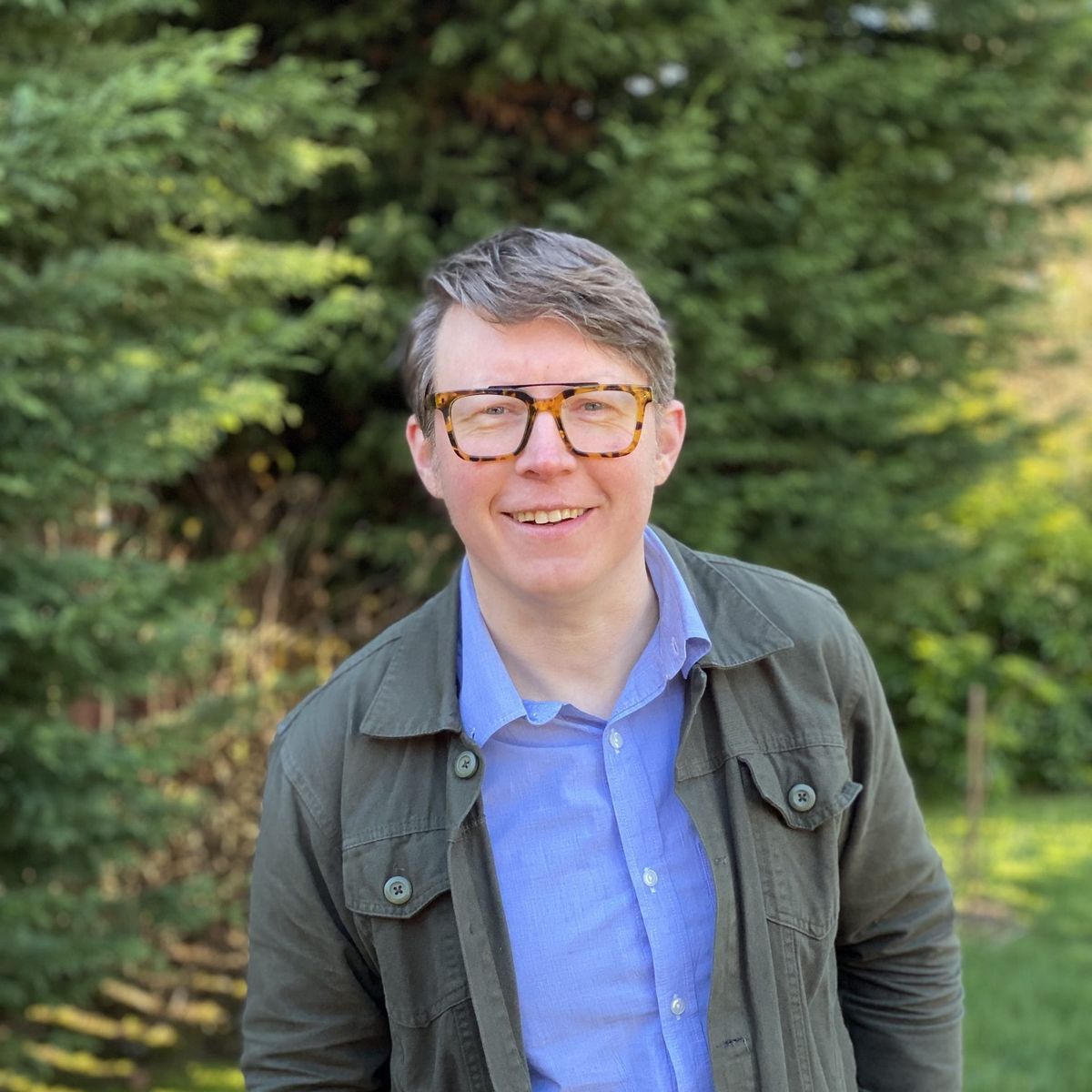
Silas James is running for the Seattle City Council District 5 seat as a self-described Democratic Socialist, bringing a perspective shaped by disability, experience with the public safety net, and nearly two decades of research and advocacy work with vulnerable populations.
This election was triggered by the resignation of Cathy Moore in July 2025, with Debora Juarez currently holding the seat on an appointed basis until voters elect someone to fill the remainder of the term. District 5 covers the far north end of the city, including Lake City, Northgate, Pinehurst, Haller Lake, and Bitter Lake.
The Seattle City Council is the legislative body of city government responsible for passing laws, setting the annual budget, and overseeing city departments. Councilmembers approve or modify the mayor's proposed budget, set zoning and land use rules that shape how the city grows, fund human services, and oversee the Seattle Police Department. They also set policy on everything from tenant protections to business regulation to transportation. While the mayor runs day-to-day city operations, the council holds the power of the purse and the power to legislate, making it one of the most consequential elected bodies in the region for residents' daily lives.
Why He Is Running
James frames his candidacy as a direct response to what he sees as a political emergency and a failure of city systems to serve people with the least power. "I'm running primarily because it was the biggest reach I could do to have an effect on society in the face of the second Trump presidency," he said.
He points to a cluster of what he calls systems failures as the core of Seattle's problems: empty housing coexisting with an unhoused population, people eligible for services who are not receiving them, a CARE team for mental health crises that is blocked from dispatching without police, and transit that does not serve the routes or frequency people need. "They're all systems failures, and the frustrating part is a lot of these things are relatively easy fixes," he said.
He described his approach as rooted in research practice. "I interview people who have a problem, I research solutions that are working in other places, and then I interview people to find out how those solutions will serve their needs," he said. He draws on a principle from universal design: "If people with the most needs have those needs met, then we serve everybody better."
Comprehensive Public Safety
James argues that the dominant framing of public safety as more police and more cameras misses the underlying driver of crime. "I think the main hindrance to people being able to achieve their basic needs is poverty," he said, adding that wealth disparity is "the biggest threat to public safety in the city."
His vision of public safety is centered on ensuring people have stable housing, safe jobs, affordable food, and freedom from fear of federal immigration enforcement. He supports reducing the cost of living through social housing, community grocery stores, universal healthcare, universal childcare, and free public transportation as tools to make the city livable at lower income levels.
On the question of police response times to property and violent crime, a persistent concern among residents, James argues the issue is one of misallocation. He points specifically to how the Seattle Police Officers Guild (SPOG) contract limits the CARE team's ability to respond independently to mental health calls, forcing police to be the first responder in most cases. "Freeing the police from having to go to those wellness checks and allowing the CARE team will mean that there are more cops available to respond to violent crimes or car break-ins," he said.
He said he would have voted against the most recent SPOG contract as written, and does not believe a larger visible law enforcement presence is the most effective way to reduce crime. He supports restorative justice programs over traditional incarceration for nonviolent offenses and wants to reduce the city's reliance on jail beds for nonviolent crimes. He also supports maintaining or increasing funding for community violence intervention programs.
Surveillance Approach
James is sharply critical of Mayor Katie Wilson's approach to surveillance and of the city's relationship with Axon, the company that supplies SPD with body cameras, automatic license plate readers, and the technology infrastructure for the Real Time Crime Center.
He said the evidence that surveillance prevents violent or property crime is weak and that its deterrent effect has been overstated. He offered an example from his own advocacy work: a client who was visibly assaulted outside a Safeway, filed a police report, and received no follow-up despite camera coverage of the incident.
His deeper concern is what Axon does with the data it collects. He said the city paid nearly $8 million dollars to Axon last year, and that the company works closely with ICE and the Department of Homeland Security. "Our contracts with Axon put our community in danger. That's an absolute certainty," he said. The platform, he explained, uses proprietary algorithms to catalog people's height, gait, race, gender, license plates, and clothing in ways that he said are easily searchable by federal immigration authorities.
If the city decides surveillance technology is necessary, James said it should be done entirely in-house, using local servers and local hardware rather than a private vendor with federal agency relationships. He added that DOT cameras already exist and their data can be accessed for investigative purposes without giving SPD real-time access to a centralized system managed by a company with ICE contracts.
James strongly opposes automated license plate readers and said the city should not cooperate with or share data with any entity that shares data with federal immigration authorities.
Housing Affordability
James sees housing as a multilayered problem requiring several simultaneous interventions. His flagship proposal is expanding social housing, with a goal of social housing representing 30-40% of the city's total housing stock.
To grow that supply, he proposes giving the Seattle Social Housing Developer a Community Opportunity to Purchase, a policy he said has been used in San Francisco to give nonprofits and community-oriented developers a short window to make a first offer on residential buildings that come up for sale. "Social housing absolutely prevents displacement," he said.
He also proposes a vacancy tax on residential buildings, which he argues would pressure property owners and management firms who keep units vacant to drive up rents to reduce that practice and lower costs across the rental market. He supports the same approach for vacant commercial spaces, which he sees as linked to problems facing small businesses in the district.
For people living unsheltered, James argues the city should create safe places to camp and park so that service providers can more reliably reach them and help them transition toward temporary and ultimately permanent housing.
Assisting Small Business
James points to high commercial vacancy rates in Lake City and along Aurora as a problem he wants to address with both a vacancy tax and an expansion of the Restored Seattle program, which provides grant funding, leasing guidance, and startup assistance to small businesses and artists looking to occupy empty retail spaces.
He said the high cost of commercial leases, which he sees as a bigger burden on small businesses than labor costs, would be reduced if a vacancy tax created financial pressure on property owners to lower rents. "That should bring down the cost of leases across other leases that are already for occupied buildings," he said. He envisions revenue from a vacancy tax funding the Restored Seattle program's expansion.
Expanding Sanctuary Protections
James said Seattle's identity as a welcoming city, reaffirmed in 2025 for LGBTQ and gender-diverse residents, people seeking reproductive access, and those seeking gender-affirming care, must be backed by practical protections. He emphasized the connection between sanctuary policy and surveillance, noting that the city's relationship with Axon creates a searchable database of residents that is accessible to ICE. "We need to just not contribute to any of those things and reaffirm our values of protecting vulnerable people," he said.
He also said the city should explicitly codify protections for gender identity in public accommodations, including athletic facilities and sports programs.
On federal threats to withhold funding from cities with sanctuary policies, James said he believes such threats are unlawful and that the city should petition the state for emergency funding, work to expand revenue sources, and lean on its status as the state's largest and most powerful city to pressure Governor Ferguson to continue fighting federal overreach.
Economic Resilience
James highlighted a guaranteed basic income proposal as a priority he has already submitted to both the Seattle City Council and the mayor. The plan would provide five hundred dollars per month to all households earning less than 300 percent of the federal poverty limit in Seattle and he said it could be implemented within two years.
He said studies of guaranteed basic income programs show consistent improvements in housing security, health, and food security, and that longer-running programs show residents begin looking toward the future, seeking more suitable housing, and considering starting businesses. Some studies have found improvements in infant birth weight. He frames the economic cost as close to zero because most of the money flows directly into the local economy and circulates through local businesses. "If we took a hundred million dollars through whatever means and gave it to our lowest-earning community members, they would spend the money," he said. "And then it gets spent multiple times."
He noted that 72% of Washingtonians support a $500 monthly guaranteed basic income.
James acknowledged the limits of what a city council can do in response to mass tech layoffs and growing automation, but said the council can create an environment in which people can survive periods of unemployment or lower-wage work. He supports expanding guaranteed basic services including free transit, affordable housing, and accessible food, and is a strong advocate for the Whole Washington universal healthcare proposal, which he said would "really decouple healthcare from people's work."
Improving Public Transit
James is a strong advocate for free public transit, dedicated bus lanes, and improved east-west bus service in the district, which he said is severely underserved for trips like Lake City to Greenwood. He argues that free transit would speed up bus service because passengers could board at any door, reducing dwell time, and that a dramatic increase in bus frequency and reliability would pull drivers out of their cars and reduce road congestion for everyone.
He lives near a light rail station and uses it regularly. "If we're going downtown to Art Walk, if I need to get to the Ave, or just go to the farmers market on Broadway, I can just hop on the light rail and know exactly when I'll be there," he said. "And if I somehow miss the train, the next one comes in like two minutes." He said that level of reliability should be the standard for all public transportation.
He also supports protected bike lanes as a way to take additional cars off the road, noting that many potential cyclists avoid biking in Seattle because of safety concerns on residential streets.
Supporting Schools
James said the city should expand services offered inside public schools to help prevent closures caused by declining enrollment and budget pressure. He pointed to the handful of schools that already house health clinics as a model to build on, and said schools should be treated as total institutions that meet students' needs beyond the academic, including healthcare, food, after-school programs, and community. He said the same principle should apply to city colleges.
Endorsements and Donors
James said his campaign is supported by a mix of small-dollar donors on tight budgets and some more moderate wealthy supporters, and that the breadth of his support reflects his approach of listening closely to people across the political spectrum. He noted that Dorothy Bullitt endorsed him, which he said she had not previously done for a socialist candidate. He does not accept corporate PAC donations.
He was candid about his own financial constraints, saying that his campaign would not have been possible without Seattle's Democracy Voucher program. "There's no way I could have thought about running for this position without the potential of Democracy Vouchers," he said. "I just don't know enough rich people to fund my campaign."
Why He Says Voters Should Choose Him
James was direct about what he sees as the distinction between himself and his opponents, Nilu Jenks and Julie Kang. "One of the big differences is my perspective. I'm somebody who has for the majority of my life lived with limited means," he said. "I know what it's like to be on a budget." He said his experience navigating systems as a disabled person who has relied on public benefits, combined with nearly two decades of research and advocacy with underserved populations, gives him a ground-level understanding of where city systems are failing and how to fix them.
About the Guest
Silas James
From Silas:
“I’m Silas James, and I’m running for Seattle City Council in District 5 to make our city work better for everyone. As a disabled educator, researcher, advocate, and former Chair of the Seattle Disability Commission, I’ve spent years helping people struggling navigate systems that were not designed for them to succeed. I’m committed to ensuring that wealthy corporations pay their fair share, expanding affordable housing, and creating community-based solutions for public safety and climate justice. If we build a Seattle that works for our most vulnerable neighbors, everyone will benefit.
For most of my life I’ve been navigating public services, and through that I’ve become an expert on these complex systems. I’ve guided people one-on-one and taught groups how to be successful, but now it’s time to fix the actual systems so that all of Seattle will benefit. Too many decisions in this city are made by people who have never had to worry about making rent, buying food on a budget, or if they can get through the next week on half a tank of gas.
I’m not a millionaire, I don’t earn six figures. I know how hard it is to make it in a city that keeps getting more expensive; I live that reality every day. I’m running to give people the tools they need to thrive and to help create neighborhoods that are safe and welcoming regardless of who you are, where you come from, or how much money you have. Let’s make sure our city’s future belongs to us, not billionaire corporations.”
Resources
Podcast Transcript
[00:00:50] Crystal Fincher: This is Hacks & Wonks, where we talk politics and policy in Washington state and cover what's happening, why it's happening, and what you can do about it.
The Seattle City Council is the legislative body of City government responsible for passing laws, setting the City's annual budget, and providing oversight of City departments. Councilmembers approve or modify the Mayor's proposed budget, set zoning and land use rules that shape how the city grows, fund human services, and oversee the Seattle Police Department. And set policy on everything from tenant protections to business regulation to transportation. While the mayor runs the day-to-day operations of City government, the Council holds the power of the purse and the power to legislate, making it one of the most consequential elected bodies in the region for residents' daily lives.
Seattle's nine-member council includes seven district representatives and two citywide at-large members. District 5 covers the far north end of the city, including Lake City, Northgate, Pinehurst, Haller Lake, and Bitter Lake. The District 5 seat is up for election following the resignation of Cathy Moore in July 2025. Debora Juarez was appointed to hold the seat until voters elect someone to fill the remainder of the term. Today, we're speaking with District 5 candidate, Silas James. Welcome, Silas!
[00:02:24] Silas James: Thank you. I'm actually - I'm really delighted to be here. As they say - first time, long time, so-
[00:02:29] Crystal Fincher: Very happy to have you on. Thankful for your prior listenership. And there was one thing that we were talking about earlier where you may sound a little different sometimes than some other candidates. Do you wanna talk about that?
[00:02:43] Silas James: Sure, yeah. I'm actually - I have some speech differences because I have a traumatic brain injury from 30-some years ago, and that affects the way that my speech comes out. And so sometimes, I speak a little too quickly 'cause I have a lot of great ideas that I wanna get out, and it doesn't come through clearly. So I've asked here - Crystal, if she could maybe give me a visual cue if that's happening. But there will be a transcript, and I just - I ask people - people so far have been, like, very gracious, and I just ask for it to continue - to continue that. Thank you.
[00:03:24] Crystal Fincher: Absolutely. Well, as you're familiar, when we speak with candidates, we like to do a little lightning round of quick yes or no or couple-word answer questions that we move through quickly just to give people an idea of where you stand to level set before we get into the long-form questions. So if you're ready, we'll go ahead and get into our lightning round.
[00:03:50] Silas James: Strangely, this is what I'm the most worried about, but yes.
[00:03:55] Crystal Fincher: Well, hopefully this isn't too painful. All right. We will start with - do you own or rent your residence?
[00:04:04] Silas James: I have never owned a home.
[00:04:06] Crystal Fincher: Are you a landlord?
[00:04:09] Silas James: No.
[00:04:10] Crystal Fincher: Have you ever been a member of a union?
[00:04:14] Silas James: I am currently a member of a union.
[00:04:16] Crystal Fincher: Which one?
[00:04:18] Silas James: SEIU 925. I've been a member for 18 years. Actually a third-generation union guy here.
[00:04:29] Crystal Fincher: Awesome. Have you ever walked on a picket line?
[00:04:33] Silas James: Yes. Well, I use a wheelchair - but yes.
[00:04:37] Crystal Fincher: Have you ever crossed a picket line?
[00:04:39] Silas James: No.
[00:04:41] Crystal Fincher: Is your campaign staff unionized?
[00:04:45] Silas James: So far my campaign staff is all volunteers. But if they - if I did hire people and they wanted a union, absolutely - I'd go and endorse their union immediately.
[00:04:56] Crystal Fincher: Well, that was my next question, so we'll move on. What political party do you identify with?
[00:05:04] Silas James: I identify as a Democratic Socialist.
[00:05:08] Crystal Fincher: Have you used the library system in the past month?
[00:05:11] Silas James: I use the library system daily with their apps and stuff, yeah.
[00:05:16] Crystal Fincher: Have you or someone in your household ever relied on public assistance?
[00:05:21] Silas James: Yes.
[00:05:22] Crystal Fincher: Have you ever been stopped or questioned by police in Seattle?
[00:05:28] Silas James: Yes.
[00:05:29] Crystal Fincher: Have you ever worked in retail or a job where you had to rely on tips?
[00:05:34] Silas James: Retail, but not a tip reliant job.
[00:05:38] Crystal Fincher: Have you ever owned a business?
[00:05:41] Silas James: I do own a business.
[00:05:45] Crystal Fincher: Have you managed a team of 10 people or more?
[00:05:49] Silas James: Yes.
[00:05:51] Crystal Fincher: 100 or more?
[00:05:52] Silas James: No.
[00:05:54] Crystal Fincher: Have you ever reported someone's misconduct in your workplace?
[00:06:01] Silas James: Yes.
[00:06:03] Crystal Fincher: Have you ever fired someone?
[00:06:07] Silas James: No.
[00:06:09] Crystal Fincher: Do you have a favorite sports team that you actively follow?
[00:06:14] Silas James: This is what I was nervous about. I know you're a big fan of sports. I'm actually - our household follows weightlifting. So I would say I follow the weightlifting team that my partner is a part of.
[00:06:29] Crystal Fincher: Cool. Do you believe the City relies too much on contractors?
[00:06:35] Silas James: Yes.
[00:06:37] Crystal Fincher: Do you accept corporate PAC donations?
[00:06:42] Silas James: I would not, no.
[00:06:45] Crystal Fincher: In response to growing fears of political violence, do you support the use of campaign funds for personal security?
[00:06:53] Silas James: I think that should be permitted, yes.
[00:06:56] Crystal Fincher: Should renter protections be strengthened, loosened, or kept as they are?
[00:07:01] Silas James: I have several policies for strengthening them, yes.
[00:07:05] Crystal Fincher: What's your favorite park in the district?
[00:07:13] Silas James: I spend a lot of time at Magnuson Park. It's just outside of my district, but a lot of time at Magnuson.
[00:07:21] Crystal Fincher: What's your favorite restaurant in the district?
[00:07:24] Silas James: We honestly can't afford to eat out very often, but when we do, I really enjoy Gorditos, which is actually a block outside of my district. So sorry I'm not giving you the right answers.
[00:07:36] Crystal Fincher: What's the last live performance you saw in the district?
[00:07:40] Silas James: Likewise, it's a bit out of our price range to see live performances. We did see a show at Hex Enduction, a record store on Lake City, that was, I think, just an in-store performance. I think the performer was Manchildhood.
[00:08:02] Crystal Fincher: Okay. We're also gonna work on keeping these answers super short.
[00:08:07] Silas James: Sorry, sorry.
[00:08:08] Crystal Fincher: No worries. What's the last song you listened to?
[00:08:13] Silas James: Probably Moby - Flower.
[00:08:17] Crystal Fincher: What's your favorite song?
[00:08:21] Silas James: I went through a period where I listened to "Where Is My Mind" by the Pixies a lot.
[00:08:24] Crystal Fincher: Nice. What's your favorite album?
[00:08:29] Silas James: This is a tough one. Not to stay on the Pixies, but maybe Bossanova. Pixies' Bossanova.
[00:08:40] Crystal Fincher: Who's your favorite local artist?
[00:08:42] Silas James: Shubhaz Casas.
[00:08:45] Crystal Fincher: What's the most recent book you've read?
[00:08:48] Silas James: Oh man, I read a lot. I'd say a book called Mutual Aid - it's kind of a workbook and explainer.
[00:09:01] Crystal Fincher: What's your top book recommendation for listeners?
[00:09:05] Silas James: For your listeners? I would say - typically, I say, So You Wanna Talk About Race, but for your listeners, I'd say The Age of Surveillance Capitalism.
[00:09:16] Crystal Fincher: What's your favorite cafe or coffee house in the district?
[00:09:20] Silas James: I go to Kaffeeklatsch a lot on Lake City.
[00:09:24] Crystal Fincher: Have you ever served on a jury?
[00:09:26] Silas James: No.
[00:09:28] Crystal Fincher: Have you ever been arrested?
[00:09:34] Silas James: I was arrested as a young child.
[00:09:41] Crystal Fincher: Have you taken transit in the past month?
[00:09:45] Silas James: Yeah.
[00:09:46] Crystal Fincher: In the past week?
[00:09:48] Silas James: Yes.
[00:09:50] Crystal Fincher: Have you ridden a bike in the past month?
[00:09:53] Silas James: No, I use a wheelchair, so it's been a long time.
[00:09:56] Crystal Fincher: Do you prefer dogs or cats?
[00:09:59] Silas James: Dogs.
[00:10:01] Crystal Fincher: What's your favorite season?
[00:10:05] Silas James: Spring.
[00:10:07] Crystal Fincher: Have you attended a public protest?
[00:10:12] Silas James: Yes, absolutely.
[00:10:14] Crystal Fincher: Do you believe a larger visible law enforcement presence is the most effective way to reduce crime?
[00:10:21] Silas James: No.
[00:10:23] Crystal Fincher: Do you believe the size of SPD is too small, too large, or just right?
[00:10:29] Silas James: I think at this point it's just right, but I believe if we use them more efficiently, it can be smaller.
[00:10:37] Crystal Fincher: Would you have voted in favor of ratifying the most recent Seattle Police Officers Guild's contract?
[00:10:46] Silas James: As it is - no.
[00:10:46] Crystal Fincher: Do you support the use of automated license plate readers in Seattle?
[00:10:52] Silas James: Absolutely not.
[00:10:54] Crystal Fincher: Should Seattle reduce its current reliance on jail beds for nonviolent offenses?
[00:11:00] Silas James: Yes, absolutely.
[00:11:02] Crystal Fincher: Should the City prioritize investment in restorative justice programs over traditional incarceration for nonviolent offenders?
[00:11:09] Silas James: Absolutely.
[00:11:11] Crystal Fincher: Should the City explicitly codify protections for gender identity in public accommodations, including athletic facilities and sports programs?
[00:11:21] Silas James: 100%.
[00:11:24] Crystal Fincher: Should the City cooperate with or share data with any entity that shares data with federal immigration authorities?
[00:11:33] Silas James: In no time - absolutely not
[00:11:37] Crystal Fincher: Do you commit to maintain or increase funding for community violence intervention programs?
[00:11:44] Silas James: Yes.
[00:11:46] Crystal Fincher: Do you plan to increase funding for investigations of labor violations like wage theft and illegal union busting?
[00:11:54] Silas James: Yes.
[00:11:56] Crystal Fincher: Do large corporations pay their fair share of taxes?
[00:12:01] Silas James: Not currently.
[00:12:03] Crystal Fincher: Do small businesses pay their fair share of taxes?
[00:12:07] Silas James: Yes, I believe so.
[00:12:09] Crystal Fincher: Do you support stricter rent stabilization measures in the city?
[00:12:14] Silas James: Yes. Yes.
[00:12:17] Crystal Fincher: Should any hyperscale data centers be allowed in the city of Seattle?
[00:12:22] Silas James: No.
[00:12:24] Crystal Fincher: What's the most recent TV show that you watched that you love?
[00:12:33] Silas James: Probably For All Mankind
[00:12:38] Crystal Fincher: What's your favorite comfort food?
[00:12:43] Silas James: I eat a lot of the Costco Kroger brand Greek yogurt with blueberries, like just added blueberries.
[00:13:01] Crystal Fincher: Are you an early bird or a night owl?
[00:13:04] Silas James: I am a night owl.
[00:13:07] Crystal Fincher: What's a hobby people wouldn't expect that you have?
[00:13:13] Silas James: In all my free time I've had lately, I've been trying to work out as much as I can, 'cause that's something that I haven't had time for.
[00:13:22] Crystal Fincher: What's your favorite neighborhood in the district?
[00:13:29] Silas James: I grew up spending a lot of time on Lake City 'cause I went to Nathan Hale, so I'd have to say there but, I mean, I really - I love a lot of different areas in the district.
[00:13:40] Crystal Fincher: Nice. What's your favorite rainy day activity?
[00:13:46] Silas James: Probably writing a policy memo.
[00:13:49] Crystal Fincher: What's your favorite Sound Transit station name?
[00:13:53] Silas James: I'm looking forward to the Pinehurst opening.
[00:13:59] Crystal Fincher: Have you voted in every primary and general election in the past four years?
[00:14:06] Silas James: Yeah, I reviewed my voting - I think I've voted in every single election that I've been able to since I was able to vote.
[00:14:14] Crystal Fincher: Have you made any political endorsements that you regret?
[00:14:19] Silas James: No.
[00:14:21] Crystal Fincher: Have you made any political donations that you regret?
[00:14:27] Silas James: No.
[00:14:30] Crystal Fincher: Last year, did you vote for Bruce Harrell or Katie Wilson for Mayor?
[00:14:34] Silas James: Katie Wilson.
[00:14:36] Crystal Fincher: Did you vote for Sara Nelson or Dionne Foster for City Council?
[00:14:40] Silas James: Dionne Foster.
[00:14:43] Crystal Fincher: Did you vote for Ann Davison or Erika Evans for Seattle City Attorney?
[00:14:49] Silas James: Erika Evans.
[00:14:51] Crystal Fincher: Did you vote for the reauthorization of Seattle's Democracy Voucher program?
[00:14:57] Silas James: Yes, absolutely.
[00:14:59] Crystal Fincher: Did you vote for Girmay Zahilay or Claudia Balducci for King County Executive?
[00:15:05] Silas James: Girmay.
[00:15:07] Crystal Fincher: Did you vote in favor of Seattle's Social Housing Initiative?
[00:15:12] Silas James: Yes.
[00:15:14] Crystal Fincher: And that is the end of our lightning round.
[00:15:17] Silas James: I made it.
[00:15:19] Crystal Fincher: You made it. Pretty painless, I think. So now we'll get into the long-form questions, starting with - why are you running and what will your top priorities be if you're elected?
[00:15:33] Silas James: Yeah. Well, I'm running primarily because it was the biggest reach I could do to have an effect on society in the face of the second Trump presidency. But there's multiple facets to that. I'm running because I feel that I have an informed perspective that I can speak to that's not being represented in the Seattle City government. I am a disabled person. I have relied on public benefits for a lot of my life. And I have also been a health advocate for people who have chronic health conditions and, you know, just the way that intersectionality affects the way people have access to healthcare. A lot of these are people who are underrepresented in other identities as well. So I've worked with people who have struggled to have access for almost 20 years. I worked on a study at the University of Washington for almost 20 years interviewing vulnerable people, and I mean, I have a lot of other connections with these groups of people who are underrepresented in our City government. And I bring the experience of navigating systems that are not meant to - well, they're intended to meet those needs, but they're not effectively doing so - and the knowledge of how to navigate those systems. I've helped myself do it. I've helped a lot of people go through all these systems. And as we were talking about before, I also co-teach a class on health disparities at UW right now. And so, approaching the same issue from the other side, helping people who are future healthcare providers understand how they can advocate and help their patients and clients really get the support they need.
Essentially all that's to say that I know that our systems are not working to support people, and I understand where the gaps are, and I have a pretty good idea of how to mend them. I think a lot of things we face in Seattle are systems failures. For example, we have a bunch of empty housing, also a bunch of unhoused people - that's a systems failure. We have a bunch of people who are eligible for services, but they're not getting them - that's a systems failure. We have a CARE team who specializes in mental health crises, but we're sending cops to those calls - that's a systems failure. We have people who wanna ride public transportation, but the system doesn't serve their needs - either it's not reliable enough, not fast enough, or it doesn't go where they need to go. They're all systems failures, and the frustrating part is a lot of these things are relatively easy fixes.
I think social housing is a beautiful solution. It absolutely prevents people from being displaced from their neighborhoods. It's a huge win for progressive taxation too. It's an amazing advantage to the environmental policy because they - social housing really favors and advances a more environmental passive housing. So I really believe that policy changes lives, and that's how it changes the world. So I'm a researcher, I'm an advocate, I'm an educator. And I think - I mean, in that order. I also studied policy in grad school. So the way I use those skills to shape a policy - I interview people who have a problem, I research solutions that are working in other places, and then I interview people, and this is iterative. I interview people to find out how those solutions will serve their needs. It's this iterative process in designing a policy that my ultimate goal is to satisfy the needs of the most underserved people. And it's the principle of universal design that if people with the most needs have those needs met, then we serve everybody better.
[00:19:58] Crystal Fincher: How do you define public safety and what will you do to make the 5th District more safe?
[00:20:05] Silas James: Yeah. I mean, this is always a huge topic. I feel like we've been told that public safety is more cops, more cameras. And when I have these conversations with people - whether they be people who are unhoused or people who are, live in mansions and are wealthy - we all agree that it's better to not need the cops in the first place. So I think the way we get there is that we need people to be able to imagine a future and to have their basic needs met. And when people have their basic needs met, then they can start saying like, "What can I do that I wanna do?" And I think the main hindrance to people being able to achieve their basic needs is poverty. Right now, I think the biggest threat to public safety in the city, and probably throughout the world, is the huge disparity in wealth - where there's a small group of people that have almost everything, and then many people have very little. And I think that there's a lot of things that are catering to the group that have everything, but then people who have nothing are under-resourced - and that puts people in a position where they often are faced with choices that can result in crimes or violence.
So I think jobs that are safe, housing that is safe and affordable, freedom from the fear of being captured by, you know, the federal government and disappeared. I think those things are limited in the presence of poverty. And really the only thing that we can do, the most effective thing we can do is to address poverty. And I think that we can make it more affordable, more easy to live in Seattle by having some things that are affordable - like social housing does a great job, community grocery stores, universal healthcare, like Whole Washington is proposing, universal childcare, free public transportation. These things would all make it more - easier to live in Seattle with less money. But we also need to do a guaranteed basic income, which we'll probably talk about a bit during this interview, that will give people more money in their household to be able to make more decisions and not have to put off essential choices.
[00:22:41] Crystal Fincher: Now, there's also significant concern with just the basics of SPD responding to calls. So many conversations and complaints surround the issue of people having their cars broken into, homes or businesses broken into and SPD not responding in a timely fashion or at all. The police chief is a direct subordinate of the Mayor and under the oversight of the City Council. What can you do as a City Councilperson to make sure that police respond in a timely and appropriate way to property and violent crime?
[00:23:24] Silas James: Yeah, I mean, that's a - I hear that all the time, and I think that's a legitimate concern. People wanna not have to call the police, but when they do want it - when they do have to call the police - they want them to come. And I think we are, have a misallocation of resources, and I don't wanna get into the contract stuff, but I think that right now we have three first responders. We have fire, police, and the CARE team. And the CARE team is very underutilized. They are trained, and they're the exact people that need to go to these mental wellness checks, but there's - the way that the SPOG contract is written right now, the Seattle Police have to be the first line of that. Like, there are limited situations where the CARE can respond without the police. So I think freeing the police from having to go to those wellness checks and allowing the CARE team will mean that there are more cops available to respond to violent crimes or, like, car break-ins or things like that where CARE team wouldn't be useful. I think it doesn't make sense to send the police - I have had to call in several wellness checks the last couple months, and it doesn't - just knowing the situation on the ground and knowing it doesn't make sense to send out a police officer. What this person needs is the CARE team, and I think making sure that the CARE team can dispatch on their own, so that will free the police up and they'd be more able to respond to calls where they're needed.
[00:25:03] Crystal Fincher: Now I wanna talk about the concern a lot of people have about a growing jobs crisis in the city. We are a tech-heavy city in terms of the economy, and Big Tech has been laying off thousands of workers in the city. People of all income and professional levels are finding themselves without jobs or afraid that they're about to find themselves without a job. How can you help address this growing jobs crisis as a City Councilperson?
[00:25:37] Silas James: Yeah, I mean, I think that is the nature of the economy - with more automation, there's less need for work. I would like to see a world where people don't have to work 40 hours a week to qualify for insurance. I know there's not every job requires you to work 40 hours to qualify for insurance, but people end up being dependent on jobs that they work more than they want to - to just be able to get their basic needs met. And I think what we can do as a city, we can definitely make - guarantee some basic services in transportation, affordable housing, you can get access to food. And I think having people's basic needs met is something we can do as a city, but I'm a strong supporter of the Whole Washington universal healthcare. I think that would really decouple healthcare from people's work. I don't know that the City itself can create more jobs, but I think we can create an environment where it's easier for people to survive and get through with lower levels of employment.
[00:26:52] Crystal Fincher: Now, from the business side, particularly with small businesses, there's been significant media coverage about the increase in labor costs. Hearing directly from businesses, they talk about even greater increase in costs in their leases - their property leases - as well as insurance costs that are far outpacing the rate of increase of labor costs. Can the City or you as a councilperson do anything to ease the burden on small businesses to help free them up to hire more?
[00:27:22] Silas James: Yeah, I think this comes from - so their, the cost of leases is high, and we have a high vacancy rate, particularly in Lake City, some of Aurora - main areas in my district. And I'm a big supporter of a vacancy tax that that would tax and yield some revenue from these unoccupied retail spaces. I also wanna do that for a residential space, too. But that's a slightly different implementation. And ideally, that would cause the property owners of these retail spaces to lower the cost of their leases and encourage more businesses to be able to get into. I also wanna support the - expanding the Restored Seattle program, which would put more pop-up businesses or business startups or even just art into these unoccupied retail spaces. And then - I don't know if your listeners know how that program works, but it's kind of a grant funding and gives some guidance to small business startups, people just maybe exploring the idea of having a business - with how to start up and give some assistance with leasing and then also give the property owner some assistance with leasing. And then any money paid by, into a vacancy tax could help fund that. And then reducing the cost of renting these retail spaces should bring down the cost of leases across other leases that are already for occupied buildings. Did that answer - I can't remember the other part of the question.
[00:29:13] Crystal Fincher: Yeah, I think that does. I do wanna talk about the City's stance on being a sanctuary city, whether it's for members of the LGBTQ+ community, for immigrants and refugees, for climate refugees. What does being a sanctuary city mean in practice to you?
[00:29:35] Silas James: Yeah, this is a huge issue right now. We are a sanctuary - a welcoming city, and that - I mean, we actually in 2025 reaffirmed that for LGBTQ, gender diverse folks, people seeking reproductive access or gender-affirming care. To me, that means that people should be able to come here and find affordable housing, access healthcare, access the care they need - whether it be reproductive care, gender-affirming care - and not have to worry that their providers, that their city official, anyone in the city is going to, you know, collaborate with anybody in trying to, you know, disadvantage them or arrest them or make people in a more vulnerable situation. So, I think this ties in directly with the surveillance issue of like cameras and how we contract with Axon, the company that works hand in glove with ICE and Homeland Security Department, and creates basically a searchable database of our most vulnerable citizens, our most vulnerable neighbors. And I think that we need to just not contribute to any of those things and reaffirm our values of protecting vulnerable people.
[00:31:14] Crystal Fincher: Now, we've seen the federal government threaten to remove or withhold federal funding because of sanctuary policies or policies that protect or serve gender-diverse, queer, immigrant, refugee, and other populations. How should you as a City Councilperson and the City respond to those threats of funding removal?
[00:31:41] Silas James: Yeah, I mean, this is - I believe it's unlawful. What we can do is petition the state for funding because we're in a state of emergency. And I think we also should be working to increase revenue sources. I know Shaun Scott advanced the Well Washington bill, which can help protect some of our most vulnerable people by expanding - well, maintaining - access to Medicaid in the state, which actually funds our hospitals. It's a difficult situation because I don't want to put the people we're protecting in the middle of a fight with the federal government, but I think we need to push back. And I think that might be easier done at a state level. But I think we are one of the biggest cities and most powerful cities in the state, and we can put pressure on Governor Ferguson to - I mean, they're already doing this - to continue fighting the - it's just, it's tyranny, is the actual word for it.
[00:33:09] Crystal Fincher: Now, housing costs have been a major concern of people. It's most people's number one expense. What can you do to make the cost of housing more affordable for people in Seattle?
[00:33:22] Silas James: Yeah, I think there is multiple things we can do. I mentioned social housing. My - I would love to see 30% to 40% of the housing in Seattle be social housing. There are a few ways to get there. We can give Seattle Social Housing Developer a community opportunity purchase act that has been used in, I think, San Francisco, where it gives-
[00:33:45] Crystal Fincher: Can you, can you repeat that? Community - go ahead.
[00:33:47] Silas James: Oh, Community Opportunity to Purchase Act. It - in San Francisco, it has been used to, I think, I'm citing either San Francisco or LA, pretty sure San Francisco. It's been used to allow nonprofits and community-oriented housing developers or housing to have the first opportunity - there's a short window where they can make an early bid to make their first offer on residential buildings that are up for sale, and then they can also enter competitive bids if their first offer is declined. And that actually will allow the supply of social housing to increase throughout the city because, you know, if social housing is given kind of preferential, lightly preferential treatment to the purchased buildings. And social housing absolutely prevents displacement.
But that's not the whole solution. Like I said, the vacancy tax - I think the vacancy tax at, for residential buildings - a lot of buildings are maintained at a level of, like, vacant units to drive up the price of other units. And if we start making it cost the owners or the property management firms who do this money, they will drop the cost, and that should have a ripple-through effect - not immediate - but to decrease the cost of housing throughout the rental space. I also think the housing issue is multilayered. It's - unhoused people are on the continuum also, and I think we need to make sure that people who are living in unsheltered situations have safe places to camp and park, and then we can deliver services to them in those spaces, and that they can be more easily reached by service providers, so they can be delivered whatever care is needed. And then, being able to help them transition more effectively into transitional emergency and ultimately permanent housing is my ultimate goal.
[00:36:03] Crystal Fincher: Surveillance is a major issue in the city, with whatever direction the implementation goes seriously impacting the safety of the city's residents. Do you agree with Mayor Katie Wilson's stance on surveillance, and how do you believe the City should proceed?
[00:36:24] Silas James: I don't agree with Mayor Wilson's stance on surveillance. I am a researcher and because that's just where my mind is, I've done a lot of reading about surveillance. Initially, the claim was that in preventing crime - I think that was overstated. There's no evidence that surveillance prevents violent or property crime. It may shift where violent crime happens to areas without surveillance, but there's no indication that it actually decreases violent crime. And so now the argument is that it makes it easier to find and solve crimes. And I can give lots of examples about people who were assaulted on camera that were not - that was not looked into at all. One of the clients that I serve was leaving a Safeway, and he was assaulted by a security guard because he had thought that he hadn't paid for what he bought, which he had and - but anyhow, he had obvious injuries, and there's no recourse - filed a police report, and they didn't do anything. So, it's kind of a red herring to say that surveillance solves crimes. And there's cameras all over, and it doesn't mean that we need to have the SPD with 24/7 access to cameras, because there's always the DOT cameras that can be decoupled from the Real Time Crime Center, and, you know, you can get that data if you need it - it doesn't have to be accessible in real time - and cell phone footage.
So I strongly - but what the surveillance that we use, which is supplied by Axon - they supply the police body cameras, the automatic license plate readers. Before we remove them - the closed-circuit TV and also, like, the integration with Ring cameras and public, well private businesses who have decided to use their cameras as part of the Real Time Crime Center. And the Real Time Crime Center - we paid almost eight million dollars last year to Axon, a company previously known as Taser, who works very closely with ICE and Homeland Security Department. I think they've had almost half a million dollars in contracts. But so our contracts with Axon put our community in danger. That's an absolute certainty. So pair that with the possibility that it might be able to be helpful in solving crimes and the absolute certainty that this contract, this relationship with Axon does put our most vulnerable neighbors in danger. It's hard for me to justify continuing it. I mean, I'm - I personally don't believe we need cameras to keep the community safe. But if we do, as a city, decide that they are something that we need, it's something we can easily do in-house. We could have serving, we could have local servers, and we could have local hardware. The reason we paid eight million dollars last year is largely in part because Axon has proprietary algorithms that help you analyze and catalog the data, the people that it captures about our most vulnerable neighbors. So they have height and gait analysis. They identify people based on race, gender, catalog license plates until recently, clothing that they wear. And it's all searchable by SPD or, I think, pretty easily by ICE if they are interested in doing so. And that's why I really strongly oppose surveillance, at least in its current form.
[00:40:11] Crystal Fincher: The City does some funding of educational services, wraparound services at schools. Is there anything the City can do to help prevent the closure of schools and the loss of services in the district?
[00:40:29] Silas James: Yeah, I think there was a proposal to change, to offer some childcare. And I know Katie Wilson has proposed and using that. I think adding more services in public schools is good and would prevent closure. I know there are several schools - I think three or four - that have actual health clinics. And I'm a big proponent - a school is a total institution, so people who are there, young people, students who are in schools, it's a huge part of their life and I think it should be something that satisfies more than just the educational needs. They should be able to get healthcare and they should be able to have community and after-school programs and before school and get food and I think it's our responsibility to make sure that schools - whether it be high schools, grade schools, middle schools or also the city colleges - are satisfying the needs of our residents.
[00:41:42] Crystal Fincher: What can the City do to improve the quality and frequency of transit service?
[00:41:51] Silas James: Yeah. I mean, I just say - I live near a light rail station, and I love it. It's the best thing. Like, if we're going downtown to Art Walk, if I need to get to the Ave, or just go to the farmers market on Broadway, or Cutie Fest, which has been so much fun. Or if I need to get to work at UW - I can just hop on the light rail and know exactly when I'll be there. And if I somehow miss the train, the next one comes in, like, two minutes. It's amazing. And I think what we - I think it's within our reach to do that with all public transportation. And that would actually help all transportation, even just private transportation. My strong desire is to have more bus lanes and have more buses in those bus lanes. And if people are in traffic and see buses zipping by, getting people where they're going much faster than driving - but the service has to be there too. We need east-west bus service because right now it's in - right now it just doesn't serve, like, my needs the way the light rail does. And I know people, if you're going from, like, Lake City to Greenwood, there may not - I don't know that particular bus route, but east-west is underserved. And I think if we had buses that people could reliably take, that would get them on time to where they're going, and they were free - they would get out of their cars and then get on the bus, and then that would have the effect of speeding up all kinds of traffic. Even the cars remaining on the road would be able to drive with less congestion because there would be less cars on the road.
And so, I am a strong advocate for more bus lanes. And protected bike lanes would also take cars off the road - because a lot of people who would potentially ride bikes don't because it's dangerous to ride bikes in Seattle, especially on residential streets. And I think making public transportation free would make it actually depart faster because people would be able to board at any door on the bus. And also decrease the burden - I'm disabled, and I can qualify for a dollar per ride bus fare. But if I'm dependent, if I'm, like, really on a tight budget, that's still fifty dollars a month if I'm taking the bus to and from work. And that might be the difference between shoes or a grocery - or not even a full grocery trip, like, for me. And I think that a very low percentage of revenue comes from ridership. It doesn't mean it doesn't need to be replaced, but I do think we can help speed up and make buses more - public transportation more effective by making bus service better suit the needs and more accessible to people.
[00:44:44] Crystal Fincher: What do you think your endorsements and donations say about your campaign?
[00:44:51] Silas James: I think it says a couple things. I have a lot of small dollar endorsements or small dollar donations. A lot of people who I approach think, "Yeah, I really, I really, really like your campaign. I love all your platform, and I wanna support, but I need to wait until payday before I can donate." And to me, that means the people who already are on tight budgets are willing to support my campaign because they think that my policies will make a difference - and they know that, and because I represent a perspective that's not being heard. But I also have wealthy donors who are more moderate, and I've been able to connect with those people because, well, we might say, "Okay, I don't feel safe, and I, I think we need more police." But then you have these conversations and kinda get to the root of that, like, well - and if we talk about wanting to achieve safety and realize that, like, if I'm calling the police, it's because something bad has already happened. And when I kinda listen - I mean, I don't kinda, I absolutely listen to the people and kinda trying to get to where they're coming from - and I find out we all want the same thing. We all want Seattle to be a safe, healthy place for people we love to live and play and easy to get around. And there's no difference in that. And I think that's why I'm getting people from all over the political spectrum - Dorothy Bullitt endorsed me, and she's never endorsed a Socialist to my knowledge. And to me, that just made me - I'm not really stuck on who endorsed me, but, like, that made me feel really good. And so I think what my, in short - sorry, I'm very long-winded - I think, in short, my donors say about me is that I am somebody who listens, and I'm somebody who wants to solve problems, and I use the information that I get from talking to people to help find ways to solve the problems.
[00:47:00] Crystal Fincher: What should be on our radar that we haven't discussed?
[00:47:04] Silas James: Guaranteed basic income. I think that's a program - I have a program that I proposed that I've submitted to the Seattle City Council and the Mayor that would be able to be implemented within two years. They would guarantee basic income of five hundred dollars, basic income to all households that earn less than 300% of federal poverty limit in Seattle. And that's a program that has been consistently shown - and I'd say it's supported by more than, I think, 72% percent of Washingtonians support a five hundred dollar a month guaranteed basic income. It's been shown, consistently with lots of studies, to improve housing security, health security, food security. And on the studies that are run longer, people have even more positive outcomes, like looking more towards the future, finding housing that's more suitable to their needs, thinking about starting a business. In some studies, they've been finding the infant birth weight has increased, and it's been amazing. And the cost is essentially zero because the majority of the money that people receive goes into the local community. And it doesn't just get spent once - it goes to pay other employees at local businesses that then turn around and spend the money in their same local economy. So if we took a hundred million dollars through whatever means - I have a proposal - and gave it to our lowest-earning community members, they would spend the money. And then it gets spent multiple times, and eventually it filters up, I'm sure, to Jeff Bezos' pocket. But, I think the circuitous path that it takes to get there really helps benefit the community and it decreases crime because it reduces poverty, and it will keep people housed, which is easier to do than to get people rehoused.
[00:49:01] Crystal Fincher: Now, as we conclude our conversation today, there's a lot of people wondering what the difference between you and your opponents is and why they should vote for you. What do you tell them?
[00:49:13] Silas James: You know, I know Julie and Nilu pretty well, and I like them both. They're quite nice people. I consider Nilu a friend. And I would say, the - one of the big differences is my perspective. I'm somebody who has for the majority of my life lived with limited means, and that's not an experience share - we all share. I know what it's like to be on a budget. I overdrew my bank account last month buying groceries, and that's not an experience that Julie or Nilu - I would imagine - share with me. And I think that that perspective of being able to understand where constituents come from, because I live it. When they say - You know, it's expensive to live in Seattle, and it's hard to live in Seattle - there's no way, absolutely no way that I could even have thought about running for this position without the potential of Democracy Vouchers. There's no way. I - there's no way. I just don't know enough rich people to fund my campaign. I know a couple, but they're not donating to me. And so, I think that my experience and the work I've done in the community with people who are systematically underserved really is what sets me apart from Julie and Nilu - wonderful people, I like them both, so no shade on that. But I think the experience of living in Seattle as somebody who is poor is different, and I think a lot of people are affected by the decisions of the City Council in ways that are directly related to their income. Seattle's great for people who are wealthy. I mean, a lot of the complaints I hear that there's - you know, too many unhoused people, and that's true. And I know, I know many people who are, have been or are currently or at-risk of being unhoused, and they would agree with you that the - that situation sucks. So I would say - my lack of resources, given I have money in savings, like I'm not - I just don't have anywhere near the amount of resources that either of my opponents have.
[00:51:47] Crystal Fincher: Well, thank you so much for joining us today, for sharing your vision and perspectives. We appreciate it - Silas James, candidate for Seattle City Council District 5. Thank you.
[00:51:58] Silas James: Thank you.
[00:52:00] Crystal Fincher: Thank you for listening to Hacks & Wonks, which is produced by Shannon Cheng. You can follow Hacks & Wonks on Bluesky @HacksAndWonks. You can find me on Bluesky at @finchfrii - that's F-I-N-C-H-F-R-I-I. You can catch Hacks & Wonks on every podcast service and app - just type "Hacks and Wonks" into the search bar. Be sure to subscribe to get the full versions of our Friday week-in-review shows and our Tuesday topical show delivered to your podcast feed. If you like us, leave a review wherever you listen. You can also get a full transcript of this episode and links to the resources referenced in the show at officialhacksandwonks.com.
Thanks for tuning in - talk to you next time.