
The Fighting 37th Has a New Contender: Kelabe Tewolde Eyes House Seat
Kelabe Tewolde is running for State Representative in the 37th District, challenging the incumbent in a race centered on housing affordability, education investment, environmental justice, and public safety in South Seattle.
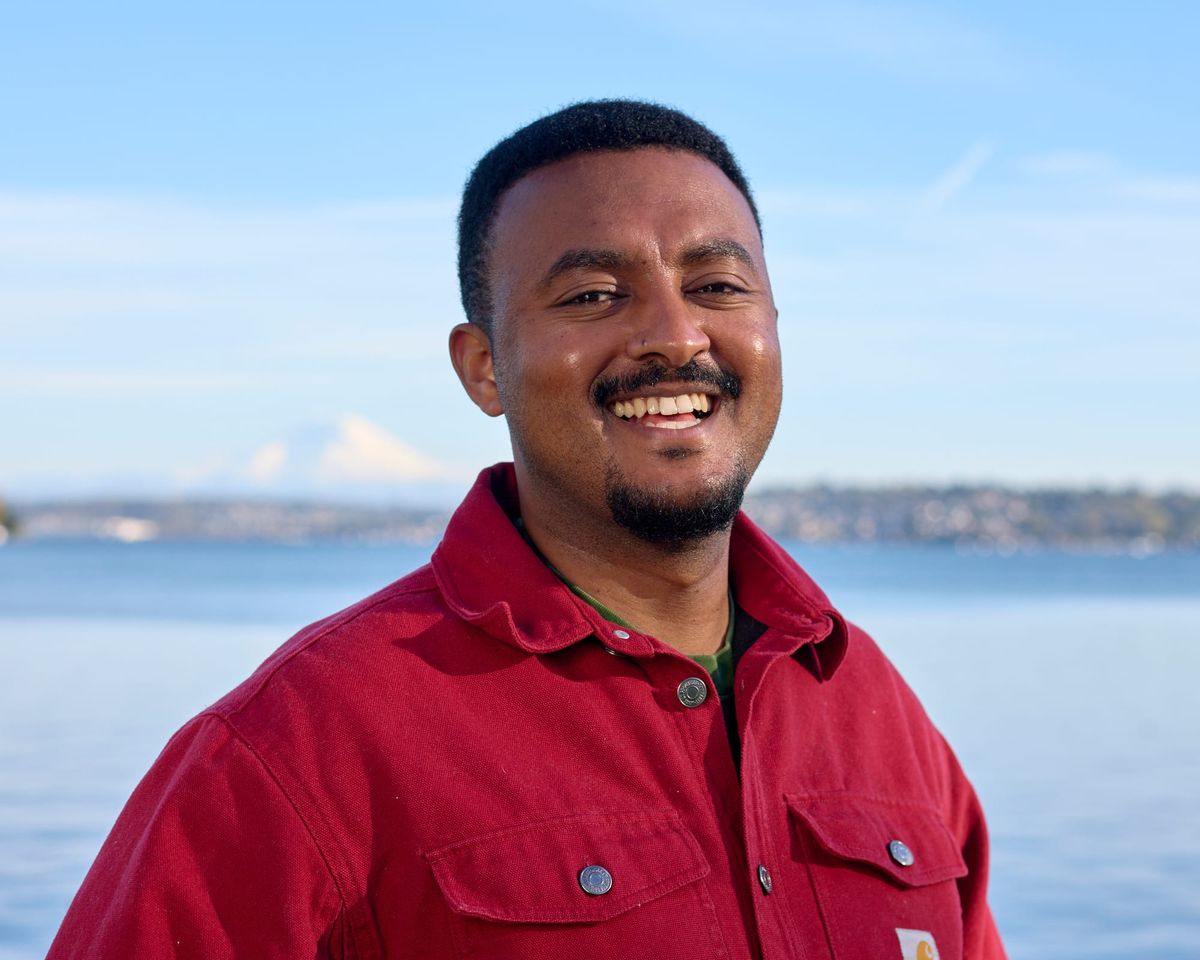
Kelabe Tewolde, an educator and Beacon Hill resident, is running for the Washington State House of Representatives in the 37th Legislative District, challenging incumbent Representative Sharon Tomiko Santos for the Position 1 seat.
The Washington State House of Representatives shares lawmaking authority with the Senate. Members serve two-year terms and are responsible for drafting and passing state legislation, setting the state budget, and conducting oversight of the executive branch. Each legislative district elects two House members and one senator. In the 37th District, which covers southeast Seattle neighborhoods including the Central District, Rainier Valley, the Chinatown International District, Columbia City, Beacon Hill, and Skyway. The House seats carry particular weight, as the district is one of the most racially and culturally diverse legislative districts in the state and has deep roots in civil rights organizing that has shaped statewide policy for decades.
Why He's Running
Tewolde's decision to run is rooted in his own family's experience with economic hardship in Seattle. Born and raised in the city, he describes watching his mother, a certified nursing assistant and refugee, work continuously only to find herself outpaced by rising costs.
"My family story isn't some abstract policy to me — it is very much my life," he said. "My mother and I were priced out of neighborhood after neighborhood growing up because no matter how hard she worked as a CNA, rising costs always moved faster than her wages."
The family also faced a health crisis that compounded their financial struggles. "We lost my grandma to lymphoma — we weren't only just grieving, we were buried under a mountain of medical debt that drove my mom to bankruptcy," he said. "I don't think parents should be worried about eviction or where their next meal is going to come from, because our legislators are unwilling to create those safety nets for those in need."
Those experiences shaped Tewolde's path into education. Over the past eight years, he has worked at Rainier Scholars, a program serving students from communities historically underserved by school systems. "Working in education has shown me firsthand what happens when you invest in young people early," he said. "It's where I learned that the best prevention isn't punishment, it's opportunity."
He also pointed to what he sees as a drift in the district's current representation. The incumbent, he noted, was first elected when Tewolde was four years old and has a long legacy of service, but he cited specific votes as motivating factors. "I saw votes against rent stabilization last year," he said. "And as a lifelong renter, and I've seen the high cost of housing, I was like — that's something that doesn't quite align with the residents in the 37th." He also said that as chair of the House Education Committee, the current representative has been "out of touch with how we should be funding education."
State Budget and Revenue
Washington state entered 2026 facing a projected budget shortfall, even as legislators passed a capital gains tax on millionaires last session. Tewolde said some of the fiscal decisions made during the session were contradictory.
"There were some decisions at the end of last session when we made $300 million in cuts to our education budget, while also getting rid of a $270 million revenue source in the estate tax," he said. "I'm not a math teacher, I'm more of a history teacher — but I could at least do the math there, and that doesn't add up."
He said he would push for additional progressive revenue tools, specifically calling out the Well Washington Fund, proposed by Representative Shaun Scott, which he said would raise funds "in a way that doesn't put a burden on the everyday person — whether that is a barista or a CNA." He added that the Legislature should have pursued corporate taxes alongside the Millionaire's Tax so that revenue could be implemented sooner, rather than waiting for a measure that still faces legal hurdles before taking effect.
Federal Funding Battles
With the Trump administration increasingly tying federal dollars to policy compliance on immigration, LGBTQ+ rights, and other issues, Tewolde said Washington State needs to be willing to hold its ground even at financial cost.
"I think the Legislature needs to be bold," he said. "We have a cohort of folks that are in the Legislature currently, as well as folks that are vying to be in the Legislature, that are willing to be bold and take action to protect the most vulnerable residents in Washington State. That includes our LGBTQ siblings. It includes our mixed-status families. It includes everyone that is trying to get healthcare, trying to have a decent education."
Tewolde said the state should have moved more quickly to establish alternative revenue streams so it would not be dependent on federal funding in the first place. He pointed to the failure to pass the Well Washington Fund and other corporate taxes last session as a missed opportunity to fund healthcare, gender-affirming care, and education in the face of federal cuts embedded in HR1.
Asked directly whether the state should modify its positions on vulnerable communities to protect federal revenue, he was blunt. "Stand with your values," he said. "I kind of get in trouble with that. But I think we're called the Fighting 37th for a reason — there are people here in this district that believe in being fighters, and they believe in living their values through and through."
Housing Affordability
Housing costs sit at the center of Tewolde's campaign, and he draws directly on his own experience as a lifelong renter. While the Legislature passed a rent stabilization measure last session, he said it fell short. "That was a watered-down version of that rental stabilization," he said, calling for stricter renter protections going forward.
He supports banning the Ratio Utility Billing System, a practice he described as allowing landlords to spread utility costs across tenants in ways that can inflate what individual renters pay beyond what they would expect. He would also pursue a ban on junk fees, citing the experience of renters who accept a listed price only to discover additional charges buried in the fine print. "It can be a huge cost on families," he said, "and causes a lot of families to move every other year."
On corporate home buying, he supports preventing corporations from purchasing more than 25 homes in the state, and he backs using state funds to purchase vacant hotels for immediate conversion to homeless shelter.
Childcare and Early Education
Tewolde said one of the most damaging cuts made during the last legislative session was a 30% reduction to Washington's Transition to Kindergarten programs. The programs provide childcare for young children while also preparing them for kindergarten, yielding better outcomes in literacy and math. "That was a big mistake," he said. He said he would work to restore that funding and expand similar programs, while also pursuing childcare subsidies that would help families afford care and allow childcare workers to earn a livable wage.
Public Safety
Tewolde said he thinks about public safety in two distinct ways: the feeling of safety and the conditions that produce crime in the first place. On the first, he pointed to research showing that activated, well-lit neighborhoods where people are present reduce crime and improve how safe residents feel.
On the second, he argued that much of the crime in the 37th District is rooted in poverty. "A lot of the crime that we see in the 37th is crime from being impoverished," he said. He pointed specifically to youth gun violence, saying young people who don't see a pathway to opportunity are more likely to end up at the margins. "We need to make sure that we're giving them opportunities. We're keeping them in school. We're keeping them in activities. We're funding those activities."
He cited a youth development fund bill, referencing HB 2484 and its companion SB 5992, as the kind of investment he would support that never made it out of committee. He also said he would support reallocating the $100 million Governor Ferguson set aside for police recruitment to instead shore up the public defense system and behavioral health services, describing both as severely underfunded. He said Washington is particularly underfunding behavioral health resources for children and adolescents.
He added that he does not believe a larger visible law enforcement presence is the most effective way to reduce crime, and that he supports non-officer crisis response teams, opposes automated license plate readers, and supports banning facial recognition technology.
Education Funding
Education is where Tewolde places his deepest personal investment, and he said it is the most underdiscussed crisis facing the state.
"We have severely underfunded and in some cases defunded education in this state. And we've failed our kids," he said. He cited data showing that more than 50% of Black youth in the state are not reading at grade level, citing a report covered in The Seattle Medium. "I was reading that article, and I was not shocked because I've seen what's going on in our schools."
He connected low literacy rates directly to downstream consequences across society. "If you look at our incarcerated population, 70% or so of incarcerated folks are reading at a fourth-grade level," he said. "When I think about education, it's not only about the educational outcomes — it is the larger ripple effects that education has."
He said teachers and students are not to blame. "They've been underfunded every single year and have not been given the tools to succeed." He said that as an educator himself, he wants to come to the Legislature as an advocate for both students and the educators who serve them.
AI, Data Centers, and Technology
Tewolde said large energy users like hyperscale AI data centers should be required to pay a premium to protect residential ratepayers, and he supports additional environmental review requirements for any data center seeking to locate in Washington communities. He went further than a regulatory approach, saying he would prefer data centers not come into communities at all given their environmental footprint.
"I personally don't want them in our communities, and I think they are dangerous," he said. "When we've seen other parts of the country deal with the blows of having data centers that wreak havoc on their communities, we shouldn't have that."
He also said the 37th District has a history of bearing disproportionate environmental burdens, and framed data center proliferation as the defining environmental justice issue of the current generation.
On consumer-facing AI, he said regulations are needed to protect children from dangerous interactions with AI platforms, citing the widely reported death of a teenager who had been engaged in conversations with an AI chatbot. He said he sees New York's legislative efforts as a model Washington should follow.
Climate and Environmental Justice
On the Climate Commitment Act, in response to the state lagging on the emissions reductions needed to meet its 2030 statutory benchmarks, Tewolde believes that CCA funds should be invested in expanding transit corridors, electrification, and building a diversified energy infrastructure to reduce reliance on fossil fuels.
He also addressed the environmental disparities that exist within the 37th District itself, speaking from personal experience as a Beacon Hill resident living under flight paths. He described overlaying air pollution maps with historical redlining maps when teaching his fourth-grade students. "They're basically the same thing," he said. "It is a long history of disinvestment. And if we wanna say it plain and clearly — racism."
His proposed responses include investing in cleaning the Duwamish River, distributing air purifiers into affected communities, planting trees to reduce heat islands, creating green space, and ensuring that community members who have deep roots in the district are part of the decision-making process so that environmental investments benefit existing residents rather than accelerating gentrification.
On How He Differs from His Opponent
Tewolde said his campaign is funded entirely without corporate PAC money, with donations coming from students and community members across the district who are directly affected by the issues he is talking about. "They're not just thinking of them as hypotheticals or theoretical — they're actually living the issues and have suffered at the cost of our State Legislature not protecting them," he said.
He argued that his background as a working educator sets him apart from the incumbent in a race where education policy sits at the center of the debate. He pointed to the incumbent's role as Education Committee chair as a seat that demands someone with direct classroom experience and a commitment to adequately funding public schools. He also cited the vote against rent stabilization as evidence that the current representation has drifted from the values of the district's renters and working families.
"I think we're called the Fighting 37th for a reason," he said. "There are people here in this district that believe in being fighters, and they believe in living their values through and through."
About the Guest
Kelabe Tewolde
Kelabe is the son of an Eritrean refugee. His mother worked as a CNA and homecare worker and has been a proud member of SEIU 1199NW at Swedish Hospital for over 20 years. Her union made a real difference for their family, he saw firsthand what it means to have workers organized and protected.
He is an alumni of Rainier Scholars, a program that changed the trajectory of his life. That experience showed him what happens when you invest in young people early, it's where he learned the best prevention isn't punishment, it's opportunity. Those values led him to return to Rainier Scholars as an educator, where he has spent the past 8 years as a teacher, advocate, and mentor to students routinely left behind by our systems.
Kelabe graduated from Colgate University with a degree in Political Science and interned in Senator Patty Murray's Seattle and DC offices. Outside of work, he has served on the Seattle Planning Commission as Land Use and Transportation Co-chair and organized mutual aid efforts in 2020, helping feed thousands of community members alongside local organizers.
Resources
Podcast Transcript
[00:00:50] Crystal Fincher: This is Hacks & Wonks, where we talk politics and policy in Washington State and cover what's happening, why it's happening, and what you can do about it.
The Washington State House of Representatives is one of two chambers in the Washington State Legislature, alongside the Senate. Washington's House members serve two-year terms and are responsible for drafting and passing state legislation, setting the state budget, and conducting oversight of the executive branch. House members are elected by legislative district, with each district represented by two House members and one senator.
The 37th legislative district covers southeast Seattle neighborhoods including the Central District, Rainier Valley, and the Chinatown International District, Columbia City, Beacon Hill, and Skyway. It's one of the most racially and culturally diverse legislative districts in Washington State, with deep roots in civil rights organizing that has shaped statewide policy for decades.
So today, I am excited to be welcoming Kelabe Tewolde, who is running for State Representative in the 37th District. Welcome to the show!
[00:02:10] Kelabe Tewolde: Thank you, Crystal - glad to be here.
[00:02:13] Crystal Fincher: Glad to have you here. Well, as usual, we're gonna start off with a lightning round where we ask you a number of yes/no or very short-answer questions - and we'll get into it now.
So starting off - do you own or rent your residence?
[00:02:30] Kelabe Tewolde: I'm a renter.
[00:02:32] Crystal Fincher: Are you a landlord?
[00:02:34] Kelabe Tewolde: No.
[00:02:35] Crystal Fincher: Have you ever been a member of a union?
[00:02:37] Kelabe Tewolde: No, but my mother has.
[00:02:39] Crystal Fincher: Have you ever walked on a picket line?
[00:02:42] Kelabe Tewolde: Yes.
[00:02:43] Crystal Fincher: Have you ever crossed a picket line?
[00:02:45] Kelabe Tewolde: Nope.
[00:02:46] Crystal Fincher: Is your campaign staff unionized?
[00:02:50] Kelabe Tewolde: I don't have staff yet.
[00:02:52] Crystal Fincher: If you get 'em and if they want to unionize, will you voluntarily recognize their effort?
[00:02:57] Kelabe Tewolde: Yes.
[00:02:58] Crystal Fincher: What political party do you identify with?
[00:03:01] Kelabe Tewolde: Democrat and Working Families Party.
[00:03:05] Crystal Fincher: Have you used the library system in the past month?
[00:03:08] Kelabe Tewolde: Yes.
[00:03:09] Crystal Fincher: Have you or someone in your household ever relied on public assistance?
[00:03:14] Kelabe Tewolde: Yes, we have.
[00:03:16] Crystal Fincher: Have you ever been stopped or questioned by police in Seattle?
[00:03:19] Kelabe Tewolde: Yes.
[00:03:21] Crystal Fincher: Have you ever worked in retail or a job where you had to rely on tips?
[00:03:25] Kelabe Tewolde: Yes.
[00:03:26] Crystal Fincher: Have you ever owned a business?
[00:03:29] Kelabe Tewolde: Kind of. I had a pop-up in the early 2020s.
[00:03:34] Crystal Fincher: Have you ever managed a team of 10 or more?
[00:03:37] Kelabe Tewolde: No.
[00:03:39] Crystal Fincher: Have you ever reported someone's misconduct in your workplace?
[00:03:43] Kelabe Tewolde: Luckily never had to.
[00:03:46] Crystal Fincher: Have you ever fired someone?
[00:03:48] Kelabe Tewolde: No.
[00:03:49] Crystal Fincher: Do you have a favorite sports team you actively follow?
[00:03:53] Kelabe Tewolde: Arsenal FC.
[00:03:54] Crystal Fincher: Oh, an Arsenal fan.
[00:03:56] Kelabe Tewolde: Just won the Premier League.
[00:03:58] Crystal Fincher: Do you believe the state should reduce its overall number of employees to cut costs?
[00:04:04] Kelabe Tewolde: No.
[00:04:05] Crystal Fincher: Do you believe the state government relies too much on contractors?
[00:04:10] Kelabe Tewolde: I need to do a little more research on that, but I don't think so.
[00:04:14] Crystal Fincher: Are you open to privatizing some state services if it might be more efficient?
[00:04:19] Kelabe Tewolde: No.
[00:04:20] Crystal Fincher: Do you support the state issuing more bonds to fund large capital projects?
[00:04:26] Kelabe Tewolde: Yes.
[00:04:27] Crystal Fincher: Would you vote in support of requiring ICE agents to get court approval before entering schools and healthcare facilities?
[00:04:35] Kelabe Tewolde: Yes.
[00:04:37] Crystal Fincher: Do you support a statewide mandate requiring all employers - public and private - to bargain with labor before implementing AI that could displace human workers?
[00:04:48] Kelabe Tewolde: Yes.
[00:04:50] Crystal Fincher: Do you support the Well Washington Fund introduced by Representative Shaun Scott?
[00:04:56] Kelabe Tewolde: Absolutely.
[00:04:57] Crystal Fincher: Do you support banning surveillance pricing by corporations doing business in Washington State?
[00:05:03] Kelabe Tewolde: Yes.
[00:05:04] Crystal Fincher: Do you accept corporate PAC donations?
[00:05:07] Kelabe Tewolde: No. I haven't received any.
[00:05:10] Crystal Fincher: In response to growing fears of political violence across the country, do you support using campaign funds for personal security?
[00:05:19] Kelabe Tewolde: Sure.
[00:05:20] Crystal Fincher: Should private detention facilities like the one in Tacoma be required to report abuse and neglect allegations, as well as deaths and serious injuries, to the State Department of Health?
[00:05:31] Kelabe Tewolde: Yes.
[00:05:32] Crystal Fincher: Should corporations be prevented from buying more than 25 homes in the state?
[00:05:38] Kelabe Tewolde: Yes, we should absolutely prevent that.
[00:05:40] Crystal Fincher: What's your favorite park in the district?
[00:05:43] Kelabe Tewolde: Gotta be Jefferson Park.
[00:05:45] Crystal Fincher: What's your favorite restaurant in the district?
[00:05:50] Kelabe Tewolde: I apologize - this has to be two restaurants. Just 'cause I have friends in the industry that, that will get mad at me if I don't say them both.
[00:05:57] Crystal Fincher: What are the two?
[00:05:58] Kelabe Tewolde: familyfriend up on Beacon Hill. And then Musang/Kilig, owned by Melissa Miranda, who's a good friend.
[00:06:04] Crystal Fincher: Okay. What's the last live performance you saw in the district?
[00:06:10] Kelabe Tewolde: I would say - CHUM News had a poetry reading at Cedar House a few weeks ago.
[00:06:16] Crystal Fincher: What's the last song you listened to?
[00:06:19] Kelabe Tewolde: Last song was Moon River, the Frank Ocean version, to calm my nerves.
[00:06:25] Crystal Fincher: What's your favorite song?
[00:06:28] Kelabe Tewolde: Favorite song's gotta be Int’l Player's Anthem - UGK.
[00:06:31] Crystal Fincher: Okay, solid. What's your favorite album?
[00:06:34] Kelabe Tewolde: Blonde by Frank Ocean.
[00:06:37] Crystal Fincher: Favorite local artist?
[00:06:39] Kelabe Tewolde: Travis Thompson.
[00:06:41] Crystal Fincher: What's the most recent book you read?
[00:06:44] Kelabe Tewolde: Martyr! by Kaveh Akbar - currently reading that.
[00:06:49] Crystal Fincher: What's your top book recommendation for listeners?
[00:06:52] Kelabe Tewolde: There's Always This Year: On Basketball and Ascension by Hanif Abdurraqib.
[00:06:58] Crystal Fincher: What's your favorite cafe or coffee house in the district?
[00:07:01] Kelabe Tewolde: Probably Avole in the Central District.
[00:07:05] Crystal Fincher: Have you ever served on a jury?
[00:07:08] Kelabe Tewolde: No.
[00:07:09] Crystal Fincher: Have you ever been arrested?
[00:07:11] Kelabe Tewolde: No.
[00:07:12] Crystal Fincher: Have you taken transit in the past month?
[00:07:15] Kelabe Tewolde: Yes.
[00:07:16] Crystal Fincher: In the past week?
[00:07:18] Kelabe Tewolde: Yes.
[00:07:19] Crystal Fincher: Have you ridden a bike in the past month?
[00:07:21] Kelabe Tewolde: Yes. Just bought one.
[00:07:23] Crystal Fincher: In the past week?
[00:07:24] Kelabe Tewolde: Yes.
[00:07:25] Crystal Fincher: What kind did you buy?
[00:07:27] Kelabe Tewolde: It was a Marin. Got it up at Recycled Cycles.
[00:07:31] Crystal Fincher: Do you prefer dogs or cats?
[00:07:34] Kelabe Tewolde: Dogs. Got two of them.
[00:07:36] Crystal Fincher: What's your favorite season?
[00:07:39] Kelabe Tewolde: Probably fall.
[00:07:42] Crystal Fincher: Have you attended a No Kings or other public protest?
[00:07:46] Kelabe Tewolde: Yes.
[00:07:47] Crystal Fincher: Do you believe a larger visible law enforcement presence is the most effective way to reduce crime?
[00:07:54] Kelabe Tewolde: No.
[00:07:55] Crystal Fincher: Do you believe the size of the State Patrol is too small, too large, or just right?
[00:08:01] Kelabe Tewolde: Probably just right.
[00:08:03] Crystal Fincher: Do you support implementation and expansion of non-officer crisis response teams?
[00:08:08] Kelabe Tewolde: Yes.
[00:08:10] Crystal Fincher: Do you support the use of automated license plate readers in Seattle?
[00:08:14] Kelabe Tewolde: No.
[00:08:16] Crystal Fincher: Should facial recognition be banned?
[00:08:19] Kelabe Tewolde: Yes, it should be banned.
[00:08:21] Crystal Fincher: Will you vote to significantly increase funding for public defender services?
[00:08:26] Kelabe Tewolde: Yes.
[00:08:28] Crystal Fincher: Should the state prioritize investment in restorative justice programs over traditional incarceration for non-violent offenders?
[00:08:36] Kelabe Tewolde: Yes.
[00:08:37] Crystal Fincher: Should the state fund and provide gender-affirming care?
[00:08:41] Kelabe Tewolde: Yes.
[00:08:43] Crystal Fincher: Should the state protect gender identity in public accommodations, including athletic facilities and sports programs?
[00:08:50] Kelabe Tewolde: Yes.
[00:08:52] Crystal Fincher: Should the state cooperate with or share any data with federal authorities?
[00:08:56] Kelabe Tewolde: No.
[00:08:58] Crystal Fincher: Do you commit to maintain or increase funding for community violence intervention programs?
[00:09:04] Kelabe Tewolde: I would support raising those.
[00:09:08] Crystal Fincher: Do you plan to increase funding for investigations of labor violations like wage theft and illegal union busting?
[00:09:14] Kelabe Tewolde: Absolutely.
[00:09:16] Crystal Fincher: Do large corporations pay their fair share of taxes?
[00:09:19] Kelabe Tewolde: Not yet.
[00:09:21] Crystal Fincher: Do small businesses pay their fair share of taxes?
[00:09:24] Kelabe Tewolde: Fair share and more.
[00:09:27] Crystal Fincher: Do you support stricter rent stabilization measures in the state?
[00:09:31] Kelabe Tewolde: Yes.
[00:09:33] Crystal Fincher: Do you support expanding the right to counsel legislation for tenants facing eviction?
[00:09:38] Kelabe Tewolde: Yes.
[00:09:39] Crystal Fincher: Do you support using state funds to purchase vacant hotels for immediate homeless shelter?
[00:09:45] Kelabe Tewolde: Yes, I do.
[00:09:46] Crystal Fincher: What's the most recent show you watched that you love?
[00:09:50] Kelabe Tewolde: Really love Shrinking on Apple TV.
[00:09:54] Crystal Fincher: What's your favorite Seattle sports moment?
[00:09:58] Kelabe Tewolde: Oof. So many. Probably Sue Bird's, like, final season in 2022 - that was just an iconic way to end.
[00:10:07] Crystal Fincher: What's your favorite comfort food?
[00:10:10] Kelabe Tewolde: Gotta be tibs, which is a Eritrean/Ethiopian dish.
Are you an early
[00:10:17] Crystal Fincher: bird or a night owl?
[00:10:19] Kelabe Tewolde: I've become an early bird because of my dog.
[00:10:22] Crystal Fincher: What's a hobby people wouldn't expect you to have?
[00:10:26] Kelabe Tewolde: Film photography.
[00:10:28] Crystal Fincher: What's your favorite neighborhood in the district?
[00:10:31] Kelabe Tewolde: Gotta be Beacon Hill, where I live.
[00:10:33] Crystal Fincher: Favorite rainy day activity?
[00:10:36] Kelabe Tewolde: Playing soccer.
[00:10:37] Crystal Fincher: Favorite Sound Transit station name?
[00:10:41] Kelabe Tewolde: Probably Symphony, 'cause it's just the only one that sounds fun.
[00:10:47] Crystal Fincher: Have you voted in every primary and general election in the past four years?
[00:10:51] Kelabe Tewolde: Yes.
[00:10:53] Crystal Fincher: Have you made any political endorsements that you regret?
[00:10:56] Kelabe Tewolde: No, and people haven't asked me.
[00:10:59] Crystal Fincher: Have you made any political donations that you regret?
[00:11:02] Kelabe Tewolde: No.
[00:11:04] Crystal Fincher: Did you vote for Bruce Harrell or Katie Wilson for Seattle Mayor?
[00:11:08] Kelabe Tewolde: Katie Wilson.
[00:11:10] Crystal Fincher: Did you vote for Sara Nelson or Dionne Foster for City Council?
[00:11:14] Kelabe Tewolde: Dionne Foster.
[00:11:16] Crystal Fincher: Did you vote for Tammy Morales or Tanya Woo?
[00:11:20] Kelabe Tewolde: Tammy Morales.
[00:11:22] Crystal Fincher: Did you vote for Ann Davison or Erika Evans for Seattle City Attorney?
[00:11:26] Kelabe Tewolde: Erika Evans.
[00:11:28] Crystal Fincher: Did you vote for Girmay Zahilay or Claudia Balducci for King County Executive?
[00:11:33] Kelabe Tewolde: Girmay.
[00:11:35] Crystal Fincher: Did you vote for the reauthorization of Seattle's Democracy Voucher Program?
[00:11:39] Kelabe Tewolde: Yes.
[00:11:41] Crystal Fincher: Did you vote for Seattle Social Housing Initiative - for Option 1A - that passed?
[00:11:48] Kelabe Tewolde: Yes, I did.
[00:11:50] Crystal Fincher: And I think that wraps up everything that we have. That is the lightning round.
[00:11:56] Kelabe Tewolde: Oh.
[00:11:57] Crystal Fincher: Pretty painless-
[00:11:58] Kelabe Tewolde: Nice.
[00:11:58] Crystal Fincher: I think. You flew through it.
Let's see. So just starting our regular question portion of the show. I'm first wondering - why are you running, and what will your top priorities be if you're elected?
[00:12:14] Kelabe Tewolde: Yeah - why I'm running. Well, I was born and raised here in Seattle. I'm a lifelong renter and a child of a refugee. I'm an educator here in my community. And so my family story isn't some abstract policy to me - it is very much my life. And my mother and I were priced out of neighborhood after neighborhood growing up because no matter how hard she worked as a CNA, rising costs always moved faster than her wages. We dealt with housing insecurity, but we were supported by a very tight-knit community. And we lost my grandma to lymphoma - we weren't only just grieving, we were buried under a mountain of medical debt that drove my mom to bankruptcy. And I don't think parents should be worried about eviction or where their next meal is going to come from, because our legislators are unwilling to create those safety nets for those in need.
And so that's why I'm running to represent the 37th Legislative District, because families deserve better. At an early age, my mom advocated for my education at every turn. She saw my cousin become a victim of gun violence and, like, made sure that I was on a positive pathway, making sure - education was her North Star. Education was a way to keep me safe - and her values stuck with me, and I became an educator as an adult. And so over the last eight years, I've been working at Rainier Scholars - working with students routinely left behind by our school systems. I've been a teacher, an advocate, a mentor - and working in education has shown me firsthand what happens when you invest in young people early. It's where I learned that the best prevention isn't punishment, it's opportunity. And we deserve an advocate who balances movement-driven values with the technical expertise of being a planning commissioner who will fight for affordable housing, create affordable healthcare options, actively invest in our kids through early learning programs and pathways to two-year and four-year degrees. Residents in the South End - we deserve someone who will actively fight for their safety as well. From the CID to Rainier Beach, we've seen our elders and our students bear the burden of our public safety efforts that have ignored the root causes of violence. So I'll push for public safety measures that actually prevent crime at the root issue. I hope that that message and those values align with the 37th Legislative District as well.
[00:14:37] Crystal Fincher: Now there are two State Representative seats and one Senator seat in the 37th District. Why did you choose to run for the State Representative seat that you're currently running for?
[00:14:51] Kelabe Tewolde: Yeah, that's a great question. When I saw the opportunity - there's this big domino effect that happened in the 37th, due to other elections and stuff. There was the open seat, which Jaelynn Scott is running for. And when I saw Jaelynn Scott run for that seat, I was like - Oh, Jaelynn's amazing. I'm so excited to vote for her and she's a new voice that will be in the Legislature that will push for a positive pathway to prosperity in the future. And I'm like - that is someone I can get behind. And I saw the other seat, held by a longtime rep who has been there for almost my whole lifetime. She was elected when I was four years old and has had a long legacy of doing right by the district, but I think more recently has started to stray away from the progressive values of the 37th. I saw votes against rent stabilization last year. And as a lifelong renter, and I've seen the high cost of housing, I was like - that's something that doesn't quite align with the residents in the 37th. As well as, we have an Education Chair who seems to be out of touch with how we should be funding education. It's such a powerful seat and I think that we need an educator here to be an advocate, not only for our students, but also for our educators as well.
[00:16:22] Crystal Fincher: So last session, the Millionaire's Tax was passed, but it also arrives alongside a projected budget shortfall for the next few years. What specific revenue tools or cuts will you make to address the remaining budget challenges?
[00:16:39] Kelabe Tewolde: I think there were some decisions that were made that didn't quite make sense when we are dealing with such a shortfall. I think there were some decisions at the end of last session when we made $300 million in cuts to our education budget, while also getting rid of a $270, or $270 million revenue source in the estate tax. It didn't quite add up. I'm not a math teacher, I'm more of a history teacher - but I could at least do the math there, and that doesn't add up. I would love to be a advocate for something like the Well Washington Fund that would actually provide funds that could fund these programs and in a way that doesn't put a burden on the everyday person - whether that is a barista or a CNA - like, those people shouldn't be bearing the brunt of our tax burden. We should be working on taxing the highest earners that should be paying more of their fair share.
[00:17:47] Crystal Fincher: Governor Ferguson has set aside $100 million for police recruitment and training, but many cities are struggling to hire and actually fill those seats. So at the same time, the public defense system is in a constitutional crisis due to lack of funding, which impacts everybody's civil rights. So would you vote to reallocate that $100 million specifically to public defense and behavioral health? Or do you think law enforcement recruitment programs are a higher priority for safety in the 37th District?
[00:18:21] Kelabe Tewolde: I think it would have to go to the public defenders and reallocate towards public defenders and mental health and behavioral health. I was actually on a project with my opponent a few years ago - with Washington Thriving - talking around, thinking through the issues of behavioral health and the resources that we have in Washington state, and we severely are underfunding that and aren't providing enough resources to people in the state, especially in that range from young kids to early adolescence and late adolescence as well.
[00:19:04] Crystal Fincher: How do you define public safety, and what will you do to make the 37th more safe?
[00:19:11] Kelabe Tewolde: I think there's two ways, two parts to this. I think there's the feeling of safety, right? And so, like, that could mean an activated neighborhood, right - where you actually feel safe. That's good lighting. That means people are around. There's proven data that shows that when places are activated like that, that people feel safer and are actually safer. It reduces crime. And then it also means that we're keeping people from getting to the point where they have to act out and do crimes of poverty, right? A lot of the crime that we see in the 37th is crime from - based from being impoverished. And so that means we need to actually invest in our communities. When I say invest in our communities, it is a multi-pronged approach, right? We are investing in our youth. It is making sure that kids have a way to stay busy. A lot of the times that we see in the 37th right now - a lot of the gun violence that we're seeing is from young people that have been pushed to the edges, right? Or don't see a pathway of prosperity. They don't see the end goal. And I think we need to make sure that we're giving them opportunities. We're keeping them in school. We're keeping them in activities. We're funding those activities. There was a really cool bill - if I remember correctly, it was HB 2484, or SB 5992 was the companion bill - but it was a youth development fund that never made it out of committee but could have been an amazing bill that actually prevented crime, if we gave students the opportunity to stay busy.
[00:21:05] Crystal Fincher: So we're in a situation where Washington State has a lot of priorities that are at odds with the priorities of our federal government. And the Trump administration - they have demonstrated a willingness to tie funding for a variety of things to adherence to their federal preferences and policies. So if the federal government threatens to remove federal funding from Washington State for policies that are pro-LGBTQ or that protect immigrants and refugees or lower income people, how should you and the Legislature respond?
[00:21:45] Kelabe Tewolde: I think the Legislature needs to be bold. I think we have a cohort of folks that are in the Legislature currently, as well as folks that are vying to be in the Legislature, that are willing to be bold and take action to protect the most vulnerable residents in Washington State. That includes our LGBTQ siblings. It includes our mixed-status families. It includes everyone that is trying to get healthcare, trying to have a decent education. And if we're gonna see federal cuts, we need to be bold in making sure that we can shore ourselves over until we can get those federal cuts restored - or get the federal funding restored, sorry. And so we need to be bold and have actions. Like in this last legislative session, there were a variety of different progressive revenue measures that were discussed, and we decided to just go with the Millionaire's Tax that will have to face multiple hurdles and won't actually be implemented for a few years. And it is an amazing feat, but we should have been working in tandem and trying to get the Well Washington Fund and other corporate taxes that could actually be implemented much sooner and would be able to fund some of those programs - whether that's healthcare, gender affirming care, education - in the face of these federal cuts in HR 1.
[00:23:14] Crystal Fincher: So to you - is it worth making those tough decisions if it will risk revenue from the federal government in the long-term - revenue that can't be restored at the federal level - and we just take a hit? Should we modify what we believe or stand strong in what we've previously decided?
[00:23:34] Kelabe Tewolde: If you've talked to any of my coworkers, I would always say stand with your values. I kind of get in trouble with that. But I think we're called the Fighting 37th for a reason, right? There are people here in this district that believe in being fighters, and they believe in living their values through and through, and I think we need to make sure that we live those values and honor those values. I think budgets are a big part of showing your values, and we have shown in this past session that we don't value certain things - whether that's education cuts that we've made. And I think we should have someone in the Legislature that can actually push our values forward.
[00:24:16] Crystal Fincher: What should the state be doing to make childcare more affordable?
[00:24:21] Kelabe Tewolde: I think we can fund subsidies. I think there were programs like Transition to Kindergarten that were cut. This is a amazing program that provides childcare for youth. And provides a kind of like, a relief for families as well, where they're able to get their kids into a program and have childcare that also sets their kids up for kindergarten and sets them up for better outcomes when it comes to their literacy rates and their math rate or math scores. And so that's an amazing program that we should restore funding to. I think cutting the state tax this past session was a mistake. Making 30% cuts to Transition to Kindergarten programs is a burden that our parents are gonna have to deal with in the state, and I think that was a big mistake as well.
[00:25:22] Crystal Fincher: Now, as a matter of policy, should large energy users like hyperscale AI data centers be required to pay a premium to protect residential rate payers? Or do you believe that more regulation that goes beyond that is even necessary? And on the flip side, do you believe that we'd be pushing jobs and corporations out of the state if we did try and enact that kind of regulation?
[00:25:53] Kelabe Tewolde: I think we should enact that type of regulation. I think that that type of regulation should be put in place to protect consumers and protect our residents. Also when it comes to AI data centers, there's a huge environmental cost and so we would have to provide further regulations when it comes to data centers and hopefully more environmental reviews to make sure that it - if they are coming into our communities, that they're doing it right. But I personally don't want them in our communities, and I think they are dangerous. When it comes to, when we've seen other parts of the country deal with the blows of having data centers that wreak havoc on their communities, we shouldn't have that. I think the 37th has experienced its own history of what happens when we bear the brunt of environmental issues and this is another one. This is the environmental issue that our generation is dealing with. And I think - in general with AI, I think there's also further regulations that we should have, not just on the companies, but also on how those platforms are being used. As an educator, it saddens me to see, like, the ways that AI has been used to harm kids. There should be regulations that protect kids. I think there was a teenager that committed suicide a few - was it last year? - after some dangerous conversations with ChatGPT, and so those are further regulations that we should put in place in Washington State. And I've seen New York make those efforts this year, and I think we should do that as well. We should be leaders in that fashion.
[00:27:48] Crystal Fincher: So the Climate Commitment Act is currently facing some scrutiny - not just on its existence, but its execution. Over $1.5 billion has been funneled through dozens of agencies, but state reports show we're still lagging behind on the emissions reductions needed to hit our 2030 statutory benchmarks. Do you think anything different should be done either on the policy side or on the implementation side to get us in a position to better achieve our emissions reduction targets?
[00:28:23] Kelabe Tewolde: Yes. I think there should be a few things that we should do with the money sp- or money raised through the CCA. I think we should be investing in expanding transit corridors. I think there should be state funding that goes towards electrification, even though electrification isn't gonna be the final and only solution. And it should also go towards, like, building the infrastructure so that we can have a diverse multi-pronged approach really when it comes to energy usage in this state - so that we can, you know, decrease our reliance on fossil fuels and further our reliance on alternative energy models.
[00:29:17] Crystal Fincher: Now, life expectancy in some parts of Seattle is up to 10 years shorter than in other parts of the same city - largely due to pollution, proximity to highways and major arterials and the pollution that creates, and historic disinvestment. What will you do to address these health disparities and environmental injustices?
[00:29:39] Kelabe Tewolde: I actually live in one of those places - in Beacon Hill, right under the flight path. So we deal with not only sound pollution, but also air pollution. And as you've said, in historically redlined districts like the Central District - I've actually taught this with my fourth graders of showing the maps of the - if you overlay air pollution with the redlining maps, they're basically the same thing. And it's unfortunate. It is a long history of disinvestment. And if we wanna say it plain and clearly - racism. And I think personally what we should be doing is investing in these communities to make sure that they're safer and are prioritized. So that could be in - neighboring to my district, like the Duwamish River - we should be investing in cleaning and making sure that the Duwamish River is a healthy space so that the surrounding communities aren't being harmed. It means listening to our community members in this district, when they are saying that they're dealing with noise pollution and air pollution. We could be investing in getting air purifiers into the community. It means that we can make our heat islands smaller, right? If you look at the south end of Seattle, there are massive heat islands because there's less of a tree canopy. It could be - yeah, planting more trees in this district or creating more green space. And not just green space for future residents, because this is a district that has dealt with a massive amount of gentrification - but it should be green spaces that can be utilized by the communities that actually live here right now and have deep roots. And so that means bringing in those communities to be part of the decision-making process as well, so that they can be included in it and be able to thrive and be part of that green future.
[00:31:52] Crystal Fincher: Now people are struggling with just making ends meet - whether it's high gas prices and the costs of owning a vehicle, housing prices, insurance prices, childcare costs, school, university costs. People are feeling it from every angle. What can you do as a legislator to help ease the burden on low and middle-income families?
[00:32:20] Kelabe Tewolde: We could do a few things. 'Cause I'm definitely feeling those strains and those costs and I have a pretty decent paying job. And that's probably why I bought my bike more recently - is because I spent $100 on gas the other day. And so we feel those pains. I think there are a few things that we could do. When it comes to housing, I think rental prices are through the roof. And yes, we had rental stabilization in the last session, but that was a watered-down version of that rental stabilization. And so we need to make sure that we're putting in protections for renters. And so that could be making those regulations stricter, but also it could mean making sure that we are, you know, banning the Ratio Utility Billing System so that people aren't paying inflated basic utilities. This is where landlords are able to, like, spread the costs of utilities across all their tenants and kind of in some ways inflate those costs for those folks - and so they're paying way above what they would expect to be paying. We could put in protections so that we can ban junk fees. Myself and many people I know that are out there renting have had to, you know, get a sticker price of where, what they're gonna be paying as they rent. And then once they get into the fine print, they're like - Oh, there's a whole bunch of junk fees that I have no idea what they're going towards. And it can be a, you know, a huge cost on families. And causes a lot of families to move every other year. Childcare - we can, you know, restore Transition to Kindergarten programs and expand those type of programs so that more families have an affordable childcare service. And then we can also, could do subsidies for childcare worker or childcare programs so that families have more affordable options, and we are able to actually pay our childcare workers a livable wage. When it comes to small businesses that can lower their prices, I think we can, you know, restructure our B&O taxes so that we can make sure that the small business owners aren't facing a huge burden and can also, you know, drive in more customers with a lower cost for their goods. But those are a few options.
[00:34:59] Crystal Fincher: What should be on our radar that we haven't discussed?
[00:35:02] Kelabe Tewolde: Ooh. I think what we haven't - or we've talked a little bit about it, but I think the biggest thing right now is that we're failing our kids in our education system. That's something I'm really passionate about. I've been in education the last eight years, working at this program, working with kids that are, you know, really hard workers. And we are seeing the fruit of our labor when it comes to our legislators, Legislature not investing in our kids. I was speaking with former Representative Dawn Mason the other day, and we were talking about - we know that if we don't have kids reading at grade level by third grade, their opportunities are significantly reduced for the future. I was speaking with someone else that - if you look at our incarcerated population, 70% or so, around that number, of incarcerated folks are reading at a fourth-grade level. And so when I think about education, it's not only about, like, the educational outcomes, it is the larger ripple effects that education has. And so we have severely underfunded and in some cases defunded education in this state. And we've failed our kids. If you look at our Black youth - this is the biggest thing for me. Over 50% of Black youth are not reading at grade level. This came out in The Seattle Medium last month. And I was reading that article, and I was not shocked because I've seen what's going on in our schools. And you can't blame the teachers, and you can't blame the students because they've been underfunded every single year and have not been given the tools to succeed. And so I wanna come in here as an educator and make sure that we are prioritizing our kids, prioritizing our future, and making sure that we have a bright future to look forward to in - not only in this district, but in the state.
[00:37:06] Crystal Fincher: What do you think your endorsements and donations say about your campaign? And why do you think voters should vote for you?
[00:37:16] Kelabe Tewolde: I think my endorsements - a few of them I can't say quite yet, but will be coming out soon - show that I am somebody that is leading with compassion and leading with a people-powered campaign. Same with my donations - I'm not taking corporate money. And I am focusing on the people that are most affected by the issues that I'm speaking of. I've got donations from, you know, students and family members throughout this district that are living the issues that I'm talking about. They're not just thinking of them as hypotheticals or theoretical - they're actually living the issues and have suffered at the cost of our State Legislature not protecting them.
[00:38:02] Crystal Fincher: Well, thank you so much for joining us today - sharing who you are and what you believe - and we will be eagerly following your campaign.
[00:38:10] Kelabe Tewolde: Thank you, Crystal.
[00:38:11] Crystal Fincher: Thank you.
Thank you for listening to Hacks & Wonks, which is produced by Shannon Cheng. You can follow Hacks & Wonks on Bluesky @HacksAndWonks. You can find me on Bluesky at @finchfrii - that's F-I-N-C-H-F-R-I-I. You can catch Hacks & Wonks on every podcast service and app - just type "Hacks and Wonks" into the search bar. Be sure to subscribe to get the full versions of our Friday week-in-review shows and our Tuesday topical show delivered to your podcast feed. If you like us, leave a review wherever you listen. You can also get a full transcript of this episode and links to the resources referenced in the show at officialhacksandwonks.com.
Thanks for tuning in - talk to you next time.