
Sharon Tomiko Santos Makes Her Case for Reelection in the 37th
Rep. Sharon Tomiko Santos, running for reelection in the 37th Legislative District, argues that displacement, public safety, housing, childcare affordability, and a fundamental reimagining of Washington's education delivery system are the defining challenges of this moment.
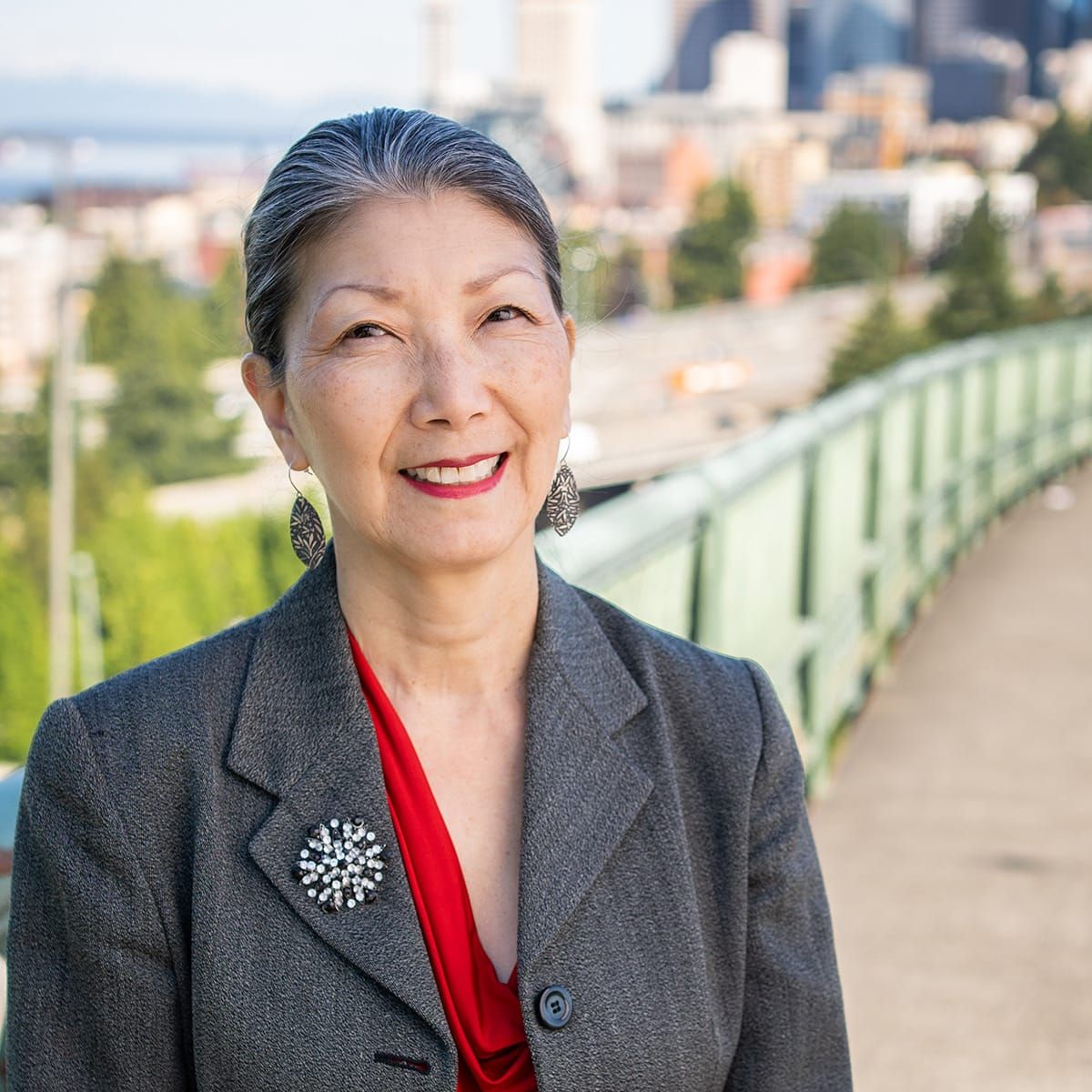
Sharon Tomiko Santos, who has represented the 37th Legislative District in the Washington State House of Representatives since 1999, is seeking reelection in a district that spans some of Seattle's most racially and culturally diverse neighborhoods, including the Central District, Rainier Valley, Chinatown International District, Columbia City, Beacon Hill, and Skyway.
House members serve two-year terms and are responsible for drafting and passing state legislation, setting the state budget, and conducting oversight of the executive branch.
Why She's Running: Community Roots and the Fight Against Displacement
Santos grounded her candidacy in the history of her own family and the communities of the 37th District. Her mother and grandmother, both American-born Japanese Americans, were incarcerated during World War II when her mother was just nine years old. After the war, she said, the entire Japanese American community on the West Coast was displaced, forced to sell their possessions for far less than they were worth, and returned home to rebuild from scratch.
"It's important to me in looking at the world to understand how not only individually traumatic displacement is, but how that sense of displacement carries across generations," Santos said. "And they're formed by people's attitudes, they're formed by economic forces, they're formed by priorities of government."
That history, she said, shapes her current focus on affordability, housing security, safe streets, and education. She described a particular concern for elders in communities like the Chinatown International District who she said have been forced to take self-defense classes just to be able to go for a walk. "My commitment is to make sure that we don't displace communities, that we do so by making neighborhoods that are safe, healthy, and active places for people of all ages, people of all races and ethnicities, people of all identities," she said.
Budget Challenges: Moving Beyond the Millionaire's Tax
The 2026 legislative session passed a Millionaire's Tax, a major policy milestone, but it came alongside a projected budget shortfall, and Santos acknowledged that the new revenue will not arrive quickly. She described the Millionaire's Tax as "the crack in the door towards moving in the direction of turning our upside-down tax code right side up," but said more immediate revenue sources are needed.
Santos said she wants to return to the Well Washington Fund, championed by Representative Shaun Scott, which she described as a measure that would generate revenue more quickly. She also argued for an employment tax on high wages, connecting the presence of high-wage technology workers directly to the region's affordability crisis. "Part of what's driving the lack of affordability in our region is the presence of all of these high-wage workers," she said.
Alongside new revenue tools, Santos said the Legislature also needs to look inward. She called for an examination of duplicative spending, where multiple agencies or community-based organizations may be delivering the same services with separate dollars, and for administrative efficiencies across state government. She also said lawmakers should hold off on new spending proposals until funding sources are identified. "I've seen these ups and downs in the past, and you can't get there simply by raising revenue," she said.
Public Safety: Security as More Than the Absence of Violence
Santos offered a broad definition of public safety that goes beyond policing and crime statistics. She described safety as "the presence of a sense of confidence in my person, in my place, and my ability to move about and in my future," invoking a paraphrase of a philosophical point that peace is not the absence of war but a condition of justice.
She described Black families in the Central District who held onto their family homes for generations as their retirement plan, only to face rising property taxes and pressure from developers, as one example of how economic insecurity and displacement are themselves public safety issues. She named housing stability, food security, access to behavioral health and substance abuse services, and reducing gun violence as the pillars of her approach.
On the question of Governor Ferguson's $100 million set-aside for police recruitment, Santos was direct that she does not believe it is the best use of those funds, particularly given that many cities are declining to fill open officer positions while crime rates fall. She pointed to the work of Representative Debra Entenman in advocating for more flexible use of those dollars at the local level, which would allow cities like Seattle to hire crisis response teams to work alongside law enforcement. "Anything that touches sort of the justice system writ broad should be fair game for that money," she said.
Santos supports expanding non-officer crisis response teams, opposes automated license plate readers, and supports banning facial recognition in law enforcement. She also supports significantly increasing funding for public defender services and prioritizing restorative justice programs over traditional incarceration for nonviolent offenders.
Federal Pressure and State Values
Santos addressed the Trump administration's threats to withhold federal funding from jurisdictions with sanctuary city policies, protections for immigrants, or trans-inclusive policies. She argued the federal threats are themselves illegal, pointing out that the president, like a governor, is bound by spending determined by Congress and cannot unilaterally withhold appropriated funds. "We, as a state, should not capitulate to bullying tactics, many of which I believe are illegal," she said.
She praised State Attorney General Nick Brown and Solicitor General Noah Purcell, whom she noted attended her elementary and high school in the 37th District, for their work challenging the administration in court. She said her role as a legislator is to hold Washington's values in state spending and policy decisions and let the attorney general do his job. "I and my colleagues in the Legislature should continue to hold up our values in our spending and our policy decisions and let our state Attorney General do his job, which is to call out the illegality of the actions of the Trump administration," she said.
Affordability: Housing, Childcare, and the Tax Burden on Seniors
On the broad affordability crisis, Santos returned repeatedly to housing as a foundational issue. She described the home as more than shelter for many longtime residents, saying it represents hard work, a retirement plan, and a legacy. She said a major but underappreciated driver of displacement is rising property taxes, and she cautioned that expanding local government taxing authority, especially through councilmanic action rather than a public vote, risks pushing older homeowners out of their homes.
Santos said she supports converting vacant hotels and commercial buildings into housing, including both emergency shelter and smaller apartment units for people just starting out. She described the Chinatown International District as having many older buildings well suited to residential use if owners had access to low-cost loans to bring them up to code, covering expenses like sprinkler systems and fire detection. "Those buildings were initially built as multifamily housing or multi-individual housing to begin with," she said. "There's no reason we can't convert them again."
She also advocated for expanding farmers' markets statewide as a dual strategy to address food security and support Washington farmers currently squeezed by federal tariffs, arguing the state could build real self-sufficiency around food production and distribution.
On childcare, Santos framed the issue as an economic productivity problem as much as a family one. She argued that employers whose workers cannot afford or find childcare should have a stake in solving it, and proposed a credit for employers who direct dollars into childcare programs like Working Connections. "Employers need childcare so that their employees can come to work," she said. "It's a productivity issue."
Climate: Staying the Course
Santos acknowledged she does not have deep expertise in the mechanics of the Climate Commitment Act, but said Washington is not alone in falling behind its greenhouse gas reduction targets. She said that during a recent trade delegation to Japan, representatives from major industrial companies including Mitsubishi, Subaru, and Kawasaki acknowledged that Japan, one of the earliest signatories to the Kyoto Protocol, is also not meeting its targets. "That's not to excuse us," she said. "We need to keep our foot on the pedal." But she also said the science of carbon reduction is evolving rapidly and that policymakers need time to evaluate whether current strategies need adjustment, what timelines are realistic, and what new approaches may be available.
Santos voted in favor of House Bill 2515, which would have protected utility ratepayers from the energy demands of AI data centers. The bill passed the House but stalled in the Senate.
Education Funding: The System Itself Needs Reimagining
Santos was emphatic that the state's education funding debates are focused on the wrong question. While acknowledging the Legislature has significantly increased education spending over the past decade, from $18.1 billion to $33.7 billion, she said simply debating dollar amounts misses the structural problem. "The efforts thus far have been akin to moving the deck chairs around," she said. "Nobody is talking about the system of education that we have and whether that needs to be changed."
Using national data from the National Center for Education Statistics, Santos pushed back on what she described as misleading comparisons, noting that Washington ranks 16th in combined state and local education funding per pupil, and 4th in the state share alone. The state's lower local contribution, she said, is where equity falls apart, because property-poor districts cannot generate the local funding that wealthier districts can.
Her proposed solution goes beyond funding formulas. She described convening what she called the Big Idea Group, an informal working group aimed at reimagining the education delivery system itself. She argued that Washington is attempting to send students into an era of advanced technology using an education model that has not fundamentally changed since her grandmother attended school. "The delivery system and the way we deliver the education program is the equivalent of a 19th century steam locomotive," she said. She called for an approach that recognizes different students have different needs and different costs, with special education students as a clear example of where civil rights obligations require more support and investment.
Experience, Endorsements, and Making the Case for Reelection
Facing a progressive challenger in the 2026 primary, Santos made a case for experience as the central argument for her reelection. She said voters in a moment of political and economic turbulence need a legislator with a track record, relationships, and an understanding of what has and has not worked in the past, including the ability to engage with national colleagues on issues that cross state lines.
Santos does not apologize for accepting corporate PAC donations, citing advice she received early in her legislative career: "If you cannot take somebody's money and still vote against their interest, then you don't belong in this business." She said her opponents in legislative battles have consistently described her as a straight shooter who keeps her word, and she traced that reputation to her time working for Governor Mike Lowry. "Everyone said, you can love him or you can hate him, but you always knew where he was coming from, and you knew you can trust him to keep his word," she said.
About the Guest
Sharon Tomiko Santos
Trained as a civil rights and social justice activist, Sharon Tomiko Santos was elected to the Washington State House of Representatives in 1998.
Rep. Santos’ legislative proposals reflect her strong advocacy for delivering high performing learning programs, ensuring a well-trained educator workforce, and eliminating educational inequities. She believes Washington state must provide excellence and opportunity to each and every student, giving them the tools they need to thrive in school and succeed in life.
In addition to education, her key policy interests include civil rights, women’s rights, economic and environmental justice, affordable housing, and community preservation. She strives to level playing fields and to enable every Washingtonian to be safe, be productive, and be successful.
Rep. Santos chairs the House Education committee and serves on the Consumer Protection & Business committee and Finance committee. She also serves appointments to the Washington State Education Opportunity Gap Accountability and Oversight committee, the Legislative Oral History committee, and the Public Stadium Authority advisory committee.
Rep. Santos is committed to community service and has served on the boards of many local and national organizations. She currently serves on the Board of Neighborhood House, one of the oldest social service organizations in Seattle serving the constituents of the 37th District since 1906.
A product of the public schools in her district, Rep. Santos also graduated from The Evergreen State College and Northeastern University. She has worked in the banking industry, on staff to local public elected officials, and in senior management positions for non-profit organizations.
Resources
Podcast Transcript
[00:00:50] Crystal Fincher: This is Hacks & Wonks, where we talk politics and policy in Washington state and cover what's happening, why it's happening, and what you can do about it.
The Washington State House of Representatives is one of two chambers in the Washington State Legislature, alongside the Senate. Washington's House members serve two-year terms and are responsible for drafting and passing state legislation, setting the state budget, and conducting oversight of the executive branch. House members are elected by legislative district, with each district represented by two House members and one senator.
The 37th legislative district covers southeast Seattle neighborhoods including the Central District, Rainier Valley, and the Chinatown International District, Columbia City, Beacon Hill, and Skyway. It's one of the most racially and culturally diverse legislative districts in Washington State, with deep roots in civil rights organizing that has shaped statewide policy for decades.
Well, today, I am very pleased to be welcoming - representative from the 37th Legislative District, Sharon Tomiko Santos. Thank you so much for joining us!
[00:02:10] Sharon Tomiko Santos: Well, good morning, Crystal - and thank you so much for having me. And thank you, too, for serving as our emcee during the 37th District Town Hall meeting earlier this year. That was a lot of fun.
[00:02:20] Crystal Fincher: That was a lot of fun. You know, I find myself moderating forums and town halls here and there, and mostly it's just cool to see how many people from the community show up there - so thanks for being available to people.
Well, we are going to get started with this whole interview. And as you probably know, we start with a lightning round of a series of yes-or-no or very short-answer questions that give people the chance to get to know who you are and where you stand on a wide variety of issues before we get to the long-form regular questions.
So we will get started with this lightning round, starting with - do you own or rent your residence?
[00:03:05] Sharon Tomiko Santos: Own.
[00:03:06] Crystal Fincher: Are you a landlord?
[00:03:07] Sharon Tomiko Santos: No.
[00:03:09] Crystal Fincher: Have you ever been a member of a union?
[00:03:12] Sharon Tomiko Santos: No.
[00:03:13] Crystal Fincher: Have you ever walked on a picket line?
[00:03:15] Sharon Tomiko Santos: Yes.
[00:03:17] Crystal Fincher: Have you ever crossed a picket line?
[00:03:19] Sharon Tomiko Santos: No.
[00:03:20] Crystal Fincher: Is your campaign staff unionized?
[00:03:24] Sharon Tomiko Santos: I don't have staff.
[00:03:26] Crystal Fincher: If you did get staff and they wanted to unionize, would you voluntarily recognize their efforts?
[00:03:31] Sharon Tomiko Santos: Yes.
[00:03:33] Crystal Fincher: What political party do you identify with?
[00:03:35] Sharon Tomiko Santos: Democratic.
[00:03:37] Crystal Fincher: Have you used the library system in the past month?
[00:03:43] Sharon Tomiko Santos: No.
[00:03:44] Crystal Fincher: Have you or someone in your household ever relied on public assistance?
[00:03:49] Sharon Tomiko Santos: Yes.
[00:03:51] Crystal Fincher: Have you ever been stopped or questioned by police in Seattle?
[00:03:55] Sharon Tomiko Santos: Yes.
[00:03:56] Crystal Fincher: Have you ever worked in retail or a job where you had to rely on tips?
[00:04:04] Sharon Tomiko Santos: I've worked - I don't know if that counts as retail. But it didn't involve tips, so I'll say no.
[00:04:11] Crystal Fincher: Have you ever owned a business?
[00:04:14] Sharon Tomiko Santos: No.
[00:04:15] Crystal Fincher: Have you ever managed a team of 10 or more people?
[00:04:21] Sharon Tomiko Santos: Hmm. No, I don't think so. No, I - I don't think up to 10. Maybe, maybe 8, but not 10.
[00:04:35] Crystal Fincher: Have you ever reported someone's misconduct in your workplace?
[00:04:39] Sharon Tomiko Santos: Yes.
[00:04:40] Crystal Fincher: Have you ever fired someone?
[00:04:42] Sharon Tomiko Santos: Yes.
[00:04:44] Crystal Fincher: Do you have a favorite sports team that you actively follow?
[00:04:48] Sharon Tomiko Santos: Oh, yeah.
[00:04:49] Crystal Fincher: Which one?
[00:04:50] Sharon Tomiko Santos: The Seattle Mariners.
[00:04:53] Crystal Fincher: Do you believe the state should reduce its overall number of employees to cut costs?
[00:04:59] Sharon Tomiko Santos: No.
[00:05:00] Crystal Fincher: Do you believe that state government relies too much on contractors?
[00:05:07] Sharon Tomiko Santos: Hmm. No, I don't think so.
[00:05:13] Crystal Fincher: Are you open to privatizing some state services if it proves more efficient?
[00:05:19] Sharon Tomiko Santos: No.
[00:05:20] Crystal Fincher: Do you support the state issuing more bonds to fund large capital projects?
[00:05:29] Sharon Tomiko Santos: I think that's a question that requires some context. Can I ask a question? Do you mean like now?
[00:05:35] Crystal Fincher: Well, actually in the lightning round, let's just say that's a - not a yes-or-no question, and if you wanna address that later, you can.
[00:05:43] Sharon Tomiko Santos: Okay.
[00:05:43] Crystal Fincher: But we'll keep these short.
[00:05:44] Sharon Tomiko Santos: I'll do that. Yeah.
[00:05:45] Crystal Fincher: Some of these answers may not be able to be answered with a yes or no.
[00:05:48] Sharon Tomiko Santos: Yes.
[00:05:48] Crystal Fincher: That's to be expected sometimes. So that's fine, and so you can just say you'll pass and we'll, we'll move on.
[00:05:56] Sharon Tomiko Santos: Okay. We'll pass.
[00:05:57] Crystal Fincher: Would you vote in support of requiring ICE agents to get court approval before entering schools and healthcare facilities?
[00:06:05] Sharon Tomiko Santos: Yes.
[00:06:06] Crystal Fincher: Do you support a statewide mandate requiring all employers - public and private - to bargain with labor before implementing AI that could displace human workers?
[00:06:20] Sharon Tomiko Santos: Public and private. Uh, yes.
[00:06:26] Crystal Fincher: Did you vote in support of House Bill 2515 that protected ratepayers from the massive energy demands of AI data centers, which passed the House but failed to advance in the Senate this year?
[00:06:38] Sharon Tomiko Santos: Yes, I think so. Yes.
[00:06:41] Crystal Fincher: Do you support the Well Washington Fund introduced by Representative Shaun Scott?
[00:06:47] Sharon Tomiko Santos: Yes.
[00:06:48] Crystal Fincher: Do you support banning surveillance pricing by corporations doing business in Washington State?
[00:06:54] Sharon Tomiko Santos: Yes.
[00:06:55] Crystal Fincher: Do you accept corporate PAC donations?
[00:06:58] Sharon Tomiko Santos: Yes.
[00:06:59] Crystal Fincher: In response to growing fears of political violence, do you support the use of campaign funds for personal security?
[00:07:07] Sharon Tomiko Santos: Yes.
[00:07:08] Crystal Fincher: Should corporations be prevented from buying more than 25 homes in the state?
[00:07:16] Sharon Tomiko Santos: Yes.
[00:07:18] Crystal Fincher: What's your favorite park in the 37th District?
[00:07:21] Sharon Tomiko Santos: Oh, Seward Park.
[00:07:23] Crystal Fincher: What's your favorite restaurant in the district?
[00:07:26] Sharon Tomiko Santos: Ooh. Oh. You just want me to get in trouble. Uh. Hmm. Uh, that one's too hard to answer, yes - with a simple answer. 'Cause it depends on what I'm in the mood for.
[00:07:45] Crystal Fincher: Okay. What was the last live performance you saw in the district?
[00:07:52] Sharon Tomiko Santos: Oh. The - doggonit, what's the name of the group? It was The Royal Room. It's a bunch of kids from the Rainier Valley actually, who - they're all grown up, they're OGs now, but doggonit. I can't remember, but they play a lot out of Yakima, and they play a lot here. They play a lot of, you know, old soul and R&B. I'm sorry - I can't remember their name. I mean, I remember the individual names. I don't remember the group name.
[00:08:26] Crystal Fincher: That's fine. What's the last song you listened to?
[00:08:32] Sharon Tomiko Santos: Oh. Uh you know, I was kind of listening to the radio on the way over here. I can't remember. I mean, I had it - I was actually thinking about this interview. Whatever was playing on KPLU.
[00:09:02] Crystal Fincher: What's your favorite song?
[00:09:05] Sharon Tomiko Santos: Oh, that one's easy. What a Wonderful World, as my husband used to sing it.
[00:09:16] Crystal Fincher: What's your favorite album?
[00:09:23] Sharon Tomiko Santos: Uh, we'll go with my first one. That's the Way of the World.
[00:09:29] Crystal Fincher: Who's your favorite local artist?
[00:09:34] Sharon Tomiko Santos: Any kind of artist?
[00:09:35] Crystal Fincher: Uh-huh
[00:09:42] Sharon Tomiko Santos: I will say Lawney Reyes.
[00:09:45] Crystal Fincher: What's the most recent book you read?
[00:09:52] Sharon Tomiko Santos: It was Years of the Woman - paraphrasing the subtitle was - The Memoirs of the House Majority Leader Lynn Kessler.
[00:10:15] Crystal Fincher: Mmm. What's your top book recommendation for listeners?
[00:10:32] Sharon Tomiko Santos: Desert Solitaire by Edward Abbey.
[00:10:36] Crystal Fincher: What's your favorite cafe or coffee house in the district?
[00:10:41] Sharon Tomiko Santos: Okay, you're getting me in trouble again. I'll say the Panama Hotel.
[00:10:46] Crystal Fincher: Have you ever served on a jury?
[00:10:48] Sharon Tomiko Santos: Oh, yeah.
[00:10:50] Crystal Fincher: Have you ever been arrested?
[00:10:52] Sharon Tomiko Santos: Yes.
[00:10:54] Crystal Fincher: Have you taken transit in the past month?
[00:10:57] Sharon Tomiko Santos: Yes.
[00:10:58] Crystal Fincher: In the past week?
[00:11:00] Sharon Tomiko Santos: No.
[00:11:01] Crystal Fincher: Have you ridden a bike in the past month?
[00:11:03] Sharon Tomiko Santos: Oh, no.
[00:11:05] Crystal Fincher: Do you prefer cats or dogs?
[00:11:08] Sharon Tomiko Santos: Cats.
[00:11:09] Crystal Fincher: What's your favorite season?
[00:11:19] Sharon Tomiko Santos: The fall.
[00:11:22] Crystal Fincher: Have you attended a public protest?
[00:11:25] Sharon Tomiko Santos: Yes.
[00:11:26] Crystal Fincher: Do you believe a larger visible law enforcement presence is the most effective way to reduce crime?
[00:11:33] Sharon Tomiko Santos: No.
[00:11:35] Crystal Fincher: Do you believe the size of the State Patrol is too small, too large, or just right?
[00:11:47] Sharon Tomiko Santos: Um - sorry. I, I think I'm gonna pass 'cause I think I have some additional questions about that one.
[00:12:06] Crystal Fincher: Okay. Do you support implementation and expansion of non-officer crisis response teams?
[00:12:13] Sharon Tomiko Santos: Yes.
[00:12:15] Crystal Fincher: Do you support the use of automated license plate readers in Seattle?
[00:12:19] Sharon Tomiko Santos: No.
[00:12:21] Crystal Fincher: Should facial recognition in law enforcement be banned?
[00:12:24] Sharon Tomiko Santos: Yes.
[00:12:26] Crystal Fincher: Will you vote to significantly increase funding for public defender services?
[00:12:31] Sharon Tomiko Santos: Yes.
[00:12:33] Crystal Fincher: Should the state prioritize investment in restorative justice programs over traditional incarceration for nonviolent offenders?
[00:12:40] Sharon Tomiko Santos: Yes.
[00:12:42] Crystal Fincher: Should the state fund and provide gender-affirming care?
[00:12:46] Sharon Tomiko Santos: Yes.
[00:12:47] Crystal Fincher: Should the state explicitly codify protections for gender identity in public accommodations, including athletic facilities and sports programs?
[00:12:56] Sharon Tomiko Santos: Yes.
[00:12:59] Crystal Fincher: Do you plan to increase funding for investigations of labor violations like wage theft and illegal union busting?
[00:13:05] Sharon Tomiko Santos: Yes.
[00:13:07] Crystal Fincher: Do large corporations pay their fair share of taxes?
[00:13:10] Sharon Tomiko Santos: No.
[00:13:12] Crystal Fincher: Do small businesses pay their fair share of taxes?
[00:13:15] Sharon Tomiko Santos: Oh, yes. More so.
[00:13:18] Crystal Fincher: Do you support stricter rent stabilization measures in the state?
[00:13:24] Sharon Tomiko Santos: No.
[00:13:26] Crystal Fincher: Do you support expanding the right-to-counsel legislation for tenants facing eviction?
[00:13:33] Sharon Tomiko Santos: Yes.
[00:13:35] Crystal Fincher: Do you support using state funds to purchase vacant hotels for immediate homeless shelter?
[00:13:41] Sharon Tomiko Santos: Yes.
[00:13:43] Crystal Fincher: What's the most recent TV show that you watched that you love?
[00:13:51] Sharon Tomiko Santos: Sanada Maru.
[00:13:53] Crystal Fincher: What's your favorite Seattle sports moment?
[00:13:57] Sharon Tomiko Santos: Oh. Randy Johnson pitching his first no-hitter in the Kingdome.
[00:14:04] Crystal Fincher: Gotcha. That was a good one.
[00:14:06] Sharon Tomiko Santos: I was with my dad.
[00:14:09] Crystal Fincher: What's your favorite comfort food?
[00:14:15] Sharon Tomiko Santos: Well, maybe anything with rice. Curry.
[00:14:19] Crystal Fincher: Are you an early bird or a night owl?
[00:14:23] Sharon Tomiko Santos: Oh - in between. I'm trying - being trained. I'm being retrained. I'm in between.
[00:14:33] Crystal Fincher: What's a hobby people wouldn't expect you have?
[00:14:45] Sharon Tomiko Santos: Probably cooking and baking.
[00:14:51] Crystal Fincher: What's your favorite neighborhood in the district?
[00:14:56] Sharon Tomiko Santos: Oh. Hmm - I'll say the one in which I live - Rainier Beach.
[00:15:05] Crystal Fincher: What's your favorite rainy day activity?
[00:15:10] Sharon Tomiko Santos: Reading.
[00:15:12] Crystal Fincher: Mine too. What's your favorite Sound Transit station name?
[00:15:20] Sharon Tomiko Santos: Hmm. I'll say Beacon Hill.
[00:15:26] Crystal Fincher: Have you voted in every primary and general election in the past four years?
[00:15:31] Sharon Tomiko Santos: Yes.
[00:15:32] Crystal Fincher: Have you made any political endorsements that you regret?
[00:15:46] Sharon Tomiko Santos: I'm sure that there must be somebody, but not - not anybody that I can think of in recent years.
[00:15:54] Crystal Fincher: Have you made any political donations that you regret?
[00:15:58] Sharon Tomiko Santos: No.
[00:16:01] Crystal Fincher: Last year, did you vote for Bruce Harrell or Katie Wilson for Seattle Mayor?
[00:16:06] Sharon Tomiko Santos: Bruce Wilson. Or Bruce - sorry, Bruce Harrell.
[00:16:11] Crystal Fincher: Did you vote for Sara Nelson or Dionne Foster for City Council?
[00:16:18] Sharon Tomiko Santos: Dionne.
[00:16:20] Crystal Fincher: Did you vote for Tammy Morales or Tanya Woo?
[00:16:24] Sharon Tomiko Santos: Oh, Tanya.
[00:16:28] Crystal Fincher: Did you vote for Eddie Lin or Adonis Ducksworth?
[00:16:34] Sharon Tomiko Santos: That one was hard. Eddie.
[00:16:40] Crystal Fincher: Did you vote for Erika Evans or Ann Davison for Seattle City Attorney?
[00:16:47] Sharon Tomiko Santos: Erika.
[00:16:49] Crystal Fincher: Did you vote for the reauthorization of Seattle's Democracy Voucher Program?
[00:16:52] Sharon Tomiko Santos: Yes.
[00:16:54] Crystal Fincher: Did you vote for Girmay Zahilay or Claudia Balducci for King County Executive?
[00:16:59] Sharon Tomiko Santos: Claudia.
[00:17:01] Crystal Fincher: Did you vote for Seattle's Social Housing Initiative that passed?
[00:17:07] Sharon Tomiko Santos: Yes.
[00:17:09] Crystal Fincher: All right. Well, that is the conclusion-
[00:17:12] Sharon Tomiko Santos: Okay.
[00:17:12] Crystal Fincher: -of our lightning round. Thank you very much.
[00:17:15] Sharon Tomiko Santos: Great. I think I have to go back to a couple. One was the question about State Patrol and - that was the serious one, I can't remember what the other one was. It might have been a later one. I guess the probing quest- oh, I know. The other question was about bonds. They were both serious. So may I just-
[00:17:40] Crystal Fincher: Go ahead. Go ahead.
[00:17:41] Sharon Tomiko Santos: Sorry. So, on the State Patrol, I guess - I think the question I had rolling through my mind is, do we just mean officers like the enforcement officers, or do we mean including, like, AFIS? Because I know they're constantly saying that they do not have enough of the, sort of the research arm for, like, AFIS or the state lab for cleaning up the rape kits - that sort of thing. So that's why I was a little bit not definitive in my response.
[00:18:26] Crystal Fincher: Okay.
[00:18:26] Sharon Tomiko Santos: 'Cause I think that that's - I think there's a distinction. If we're talking about patrol officers - think probably the answer is yes, there's enough. But probably State Patrol across the agency, I don't think so.
With bonds, the questions that I had were - was the question about right this moment? Or was that just in general? And the real - my response is it depends on a lot of things. One, I think bonds are a good way to generate revenues. I think it's a good way to get people back into jobs. And there's a cost that is paid back by the operating budget. So it depends on if interest rates are high or low, and right now they're kind of on the higher end. So, that's another reason why I was a little bit unclear or not definitive in my response.
[00:19:30] Crystal Fincher: Gotcha. All right. Well, we will start off with our first question, which is - why are you running, and what will your top priorities be if you're reelected?
[00:19:41] Sharon Tomiko Santos: Oh. Well, thank you for that question. And I know you and others have heard me talk about how proud I am to represent the 37th Legislative District because this is the district in which I was raised. And it's the communities of the 37th who instilled my values, who shaped my worldview, and who really give me the, sort of the motivational direction in terms of where I wanna put my efforts and my energies.
But I wanna unpack that just a little bit because I think it deserves it - to talk about not only what have I done, but more important, what will continue to motivate me. As many people know, my mom and my grandma were both American-born citizens who were incarcerated during World War II for no reason other than their ethnic identity as Japanese Americans. Again, both of my - both my mother and my grandmother were born in the United States. My mother was only nine when she was put behind bars. After the war, our community - 'cause the entire Japanese community on the West Coast was displaced, removed from their homes, forced to sell all of their worldly possessions on pennies on the dollar. Some of them actually lost them through government action. And after the war, our communities came back and rebuilt their neighborhoods. They rebuilt their businesses. They rebuilt community centers where there weren't any that were opening their doors to Japanese Americans. So for example, the Nisei Veterans Committee built their house that still stands because all of the other veteran organizations refused to allow Japanese American veterans returning from war to join their association.
So It's important to me in looking at the world to understand how not only individually traumatic displacement is, but how that sense of displacement carries across generations. And they're formed by people's attitudes, they're formed by economic forces, they're formed by priorities of government. And so, to me, it really emphasizes why I'm focused on - as I look around at the forces impinging on our community today - affordability, affordable housing, safe streets, safe communities, making sure that our students have access to a great education. My interest, both in the past and as I move forward, is how do we make sure that some of those elders who actually were children returning from the war, but all of our elders who helped build this community - I'm very proud of our very diverse communities - are not displaced because they're unable to continue to afford paying their taxes? That is a huge issue to me. I'm very worried about the safety in our streets, where both elders and children - we have the, I think, the highest proportion of elders and school-aged children in our district. And I think it's a sad day when, as we have, for example, in Chinatown International District, been forced to teach our elders self-defense, just so that they can go out and take a walk and breathe fresh air. My commitment is to make sure that we don't displace communities, that we do so by making neighborhoods that are safe, healthy, and active places for people of all ages, people of all races and ethnicities, people of all identities. And that's deeply rooted in the lessons I learned, not just from my own family history, but by many of the elders who helped raise me across our diverse communities.
[00:25:03] Crystal Fincher: Now, the 2026 session saw the passage of the Millionaire's Tax, but it arrived alongside a projected budget shortfall. What specific revenue tools or cuts will you make to address remaining budget challenges?
[00:25:20] Sharon Tomiko Santos: That's an excellent question, and it's one that certainly our Legislature, but especially our caucus and the other majority caucus, will be grappling with deeply. We knew going forward that the Millionaire's Tax was not going to bring in revenue funds right away. I will say it was an important piece of policy to get out of the Legislature because it's the crack in the door towards moving in the direction of turning our upside-down tax code right side up, where we start looking at what people are able to give rather than just sort of the - it reminds me of the difference between equal and equitable. You know, just because everyone buys, you know, a common whatever - household item, cleaning item - doesn't mean that it doesn't hurt those who are poorer more. Because they're paying the same amount of tax, whereas a higher income family can afford it.
I think that in this upcoming session - although I don't know how challenging the conversations will be - we have to go back to the Well Washington Fund that you referenced in the lightning round. Because we knew, again, last year that that was the measure that would bring funds in much more quickly. So my interest is in finding revenue sources that come in more quickly. I think that when we are talking about individuals who earn over a certain amount, or who get paid over a certain amount - I think that there ought to be an employment tax that's related to that. Because that's part of what's driving the lack of affordability in our region - is the presence of all of these high-wage workers.
At the same time - and I kind of mentioned this during our Town Hall meeting as well - is, you know, I've seen these ups and downs in the past. And you can't get there simply by raising revenue. Millionaire's Tax is a good example. There will be, there's going to be a court case there. There's potentially going to be an initiative. Even with the Well Washington Fund - that one, we don't know what the outcome of that might be in the electorate, but we do have to do something that's gonna get money in the door right away. So I've also felt that it's very important that we take a look at our existing spending and figure out where are we duplicating funds. So from a taxpayer perspective, the taxpayer dollar is the dollar, and the taxpayer could have and should have an expectation that this dollar is going to go and support - let's say, basic health for poor people. Well, if we give that dollar to our public health department, or we give that dollar to a community-based organization - it's $1. So the question becomes - how do we make our dollars work more efficiently? So can we do $1 towards health and say - Public health department, you must work collaboratively with our community-based organizations who are also delivering health services - as an example? So looking for duplicative spending, but the other thing is finding out where we can find administrative efficiencies in other ways. And those will take some deep dives, and agencies are generally not inclined to cut their own budgets. So I don't know if that means an across-the-board administrative cut, but that would be another approach. And then the final way, I think, is to hold steady on new legislative proposals that will cost money early until we can find a funding source for them.
[00:30:32] Crystal Fincher: How do you define public safety, and what will you do to make the 37th District more safe?
[00:30:53] Sharon Tomiko Santos: The thought that's running through my mind right now, Crystal, is a quote by a philosopher. And it, it's something like, "Peace is not the absence of war." And then he goes on to say, "It's a way of thinking. It's a way of behaving." I'm paraphrasing here. "It's justice and it's faith." I used to teach Western civilization, so that's why this comes to me. And so to me, the reason I think I'm thinking this is - how do I define public safety - is do our elders fear going out at night or are they confined in their apartments? Are children able to walk freely, play freely in their own neighborhoods, as I used to do on Beacon Hill, without fear of gun violence erupting? Can families feel confident that they are secure through their generations in their home, but also through their future? I think of so many of the Black families in the Central District who held on and held on and held on. I think of one of my dear friends - Mrs. Hollingsworth, she was a school board member - who had her home up there on, what was it, 23rd and I want to say Republican, I can't remember what the cross street was. Really trying to hold on to that family homestead because for our elders, we have to remember they were growing up at a time where Social Security, if it existed, was still very nascent, and they were not really the prime beneficiaries of it. So they, their retirement plan, as it were, was that house. They bought what was available to them, and it was through no fault of their own that real estate increased. Good for them. That's - that was the plan. That was the retirement plan. But then when they can no longer afford to hold onto that home because of increasing taxes and they start facing vultures who want to scoop up this real estate for more development, that presents that sense of insecurity. And I know the question was about public safety, but to me, again, safety is not the absence of violence. It is the presence of a sense of confidence in my person, in my place, and my ability to move about and in my future.
And you asked, what will I do? I think that that will take multiple kinds of strategies. One is around housing. We have to increase affordable housing. I think we also need to re-look at the senior tax exemption for housing. It used to be - we used to put a straight dollar amount when I first went into the Legislature. I was the one who proposed this doesn't make sense because a straight dollar amount in Selah is nothing in Seattle. And that was, you know, however long it was ago. And if nothing else, that truth has expanded. So affordable housing, especially looking at our vulnerable populations who are at great risk of being displaced, and our vulnerable communities at great risk of being displaced. I think the other issue is around food security - access to affordable, healthy food in your neighborhood. So I would envision putting in more efforts towards farmers' markets across the state. I think that's actually a win-win for - one, Washington. We have farmers who are facing all kinds of tariff issues, thanks to the administration. Well, we have people who need food and sustenance. So can we figure out a way to be self-sufficient within this state around food security? I think the issue around - which is a perennial issue - how do we get guns and drugs off the streets? And I think that's a complex issue. I hope that there will be a question in your long format around that, so that maybe we can talk about that a little bit more. But suffice it to say, it is a big problem that has been decades in the making since the Reagan revolution. I think we are now certainly paying the piper now. It means that we have to re-commit to more public health professionals that are experts in substance abuse disorder and mental and behavioral health, who are more mobile and who are culturally competent. It means that we have to have housing that allows for that kind of supportive service to take place in a safe and monitored fashion. It also means that we have to do some significant training with our law enforcement professionals - not that they're going to become the social worker in the street, but how do they, if they're the first responder deescalate a situation so until they can get their backup. So that instead of their backup being more law enforcement with guns, we can get the mental, behavioral, and substance abuse professionals there to provide the immediate care that an individual might need. Obviously, I can go on, but I think you probably have more questions, so I will stop there.
[00:38:21] Crystal Fincher: I do. Governor Ferguson has set aside $100 million for police recruitment and training, but many cities are struggling to fill those seats, and cities are seeing crime rates decline even with those seats unfilled. Do you think that that setaside might have a better use, like behavioral health or public defense? Or do you think the $100 million for police hiring is the best use of funds for making the 37th more safe?
[00:38:54] Sharon Tomiko Santos: I don't think using it for police hiring is the best use of funds. And in fact, I believe that my friend and colleague, Representative Entenman, worked very hard to ensure that the funds were more flexibly used at the local level to allow for - say, for example, the City of Seattle, to be able to hire crisis response teams to work in conjunction with law enforcement. I think anything that touches sort of the justice system writ broad should be fair game for that money.
[00:39:43] Crystal Fincher: That makes sense. Now, we've seen a lot of threats from the federal government to a number of jurisdictions saying that if they don't align with their priorities, that if they have sanctuary city protections, protections for immigrants, trans people - you know, a number of different things - that they are threatening to remove or withhold funding. How should Washington State respond, and how should you respond as a legislator when our values and our laws that we have passed and that the public supports are being used as an excuse to remove funding? How should you respond in the face of that?
[00:40:27] Sharon Tomiko Santos: Well, first of all, I think we, as a state, should not capitulate to bullying tactics, many of which I believe are illegal. And so to that end, I would remind both this administration and our public that the president, like the governor, has to comply with the spending determined by the legislative body. And in the federal government, that body is Congress, and obviously in Washington, it's the Legislature. And I don't mean just the governor - it's any executive branch officer. So one, it's illegal, and I'm very proud of our State Attorney General, Nick Brown, for his multiple efforts to - and I, let me also say our Solicitor General, Noah Purcell, who is a product of the 37th District, including my elementary school and my high school, so - that they have been laser-focused on protecting Washington values. So I think - I and my colleagues in the Legislature should continue to hold up our values in our spending and our policy decisions and let our state Attorney General do his job, which is to call out the illegality of the actions of the Trump administration.
[00:42:14] Crystal Fincher: So many residents across the state and in the 37th are being squeezed financially from all sides. Housing costs have skyrocketed. Car ownership is expensive. Gas prices have jumped. Childcare now costs more than college on an annual basis. The largest expenses that people have have all gone up, and lots of people are just saying - I can't take anymore. They can't afford it. They're choosing between medication and groceries, childcare and rent. What are the most immediate and impactful things you can do to make life more affordable for people in the 37th?
[00:43:02] Sharon Tomiko Santos: I think that there are a couple of things that I wanna touch on. We've already touched on housing, but I wanna go back there again, because housing is a basic human right. Let's start with that. And as we've already discussed, so many members of our community - that home is more than just a place where they reside. It represents their hard work. It is their retirement plan. It is their legacy to their children and to their community. And so it's going to be very important - because the other piece we didn't talk about was, or was not in that recitation, is the increase in taxes - that too. So we have to be careful when we talk about increasing the capacity of local governments to tax because, especially if it's councilmanic versus going to the voter. Because that is probably the largest thing that is driving our older homeowners out of their homes - is the inability to keep up with taxes as well as rising utility costs. So when we talk about what can we in the Legislature do, what can I do - one is, again, continue to double down on housing. We keep putting more and more funds in there. But I think one of the items you mentioned in the rapid - whatever you called it, lightning round - was buying vacant hotels. Well, I think there are a lot of vacant buildings. There are a lot of vacant buildings. So yes, I think we can buy hotels that are vacant, convert them into housing. And it doesn't just have to be emergency housing. It could be, you know, micro apartments or whatever they call them - pods, I think - for people who are just starting out.
I would also point out there are many neighborhoods in the 37th District, like the Chinatown International District, that are ripe for rehabilitation of their buildings. We can develop a housing loan, low-cost loan program so homeowners can - or excuse me, building owners - can undertake their own renovations. Very costly repairs to bring them up to code, like sprinkler systems, other types of fire detection systems, security systems. Those are all very expensive. But those buildings were initially built as multifamily housing or multi-individual housing to begin with. There's no reason we can't convert them again, but they have to have access. I think the other is to make sure that we are looking at many of the corporate buildings that are beginning to stand vacant and ask - you know, we went through a big building boom about 10 years ago. Is office space really the best, highest use of that - those buildings? So, I think there are many, many opportunities in housing.
In childcare, I think that one gets a little more complex. Certainly we have childcare deserts all across the state. I think - and I said this during COVID and there was not a pickup on this, but I think it's an important idea - and that is families, working families need childcare so they can go to work. That means there's a missing piece there. Employers need childcare so that their employees can come to work. It's a productivity issue. So it seems to me that as we look at something like taxing employers who are paying high wages to their employees, we should also be looking at perhaps a way to give credit for those employers who divert some of those dollars into a childcare fund to support our Working Connections childcare program. There's more on that, but that one is a very important thing that we cannot forget. Childcare is related to economic productivity for our businesses
[00:48:04] Crystal Fincher: Absolutely. Now, the Climate Commitment Act has some people who disagree with it because they disagree with the need for any kind of climate legislation at all. But it does have some people concerned who support the need to take action to reduce greenhouse gas emissions and mitigate climate impacts because it's not currently on track to hit the 2030 or 2040 benchmarks for reduction. What should be done to get the Climate Commitment Act on track to hit its greenhouse gas reduction targets and to better mitigate the impacts that we're seeing, as we're in the middle of a heat wave as we record this right now, that people are experiencing?
[00:48:54] Sharon Tomiko Santos: Yeah. It's a very complicated issue obviously, and I don't want to minimize the importance of the question you're asking. But I will also say, except in the broadest policy understanding of Climate Commitment Act policies, this is not an area that I have strong expertise. But what I can say is that, of the multiple states that have adopted CCA-like goals - we are not alone. Very few states, if any, are actually on track. I think maybe there's one. But it's not just states. I just came back from Japan, and we had many meetings with some of the major - this was part of a Secretary of State trade delegation - and we were meeting with some major companies like Mitsubishi, Subaru, Kawasaki, who are involved in heavy industries related to aerospace. And we wanted to talk about a partnership between a local Washington company and some of these Japanese companies to develop a more robust alternative aviation fuel and fuel distribution system. And what came out in those conversations is - Japan was one of the early - well, we all know about the Kyoto Protocol, right? They came out early with a commitment to greenhouse gas reductions, and they too are not meeting their target. So that's not to excuse us. We need to keep our foot on the pedal. But I also think science is, in fact, an art. Science is not a perfect predictor. We need to have more, I think, time to figure out - do these, do our strategies need to be adjusted? Do we need to look at a timeline differential? Are there component parts? I mean, I'm learning about new things in the whole carbon reduction environment that frankly I'm not - I'm not gonna pretend I understand them all. But it used to just be stop driving your car, you know? Stop, stop polluting the air, stop building fires. But now it's a whole bunch of other things. And so, I think it's promising and I think we have to give ourselves some time because that - CCA is still relatively new.
[00:52:16] Crystal Fincher: Now, education funding is a humongous topic. Districts across the state from Seattle to Sedro-Woolley are in dire financial straits - considering closing schools, some districts are in danger of being taken over by the state. It is just a really tough, challenging financial environment with major structural deficits, while I think there's broad agreement that the state is not meeting its obligation - its paramount duty as our Constitution says - to fully fund education. There's been lots of talk about progress that has been made and incremental steps taken. But what needs to happen in order to fully fund education in our state?
[00:53:13] Sharon Tomiko Santos: One of the things that I would say is, in my perspective, the efforts thus far have been akin to moving the deck chairs around. Nobody is talking about the system of education that we have and whether that needs to be changed. That's the problem. We keep talking about how are we gonna provide more funding, and I do actually - you know, I think one of the things that it is important for me to say is the Legislature has continued to increase funding over the years. So for example, in a - over a 10-year period, we have gone from education funding at $18.1 billion to $33.7 billion. That's in 10 years' time. That is not shirking our duty. What is true is that costs have escalated. I would also point out that according to national data sources, because you always have to be careful about the data sources you're using, so I'm citing NCES, which is Department of Education data. When you take a look at state and local funding, Washington is actually 16. So all of this hand-wringing about, "Oh, we're 48th," that's not true. We're 16 in state and local funding. But what is very, very interesting, I think, is if you then say, "What is the state funding and how do we compare to our peers?" We're number four. We are number four in terms of both of the amount that we at the state contribute per pupil. Where we fall down is in the amount of local funding - so we're number 36 when you talk about what is the local contribution. And the reason that becomes important is directly to your question, Crystal, which is the principles of a sound education financing system are equity, stability, adequacy, accountability, sustainability. We have struggled with equity in education funding since the Barefoot Schoolboy Act was adopted in the 1800s, where the issue of equity is - how do we make sure every student across the state gets the same amount of money for their basic education when we know that some districts are property poor and some districts are property rich?
So that's why I say we need to re-look at what we are funding, not just the dollar amounts. And so I've been leading a group that's off the books, so to speak, it's not a legislative task force, that I'm calling the Big Idea Group. And the premise is this - the education delivery system that our children are going through is the same education system that I went through, that you went through, that my mother went through, that my grandmother went through. Today, however, we have an expectation of our children that they're gonna land not on the moon, but into the cosmos. But the delivery system and the way we deliver ed- the education program is the equivalent of a 19th century steam locomotive. So to me, the answer to getting to equity and adequacy is recognizing that not every child is the same, and different childs have different needs, and so therefore, some children are gonna cost more. Think your special education student, for example - they need more support services, part of their civil rights. So how do we make sure that they stay on track both academically and get their civil rights supports in that education? And that requires a complete re-imagination of our education system.
[00:57:53] Crystal Fincher: Now, we're just about to move to close our conversation today. But as voters are thinking about your candidacy, who you are, and what distinguishes you from your opponent - since you have a challenger in this race. What do you tell them about why they should choose you over your opponent? And what do you think your endorsements and donations say about you?
[00:58:26] Sharon Tomiko Santos: I think we are in very, very challenging times politically, both federally and in our state. We're in challenging economic times. It seems to me that what you want is an experienced legislator - somebody who has an understanding of what has worked before and what has not worked before. Somebody who is not just engaging locally, but is trying to tackle some of our larger problems that are more federal with colleagues across the country. So I think experience, knowledge, and the relationships are very important.
And you asked about my endorsements. I would say that my endorsements speak to my commitment to our human and civil rights, both as citizens of the state, of this country, and of this world. I think they speak to the fact that - I said earlier I do accept corporate PAC donations. I don't apologize for that, because there was a wise man who told me when I was first elected - he was our state party chair, he was also a former state legislator from the 37th District - that if you cannot take somebody's money and still vote against their interest, then you don't belong in this business. And I'm very proud to say that people I've tangled with often in the Legislature have always said that they can count on me to always be a straight shooter, that I will never lead them astray, but I always have an open door and allow them to have their piece. And I take great pride in that because I think that was what I learned when I worked for Mike Lowry. Everyone said - You can love him or you can hate him, but you always knew where he was coming from, and you knew you can trust him to keep his word. And so, I think that's what I would say.
[01:00:54] Crystal Fincher: Well, thank you very much, Representative Sharon Tomiko Santos, for sharing who you are, what you stand for, and what you plan to do if you're reelected. Thank you so much.
[01:01:05] Sharon Tomiko Santos: Thank you so much, Crystal.
[01:01:08] Crystal Fincher: Thank you for listening to Hacks & Wonks, which is produced by Shannon Cheng. You can follow Hacks & Wonks on Bluesky @HacksAndWonks. You can find me on Bluesky at @finchfrii - that's F-I-N-C-H-F-R-I-I. You can catch Hacks & Wonks on every podcast service and app - just type "Hacks and Wonks" into the search bar. Be sure to subscribe to get the full versions of our Friday week-in-review shows and our Tuesday topical show delivered to your podcast feed. If you like us, leave a review wherever you listen. You can also get a full transcript of this episode and links to the resources referenced in the show at officialhacksandwonks.com.
Thanks for tuning in - talk to you next time.