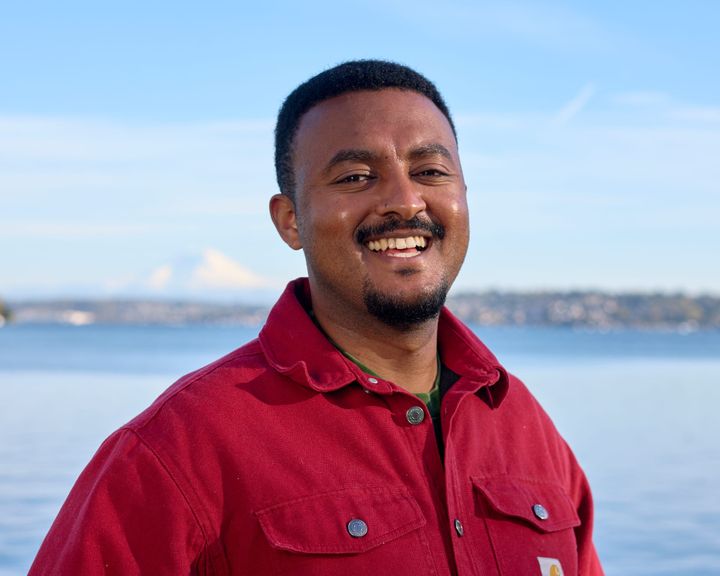

State Rep. Chipalo Street Seeks 37th District Senate Seat
State Representative Chipalo Street is running for the open 37th District Senate seat, emphasizing his record on progressive taxation, housing affordability, reparations, and immigrant protections as the district faces compounding pressures from federal policy rollbacks and a tight state budget.
The 37th legislative district covers southeast Seattle neighborhoods including the Central District, Rainier Valley, the Chinatown International District, Columbia City, Beacon Hill, and Skyway. It is one of the most racially and culturally diverse legislative districts in Washington State, with deep roots in civil rights organizing that has shaped statewide policy for decades.
Street, who currently represents the 37th District in the State House, is running to fill the Senate seat being vacated by Senator Rebecca Saldaña.
Why He's Running
Street points to his four years in the State House as the foundation for his Senate bid, and to the importance of continuity in the seat held by Saldaña.
"I've been lucky to be able to serve in the State House for four years," he said. "I've super enjoyed my two seatmates, Rep. Santos and Senator Saldaña, learning from them and watching, specifically, Senator Saldaña, lead in progressive ways in the Senate. And now that she's stepping down, I want to make sure that we have a great progressive champion in the Senate carrying on those traditions for the 37th."
"I'm the only person who's turned progressive values into policy and investment in this race," he said. "When I came to the House, I earned positions in Democratic leadership and on the tax and budget committees to champion the Millionaire's Tax, to fund education, health care, tax cuts for working families."
Street also highlights a trio of investments he helped secure. "In conjunction with Senator Saldaña and Rep. Santos, we brought back $131 million to invest in our district, from things like homeownership in land trusts to the Tubman Health Center, which will be the first Black-owned health center in the state," he said. He added that the center is also attempting to build a replicable model to expand access to culturally responsive health care.
Street also points to his work on reparations as a signal achievement. "We brought back $300,000 to do a state study on reparations. We're now the third state in the country to start looking at how we do reparations for descendants of slaves. I spearheaded and championed that work. And I'm the first legislator to actually make progress on it in the state," he said.
The Budget: Navigating a Shortfall Until the Millionaire's Tax Kicks In
In the 2026 session, the legislature passed the Millionaire's Tax, which imposes a tax on personal income exceeding $1 million per year. But the new revenue does not arrive until 2028, leaving a gap the legislature must bridge in the meantime alongside an existing projected shortfall.
Street acknowledges the challenge directly. "I think that's going to be the question of this next session, is how do we get through this next budget to 2028, 2029, which is the point when the Millionaire Tax revenue comes in and our budget picture gets a little better," he says.
He lists several progressive revenue options he still supports, including a wealth tax, the Well Washington Fund championed by Representative Shaun Scott, and closing corporate tax loopholes. But he is frank about the political dynamics. "I think some of the more moderate Democrats, their appetite for increasing taxation right now will not be very high," he says.
His strategy for making the case for revenue over cuts centers on making the human consequences concrete. "I think it's going to be imperative that we come and show how these cuts affect real Washingtonians, sometimes resulting in death. One of the things that we negotiated or debated the last session was cutting Medicaid funding for people on dialysis. If you don't have dialysis, you die," he says. "These are the types of cuts and these are the impacts of these cuts."
Street describes a potential path to compromise: temporary progressive revenue designed to sunset once the Millionaire's Tax revenue arrives. "Maybe we do some temporary progressive revenue until the income tax comes in. I'd love for it to be permanent. However, I see maybe a path towards compromise to say we'll do very targeted temporary revenue that sunsets once the Millionaire Tax revenue comes in so that we can at least have a compromise path towards a no-cuts budget," he says.
Public Safety: A Broader Vision Than Policing
Street defines public safety in expansive terms, pushing back against approaches centered primarily on law enforcement. "Public safety starts with making sure that folks have the basic means to cover their livelihood, and have a strong social safety net so that when folks do slip and have a catastrophic incident, they have the resources to get their lives back on track," he says.
He emphasizes that police serve an important and specific function, including investigating violence and responding to dangerous situations, but that they are being sent to calls they are neither trained nor equipped to handle well. "Our police force gets sent out many times on what are really social service calls to people in distress on the streets, either dealing with a mental health issue or a substance abuse issue. I don't think our police officers joined the force to be social workers. They joined to fight crime," he says. "We should be sending folks who know how to deal with mental health crises and know how to deal with addiction to those so that the people are getting the correct resources and that we are getting them the help that they need."
Street highlights work he did through the Legislative Black Caucus to reshape Governor Ferguson's $100 million public safety proposal, which was originally directed at hiring more police officers. "I'm really proud to have worked on Governor Ferguson's $100 million demand for more cops, to change that to a bill that can be used for these other alternative interventions that I believe get us to a safer and more sustainable community. So now instead of this $100 million only going to hire more cops, now it can be used for community interventions and things like that," he says.
On how those funds should be allocated, Street says he prefers giving local communities flexibility to decide what they need most, whether that is alternatives like CARE responders or chronically underfunded public defense services. He also calls for eliminating the property tax cap that constrains what cities and counties can raise to fund locally delivered services.
Street makes clear that public defense is a state constitutional obligation that should be funded from the general fund. "Public defense is something that is a mandate of the state. It is one of the things that the general fund should fund, and we need to fund that along with K-12, along with healthcare, along with all the other services that are general fund funds," he says.
Standing Up to Federal Funding Threats
The Trump administration has threatened to withhold federal funding from states that do not comply with its policy priorities, putting Washington's values and its budget under simultaneous pressure. Street says Washington should defend its values and then work to fill the resulting financial gaps.
He cites two examples from the recent session. "A couple of great examples of things that we did do to plug holes was reinstating abortion funding that was cut by the feds," he says. "H.R. 1 kicked immigrants off of food assistance. We right-sized that in our state budget so that any immigrant within Washington state still has access to things like SNAP and FAP."
Street acknowledges the limits of what the state can do when federal cuts are large enough. Washington's state budget includes tens of billions in Medicaid funds, and he concedes that a complete federal cut of that scale would be impossible to backfill. "That doesn't mean we shouldn't stand up for the values that we have in this state," he says.
Affordability: Housing, Child Care, and Gas Prices
Street approaches the affordability crisis as a set of distinct challenges requiring distinct tools.
On housing, he argues that the state needs both more supply and stronger tenant protections, and that neither alone is sufficient. He points to a bill he ran with Senator Alvarado and Governor Ferguson to allow housing in commercial areas as an example of the supply-side work. "The Department of Commerce estimated that we need about a million new housing units over the next 20 years. And at $330,000 a unit, that's $330 billion. That's not something the government can provide," he says. "We need the private market to provide that and we can incentivize them through things like changing our land use policy."
At the same time, Street argues forcefully that tenants need protection while the market remains out of balance. He speaks from personal experience as a landlord who has voluntarily practiced rent stabilization. "I have a tenant who has a felony. I have a tenant on vouchers," he says. "I've practiced rent control or rent stabilization before it was law and practically implement rent control in my business already." He adds that his business allows him to make the case from the floor of the Legislature that rent stabilization does not destroy real estate markets. "You can still run a profitable business. It's not going to kill the real estate industry if we protect tenants," he says.
Street also calls for continued investment in the state's Housing Trust Fund, which he says has been funded at around $300 million in recent budgets, for deeply affordable housing that the private market has less incentive to provide.
On child care, Street says he wants to keep Millionaire's Tax revenue available for other needs and negotiate a separate, business-backed revenue source instead. "This is an area that business also is very interested in seeing happen. And so I would like to see a negotiation with the business community where we can come up with another progressive source of money to fund childcare," he says.
On gas prices, Street opposes a gas tax holiday as a gimmick that primarily benefits people with the resources to time their purchases. He favors instead requiring oil companies to disclose how they calculate their prices. "The Northwest has significantly higher gas prices than the rest of the country," he says, arguing that this predates both the Climate Commitment Act and the current conflict with Iran and that transparency would enable better regulation.
The Climate Commitment Act
The Climate Commitment Act has raised $1.5 billion since passage, but Washington is still not on track to meet its 2030 and 2040 emissions reduction targets. Street says the first step is a clear-eyed review of where the dollars are going.
"If we do a review to understand where those dollars are going, making sure that we are spending dollars towards carbon reduction and emission reduction," he says. He acknowledges that not all CCA-funded projects directly reduce emissions and says the state should prioritize those that most directly advance its climate goals.
Data Centers and Energy
Street says the state needs strict regulations to ensure that hyperscale data centers do not drive up electricity rates for consumers or push Washington backward on its path toward clean energy. He does not call for an outright prohibition, noting that some communities, like Quincy, have expressed openness to hosting data centers and have pointed to the property tax revenue as a local benefit.
"If they do, then I'm not opposed to them building a data center in Quincy or in a community that wants a data center, as long as those data centers abide by strict regulations to make sure that rates aren't going up now or in the future. Or because the data center is here, or that the data center is causing environmental damage," he says. He adds that he was among the most consistent legislative supporters of House Bill 2515, which was designed to protect ratepayers from the energy demands of AI data centers.
Environmental Justice and Health Disparities
Life expectancy in some parts of the 37th District is up to 10 years lower than in other parts of Seattle, driven by pollution, highway proximity, and historic disinvestment. Street points to the HEAL Act, championed by Senator Saldaña, which requires that 30% of CCA revenue be directed to disproportionately impacted communities, as the key existing mechanism for addressing this.
He describes two examples of how those funds have been applied in the 37th: zero-emission school buses prioritized for the district, and money to help immigrant short-haul truckers at the Port of Seattle convert from diesel to electric vehicles. "A lot of the short-haul truckers are immigrants, and so those immigrant folks aren't sitting in unhealthy air and unhealthy conditions," he says.
Education Funding
Washington's constitution establishes a paramount duty to fully fund K-12 education, a duty the state is not currently meeting. Street says he expects a significant share of the Millionaire's Tax revenue that arrives in 2028 to go toward closing that gap.
He calls out special education funding as a particular failure. "Even sadder is we're not meeting that duty for folks who need special education needs, independent or individualized education plans," he says. He notes that the Legislature has chipped away at the special education cap that limits reimbursements to school districts, but has not fully eliminated it. "I expect a significant portion of the Millionaire Tax revenue that's coming in in '28 to go towards K-12 education. That is the largest portion of our general fund, that Millionaire Tax money is coming into the general fund, and I expect that to be used to fully fund our education system, including special ed," he says.
Protecting Immigrants from Federal Enforcement
Street describes a multi-year arc of legislation he has been part of to protect immigrants in Washington from federal immigration enforcement, and says that work will need to continue.
He points to laws restricting ICE from operating around courthouses, the Keep Washington Working Act, and recent legislation preventing ICE from entering child care centers, hospitals, and elder care facilities. He also points to requirements that employers notify workers before an I-9 audit, a ban on ICE agents wearing masks during operations in Washington, and regulation of Flock surveillance cameras to restrict their use in sensitive locations and limit data retention.
Street describes one concrete proposal he is developing in response to a Trump administration executive order banning immigrants from obtaining commercial driver's licenses for interstate trucking. "If we were to create a Washington commercial driver's license, those folks would be able to keep their jobs because they're not traveling across state lines," he says. He is in active conversation with the Amalgamated Transit Union and the Somali community, noting that many of the short-haul truckers at the Port of Seattle who would be affected are Somali residents of the 37th District.
His Opponent and the Case for His Candidacy
Street is running against Tatiana Brown, a community activist who also holds progressive values. Street says the distinction between them is not ideological but rather one of effectiveness and readiness.
"Both my values and Tatiana's values seem to align. When I've talked to her, it doesn't sound like she would be making different voting decisions than I would," he says. "To me, it's, hey, who has already done this work? Who has the relationships to do this work, especially in the Senate?"
He describes the Senate as a more individually demanding body than the House, and lists specific senators he has already worked with on issues ranging from progressive taxation to housing to data privacy, arguing that those existing relationships would enable him to move legislation from his first day in the chamber.
Street is candid about his frustration with the race itself. He argues that the energy Brown is investing in challenging him would produce more progressive wins if directed toward competitive districts where flipping or improving a seat could change outcomes on legislation that is currently failing by one or two Democratic votes. "There are policies that are not passing out of our Legislature because we're missing one or two Democratic votes. We have kids who are sitting in cells for 22 hours, pooping in bags and pissing in bottles. That's because we need one or two different votes out of our Democratic caucuses," he says.
He says his endorsements from progressive organizations and labor unions, which he expects to carry over from his previous campaigns, reflect the validation he values most. "I came into this as a relatively unknown person and always told people like, Thank you for electing me, but please just what will mean the most to me is if you are appreciative of the work I've done after my session, like each session and you come back and reelect me, that is the most meaningful thing to me," he says.
About the Guest
Chipalo Street
Chipalo Street was raised with his sister by two loving parents in a working-class African American community. He was lucky enough to discover a love of technology at his public school, a passion that pushed him to earn a Bachelors and Masters in Computer Science from Brown University. While at Brown, Street co-founded a start-up in remote cardiac rehabilitation.
After graduating from Brown, Chipalo joined Microsoft where his work starting the Azure IoT Edge product helped direct Microsoft’s approach to edge computing. He has had four patents granted and now works for Microsoft’s Chief Technology Officer as an advisor on emerging technologies.
Recognizing that the education that provided him with such great opportunities was not available right in his own neighborhood, Chipalo co-founded the Teacher Scientist Partnership at Technology Access Foundation Academy. In this role, he developed and taught a computer science curriculum in south Seattle. He has also gives back to his community with the Public Policy Impact Council at the United Way of King County.
In addition to his work at Microsoft, Chipalo started a small real estate company that views rental homes as partnerships between the owner and tenants. Despite around 1/3 of his tenants losing work during the pandemic, he was able to ensure that all of his tenants remained housed.
Chipalo also recently concluded a successful side career as a soccer referee for international, professional, and collegiate matches. He has refed games for the Seattle Sounders, OL Reign, Tacoma Defiance, Portland Timbers, Inter Milan, and Paris Saint Germain!
In the House, he serves as Vice Chair of the Finance Committee as well as on the Environment & Energy and Innovation, Community & Economic Development, & Veterans committees.
Chipalo lives in the Central District in Seattle.
Resources
Podcast Transcript
[00:00:50] Crystal Fincher: This is Hacks & Wonks, where we talk politics and policy in Washington state and cover what's happening, why it's happening, and what you can do about it.
Washington's 49 legislative districts form the backbone of state government, and the senators who represent them hold some of the most consequential and least understood power in the state. State senators serve four-year terms and sit in one of two chambers of the Washington State Legislature, which meets in Olympia each year to write the laws that govern nearly every aspect of life in the state. The scope of that work is broader than most people realize. State senators draft and vote on legislation covering education, housing, health care, criminal justice, environmental policy, labor rights, and more. They craft Washington's multi-billion dollar operating budget, the document that determines how much money flows to your child's school, whether community mental health centers are funded, and how much the state invests in affordable housing, and what resources are available for people with disabilities or in need of long-term care. They also set the capital budget, which funds construction and infrastructure across the state. And the transportation budget, which shapes everything from highway maintenance to public transit. Beyond budgeting, senators set the tax policies that determine who pays for all of it. And Washington's notoriously regressive tax structure means those choices have an outsized impact on working families. They also write the rules that govern landlords and tenants, employers and workers, law enforcement and the communities they serve. When a family can't afford child care, when a student with a disability isn't getting the support they need at school, when someone is held in jail because they can't afford a lawyer - those are often the downstream consequences of decisions made in Olympia.
The 37th legislative district covers southeast Seattle neighborhoods including the Central District, Rainier Valley, and the Chinatown International District, Columbia City, Beacon Hill, and Skyway. It's one of the most racially and culturally diverse legislative districts in Washington State, with deep roots in civil rights organizing that has shaped statewide policy for decades.
Well, today I am thrilled to be welcoming current representative for the 37th district and candidate for the Senate seat in the 37th district, Chipalo Street. Welcome!
[00:03:29] Chipalo Street: Thanks for having me back. It's always great to be here.
[00:03:31] Crystal Fincher: Very excited to have you back. Well, as you know, we start off our candidate interviews with a lightning round of quick yes or no or just couple-word answer questions to give people the opportunity to get to know you across a variety of issues - and just a little bit more about who you are as a person - before we get into our long form answers. So we're going to get started with that right now.
[00:03:57] Chipalo Street: Let's do it.
[00:03:58] Crystal Fincher: All right. Starting off, do you own or rent your residence?
[00:04:02] Chipalo Street: I own it.
[00:04:03] Crystal Fincher: Are you a landlord?
[00:04:05] Chipalo Street: I am.
[00:04:06] Crystal Fincher: Have you ever been a member of a union?
[00:04:09] Chipalo Street: I have.
[00:04:10] Crystal Fincher: Have you ever walked on a picket line?
[00:04:12] Chipalo Street: I have.
[00:04:14] Crystal Fincher: Have you ever crossed a picket line?
[00:04:16] Chipalo Street: I have not.
[00:04:17] Crystal Fincher: Is your campaign staff unionized?
[00:04:21] Chipalo Street: I am my campaign staff, so I get to complain to management all the time.
[00:04:26] Crystal Fincher: If you do get staff and they want to unionize, will you voluntarily recognize their efforts?
[00:04:32] Chipalo Street: Oh, for sure. Like, if they'd like to, no problem.
[00:04:34] Crystal Fincher: What political party do you identify with?
[00:04:38] Chipalo Street: Democrats.
[00:04:39] Crystal Fincher: Have you used the library system in the past month?
[00:04:42] Chipalo Street: Yes.
[00:04:43] Crystal Fincher: Have you or someone in your household ever relied on public assistance?
[00:04:47] Chipalo Street: No.
[00:04:48] Crystal Fincher: Have you ever been stopped or questioned by police in Seattle?
[00:04:55] Chipalo Street: Stopped, as in pulled over, counts as well - so then that's a yes.
[00:04:58] Crystal Fincher: Have you ever worked in retail or a job where you had to rely on tips?
[00:05:05] Chipalo Street: No.
[00:05:06] Crystal Fincher: Have you ever owned a business?
[00:05:09] Chipalo Street: Yes.
[00:05:10] Crystal Fincher: Have you managed a team of 10 people or more?
[00:05:14] Chipalo Street: Dotted line, yes.
[00:05:16] Crystal Fincher: 100 or more?
[00:05:17] Chipalo Street: No.
[00:05:19] Crystal Fincher: Have you ever reported someone's misconduct in your workplace?
[00:05:23] Chipalo Street: Yes.
[00:05:24] Crystal Fincher: Have you ever fired someone?
[00:05:27] Chipalo Street: No.
[00:05:29] Crystal Fincher: Do you have a favorite sports team you actively follow?
[00:05:33] Chipalo Street: Yes.
[00:05:35] Crystal Fincher: Who?
[00:05:36] Chipalo Street: The referees of your local MLS match.
[00:05:42] Crystal Fincher: Do you believe the state of Washington should reduce its overall number of employees to cut costs?
[00:05:50] Chipalo Street: No, not necessarily. Like this should be tied to outcomes, not just necessarily headcount budget.
[00:05:57] Crystal Fincher: Okay. We're doing short answers.
[00:05:59] Chipalo Street: Sorry. Yeah, let me - sure.
[00:06:02] Crystal Fincher: Do you believe state government relies too much on contractors?
[00:06:07] Chipalo Street: No.
[00:06:08] Crystal Fincher: Are you open to privatizing some state services if it proves more efficient?
[00:06:14] Chipalo Street: No.
[00:06:16] Crystal Fincher: Do you support the state issuing more bonds to fund large capital projects?
[00:06:21] Chipalo Street: Yes.
[00:06:23] Crystal Fincher: Do you support a statewide mandate requiring all employers - public and private - to bargain with labor before implementing AI that could displace human workers?
[00:06:33] Chipalo Street: Yes.
[00:06:35] Crystal Fincher: Do you support the Well Washington Fund introduced by Representative Shaun Scott?
[00:06:40] Chipalo Street: Yes.
[00:06:41] Crystal Fincher: Did you support House Bill 2515 to protect rate payers from the massive energy demands of AI data centers?
[00:06:50] Chipalo Street: I voted for that more times than anyone else in the legislature except for Rep. Doglio - me and her are the two folks who voted the most for it.
[00:06:58] Crystal Fincher: Do you support banning surveillance pricing by corporations doing business in Washington state?
[00:07:03] Chipalo Street: Yeah.
[00:07:05] Crystal Fincher: Do you accept corporate PAC donations?
[00:07:08] Chipalo Street: Yeah.
[00:07:09] Crystal Fincher: In response to growing fears of political violence across the country, do you support the use of campaign funds for personal security?
[00:07:18] Chipalo Street: Sure, yeah.
[00:07:19] Crystal Fincher: Should corporations be prevented from buying more than 25 homes in the state?
[00:07:25] Chipalo Street: Sure.
[00:07:26] Crystal Fincher: What's your favorite park in the district?
[00:07:29] Chipalo Street: Al Larkins.
[00:07:31] Crystal Fincher: What's your favorite restaurant in the district?
[00:07:35] Chipalo Street: Ooh, there's not a quick answer to that one. There's so many.
[00:07:42] Crystal Fincher: All right. What's the last live performance you saw in the district?
[00:07:47] Chipalo Street: Tems. And I missed Kes, unfortunately, because of my kid.
[00:07:51] Crystal Fincher: What's the last song you listened to?
[00:07:57] Chipalo Street: When I was running it was the Soca 2026 - Soca Brainwash - from DJ Private Ryan.
[00:08:03] Crystal Fincher: What's your favorite song?
[00:08:07] Chipalo Street: Ever?
[00:08:08] Crystal Fincher: Yep.
[00:08:09] Chipalo Street: Oh, Lord. Yeah, I don't - I do not have answer to that off the top of my head.
[00:08:19] Crystal Fincher: Do you have a favorite album off the top of your head?
[00:08:24] Chipalo Street: No.
[00:08:25] Crystal Fincher: Who's your favorite local artist?
[00:08:28] Chipalo Street: Local artist? I don't know. B Rel is a great artist and shows up in the community, so let's go with him.
[00:08:45] Crystal Fincher: What's the most recent book you read?
[00:08:49] Chipalo Street: I am reading The Loneliness of Sunny and Sonia right now.
[00:08:53] Crystal Fincher: What's your top book recommendation for listeners?
[00:09:00] Chipalo Street: One that I recently completed and was amazing was - oh God, what's the name of it? Copperhead, Diamondback - hold on a second, I can find you the real-
[00:09:17] Crystal Fincher: I love book recommendations, so we'll indulge this time to locate this, even though it's a short form.
[00:09:24] Chipalo Street: Demon Copperhead. There you go - That's the name of it.
[00:09:26] Crystal Fincher: Demon Copperhead by whom?
[00:09:29] Chipalo Street: By Barbara Kingsolver.
[00:09:31] Crystal Fincher: All right. What's your favorite cafe or coffee house in the district?
[00:09:36] Chipalo Street: Hi-Spot.
[00:09:38] Crystal Fincher: Have you ever served on a jury?
[00:09:41] Chipalo Street: Yes. No. No, I've gotten jury summons. I've never actually been on the jury.
[00:09:47] Crystal Fincher: Have you ever been arrested?
[00:09:50] Chipalo Street: Yes.
[00:09:51] Crystal Fincher: Have you taken transit in the past month?
[00:09:59] Chipalo Street: No.
[00:10:02] Crystal Fincher: Have you ridden a bike in the past month?
[00:10:04] Chipalo Street: Yes.
[00:10:05] Crystal Fincher: Do you prefer dogs or cats?
[00:10:09] Chipalo Street: Dogs.
[00:10:11] Crystal Fincher: What's your favorite season?
[00:10:15] Chipalo Street: Summer.
[00:10:16] Crystal Fincher: Have you attended a public protest?
[00:10:20] Chipalo Street: Yes.
[00:10:21] Crystal Fincher: Do you believe a larger visible law enforcement presence is the most effective way to reduce crime?
[00:10:27] Chipalo Street: No.
[00:10:28] Crystal Fincher: Do you believe the size of the State Patrol is too small, too large, or just right?
[00:10:41] Chipalo Street: It's probably fine. I've not heard large issues with the size of our patrol.
[00:10:46] Crystal Fincher: Do you support implementation and expansion of non-officer crisis response teams?
[00:10:52] Chipalo Street: Yes.
[00:10:53] Crystal Fincher: Do you support the use of automated license plate readers in Seattle?
[00:10:59] Chipalo Street: No.
[00:11:00] Crystal Fincher: Should facial recognition in law enforcement be banned?
[00:11:08] Chipalo Street: Yes.
[00:11:10] Crystal Fincher: Will you vote to significantly increase funding for public defender services?
[00:11:15] Chipalo Street: Yes.
[00:11:17] Crystal Fincher: Should the state prioritize investment in restorative justice programs over traditional incarceration for nonviolent offenders?
[00:11:25] Chipalo Street: Yes.
[00:11:26] Crystal Fincher: Should the state fund and provide gender-affirming care?
[00:11:30] Chipalo Street: Yes.
[00:11:31] Crystal Fincher: Should the state explicitly codify protections for gender identity in public accommodations, including athletic facilities and sports programs?
[00:11:40] Chipalo Street: Yes.
[00:11:42] Crystal Fincher: Do you commit to either maintain or increase funding for community violence intervention programs?
[00:11:48] Chipalo Street: Yes.
[00:11:49] Crystal Fincher: Do you plan to increase funding for investigations of labor violations like wage theft and illegal union busting?
[00:11:56] Chipalo Street: Yes.
[00:11:57] Crystal Fincher: Do large corporations pay their fair share of taxes?
[00:12:02] Chipalo Street: No.
[00:12:03] Crystal Fincher: Do small businesses pay their fair share of taxes?
[00:12:07] Chipalo Street: Yes.
[00:12:09] Crystal Fincher: Do you support stricter rent stabilization measures in the state?
[00:12:13] Chipalo Street: Yes.
[00:12:15] Crystal Fincher: Do you support expanding the right-to-counsel legislation for tenants facing eviction?
[00:12:21] Chipalo Street: Yes.
[00:12:23] Crystal Fincher: Do you support using state funds to purchase vacant hotels for immediate homeless shelter?
[00:12:30] Chipalo Street: Yeah, that's fine.
[00:12:32] Crystal Fincher: What's the most recent TV show you watched that you love?
[00:12:38] Chipalo Street: That I love? Atlanta.
[00:12:49] Crystal Fincher: What's your favorite Seattle sports moment?
[00:12:52] Chipalo Street: I think it's pretty cool to see Christian Roldan on the World Cup team. He's - I'm sorry, can't keep going. Quick answers.
[00:13:08] Crystal Fincher: What's your favorite comfort food?
[00:13:12] Chipalo Street: Mac and cheese.
[00:13:14] Crystal Fincher: Are you an early bird or night owl?
[00:13:18] Chipalo Street: Both.
[00:13:19] Crystal Fincher: Well, yeah, you have a newborn, so that's a both.
[00:13:23] Chipalo Street: There is no sleep. What is sleep?
[00:13:24] Crystal Fincher: What's a hobby people wouldn't expect you have?
[00:13:29] Chipalo Street: Um, previous professional soccer referee. That's pretty random.
[00:13:34] Crystal Fincher: What's your favorite neighborhood in the district?
[00:13:38] Chipalo Street: The 37th. Does that count as a neighborhood?
[00:13:41] Crystal Fincher: No, that's a whole district. You've got neighborhoods in the district.
[00:13:43] Chipalo Street: Okay, let's go with the CD then.
[00:13:45] Crystal Fincher: What is it?
[00:13:46] Chipalo Street: The CD. Does that count as a neighborhood?
[00:13:48] Crystal Fincher: Yes, that counts as a neighborhood.
[00:13:49] Chipalo Street: Okay, cool.
[00:13:50] Crystal Fincher: What's your favorite rainy day activity?
[00:13:59] Chipalo Street: Naps? But I think that's just my favorite activity anyway.
[00:14:03] Crystal Fincher: Naps is a legit answer. What's your favorite Sound Transit station name?
[00:14:10] Chipalo Street: Sound Transit station name? Mount Baker?
[00:14:20] Crystal Fincher: All right. Have you voted in every primary and general election in the past four years?
[00:14:29] Chipalo Street: I believe so.
[00:14:30] Crystal Fincher: Have you made any political endorsements that you regret?
[00:14:37] Chipalo Street: Yes.
[00:14:38] Crystal Fincher: Who?
[00:14:41] Chipalo Street: I think Rob could do a better job.
[00:14:43] Crystal Fincher: Rob Saka?
[00:14:44] Chipalo Street: Correct.
[00:14:45] Crystal Fincher: Have you made any political donations that you regret?
[00:14:52] Chipalo Street: No.
[00:14:54] Crystal Fincher: Last year, did you vote for Bruce Harrell or Katie Wilson for Seattle Mayor?
[00:14:59] Chipalo Street: Katie.
[00:15:00] Crystal Fincher: Did you vote for Joy Hollingsworth or Alex Hudson for City Council?
[00:15:05] Chipalo Street: Joy.
[00:15:06] Crystal Fincher: Did you vote for Erika Evans or Ann Davison for Seattle City Attorney?
[00:15:12] Chipalo Street: Erika.
[00:15:13] Crystal Fincher: Did you vote for the reauthorization of Seattle's Democracy Voucher program?
[00:15:18] Chipalo Street: Yes.
[00:15:19] Crystal Fincher: Did you vote for Girmay Zahilay or Claudia Balducci for King County Executive?
[00:15:25] Chipalo Street: Girmay.
[00:15:26] Crystal Fincher: Did you vote for the successful Seattle social housing initiative?
[00:15:32] Chipalo Street: Yes. And it was the 1A one.
[00:15:35] Crystal Fincher: 1A.
[00:15:35] Chipalo Street: Correct. The one that was - yes, there you go.
[00:15:38] Crystal Fincher: And with that, we have made it to the end of the lightning round. Thank you for indulging us with that. So now we get to the general questions. First one is - why are you running and what will your top priorities be if you're elected to the Senate?
[00:15:55] Chipalo Street: Yeah. So, I've been lucky to be able to serve in the State House for four years. I mean, it's been a complete privilege. I've super enjoyed my two seatmates, Rep. Santos and Senator Saldaña, learning from them and watching - specifically, Senator Saldaña - lead in progressive ways in the Senate. And now that she's stepping down, I want to make sure that we have a great progressive champion in the Senate carrying on those traditions for the 37th. I think it's even more important with the fascist of the president that - who we have in our state legislatures matter and can push back against the feds. And I'm the only person who's turned progressive values into policy and investment in this race. When I came to the House, I earned positions in Democratic leadership and on the tax and budget committees to champion the Millionaire's Tax, to fund education, health care, tax cuts for working families. I've done a bunch of things like battling the landlord lobby, reforming the zoning laws to increase home building - and I want to make sure that we continue those things in the Senate.
I'm also super proud that in conjunction with Senator Saldaña and Rep. Santos, we brought back $131 million to invest in our district - from things like homeownership in land trusts to the Tubman Health Center, which will be the first Black-owned health center in the state. And they're also trying to do a repeatable model so that we can expand that and give people more access to culturally responsive health care, food banks, early learning centers. And also bring back $300,000 to do a state study on reparations. Like, this is - we're now the third state in the country to start looking at how we do reparations for descendants of slaves. I spearheaded and championed that work. And I'm the first legislator to actually make progress on it in the state. We've had great work from like Rep Taylor who did covenant home ownership and that's a different form of reparations that - I would never want to take away from that - but in terms of reparations for slavery, like this is the first. And so, just making sure we have a progressive champion that can effectively fight back against Trump and then champion all of our progressive values and make our community stronger is why i want to be in the Senate. And i'm glad to have the support of my seatmate, I'm glad to have the support of practically all of the Democratic and Democratic House and Senate members, many different progressive organizations, and pretty much all of the unions. So - or, I expect to have pretty much all of the unions - we're still going through the endorsement process. But I've gotten their support in the past and I expect to have their support in the future, given my 100% labor voting record and having one of the most progressive voting records in the Legislature, per The Stranger.
[00:18:48] Crystal Fincher: Now, the 2026 session saw the passage of the Millionaire's Tax, which puts a tax on personal income that exceeds $1 million per year. But that arrived alongside a projected budget shortfall. What specific revenue tools or cuts will you make to address remaining budget challenges?
[00:19:10] Chipalo Street: I think that's going to be the question of this next session - is how do we get through this next budget to 2028, 2029, which is the point when the Millionaire Tax revenue comes in and our budget picture gets a little better. I'm still a supporter of many of the progressive revenue options that we have on the table - either a wealth tax, the Well Working Washington Fund.
[00:19:34] Crystal Fincher: Well Washington Fund.
[00:19:36] Chipalo Street: There you go. Well Washington Fund - thank you. Closing loopholes on corporations. However, I think this is going to be a battle because I think some of the more moderate Democrats - their appetite for increasing taxation right now will not be very high. So I think it's going to be imperative that we come and show how these cuts affect real Washingtonians, sometimes resulting in death - one of the things that we negotiated or debated the last session was cutting Medicaid funding for people on dialysis. If you don't have dialysis, you die. Like these are the types of cuts and these are the impacts of these cuts. And so really hitting home with folks - what it means to make cuts to vital services - I think will be very important to have these conversations around whether we make cuts, whether we expand revenue and what that looks like. And hopefully we can get to a point where maybe we do some temporary progressive revenue until the income tax comes in. I'd love for it to be permanent. However, I see like maybe a path towards compromise to say - we'll do very targeted temporary revenue that sunsets once the Millionaire Tax revenue comes in so that we can at least have a compromise path towards a no-cuts budget.
[00:20:54] Crystal Fincher: How do you define public safety and what will you do to make the 37th district more safe?
[00:21:01] Chipalo Street: Yeah, public safety, I mean, I think starts with making sure that folks have the basic means to cover their livelihood. And have a strong social safety net so that when folks do slip and have a catastrophic incident, they have the resources to get their lives back on track. Police are part of public safety. When there's a murder, we want to have someone to call to investigate that. If there's a dangerous situation with someone wielding a gun, we want to have a trusted force that we can call to investigate and de-escalate that. However, just like any other profession, like doctors and lawyers, we have professional standards and we should apply those to police as well. We also want our police to be members of the community so that they are familiar with the community and understand the dynamics that are going on. However, police aren't the only aspect of community safety. We should have violence interrupters so that we don't even get to a point where we have violent situations. If we can stem this before it starts, then we don't have to involve the police department. We should make sure that we have different sorts of response that meets the need of a person. So specifically, our police force gets sent out many times on what are really social service calls to people in distress on the streets, either dealing with a mental health issue or a substance abuse issue. I don't think our police officers joined the force to be social workers. They joined to fight crime. We should not be asking them to do that. We should be sending them - also not equipped or skilled to do that, they're not trained to do that. We should be sending folks who know how to deal with mental health crises and know how to deal with addiction to those so that the people are getting the resources - the correct resources - and that we are getting them the help that they need. And I think that's another place where we can think more comprehensively about public safety, which is why I'm really proud to have worked on Governor Ferguson's $100 million demand for more cops - to change that to a bill that can be used for these other alternative interventions that I believe get us to a safer and more sustainable community. So now instead of this $100 million only going to hire more cops, now it can be used for community interventions and things like that. So that's one of the ways that we, in the LBC, have lived our values in the Legislature to make sure that we have more comprehensive community-
[00:23:32] Crystal Fincher: And the LBC is?
[00:23:34] Chipalo Street: LBC is the Legislative Black Caucus.
[00:23:38] Crystal Fincher: Now, you just talked about that $100 million setaside, and that's actually what I was just getting ready to ask you. Now, you've talked about wanting to transfer that use to different areas within public safety. Should that be targeted to behavioral health or public defense, or do you have other ideas for that?
[00:24:00] Chipalo Street: I like that it's targeted to local communities so that they can use it as best they see fit. I think you mentioned a couple of things that are very important in terms of CARES responders, they sent the equivalent of CARES responders across the state, or public defense. Public defense is in a huge hole, as are many county and local services, because we have a property tax cap. That is another thing that I would support getting rid of, because our localities need the ability to raise the revenue they need to provide the services that their city or county provide. While I was not a fan of having a direct, um, direct funding from the Millionaire's Tax to - directly to public defense, which is one of the proposals. We did siphon some of that money to provide it to locals so that they can use it for public defense or these other purposes. Public defense is something that is a mandate of the state. It is one of the things that the general fund should fund, and we need to fund that along with K-12, along with healthcare, along with all the other services that are general fund funds.
[00:25:12] Crystal Fincher: Now, the federal government has threatened to remove or withhold funding for states that are not aligned with the Trump administration's social and economic policies. Washington state is not aligned with the Trump administration's policies in a variety of areas, leaving some funding very vulnerable. How should you and the Legislature respond when you have a choice between standing up for our values and policies, or facing the threat of a loss of funding?
[00:25:47] Chipalo Street: I think we should stand up - we should 100% stand up for our values and policies and then try and plug holes where we can. So a couple of great examples of things that we did do to plug holes was reinstating abortion funding that was cut by the feds. I don't know if it's in H.R. 1 or just generally, but they cut abortion funding - we reinstated that here in Washington. That aligns with our values. H.R. 1 kicked immigrants off of food assistance. We right-sized that in our state budget so that any immigrant within Washington state still has access to things like SNAP and FAP. Those are examples of where we are fighting back against the feds and making sure that our budget reflects our values. There may be some larger cuts that would be much harder to fill, specifically Medicaid. H.R. 1 could cause up to like $26 billion of cuts onto Medicaid. Or sorry - our budget has $26 billion of Medicaid funds in it. I'm not sure exactly how much H.R. 1 would cut from that, but if it was to say cut all of that, that is such a drastic amount of money that we would not necessarily be able to backfill that. But that doesn't mean we shouldn't stand up for the values that we have in this state.
[00:26:57] Crystal Fincher: People are facing budget crunches from all areas. Housing prices are extremely high compared to incomes in the area. Child care is the cost of a university education. Gas prices are...
[00:27:14] Chipalo Street: They were already high and then we started an unnecessary war in Iran.
[00:27:17] Crystal Fincher: So people are being squeezed from A to Z. What can you do to tangibly make life more affordable for residents in the 37th district?
[00:27:27] Chipalo Street: Yeah, I think we should take each one of those separately. So for example, when we talk about housing, there are some things that we can do in terms of state funding, which help affordability at different levels. So first, we should increase supply because one of the reasons that we have such high housing prices is we don't have the correct supply. The Department of Commerce estimated that we need about a million new housing units over the next 20 years. And at $330,000 a unit, that's $330 billion. That's not something the government can provide. And so we need the housing, the private market to provide that and we can incentivize them through things like changing our land use policy. I ran a bill last year in conjunction with Senator Alvarado and the governor to allow housing in commercial areas. So we need to expand the supply of housing to generally bring down the cost of housing. However, at the same time, we also need to protect tenants while the market's out of balance so that they can't get taken advantage by landlords. And that's something that - unique experience I bring to the Legislature. I'm a landlord. I live progressive values in that business. So for example, I have a tenant who has a felony. Thankfully, we've passed Ban the Box, but I had that tenant before Ban the Box. I have a tenant on vouchers. We shouldn't be discriminating against people based on where their income comes from - whether they earn it, whether they have some assistance from the government. I've practiced rent control or rent stabilization before it was law and practically implement rent control in my business already - when a tenant moves in, I don't up the rent on them. There is one exception where I raised it by $100, but that tenant still has rent that is $1,300 under market. So by and large, I consider that I run my business off rent control. And I think it's really important to be able to show and have examples in the Legislature where I can stand up and say - Hey, you can still run a profitable business. It's not going to kill the real estate industry if we protect tenants. Look, I'm doing it here in this state. Look at other states that have these similar protections. They have flourishing real estate markets and a rental market. It is not going to kill this market here in Washington. So we need to protect tenants while the housing market's out of whack. We also need to do continued state investment in deeply affordable housing because the private market is less incentivized to do that because there's less profit there. So we've been making historic investments in the Housing Trust Fund to the tune of like $300 million - a budget which is very needed and needs to continue. So we can do state spending, as I just mentioned, in terms of Housing Trust Fund. We can do non-state spending, which is expanding policies that expand supply and protect tenants and housing.
For childcare, we just passed the Millionaire's Tax - that will be more money coming in. I would actually like to not use the Millionaire Tax money for childcare because this is an area that business also is very interested in seeing happen. And so I would like to see a negotiation with the business community where we can come up with another progressive source of money to fund childcare. That would be another meaningful way to make life more affordable for Washingtonians. What was the other, you had two other categories that we could address.
[00:30:47] Crystal Fincher: Housing.
[00:30:48] Chipalo Street: Childcare, housing.
[00:30:49] Crystal Fincher: I mean, people's biggest expenses - housing, childcare, transportation, gas.
[00:30:55] Chipalo Street: Gas.
[00:30:56] Crystal Fincher: And really transportation overall.
[00:30:58] Chipalo Street: There's been mentions of like, yeah, there's been conversations of like a gas tax holiday that is - most tax holidays are gimmicks and generally benefit people who can plan around that, which means that you have the resources to not buy something until that holiday comes around. And so holidays, I'm not in support of. What we should be doing is - we had a bill last year, two years ago, which would mandate that oil companies give transparency into how gas prices are calculated. With that information, we would be better able to regulate and make sure that they are not gouging the Northwest - because as we see, the Northwest has significantly higher gas prices than the rest of the country. That was before Iran. That was before the CCA. So don't listen to the folks saying - Oh, the CCA is causing us to have higher gas prices than everyone else, that's the root cause of it. The root cause is that we've had higher gas prices for some time, and we need the transparency to understand why that is.
[00:32:03] Crystal Fincher: Now, the Climate Commitment Act is facing scrutiny. Some people say that it's not needed at all. Some people say that it's a good idea, but just needs better execution. But $1.5 billion has been raised and we're still not on track to hit our 2030 and 2040 climate goals, our emissions reductions goals. What needs to happen to get the CCA on track?
[00:32:31] Chipalo Street: Oh, I think if we do a review to understand where those dollars are going - making sure that we are spending dollars towards carbon reduction and emission reduction. There's been many great projects funded by the CCA - not all necessarily go towards reducing emissions. I think that would be the first place to start to make sure that we are focusing our energy, or the resources brought in by the CCA, most directly on those things that will help us meet our goals.
[00:33:00] Crystal Fincher: How do you think the states should be approaching hyperscale data centers?
[00:33:07] Chipalo Street: I think we need first very strict regulations to make sure that they don't raise prices on consumers and that they don't pollute our environment and send us backwards on our path towards a greener future. While I don't want data centers in my backyard, there are some communities who seem open to them. So one of the examples that gets thrown around often is the Miracle in Quincy. We heard last session a lot of testimony about how the tax revenue from - property tax revenue from a data center in Quincy - has allowed them to build a new school, a new police station, sidewalks, and that that community really likes it. I hope that we are getting the full story and Quincy residents really do like it. If they do, then I'm not opposed to them building a data center in Quincy or in a community that wants a data center, as long as those data centers abide by strict regulations to make sure that rates aren't going up now or in the future. Or because the data center is here, or that the data center is causing environmental damage. So as long as we can make sure that data centers are abiding by those policies, then I think it's more of a community-by-community decision about where they're placed. That said, data centers in my neighborhood are not something that I'm excited about.
[00:34:37] Crystal Fincher: Now, life expectancy in some parts of your district are up to 10 years lower than other areas - just in the city of Seattle - largely due to pollution, highway proximity, historic disinvestment. What will you do to reduce these health disparities and environmental injustices?
[00:34:58] Chipalo Street: So Senator Saldaña - props to her - got the HEAL Act passed, which requires that 30%, I believe, of CCA revenue goes to disproportionately impacted communities. An example of how we're doing things like that is making sure that the 37th and other disproportionately impacted communities get zero emission school buses first, making sure that these communities are the ones that are first in line for different types of emissions reductions, different types of environmental mitigations that happen through this CCA money. And so, it's great that we have the CCA revenue to do it. It's even better that Senator Saldaña fought to make sure that 30% of that is redirected to the district. And then it's incumbent upon us to make sure that - with each of these things - that comes back to the district. Another great project was - we have the Port of Seattle, which is not technically in the 37th but right across the highway from us. There's a lot of short-haul truckers there who use diesel trucks. And we got money from the CCA to help them turn those trucks into electric trucks so that there is less pollution in general. And then a lot of the short-haul truckers are immigrants - and so that those immigrant folks aren't sitting in unhealthy air and unhealthy conditions.
[00:36:19] Crystal Fincher: Now, Washington state, according to our constitution, has a paramount duty to fully fund education. We are not meeting that paramount duty. What needs to happen to fully fund education? What will you do?
[00:36:36] Chipalo Street: Yeah, we're not meeting that duty. Even sadder is we're not meeting that duty for folks who need special education needs, independent or individualized education plans. I am proud that we have done a better job of funding special ed in the past couple budgets. We have chipped away at things like the special ed cap, which limits how much money goes to school districts for special ed. However, we not fully funded special ed and we haven't fully funded special or just K-12 education in general. I expect a significant portion of the Millionaire Tax revenue that's coming in in '28 to go towards K-12 education. That is the largest portion of our general fund, that Millionaire Tax money is coming into the general fund, and I expect that to be used to fully fund our education system, including special ed.
[00:37:29] Crystal Fincher: What should be on our radar that we haven't discussed?
[00:37:34] Chipalo Street: What should be on our radar? There's so many things that can be on our radar. I think a lot of the things that you talked about, we could be talking about with any federal administration. But that is not the case. We have a fascist as our president and a ton of harmful policies are coming out of that administration. I am super proud of the work that we've done to try and protect Washingtonians. Some of that work was done before I came into office - before, and I think it was in 2019, we passed a law to say that ICE can't be, can't conduct immigration around courts. We should make sure that immigrants can go to courts and can be engaged in our criminal legal systems without fear of being deported. We then did the Keep Washington Working Act, which provided further protections for immigrants. And then this past year, we passed bills preventing ICE from going to many places like child care centers, hospitals, elder care centers. We made sure that if an I-9 immigration check is coming to an employer, that employer must tell their employees. We prevented ICE, or made it illegal for ICE, wearing masks while they're doing their work here. And we also regulated Flock cameras to say what they can be used for, make sure they're not used in sensitive places, and change the data retention timelines of that data. So I think there's a ton of stuff that we have done to protect Washingtonians against the federal administration. There is a lot that we already did, and we're going to have to continue doing this. So for example, you may have heard that Trump issued an executive order which bans immigrants from attaining a commercial driver's license so that they can't do trucking across state lines. We can't completely negate that, but we can take some steps to blunt that here in Washington. So as I mentioned earlier, there is a port that we have, and a lot of the short-haul truckers are immigrants. If we were to create a Washington commercial driver's license, those folks would be able to keep their jobs because they're not traveling across state lines. And so that's something I'm talking with ATU, that's something I'm talking with the Somali community about - because a lot of those truck drivers are Somali, a lot of them are of 37th residence. And that's one place where we can try to blunt some of these actions from the federal government going forward. So that is one sort of large area that I would say that I don't think we touched on, but is very pertinent for these times.
[00:40:17] Crystal Fincher: What do you think your endorsements and donations say about your campaign?
[00:40:24] Chipalo Street: I think the endorsements and donations say that I have one of the most progressive voting records in the Legislature. I've had endorsements from practically all of the progressive organizations and labor unions in my past - my past campaign, my past reelection campaign. I anticipate that I will re-earn all of those endorsements again for this campaign, given I only built on my progressive voting record. I was a prime champion of the Millionaire's Tax by being Vice-chair of the Finance Committee. I've been working on that during interim and during legislative session and working on it going forwards because while we've passed it, we are going to have to defend this at the ballot. So I expect to be a large part of the campaign to defeat whatever initiative comes against it. We also need to continue tweaking its implementation and making sure that it remains strong and it's not whittled down by special interests. So that's a multi-year piece of work that I have been involved in and expect to continue to be involved in, which is important for so many of our progressive values because it's going to fund the services that run our state. And so it's so so validating. And I came into this as a relatively unknown person and always told people like - Thank you for electing me, but please just what will mean the most to me is if you are appreciative of the work I've done after my session, like each session and you come back and reelect me, that is the most meaningful thing to me. And so seeing those endorsements is just one of the ways that I see the community validating the work that I do on their behalf. And that's the biggest thank you I can receive.
[00:42:06] Crystal Fincher: Now, you are running against an opponent, Tatiana Brown, for this Senate seat. As voters are trying to determine the differences between you two, what do you tell them about that and why they should vote for you?
[00:42:23] Chipalo Street: Yeah, I mean, to me, I want someone who has a record. Both my values and Tatiana's values seem to align. When I've talked to her, it doesn't sound like she would be making different voting decisions than I would. And so to me, it's - hey, who has already done this work? Who has the relationships to do this work, especially in the Senate? In the House, it's more of a team game. In the Senate, it's individual contractors. I can run down a long list of senators that I've already worked with - from Senator Frame on making the state tax more progressive and on the Millionaire's Tax, Senator Slatter on strong data protections on My Health, My Data, Republican Senator King on lead in cookware, Senator Bateman, when she was Representative Bateman in the House on different housing policy, like missing middle policy. Senator Alvarado is a strong housing champion, and she was a representative that came in with me in my freshman class, and we have a strong relationship. So I have tons of relationships in the Senate to make sure that we can continue to move progressive legislation as Senator Saldaña steps down. And so to me, it's making sure that we have the most progressive and the most effective person in this seat possible. And like, I believe Tatiana would like to be a senator who does great things. I believe that she could be in the future. She will not be as effective as I will immediately. And I guess to me, there are so many other ways to make progressive change that it's confusing why she is running against me. There are policies that are not passing out of our Legislature because we're missing one or two Democratic votes. We have kids - we have not passed juvenile rehabilitation reform laws yet. We have kids who are sitting in cells for 22 hours, pissing in bags and pooping in - or pooping in bags and pissing in bottles. That's because we need one or two different votes out of our Democratic caucuses. If you were to take that energy that she is - she's doing a great job. She's raising money. She has a great website. She's putting in the work. If she was to take that work and put it into a district that was - some of the Seattle districts, some districts that border Seattle - and get a more progressive person elected, we would have more progressive wins in the Legislature. However, that's not the case. She's putting her time into something that will not get us more progressive wins, so that is a little bit frustrating. So my message to folks is - Hey, get the person into this office who will be the most effective and has a proven track record of these legislative plans.
[00:45:01] Crystal Fincher: Well, thank you so much for spending time with us today, sharing where you stand and who you are. We'll be following this race with interest. Thank you, Chipalo Street.
[00:45:12] Chipalo Street: My pleasure.
[00:45:14] Crystal Fincher: Thank you for listening to Hacks & Wonks, which is produced by Shannon Cheng. You can follow Hacks & Wonks on Bluesky @HacksAndWonks. You can find me on Bluesky at @finchfrii - that's F-I-N-C-H-F-R-I-I. You can catch Hacks & Wonks on every podcast service and app - just type "Hacks and Wonks" into the search bar. Be sure to subscribe to get the full versions of our Friday week-in-review shows and our Tuesday topical show delivered to your podcast feed. If you like us, leave a review wherever you listen. You can also get a full transcript of this episode and links to the resources referenced in the show at officialhacksandwonks.com.
Thanks for tuning in - talk to you next time.